
What Is a Rolling Cart? The Best Rolling Carts for Every Room in 2026
A rolling cart is a small, light, wheeled shelf unit that carries everyday things from one room to another, and a good one earns its keep in every room it visits. It is not a piece of furniture that stays put. It is the three-tier metal trolley that holds towels in the bathroom in the morning, craft supplies in the spare room in the afternoon, and books and blankets in the living room in the evening. If your home has things that belong in more than one place, a rolling cart is the cheapest way to give them wheels.
This guide covers the rolling carts worth buying in 2026: the types that roll well when loaded, how to size one for its room, and the mistakes that turn a handy cart into a wobbly shelf on wheels. It is about rolling carts, not their lookalike cousins. A kitchen cart adds counter space for cooking, a bar cart holds bottles and glasses for entertaining, and a utility cart hauls heavy loads in the garage and workshop. A rolling cart does a different job: light, everyday storage that moves with you around the house.
Key Takeaways
- A rolling cart is worth buying when the things it holds are used in more than one room, or when a room has no spare shelf space at all.
- Three tiers are the sweet spot: enough storage to matter, low enough to stay stable, and shallow enough to fit through a doorway.
- Lockable castors are not optional: a cart that rolls away on a hard floor is a spill waiting to happen.
- Buy for the heaviest thing it will carry, not the lightest: a cart rated for 50 kilograms rolls smoothly, one rated for 15 does not.
- Measure the parking spot and the doorway it must pass through, because a cart that cannot leave its room is just a shelf.
Why a Rolling Cart Earns Its Place
Most homes fail in the same place: the things you use every day have no proper home. The hairdryer lives on the bathroom floor, the craft supplies live in three different cupboards, and the books pile up on the arm of the sofa. A rolling cart fixes that by giving those things one home that moves: beside the bath, at the desk, or tucked into a gap by the sofa.
It also works because it asks nothing of the house. There is no drilling, no fixing to a wall, and no argument with a landlord. It arrives flat-packed, takes ten minutes with an Allen key, and moves with you when you move home. For renters and small flats, that matters more than any single feature.
The Main Types of Rolling Cart
Rolling carts come in a handful of shapes, and the right one depends on what it will carry and where it will live. Start with the shelves, the part you touch every day, then worry about the wheels underneath.
Three-Tier Metal Shelf Carts
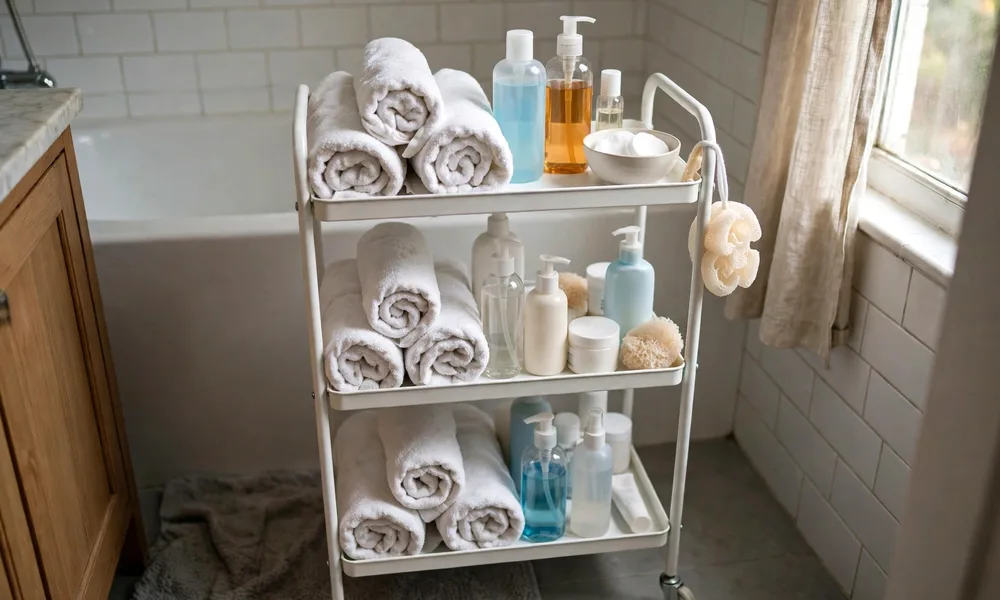
The three-tier metal shelf cart is the best rolling cart for most homes in 2026, because it does the most jobs for the least money. A steel tube frame with three shallow trays, usually around 45 centimetres wide and 35 deep, holds towels, toiletries, books, yarn or pantry overflow with equal ease. The trays have raised edges, so nothing slides off when the cart moves.
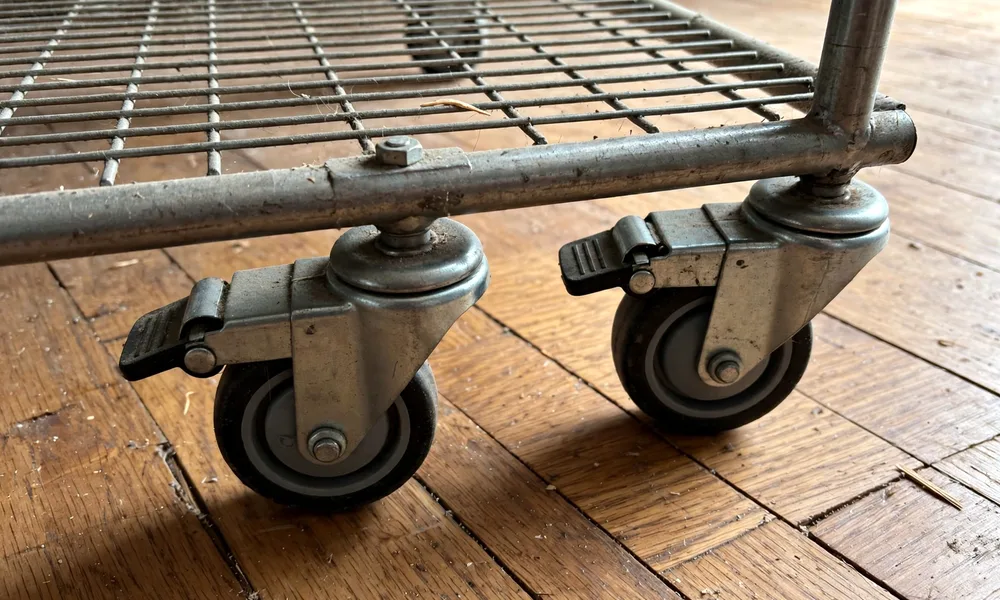
Look for a frame that bolts together rather than one held by push-fit plastic caps, and for castors that swivel and lock. The best versions have two locking castors and two free ones. Avoid the cheapest models with thin wire shelves that sag under a stack of books.
Wooden Trolley Carts
A wooden trolley cart suits rooms where the cart is on display all day. A beech or oak frame with solid shelves reads as furniture rather than a utility trolley, which helps in a living room or bedroom where a metal cart would look out of place. Wood shelves also forgive the odd ring mark and give glasses and mugs a more stable footing than a wire tray.
The trade-off is weight and water. Wood is heavier than metal, so check the castors are sturdy, and keep a wooden cart out of the bathroom unless the finish is sealed.
Wire-Basket Craft Carts
A wire-basket craft cart is built for hobbies that come with a hundred small pieces. The deep wire baskets hold yarn, paint jars, fabric and tools without hiding them, and the open mesh lets you spot the colour you need without emptying a shelf. At around 40 centimetres wide it fits beside a desk or a sewing table, and it rolls out of the way when the project is done.
The compromise is dust and small items. Wire baskets do not suit loose beads or pins, so use small boxes inside the baskets for the tiny pieces. Look for baskets that lift out, so you can carry one to the table and put it back.
Slim Narrow Carts
A slim narrow cart is built for the gap nobody else can use: the 15-centimetre slot between the washing machine and the wall, or the strip beside the wardrobe in a small bedroom. At around 45 centimetres long and only 15 to 18 deep, it slides into gaps that defeat any other cart, and it holds cleaning sprays, laundry supplies or shoes in three or four shallow tiers.
The compromise is shelf size: a slim cart holds bottles and folded cloths, not books or blankets. Look for lockable castors and a low, wide wheelbase, because a tall, narrow cart can tip if pulled at an angle.

Folding and Serving Carts
A folding cart is for homes that need a cart sometimes and a clear floor the rest of the time. The shelves fold flat against the frame, so the whole cart hangs on a hook or slides behind a door between uses. Open, it holds a tea service, a stack of plates or a pile of laundry; folded, it is barely 10 centimetres deep.
Check the folding mechanism before you buy: it should lock firmly open with no wobble, and the folded frame should sit flat. Avoid the cheapest folding carts, where a shelf that sags under a teapot is worse than no shelf at all.
Rolling Carts Compared
| Type | Best for | Typical size | Load rating |
|---|---|---|---|
| Three-tier metal shelf cart | Every room, everyday storage | 45 x 35 cm | 40 to 60 kg |
| Wooden trolley cart | Living room and bedroom display | 60 x 40 cm | 30 to 50 kg |
| Wire-basket craft cart | Craft and hobby supplies | 40 x 30 cm | 20 to 30 kg |
| Slim narrow cart | Gaps beside appliances | 45 x 18 cm | 15 to 25 kg |
| Folding and serving cart | Occasional serving and laundry | 50 x 35 cm | 20 to 30 kg |
If the cart will move between rooms every day, the three-tier metal cart wins. If it will stay in one room and be looked at, wood earns its place.
How to Choose the Right Rolling Cart
Measure twice, and measure the right things. Measure the wall or corner where the cart will live, and then measure the route it will travel: the doorway it must pass and the turning circle at the end. A cart that fits its parking spot but cannot leave its room is no use. As a rough guide, 40 to 50 centimetres wide suits most rooms.
Wheels decide whether a cart is genuinely mobile or just furniture with decoration. Look for smooth-rolling castors that lock, ideally two locking and two free. Check the weight rating too, since a cart loaded with books and bottles is heavier than it looks, and flimsy wheels are the first thing to fail.
Shelf clearance shapes how the cart is used. A tall gap between shelves holds shampoo bottles and books upright; a shallow gap holds folded towels and flat craft supplies. Measure the tallest thing the cart must hold before you buy, because a shelf that is two centimetres too short is useless. A raised edge around each tray stops bottles sliding when the cart moves, which is a detail worth having.
The 6-Point Checklist Before You Buy
- Measure the parking spot, the doorway and the route, in centimetres, before you order anything.
- Check the weight rating per shelf and in total, and buy for the heaviest load, not the lightest.
- Confirm at least two castors lock, and test the lock with a foot before the cart is loaded.
- Measure the tallest item the cart must hold against the gap between shelves.
- Look for a frame that bolts together, not one held by plastic push-fit caps.
- Check the tray edges are raised, so nothing slides off when the cart rolls over a rug edge.
Mistakes That Waste Money
The most common mistake is buying for the room the cart lives in today and forgetting it will move. A cart bought for the bathroom ends up in the craft room, and one bought for books ends up holding laundry. Buy the sturdiest cart your budget allows.
The second mistake is overloading the top shelf. A rolling cart is top-heavy by design, and a heavy top shelf makes it tip when it crosses a rug edge or a door threshold. Keep the heavy things low, the light things high, and never pull a loaded cart by one handle at an angle. Push it from behind, slowly, and lock the castors before you load or unload it.
Frequently Asked Questions
What is a rolling cart used for?
A rolling cart is a light, wheeled shelf unit for everyday things that move between rooms: towels and toiletries in the bathroom, craft supplies in the spare room, books and blankets in the living room, and cleaning supplies in the kitchen. It is storage that travels with the job, not furniture that stays in one place.
How much weight can a rolling cart hold?
Most three-tier metal rolling carts are rated for 40 to 60 kilograms in total, or roughly 15 to 20 kilograms per shelf. Slim carts hold less, usually 15 to 25 kilograms. Keep the heaviest items on the bottom shelf so the cart stays stable.
Do rolling carts damage wooden floors?
Not if the castors are right. Rubber or polyurethane wheels roll quietly and leave no marks, while hard plastic wheels can scuff a soft floor. If your floors are wood, choose rubber wheels and lock the castors when the cart is parked, so it does not creep and scratch.
Can a rolling cart be used in the bathroom?
Yes, if the frame is metal or sealed plastic. A metal cart with a powder-coated finish resists steam and splashes, and the open shelves dry quickly. Keep a wooden cart out of the bathroom unless the finish is fully sealed, because bare wood swells in damp air.
What is the difference between a rolling cart and a utility cart?
A rolling cart is light and made for indoor, multi-room storage, usually rated under 60 kilograms with small castors. A utility cart is a heavy-duty steel hauling cart for garages and workshops, rated for 300 kilograms or more. They look similar in a photo, but they do opposite jobs.
How do I stop a rolling cart from tipping over?
Load heavy items on the bottom shelf, light items on top, and never pull a loaded cart by one handle at an angle. Push it from behind, cross thresholds slowly, and lock at least two castors whenever the cart is parked. A low, wide cart is always more stable than a tall, narrow one.
The Bottom Line
Buy the three-tier metal rolling cart if you want one cart that works in every room, the wooden trolley if it will live on display, and the slim cart if it must fit a gap. Measure the doorway, check the locks, and keep the heavy things low.


