
The best smoothie bowls in 2026 are thick enough to eat with a spoon, generous with toppings, and built like a proper breakfast rather than a drink in disguise. A great bowl starts with a frozen fruit base blended with almost no liquid, then earns its crunch from granola, seeds, nuts and fresh fruit on top. The result is a meal that keeps you full until lunch and tastes like something you actually look forward to.
Smoothie bowls are not simply smoothies poured into a bowl. A drinkable smoothie is thin, sipped through a straw and gone in five minutes. A smoothie bowl is spoonable, layered and textured, and the toppings are half the point: they add fibre, protein and crunch, and they slow you down enough to enjoy the meal.
This guide rounds up the best smoothie bowls of 2026, from classic berry bowls and tropical favourites to green bowls, protein-packed breakfast bowls and the best bowl cafés, with honest advice on what works, what to avoid, and how the leading styles compare on taste, nutrition, cost and effort.
Key Takeaways
- The best smoothie bowls are thick enough to eat with a spoon: frozen fruit, very little liquid, and a high-speed blend.
- Toppings are half the meal: granola, seeds, nuts and fresh fruit add the crunch, fibre and protein that keep you full.
- A bowl needs protein or healthy fat to work as breakfast; fruit alone is a snack, not a meal.
- Frozen fruit beats fresh fruit for the base every time: it thickens the bowl without watering it down.
- Homemade bowls win on cost and control, while bowl cafés win on variety and convenience.
What Makes a Great Smoothie Bowl
A great smoothie bowl starts with one rule: the base must be thick. Use frozen fruit as the backbone, add only a splash of liquid, and blend in short bursts, pushing the mixture down between pulses. If your blender needs a lot of liquid to move, you are making a smoothie, not a bowl.
The classic formula is simple. One and a half cups of frozen fruit gives sweetness and body, half a frozen banana gives creaminess, and two to four tablespoons of milk, yoghurt or coconut water gives the blender just enough to work with. Add a spoonful of nut butter or a scoop of protein powder for staying power, and a flavour extra such as vanilla, cocoa or cinnamon for character.
Choose Your Toppings With Care
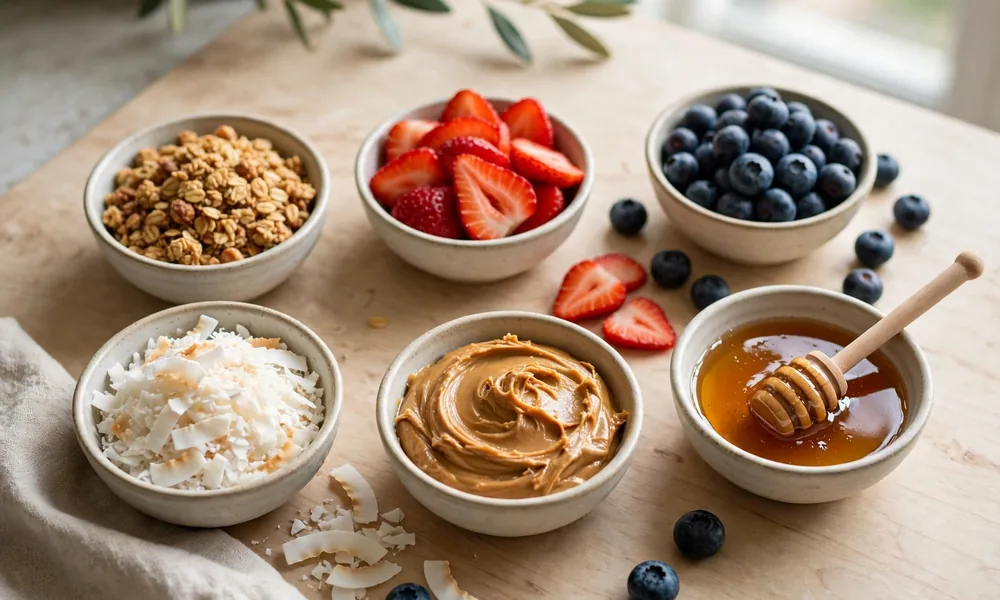
Toppings deserve as much thought as the base. Aim for four or five different textures: something crunchy like granola or nuts, something soft like sliced banana or berries, something seedy like chia or hemp seeds, and something creamy like a drizzle of peanut butter. Keep portions honest: a bowl can quietly turn into a sugar bomb when the granola is sweetened and the honey flows freely, so measure the sweet extras and let the fresh fruit do most of the sweetening.
Best Berry Smoothie Bowls in 2026
Berry bowls are the safest place to start, and they remain the most popular style for a reason. Strawberries, blueberries, raspberries and blackberries blend into a thick, vivid base that tastes sweet without any added sugar, and their natural tartness keeps the flavour lively. A classic mixed-berry bowl, frozen berries, half a frozen banana, a spoonful of Greek yoghurt and a splash of milk, is the single most reliable bowl you can make, and it works for breakfast, a snack or a light dessert.
Berries also freeze brilliantly, which means a good berry bowl is available all year, not just in summer. Buy frozen berries in large bags and keep them in the freezer. Fresh berries are lovely as a topping, but frozen ones give a thicker, colder result and cost far less out of season. Top with sliced strawberries, blueberries, granola and a sprinkle of chia seeds.
Best Tropical Smoothie Bowls in 2026
Tropical bowls taste like a holiday, and they are the best choice when you want something bright and refreshing. Mango is the star: frozen mango blends into a silky, almost ice-cream-like texture, and it pairs beautifully with pineapple, banana and coconut water. A mango and pineapple bowl, topped with toasted coconut flakes and sliced kiwi, is one of the most satisfying breakfasts you can make in under ten minutes.
The trick with tropical bowls is balance. Mango and pineapple are both sweet, so a squeeze of lime or a few raspberries on top cuts through the richness and keeps the flavour lively. Coconut milk makes the base creamier, but it also adds fat, so use it sparingly. Passion fruit pulp, spooned over the top just before serving, adds a sharp, fragrant finish that lifts the whole bowl.
Best Green Smoothie Bowls in 2026
Green bowls are the best option when you want vegetables in your breakfast without tasting them. A handful of baby spinach or kale disappears into a frozen mango or banana base, adding fibre, iron and folate while the fruit carries the flavour. The colour is unmistakably green, but the taste is sweet and fruity, especially with half a frozen banana and a spoonful of peanut butter.
Avocado is the secret weapon of green bowls. Half an avocado blended into the base makes it rich and creamy, adds healthy fat, and helps the bowl stay thick. Top a green bowl with sliced kiwi, pumpkin seeds and a few blueberries for colour contrast.
Green bowls reward a light hand with the extras. Spirulina and greens powders promise extra nutrition, but they can turn the flavour bitter if you overdo them, so start with half a teaspoon and build up slowly. If you already drink a daily greens powder, a bowl is a pleasant way to take it, and our guide to the best greens powders of 2026 compares the options that actually taste good in a blend.
Best Protein-Packed Smoothie Bowls in 2026

Protein powder is the most direct route, and a scoop of vanilla or unflavoured whey blends cleanly into almost any bowl. Chocolate protein powder works beautifully in a banana and peanut butter bowl. If you prefer plant-based options, our roundup of the best plant protein powders of 2026 covers the ones that mix smoothly without a chalky aftertaste.
Nut butters, seeds and nuts add protein in smaller amounts while also adding fat and crunch, which is exactly what a bowl needs to feel satisfying. A tablespoon of peanut butter, a spoonful of hemp hearts and a scattering of chopped almonds together add roughly ten grams of protein to a bowl that already has yoghurt in the base.
Best Smoothie Bowl Cafés and Ready-Made Bowls in 2026
Not every bowl needs to be made at home. Bowl cafés have become a fixture in most cities, and the best ones are worth the price: they use frozen acai and pitaya bases, offer a wide topping bar, and make a bowl that is hard to replicate without a commercial blender. A café bowl typically costs between eight and fifteen pounds, which is expensive for a daily habit but reasonable as a weekend treat.
When you order at a café, watch the sweet extras. Many cafés drizzle honey, add sweetened granola and pile on dried fruit, which can push a healthy-looking bowl past five hundred calories. Ask for unsweetened granola, skip the honey, and load up on fresh fruit, nuts and seeds instead.
Ready-made frozen bowls from the supermarket are the middle ground: cheaper than a café, faster than blending from scratch, and increasingly good. Look for short ingredient lists with real fruit first and no added sugar. Defrost for ten minutes, add your own toppings, and you have a bowl in about the time it takes to make toast. If you want to compare drinkable options for busy mornings too, our guide to the best smoothies of 2026 covers the blends that work best in a glass.

Smoothie Bowls Compared
| Bowl Style | Best For | Typical Cost per Bowl | Why It Works |
|---|---|---|---|
| Berry bowl | Everyday breakfast, beginners | £2–£4 homemade | Reliable, sweet without added sugar, frozen berries keep well |
| Tropical bowl | Summer mornings, bright flavours | £3–£5 homemade | Mango gives a silky texture; lime and berries keep it balanced |
| Green bowl | Vegetable-packed breakfasts | £2–£4 homemade | Spinach and avocado hide in fruit; fibre and healthy fats |
| Protein bowl | Post-workout, staying full | £3–£5 homemade | Yoghurt and protein powder add 20–30g of protein |
| Café bowl | Weekends, no-blend days | £8–£15 at a café | Wide topping bar, commercial blender texture, zero washing up |
| Ready-made frozen bowl | Busy mornings | £3–£5 from the supermarket | Fast, consistent, easy to customise with fresh toppings |
Smoothie Bowl Shopping Checklist
- Stock the freezer first: frozen berries, frozen mango, frozen banana slices and a bag of spinach are the backbone of every bowl.
- Choose a blender that handles thick blends: a tamper or a narrow jug makes a real difference to bowl texture.
- Buy toppings in bulk: granola, chia seeds, hemp hearts, nuts and coconut flakes keep for months in sealed jars.
- Keep fresh fruit for topping, not blending: bananas, berries and kiwi look better and taste fresher on top.
- Check granola labels before you buy: unsweetened or lightly sweetened granola keeps a bowl from turning into dessert.
- Chill your bowls in the freezer for ten minutes before serving so the base stays thick while you eat.
Frequently Asked Questions
Are smoothie bowls healthy?
Yes, when they are built well. A bowl based on frozen fruit, with yoghurt or protein for staying power and measured toppings, is a genuinely nutritious breakfast. The risk is the toppings: sweetened granola, honey and dried fruit can quietly add a lot of sugar, so keep the sweet extras small and let fresh fruit do the sweetening.
What is the difference between a smoothie bowl and a smoothie?
Thickness and how you eat it. A smoothie is thin enough to drink through a straw, while a smoothie bowl is thick enough to eat with a spoon and is served in a bowl with toppings. Bowls use frozen fruit and very little liquid, which gives them a soft-serve texture, and the toppings add crunch, fibre and protein.
How do I make a smoothie bowl thick?
Use fully frozen fruit, add only two to four tablespoons of liquid, and blend in short bursts, pushing the mixture down between pulses. A frozen banana is the single best thickener, and chilling the bowl beforehand helps the base hold its shape.
Can I make smoothie bowls without a high-speed blender?
Yes, with a little patience. A standard blender can handle a bowl if you work in small batches, add liquid one spoonful at a time, and stop often to scrape the sides down. Softer frozen fruit such as mango and banana blends more easily than hard berries, so start there.
Are smoothie bowls good for weight loss?
They can be, because a well-built bowl is high in fibre and volume for relatively few calories, which helps you feel full. The key is portion control on calorie-dense toppings: measure the granola, nut butter and seeds rather than pouring freely, and skip honey and sweetened dried fruit.
How much does a homemade smoothie bowl cost?
Most homemade bowls cost between two and five pounds. Frozen fruit in bulk is cheap, bananas cost very little, and seeds and granola bought in large bags bring the per-bowl cost down further. A café bowl costs eight to fifteen pounds, so making your own four times a week can easily save more than a hundred pounds a month.
The Bottom Line
The best smoothie bowls in 2026 are the ones you will actually make again: thick, spoonable bases, fresh fruit, crunchy toppings and enough protein to carry you through the morning. Start with a berry bowl, master the thickness, then branch out into tropical, green and protein-packed versions. Homemade bowls win on cost and control, café bowls win on convenience, and a bowl built on frozen fruit and honest toppings is one of the easiest good breakfasts you can eat.


