
Frozen Figs That Actually Taste Like Figs in 2026
Frozen figs can be one of the best things in the freezer aisle, and also one of the most disappointing. A good bag opens onto figs that are dark, honeyed and jammy, with the soft chew and deep sweetness that make a fresh fig worth seeking out. A bad bag gives you icy, bland fruit that tastes of the freezer and turns to grey mush as it thaws. The difference is rarely luck: it comes down to the figs in the bag and how you use them.
Figs freeze differently from most fruit. Soft, thin-skinned and full of sugar, they hold their flavour well but lose their shape easily. Frozen figs are at their best cooked, roasted or folded into baking, where honeyed sweetness and soft texture become an advantage. This guide explains how to pick bags that actually taste like figs, whether to buy whole or halved, how to thaw them, and how to cook with them.
Key Takeaways
- Buy figs that are loose in the bag, dark in colour and free of large ice crystals.
- Halved figs suit baking and roasting best; whole figs suit compotes and slow cooking.
- Expect honeyed, jammy sweetness, not bright acidity; figs need lemon, vinegar or tart fruit nearby.
- Thaw figs slowly in the fridge and use them the same day; fast thawing turns them soft and grey.
- Roast or bake frozen figs straight from the freezer for the best texture; thawing first makes batters soggy.
Why Frozen Figs Taste So Different From Fresh
A fresh fig is a brief pleasure: it ripens fast, bruises easily and goes soft within days. Freezing catches figs at full ripeness, usually within hours of picking, and holds them there. That is why a good frozen fig can taste more intensely of fig than an out-of-season fresh one, often picked under-ripe to survive the journey. Sugar, honeyed depth and the soft, seedy interior all survive freezing well, because figs are naturally high in sugar and low in water.
What freezing changes is texture. Ice crystals break down the cell walls, so a thawed fig is softer, wetter and more fragile than a fresh one, and will not hold a neat shape on a cheese board. That matters less than it sounds, because the flavour survives. Treat frozen figs as a cooking fig: roasted until caramelised, baked into tarts, simmered into compotes, or blended into sauces. Our guide to why frozen fruit deserves a spot in your freezer in 2026 explains the same principle across the freezer aisle.
Whole vs Halved: The First Choice That Matters
Form decides what you can do with a fig, so choose deliberately.
Whole Figs
Whole figs suit slow cooking best. They hold together in compotes, poaching liquids and tagines, softening gradually and soaking up flavour, and they are the best choice for eating lightly thawed with cheese or yoghurt. Their weakness is uneven thawing, so slice or halve them while still firm if you need them fast. They also hide their quality, so check the bag for colour and avoid pale or shrunken figs.
Halved Figs
Halved figs are the most useful form for baking and roasting, and the best default if you buy one bag. The cut face shows you what you are getting: deep red or amber means ripe and sweet, while a pale, dry centre means picked too early. Halves thaw faster and more evenly, sit neatly cut-side up in a tart, and caramelise well. Their only drawback is drying out faster once thawed, so use them the same day.

Chopped Figs
Chopped figs are the workhorse for baking, porridge and smoothies, where shape does not matter and even distribution does. They fold into batter without sinking, scatter evenly through a crumble, and blend smoothly. They are the worst choice where the fig should be seen, and they go soft fastest, so buy them only when the dish will hide them.
What Sweetness Really Means in a Frozen Fig
Figs are sweet in a way that is easy to misread. With almost no acidity, their sweetness reads as deep, dark and honeyed rather than bright: honey, jam and brown sugar, with a soft, seedy texture. It is a wonderful flavour, but it needs balance. Without something tart or salty nearby, fig dishes taste flat and one-note, however good the figs are.
Variety matters more than most bags admit. Dark figs, such as Black Mission, are the sweetest and most jammy, with deep red flesh that turns almost purple when roasted, and they suit desserts and tarts best. Brown Turkey figs are milder, suiting savoury cooking and cheese boards. Green figs, such as Kadota, are mildest, with pale amber flesh and a delicate, almost nutty flavour that vanishes under sugar or spice. If the bag names the variety, choose dark figs for baking and green figs for savoury dishes; if not, judge by colour. The ingredients should list one thing only: figs. Sweetened bags hide dull fruit and burn more easily.
Frozen Figs, Compared
| Form | Best for | Thawing | Watch out for |
|---|---|---|---|
| Whole | Compotes, poaching, eating with cheese | Slow, uneven | Hidden quality, icy centres |
| Halved | Baking, roasting, salads, flatbreads | Fast and even | Dries out once thawed |
| Chopped | Cakes, crumbles, porridge, smoothies | Fastest | Loses its shape, looks plain |
| Dark varieties | Desserts, tarts, roasting | As above | One-note without acid |
| Green varieties | Savoury dishes, cheese boards | As above | Mild, easily overwhelmed |
How to Thaw Frozen Figs Without Losing Them
Thawing is where most frozen figs are ruined, and it is entirely avoidable. Thaw slowly, in the fridge, and use the figs the same day: move what you need into a covered bowl and leave it for two to three hours. The figs thaw evenly, keep their colour, and stay firm enough to handle. Drain off the liquid that collects, or it will make batters soggy and sauces thin.
Never thaw figs quickly at room temperature or in warm water: fast thawing collapses the soft flesh and the figs come out grey, wet and shapeless. Never microwave them either, unless you are making a sauce. Never refreeze thawed figs; use them within a day and cook leftovers into a compote instead.
There is one exception: do not thaw figs at all when baking or roasting. Frozen figs hold their shape in a hot oven while the outside caramelises, and release moisture slowly instead of flooding the dish. Toss halved figs straight from the freezer with oil or honey and roast them cut-side up, or use them frozen in tarts and cakes and add a few minutes. The best frozen berries for smoothies and baking in 2026 follow the same rule: frozen fruit goes into hot dishes frozen, and into cold dishes thawed.
Baking and Roasting With Frozen Figs
Roasting is the single best thing you can do with a frozen fig. Heat concentrates the sugars, deepens the honeyed flavour, and turns the cut face golden while the inside stays soft and jammy. Spread halved figs cut-side up on a tray, drizzle with honey, add thyme or rosemary, and roast until the edges darken and the juices bubble. Serve warm with yoghurt, ice cream or cheese, or over porridge and pancakes.
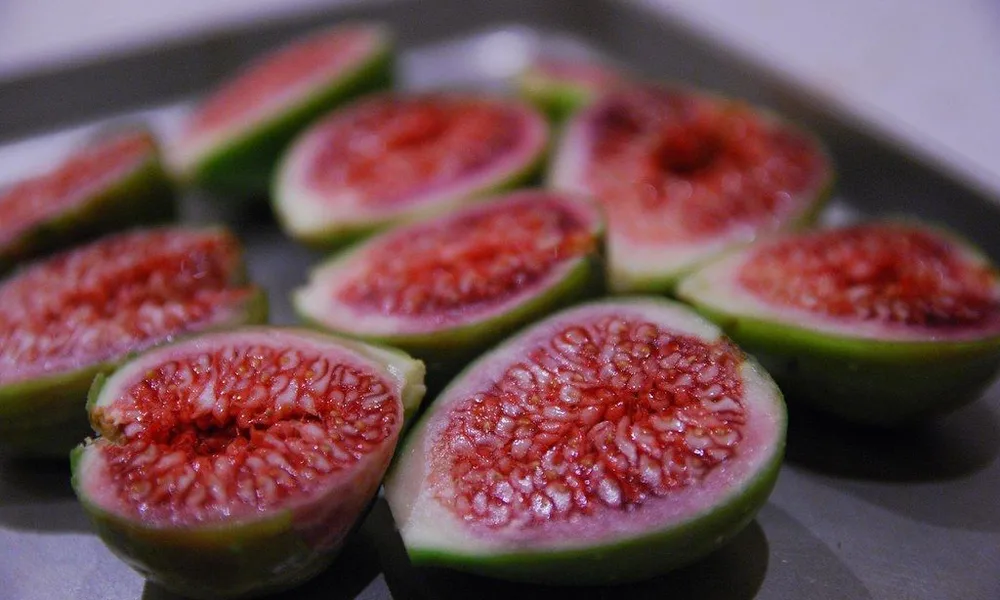
Baking needs a little more care, because figs release water as they thaw. Use them frozen, and give the moisture somewhere to go. In a tart, arrange halved figs cut-side up on a frangipane or custard filling, which absorbs the juice. In a cake, toss chopped figs in flour before folding them in, so they distribute instead of sinking.
Figs also earn their place in savoury cooking, where sweetness balances salt and fat: roasted figs with blue cheese and walnuts, figs wrapped in prosciutto, or figs in a sauce for pork or duck. The key is contrast. Lemon, balsamic vinegar, salty cheese or bitter leaves make figs taste more of themselves. Figs with nothing to push against taste sweet and forgettable; figs with contrast taste memorable.
What to Look For in the Freezer Aisle
Choosing a good bag takes less than a minute. Squeeze it gently: it should feel loose and free-flowing, with individual figs you can feel through the plastic. A bag that feels like a solid block has thawed and refrozen, and the figs inside will be soft, icy and dull. A light dusting of frost is normal, but large ice crystals mean bad storage.
Look at the figs through the bag. Dark skins, plump shapes and an even size are good signs; pale, shrunken or uneven figs suggest under-ripe fruit or a bag that has sat for months. Check the date and the ingredients, which should list figs and nothing else. At home, keep the bag sealed, squeeze the air out, store it flat, and use within three months.
Mistakes That Ruin Frozen Figs
The most common mistake is thawing figs and expecting them to behave like fresh ones: a thawed fig will never sit neatly on a cheese board, so use thawed figs in cooking. The second is buying sweetened figs and wondering why everything tastes of syrup. The third is cooking figs without acid, which leaves figs, honey and pastry cloying. The fourth is overcrowding the tray: figs need space for moisture to escape, or they steam instead of roasting.

Your Frozen Fig Checklist
- Choose a bag that feels loose and free-flowing, with dark, plump figs and no large ice crystals inside.
- Buy halved figs as your default, whole figs for compotes and poaching, chopped figs for baking and smoothies.
- Check the ingredients list: figs and nothing else, with no added sugar or syrup.
- Thaw slowly in the fridge and use the same day, or cook straight from frozen.
- Balance the sweetness with lemon, vinegar, salty cheese or bitter leaves so the fig flavour stands out.
- Store the bag sealed, flat and dated, and use within three months.
Frequently Asked Questions
Do frozen figs taste as good as fresh figs?
For cooking, yes, and sometimes better, because frozen figs are picked fully ripe while out-of-season fresh figs often are not. The flavour survives freezing; the texture does not, so thawed figs suit roasting, baking and compotes rather than eating raw.
Should I buy whole or halved frozen figs?
Halved figs are the best default: they thaw evenly, show the quality of the fruit, sit neatly in tarts, and caramelise well. Whole figs suit compotes; chopped figs suit cakes and smoothies.
Do I need to thaw frozen figs before baking?
No. Use them straight from the freezer and add a few minutes to the cooking time. Frozen figs hold their shape in a hot oven, while thawed figs can make batters soggy.
Why do my thawed figs look grey and soft?
They were thawed too fast, at room temperature or in warm water, which collapses the soft flesh. Thaw slowly in the fridge, drain the liquid, and use the same day. Figs that have thawed and refrozen also look grey, so avoid bags that feel like a solid block.
What goes well with frozen figs?
Anything salty, tart or bitter: blue cheese, goat cheese, prosciutto, walnuts, lemon, balsamic vinegar and thyme. A little acid or salt makes figs taste more of themselves.
How long do frozen figs last in the freezer?
Use them within three months, keeping the bag sealed, flat and dated once opened. Figs pick up freezer smells easily, so store them away from strong-smelling foods. Never refreeze thawed figs.
The Bottom Line
The best frozen figs of 2026 taste like figs: dark, honeyed and jammy, loose in the bag, with nothing added. Buy halved figs as your default, thaw them slowly or cook them straight from frozen, and give their sweetness something to push against, whether lemon, salty cheese or a hot oven. How to pick frozen peaches worth stocking in 2026 covers the same bag-checking skills for another fruit that rewards the same care.


