How to Pick Frozen Peaches Worth Stocking in 2026
Frozen peaches are the quiet bargain of the freezer aisle, and the easiest bag to buy badly. A good bag opens onto golden slices, loose enough to pour and sweet enough to eat half-thawed. A bad bag is a solid icy block of pale, tart fruit that turns to mush when it thaws. The difference is rarely the brand: it is the cut, how ripe the fruit was when frozen, and whether anything was added. This guide explains how to read a bag.
Fresh peaches have one of the shortest seasons of any fruit: a few summer weeks at a fair price, then they are gone, or expensive and picked under-ripe. Frozen peaches solve that. They are picked ripe, peeled, cut and frozen within hours of harvest, so a bag in the freezer means peach smoothies in January and peach cobbler in March. Our guide to frozen fruit puts peaches among the stone fruit that freeze best.
Key takeaways
- Slices are the most useful cut: they thaw evenly, hold their shape, and spread through a bake instead of sinking.
- Buy plain peaches with one ingredient. Syrup or added sugar costs more and limits what you can cook.
- Use frozen peaches straight from the freezer for smoothies and baking. Thawing first makes smoothies thin and bakes soggy.
- Deep gold colour and a ripe smell beat the words on the front.
- Squeeze the bag first. Loose, free-flowing fruit was frozen properly; a solid block has thawed and refrozen.
What frozen peaches actually are
Frozen peaches are fresh peaches washed, peeled, stoned, cut and frozen quickly, usually within hours of being picked. Fast freezing forms small ice crystals that do little damage to the fruit’s cells, so texture, colour and flavour survive far better than with slow freezing. Most are picked at full ripeness, a genuine advantage over fresh peaches shipped long distances, which are picked under-ripe so they survive the journey and never quite sweeten up.
Freezing preserves most of a peach’s nutrition: vitamin C drops a little, and fibre survives almost completely. What freezing changes is texture. A thawed peach is never as firm as a fresh one, because ice crystals soften the flesh. That softness is a flaw in a fruit salad and a virtue in a cobbler, a smoothie or a sauce. Yellow peaches are the common kind; white peaches are paler and sweeter, lovely half-thawed but fading in cooking.
Slices vs halves vs diced: the cut that matters
The first choice on the shelf is the cut, and it matters more for peaches than for almost any other frozen fruit. Peaches are large and soft once thawed, so the way they were cut before freezing decides how they behave in the pan, the blender and the oven.
| Cut | Best for | Texture | Watch out for |
|---|---|---|---|
| Slices | Smoothies, baking, breakfast bowls | Even, holds shape well | Thin slices break if stirred hard |
| Halves | Poaching, grilling, serving whole | Firm, generous, keeps its form | Slow to thaw; needs cutting for baking |
| Diced | Muffins, porridge, sauces | Small, spreads evenly | Softest cut; poor where fruit should show |
Slices: the most useful cut
Sliced peaches are the most useful cut in the freezer aisle, and the one to stock first. The slices freeze evenly, so they thaw evenly too, and they hold their shape far better than whole or halved fruit. In baking they spread through a batter instead of sinking.
Halves: the most versatile shape
Halves are whole peach halves with the stone removed, and the best shape when the peach itself is the star. They hold their shape, look generous on a plate, and can be sliced, diced or stuffed to suit the dish. The trade-off is time: halves thaw slowly, so they need longer in the fridge.
Diced: best for baking and breakfast
Diced peaches are small, even pieces cut for convenience, and the best cut for baking, because they spread evenly through cake batter or muffin mix, and they are ideal stirred into porridge or overnight oats. They are the softest cut of all and look the least like fruit, so they are a poor choice where the peach should be seen. Keep diced peaches as a second bag.

Sweet or tart? Reading the bag
Peaches vary in sweetness more than almost any other frozen fruit, because flavour depends on how ripe the fruit was when picked. Colour is the first clue: deep, even gold all the way through means a ripe peach, while pale, almost white flesh means it was picked before it was ready, and no amount of freezing will sweeten it. Smell is the second: a good bag smells faintly of peaches even while frozen. A bag that smells of nothing, or faintly of the freezer, holds fruit that was picked under-ripe or stored too long.
The ingredient list matters most. A good bag lists one ingredient: peaches. Some bags add sugar or syrup, and those cost more, taste sweeter than you planned, and limit what you can cook, because you cannot take the sugar back out. A little ascorbic acid, listed as vitamin C, is fine: it stops the fruit browning and does not change the flavour. Freestone peaches freeze best, because they cut cleanly without tearing; ragged pieces probably came from clingstone fruit.
Smoothies: use them frozen
Frozen peaches are at their best in a smoothie, and the rule is simple: use them straight from the freezer, never thawed. Frozen fruit chills the smoothie as it blends, so there is no need for ice, and the thick texture comes from the frozen fruit itself. Thawed peaches make a thin, watery smoothie, because the juice they release has nowhere to go but into the glass. A cup of frozen peach slices, a banana, a spoonful of yoghurt and a splash of milk blends thick, cold and sweet in under a minute.
Peaches are a gentler smoothie fruit than berries, and that is their strength. They sweeten a smoothie without dominating it, so they pair well with almost anything: mango for a tropical blend, raspberries for a sharp contrast, spinach for a green smoothie that still tastes of fruit. Our guide to frozen mango is the closest comparison: mango and peach play the same role in a blender, thick and sweet, but peach is lighter and more floral where mango is richer and heavier. If a smoothie tastes flat, add a squeeze of lemon: acidity wakes peach flavour up.
Baking with frozen peaches
Frozen peaches bake beautifully, provided you treat them as frozen fruit and not as fresh. The biggest mistake is thawing them first and tipping the juice in with them, which leaves a cobbler swimming and a cake soggy in the middle. Use the slices straight from the freezer, toss them in a spoonful of flour or cornflour before folding them into a batter, and add five to ten minutes to the baking time. The flour absorbs the juice as the fruit thaws in the oven, so the crumb stays light and the peaches stay distinct.
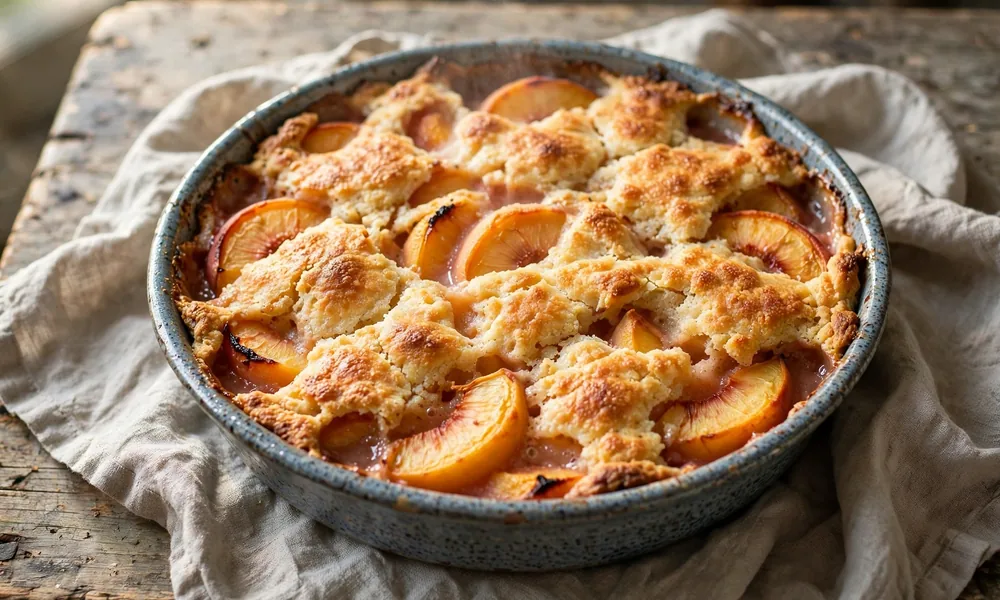
Cobblers, crumbles and crisps are the best home for frozen peaches, because they forgive the softness freezing brings and reward the flavour freezing preserves. A cobbler topping bakes over fruit that turns jammy underneath, and the contrast between crisp topping and soft fruit is exactly what the dish is for. Do not stir a peach batter twice once the fruit is in, or the slices break up and bleed juice through the crumb.
Thawing: when and how
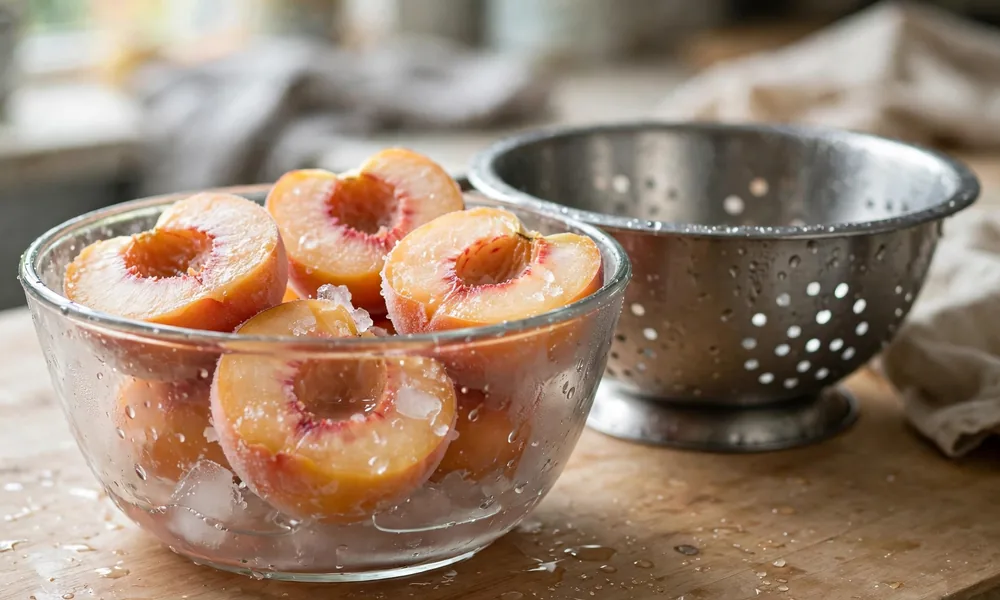
Most of the time, you should not thaw frozen peaches at all. Smoothies, baking, sauces and compotes all work better from frozen, and thawing only adds a step and a puddle. Thawing matters when the peach will be eaten as it is: over yoghurt, in a fruit salad, on porridge, or served as a dessert on its own. For those, thaw slowly in the fridge, in a bowl, for three to four hours or overnight. Slow thawing keeps the slices firm and the juice inside the fruit.
Never thaw peaches in warm water or in the microwave. Warm water turns the outside soft while the middle stays icy, and the microwave cooks the edges and leaves the centre cold. If you are short of time, spread the slices in a single layer on a plate at room temperature for thirty minutes. Never refreeze peaches that have thawed: refrozen fruit turns to mush and tastes of the freezer.
Storage and shelf life
A bag of frozen peaches keeps far longer than most people think, but it does not keep for ever. Unopened, it is at its best for six to eight months from freezing, and it stays safe well beyond that, but the flavour fades and the fruit picks up freezer taste after about a year. Once opened, press the air out of the bag, seal it tightly, and use it within three months.
Store the bag flat, not upright, so the slices freeze in a single layer and stay loose instead of clumping into a block. A flat bag also thaws faster and stacks neatly, which matters in a crowded freezer. Keep the bag away from strong-smelling food, because frozen fruit absorbs odours: a bag stored next to onions will taste faintly of onions. Our guide to canned peaches explains where tins beat the freezer: a tin keeps for years and the fruit is already soft, but the freezer wins on flavour and on having no added sugar.
Checklist: buying frozen peaches
- Squeeze the bag first: loose, free-flowing slices mean proper freezing; a solid block means it thawed and refroze.
- Read the ingredients: one word, peaches, and a little ascorbic acid at most; no added sugar or syrup.
- Look for deep, even gold colour through the bag; pale or white pieces were picked under-ripe.
- Choose slices as your main bag, halves for serving whole, diced only as a second bag.
- Smell the bag when you open it: a faint sweet peach smell means ripe fruit; no smell means dull fruit.
- Store the bag flat, sealed and away from strong smells, and use it within three months of opening.
Frequently asked questions
Are frozen peaches as good as fresh peaches?
For smoothies, baking and cooking, yes, and often better outside peach season, because frozen peaches were picked ripe and frozen within hours. For eating raw, a perfect fresh peach in season is better.
Do I need to thaw frozen peaches before baking?
No. Use them straight from the freezer, toss them in a spoonful of flour or cornflour, and add five to ten minutes to the baking time. Thawing first releases juice that makes bakes soggy.
Why did my cobbler turn out watery?
Almost always because the peaches were thawed before baking, or no thickener was used. Use frozen slices, coat them in flour, and rest the cobbler for ten minutes after baking.
Can I eat frozen peaches straight from the bag?
Yes, and half-thawed slices are a lovely snack: sweet, cold and refreshing. Let them sit for ten minutes at room temperature first, so they soften just enough to bite.
How long do frozen peaches last once opened?
Three months at their best if the bag is sealed tightly with the air pressed out and stored flat. They stay safe longer, but the flavour fades and freezer taste creeps in.
Are sweetened frozen peaches worth buying?
Almost never. Sweetened bags cost more, taste sweeter than most recipes need, and limit what you can cook. Buy plain peaches and sweeten the dish yourself.
The bottom line
Frozen peaches worth stocking in 2026 are plain, ripe and loose in the bag: deep gold slices with one ingredient on the label, bought as slices first. Use them straight from the freezer for smoothies and baking, thaw them slowly in the fridge only when they will be eaten as they are, and store the bag flat, sealed and used within three months.