
Finding the best sunglasses for men is not about chasing the most expensive logo on the shelf. It is about a pair that protects your eyes properly, fits your face without sliding or pinching, and looks right with the way you actually live, whether that means a daily commute, weekend sport, or long summer days outdoors. The right pair becomes something you reach for every morning without thinking about it, and the wrong pair ends up forgotten in a drawer or rattling around in the car door.
Men often buy sunglasses the way they buy a wallet: quickly, and then they live with the choice for years. That makes the first decision matter more than it seems. A cheap pair with no real UV protection can do more harm than wearing nothing at all, because dark lenses make your pupils open wider and let more ultraviolet light in. A frame that looks great in the shop mirror but presses behind your ears will give you a headache by lunchtime.
This guide cuts through all of that. It explains what to look for in lenses and frames, which classic styles suit which faces, and how to pick a pair for driving, travel, sport, and everyday wear. Spend on lens quality and fit, not on the name on the arm.
Key Takeaways
- Buy 100% UVA and UVB protection first. Lens darkness alone tells you nothing about safety.
- Polarized lenses are worth the extra cost if you drive, spend time near water, or hate reflected glare.
- Match the frame to your face shape: angular frames soften round faces, and softer curves suit square jaws.
- Comfort decides whether a pair gets worn. Check the bridge, the temples, and the weight before you buy.
- One great pair beats three mediocre ones, but a second cheap pair for the car or the beach is still worth having.
How to Choose the Best Sunglasses for Men
Start With the Lenses
Every pair worth buying blocks 100% of UVA and UVB rays, usually labelled UV400. Check for that marking on the lens, the packaging, or the product page before you look at anything else. Polarization is a separate feature: it filters the horizontal glare that bounces off roads, water, and wet pavements, and it makes a genuine difference on bright days. It can make some phone and dashboard screens look patchy, so if you spend your day staring at screens, try a polarized pair with your phone in the shop first.
Lens colour changes what you see more than most men expect. Grey keeps colours true and works well in the brightest sun, which is why it is the safest all-round choice. Brown and amber add warmth and improve contrast, helping on the road and on overcast days when the light is flat. Green, the classic aviator choice, cuts glare while keeping colours natural. Mirrored coatings cut extra light and look sharp, but they scratch more easily, so they need a hard case and a little care.
Then Pick the Frame
Frame material decides weight, durability, and how the pair feels after four hours on your face. Acetate is the classic choice: it comes in rich colours, holds its shape well, and feels substantial without being heavy. Metal frames, especially titanium, are lighter and slimmer, and they suit men who want a pair that almost disappears on the face. TR90 and other flexible plastics are the toughest option and the best pick for sport, because they bend rather than snap.
Fit Comes Before Fashion
Fit is where most bad purchases happen. A pair that slides down your nose in the heat is useless, however good it looks in the mirror. Check three points before you buy. First, the bridge should rest evenly without pinching or leaving red marks. Second, the temples should touch your head lightly without squeezing. Third, the lenses should be wide enough that your eyes sit comfortably inside them, with no squinting around the edges.
Face shape is the simplest guide to style, and it works. A round face suits angular frames, such as square or rectangular shapes, because the straight lines add definition. A square face with a strong jaw suits rounder or softer frames, which take the edge off the angles. An oval face, the most forgiving shape, suits almost everything, so the choice comes down to size and personality. A longer face suits larger, wider frames that add breadth, while a smaller face needs narrower frames that do not overwhelm it.
The Classic Styles That Suit Men Best
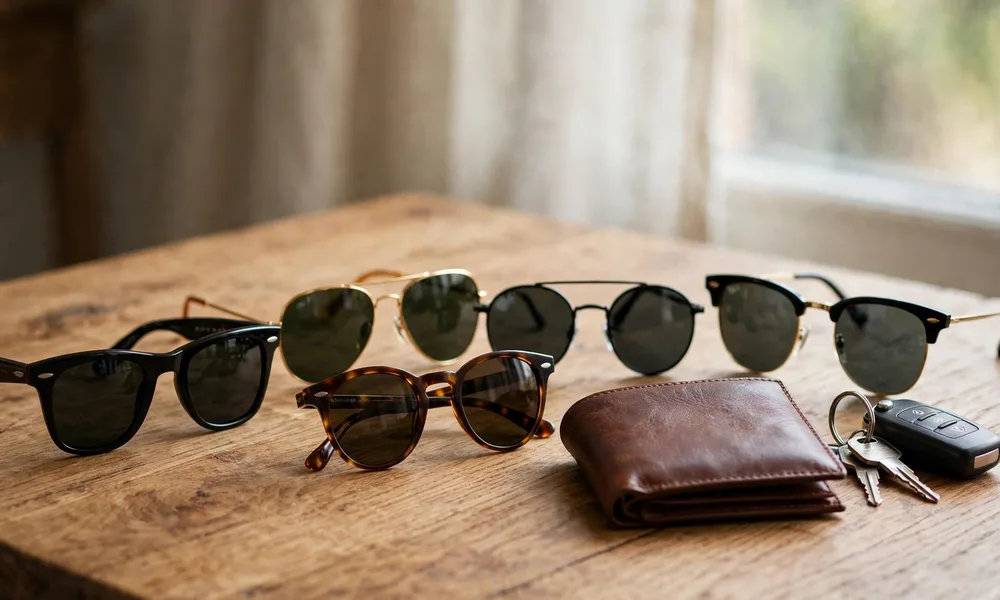
Most men’s sunglasses fall into a handful of classic styles, and each one suits a different face and a different mood. The table below compares them at a glance, so you can narrow your search before you start trying pairs on.
| Style | Best For | Face Shapes | Watch Out For |
|---|---|---|---|
| Wayfarer | Everyday wear, city life | Oval, round, square | Can feel heavy on small faces |
| Aviator | Driving, classic looks | Oval, square, heart | Too large on narrow faces |
| Clubmaster | Smart and vintage looks | Oval, round | Can look dated with casual kit |
| Square and rectangular | Strong definition, work wear | Round, oval | Harsh on very square jaws |
| Round | Retro and relaxed style | Square, oval | Easy to get the size wrong |
| Wraparound sport | Running, cycling, outdoor work | All, sized correctly | Looks out of place off the trail |
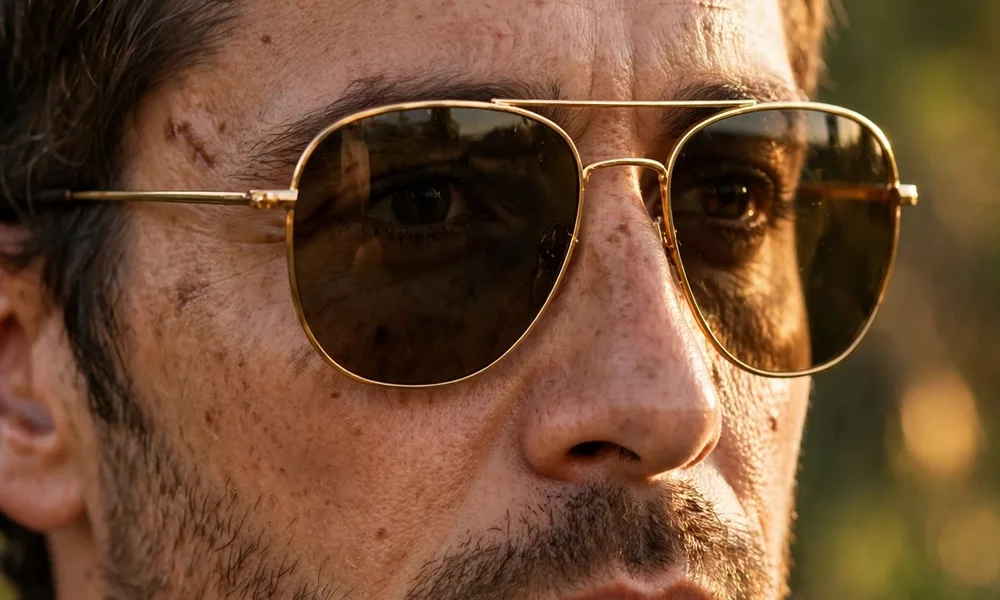
Aviators are the classic alternative, and they suit men with longer faces particularly well, because the teardrop lens adds width and balances length. They are also one of the best styles for driving, because the large lens gives wide coverage and the thin metal frame barely blocks your peripheral vision. Just be careful with size: an aviator that is too big looks like a costume, so the lens should end near your cheekbone, not halfway down it.
The Best Sunglasses for Men by Situation
For driving, polarized lenses are the single biggest upgrade you can make. They cut the reflected glare bouncing off wet asphalt and other windscreens, sharpen contrast so road markings stay readable, and keep eye strain from building up over a long journey. Choose a grey, brown, or copper tint, and avoid lenses so dark that your dashboard becomes hard to read. A secure, lightweight frame with slim temples is the other half of the recipe, because it stays comfortable for hours and does not press against your head. Our full guide to the best sunglasses for driving explains tints, polarization, and fit in detail.

For travel, versatility matters more than anything else. You want a pair that handles bright sun, works in shade, survives being packed and unpacked, and looks right from the airport to dinner. A foldable frame or a tough acetate pair with a hard case is ideal, and a neutral lens colour such as grey or green works in more situations than a dramatic mirror finish. If you are planning a trip, read our guide to the best sunglasses for travel before you pack, because the right pair can save you from buying a poor replacement at an airport shop.
For a first pair on a budget, you do not need to spend a fortune. You can get full UV400 protection, decent polarization, and a solid acetate frame for well under a hundred dollars, and that pair will protect your eyes just as well as one costing five times as much. What the extra money buys is clearer optics, better hinges, lighter materials, and a more refined finish. If you can only spend on one thing, spend it on the lenses: a cheap frame with excellent lenses beats an expensive frame with poor ones every time. For a wider comparison of styles, prices, and lens types, see our round-up of the best sunglasses of 2026.
What to Spend and How to Look After Them
As a rough guide, a good everyday pair costs somewhere between fifty and two hundred dollars. Below that, you can still find solid protection, but check the UV marking carefully and expect simpler hinges and heavier frames.
Looking after a pair takes almost no effort and doubles its life. Keep them in a hard case when they are not on your face, never in a pocket with keys or loose change. Clean the lenses with a microfibre cloth and a little lens spray or lukewarm water, never with your shirt, which can scratch the coating over time. And avoid leaving them on a car dashboard in summer: the heat can warp acetate frames and damage lens coatings.
Before You Buy: The Checklist
- Check for 100% UVA and UVB protection or a UV400 marking before anything else.
- Decide whether you need polarization for driving, water, or bright reflected glare.
- Try the frame on your face: the bridge should rest evenly and the temples should not squeeze.
- Check your eyes sit near the centre of each lens and the frame ends near the edge of your face.
- Choose a style that fits your face shape and the clothes you actually wear.
- Make sure a hard case and a microfibre cloth come with the pair, or buy them at the same time.
Frequently Asked Questions
Do expensive sunglasses protect your eyes better than cheap ones?
Not necessarily. Protection comes from the UV coating, not the price tag, and a cheap pair with genuine UV400 protection shields your eyes just as well as a luxury pair. What extra money buys is clearer optics, lighter materials, better hinges, and a more refined finish, all of which matter for comfort and durability, but not for basic safety.
Are polarized lenses worth it for men?
Yes, if you drive, spend time near water, or struggle with reflected glare. Polarized lenses filter out the horizontal glare that bounces off roads and water, which makes bright days more comfortable and reduces eye strain. The only real drawback is that they can make some phone and dashboard screens look patchy, so test them with your devices first.
What frame shape suits a round face?
Angular frames suit round faces best, because straight lines and sharp corners add definition. Square, rectangular, and wayfarer styles are the safest choices. Avoid very round frames, which can make a round face look rounder, and pick a frame that is slightly wider than your face to add balance.
What frame shape suits a square face?
Rounder and softer frames suit square faces, because curves take the edge off a strong jaw. Round frames and oval shapes work well, as do aviators, whose teardrop lenses soften the angles. Avoid very square frames, which can make a square jaw look even harder.
How do I stop my sunglasses sliding down my nose?
Sliding usually means the fit is wrong, not that your face is wrong. Check that the bridge sits evenly and the temples touch your head lightly without squeezing. Adjustable nose pads help a great deal, as do rubber temple grips on sport frames.
Can I wear sunglasses with a beard?
Yes, and a beard actually changes which frames look best. A full beard adds visual weight to the lower half of your face, so a slightly heavier or larger frame balances it better than a very slim one. Dark acetate frames work particularly well with beards, while very light metal frames can look lost against a thick beard. Try the pair on with your normal beard length, not freshly trimmed, to judge the balance properly.
The Bottom Line
The best sunglasses for men are the ones that protect your eyes fully, fit your face properly, and suit the life you actually live. Start with UV400 protection and polarization if you need it, match the frame to your face shape, and spend your money on lens quality and a solid fit rather than a logo. Do that, and you will end up with a pair you reach for every day, for years.


