The best table lamps for living rooms 2026 do far more than light a corner. The right lamp sets the mood for the whole room, softens harsh overhead light, and turns a plain sofa into a styled, finished space. A well-chosen table lamp is one of the easiest and most affordable upgrades you can make.
Yet choosing one is harder than it looks. A lamp that is too tall overwhelms a low sofa, a shade that is too narrow throws light in the wrong places, and a bulb that is too cool can make a cosy room feel cold and clinical.
This guide compares the lamp styles that work best in real living rooms, explains how to size and place them, and covers the materials, bulbs, and features worth paying for in 2026.
Key takeaways
- Choose a lamp 60 to 75 cm tall, with the bottom of the shade at about eye level when seated.
- Warm white bulbs (2700K to 3000K) suit living rooms best, creating a relaxed glow, not a harsh light.
- Linen shades diffuse light softly and flatter most living room styles, modern to traditional.
- Ceramic, brass, and glass bases are the most durable and versatile choices.
- Place lamps at two heights across the room for balanced light, and add a dimmer wherever you can.
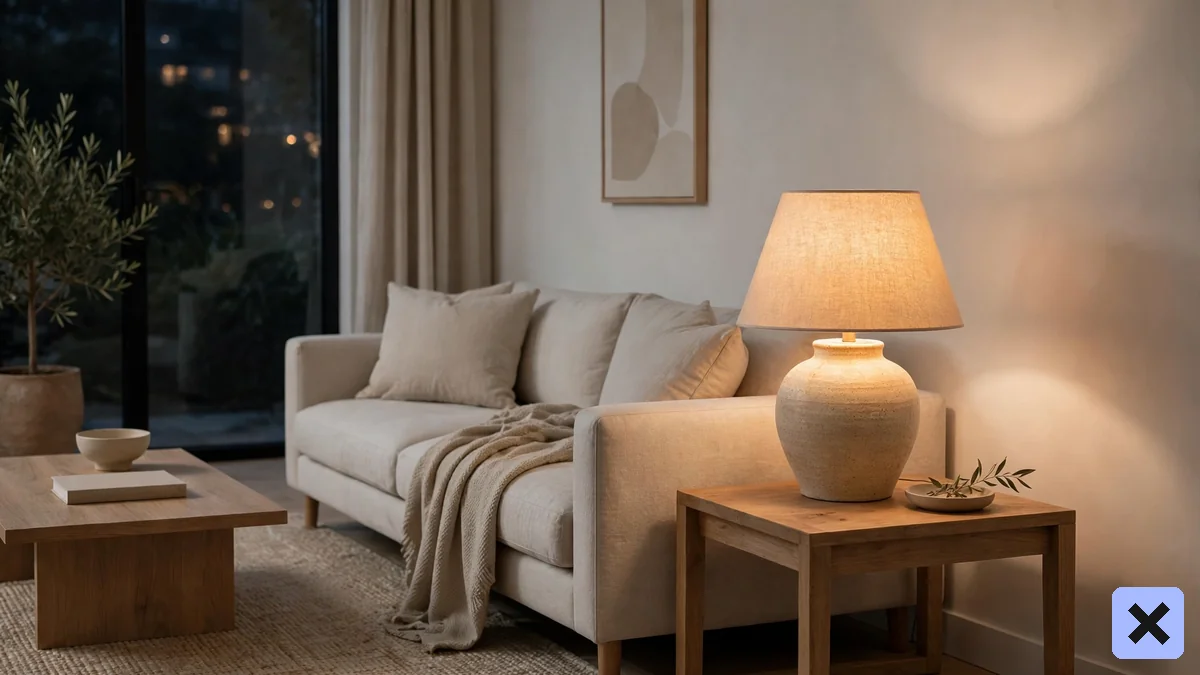
What Makes a Great Living Room Table Lamp
A great living room table lamp does three jobs at once: useful light for reading and conversation, warmth and atmosphere in the evening, and decoration during the day. Lamps that fail usually do only one of these well: a sculptural lamp with a dim, narrow beam looks striking but leaves you squinting, while a bright task lamp can feel like office lighting. The best lamps balance all three.
Scale and Proportion
Scale is the first thing to get right, and the easiest to get wrong. A lamp should feel in proportion to its table and the furniture beside it, and the shade should be no wider than the table surface. In most living rooms, a lamp between 60 and 75 cm tall works well on an end table beside a sofa, while lamps under 45 cm tend to disappear and lamps over 80 cm can dominate a modest space.
Light Quality Matters More Than Looks
A beautiful lamp with the wrong bulb is a bad lamp. For living rooms, warm white light between 2700K and 3000K is the sweet spot: it flatters skin tones and warms up wood and fabric. Cooler daylight bulbs above 4000K belong in a home office, not beside your sofa. A 60-watt equivalent LED, around 800 lumens, suits most living room lamps, and a dimmer turns one lamp into several. Light needs change from room to room, as our guide to the best table lamps for bedrooms shows.
The Best Table Lamps for Living Rooms in 2026
The lamps below cover the styles that suit living rooms best this year: ceramic, brass, glass, sculptural statement pieces, and one good budget pick.
Best Overall: The Ceramic Gourd Lamp
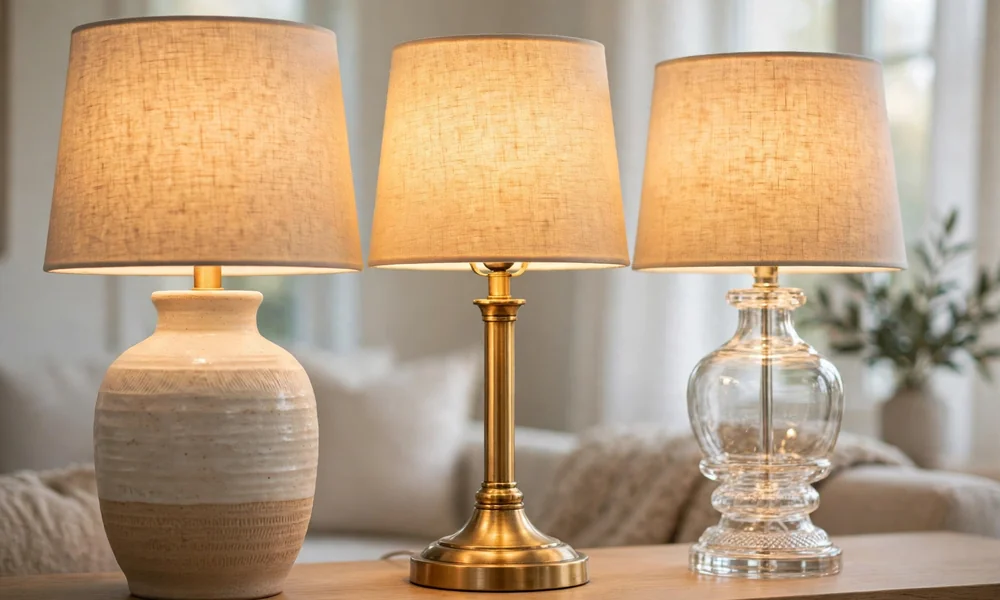
The ceramic gourd lamp remains the safest and most versatile choice for a living room. Its soft, rounded body works with modern, traditional, and transitional furniture alike, and the ceramic finish adds texture without demanding attention. Paired with a natural linen shade, it throws a warm, even glow. Look for a hand-glazed or speckled finish in a warm neutral, such as cream, sand, or soft sage, which will outlast trend-driven colours.
Best Brass Lamp: The Classic Column
A brass column lamp brings warmth and a hint of formality to a living room. The slim, upright shape suits narrow end tables where a wide ceramic base would crowd the surface, and the metal finish catches the light beautifully, even when the lamp is off. Antique brass is the most forgiving finish, hiding fingerprints and ageing gracefully. Keep the shade simple: a straight drum in cream linen lets the metal do the talking.
Best Glass Lamp: Clear and Coloured Glass
Glass lamps are the best choice for small living rooms, because they take up almost no visual space. A clear glass base lets light pass through and keeps a side table looking open and uncluttered. Coloured glass, in smoky grey or soft amber, adds a little more presence while staying light and airy. The trade-off is that glass shows dust and fingerprints more readily, so it suits tidy households.
Best Statement Lamp: Sculptural and Organic Shapes
Sculptural lamps are the standout trend of 2026, with organic curves, twisted ceramic forms, and oversized drum shades appearing in living rooms everywhere. A statement lamp works best as a single focal point, on a console or sideboard where it has room to breathe. The key is restraint elsewhere: if the lamp is bold, keep the shade plain and the surrounding objects few.
Best Budget Pick: The Simple Drum Lamp
You do not need to spend a fortune to light a living room well. A simple drum lamp, with a clean cylindrical base and a linen shade, costs far less than designer options and looks right in almost any room. Spend the money you save on a good bulb and a dimmer, and check the weight before buying: a solid, stable lamp is worth more than a taller one that wobbles.
Table Lamp Comparison
Use this comparison to match a lamp style to your room, budget, and the light you need.
| Lamp style | Best for | Light quality | Price range |
|---|---|---|---|
| Ceramic gourd | Most living rooms | Warm, even glow | Mid-range |
| Brass column | Narrow tables, formal rooms | Focused, warm pool | Mid to high |
| Clear glass | Small rooms | Bright, airy | Mid-range |
| Sculptural | Statement styling | Soft, ambient | High |
| Simple drum | Budget-friendly rooms | Even, general light | Low |
How to Choose the Right Size
Size is where most lamp purchases go wrong, and it is the easiest thing to fix with a tape measure. Before you buy, measure the table and the sofa arm, and the distance from the table surface to your eye level when seated.
Height Rules That Actually Work
When you sit beside a table lamp, the bottom of the shade should sit at roughly your eye level, and the bulb should be hidden behind the shade from your seated position. If you can see the bare bulb, the lamp is too tall or the shade too short. For a standard sofa with an end table around 60 cm high, a lamp of 60 to 75 cm is usually right. It also helps to think about how table lamps sit alongside taller lighting, such as the best floor lamps for living rooms, so the room has light at more than one height.
Shade Shape and Size
The shade controls where the light goes. A drum shade throws light up and down in roughly equal measure, which suits general living room lighting, while a tapered empire shade directs more light downward, which is better for reading. As a guide, the shade should be about two-thirds the height of the lamp base, and its widest diameter should be slightly less than the width of the table. Linen, cotton, and silk all diffuse light softly; avoid plastic or paper shades, which yellow and crack with heat.
Bulbs, Dimmers, and Smart Features
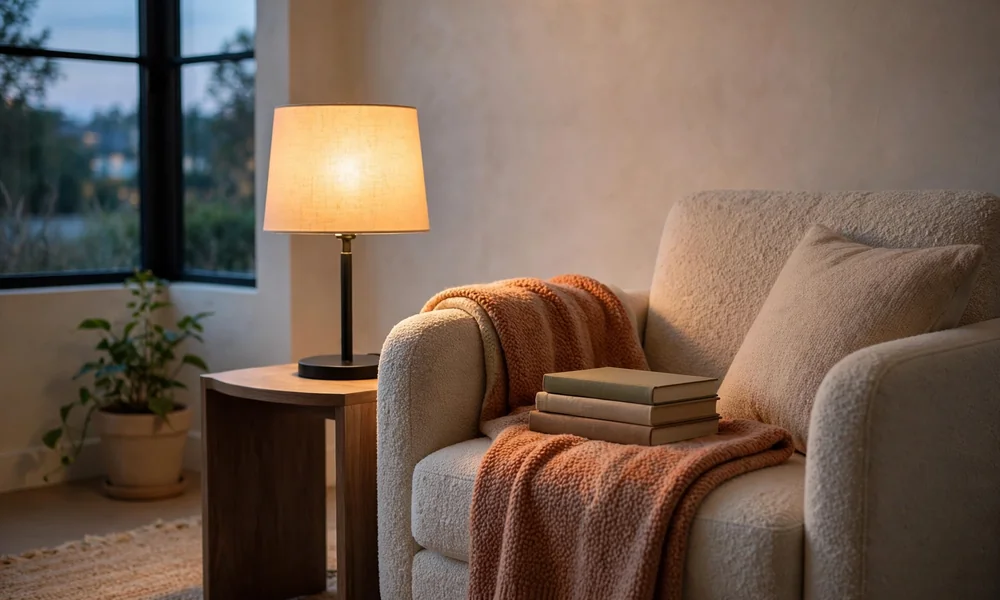
Modern table lamps are no longer just a socket and a switch. Many now come with built-in LED panels, touch dimmers, and USB charging ports, and smart bulbs can add colour temperature control. A built-in dimmer is the single most useful feature, letting you shift from bright reading light to a low evening glow. Be cautious about a built-in LED that cannot be replaced: when it fails, the whole lamp is finished. A standard E27 or B22 socket gives you far more choice.
Where to Place Table Lamps in a Living Room
Placement matters as much as the lamp itself. A well-placed lamp lights the people using the room, while a badly placed one lights a blank wall.
Beside the Sofa
The classic position is on an end table beside the sofa, at the end nearest the main seating. This gives readers light without glare and anchors the sofa visually. In a large room, a matching pair, one at each end, creates symmetry and balances the light. In a smaller room, a single lamp at one end is enough. Keep the lamp close enough to reach easily, and run the cord behind the table.
On a Console or Sideboard
A console table against a wall or a sideboard under a mirror is the second-best home for a table lamp. Here the lamp works as decoration as much as lighting, filling an otherwise empty wall and warming the room from the edges. A lamp on a sideboard also throws light onto the wall above it, which makes the room feel taller. On a long sideboard, a single lamp at one end, balanced by a vase or books at the other, looks more considered than two identical lamps.

Styling Tips That Make Lamps Look Expensive
A few small styling choices can make an ordinary lamp look far more expensive. First, match the shade to the room, not to the lamp: a cream linen shade suits almost every living room, while a coloured shade should pick up a colour already in the room. Second, keep the lamp clean, since dust on a shade dulls the light. Third, think in layers: a table lamp combined with a floor lamp across the room creates depth. It also helps to avoid the pitfalls in our guide to the worst lighting mistakes that make a room feel cold.
Checklist: Buying a Living Room Table Lamp
- Measure your table and sofa arm height before you shop.
- Choose a lamp 60 to 75 cm tall for a standard sofa-side table.
- Pick a warm white bulb, 2700K to 3000K.
- Check the shade is about two-thirds the height of the base.
- Look for a dimmer, or a dimmable smart bulb.
- Test the weight and stability, and keep the cord behind the table.
Frequently Asked Questions
How tall should a table lamp be for a living room?
For a standard sofa-side table, a lamp between 60 and 75 cm tall is usually right. The bottom of the shade should sit at about eye level when seated, so the bulb stays hidden.
What colour temperature is best for a living room lamp?
Warm white, between 2700K and 3000K, is best for living rooms. It creates a relaxed glow that flatters wood, fabric, and skin tones.
Should table lamps in a living room match?
They do not have to match exactly, but they should relate to each other. A matching pair looks balanced and formal, while two different lamps in the same finish or colour family look relaxed and collected.
How many table lamps does a living room need?
Most living rooms need one or two table lamps, plus at least one other light source, such as a floor lamp or overhead light. One lamp suits a small room, while a larger room benefits from two.
Are LED table lamps better than traditional socket lamps?
Built-in LED lamps are energy efficient and often include dimming, but a standard socket lamp is more flexible, since you can change the bulb as technology improves.
What shade material is best for a living room table lamp?
Linen is the best all-round choice, diffusing light softly and suiting most styles. Cotton is a close second, and silk suits more formal rooms. Avoid plastic or paper shades, which yellow with heat.
The Bottom Line
The best table lamps for living rooms in 2026 are the ones that fit your room, not just a trend. A ceramic gourd lamp suits most homes, a brass column adds warmth to narrow tables, a glass lamp opens up small rooms, and a sculptural piece makes a statement where the room can carry it. Measure first, choose warm light, add a dimmer, and place the lamp where you sit.


