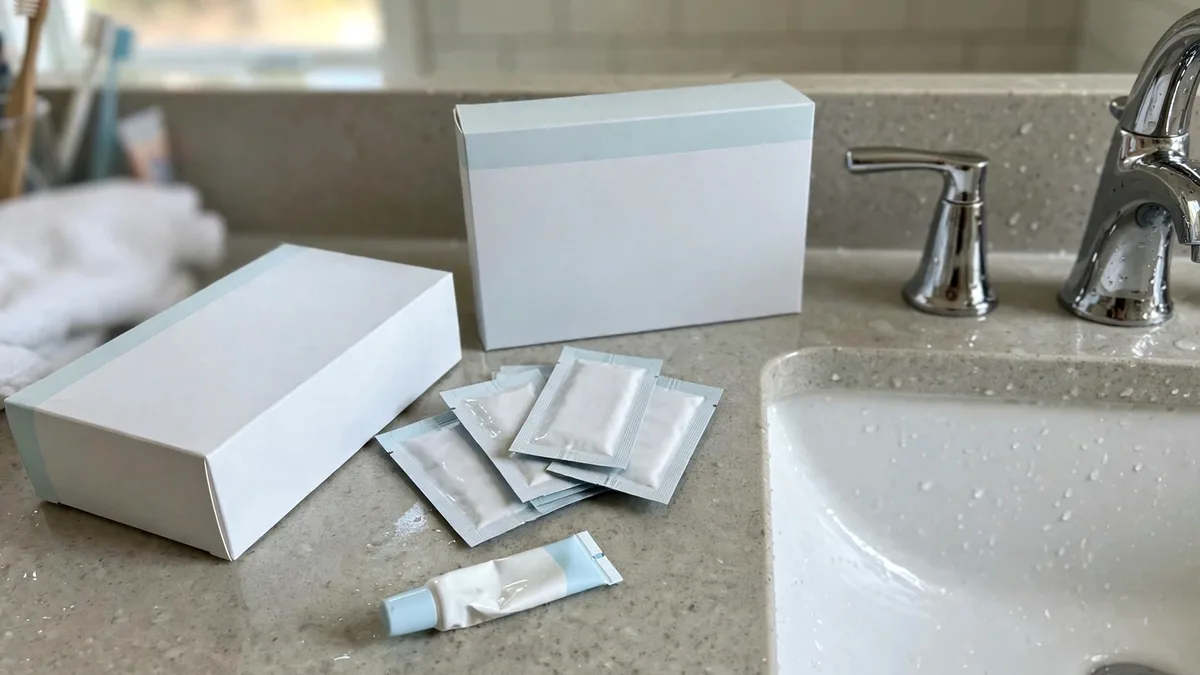
Teeth whitening kits vs whitening toothpaste is the comparison that decides whether your smile actually gets brighter or just feels cleaner. Whitening toothpaste scrubs surface stains away with mild abrasives, and it can only take your teeth back to their natural shade. A whitening kit, by contrast, uses a peroxide gel that lightens the enamel itself, which is why kits can move teeth several shades brighter while toothpaste cannot.
Not every kit is worth buying. The best teeth whitening kits of 2026 balance strength with kindness: enough peroxide to lift stains in a week or two, a gel that stays where you put it, a tray or strip that fits properly, and a formula that does not leave your teeth aching at the touch of cold water. This guide compares the best kits for home use in 2026, judged on whitening power, fit, sensitivity, ease of use and value.
Key Takeaways
- Whitening kits lighten the enamel itself with peroxide, while whitening toothpaste only scrubs surface stains away.
- Strips are the simplest kits to use; trays with gel give the most even coverage; pens are best for small touch-ups.
- Sensitivity is the main side effect: start with a lower-strength gel and skip a day if your teeth ache.
- Most kits show a visible difference in 7 to 14 days of daily use, not in a single session.
- Whitening does not work on crowns, veneers or fillings, so expect uneven results if you have dental work.
How We Picked the Best Teeth Whitening Kits for 2026
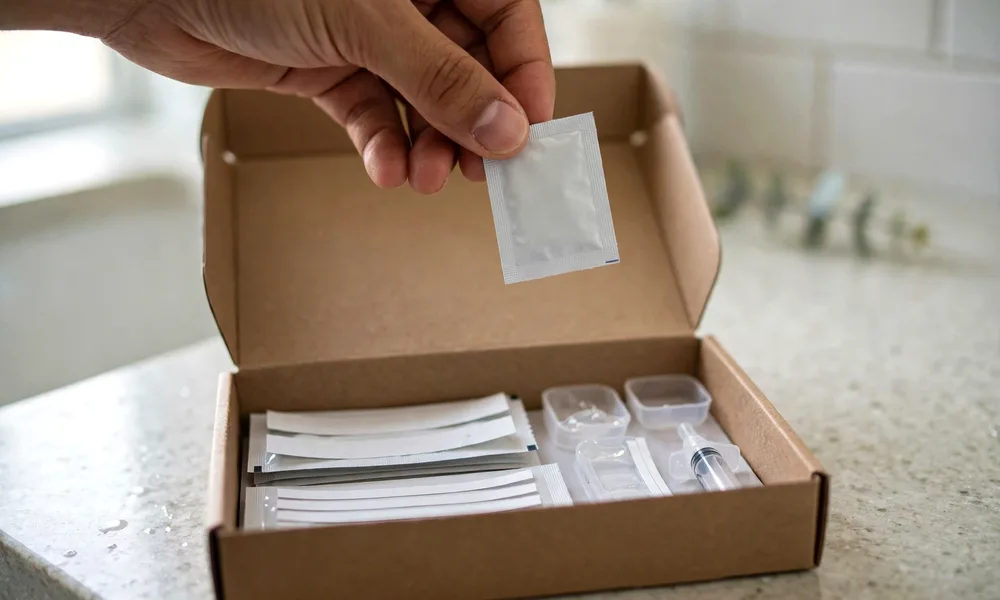
We started with the active ingredient. Hydrogen peroxide and carbamide peroxide are the two whitening agents that actually work, and the concentration decides both the speed and the sensitivity. Every kit below uses a concentration strong enough to show results in two weeks without the burning sensitivity of the strongest gels.
Next we looked at fit, because gel only whitens the teeth it touches. A strip that slips, a tray that gaps at the edges, or a pen that dries patchily all leave stripes and missed spots. We also weighed ease of use and sensitivity, since a kit that whitens brilliantly but makes cold water painful is one you will stop using.
The Best Teeth Whitening Kits of 2026 at a Glance
| Kit | Type | Session | Best for |
|---|---|---|---|
| BrightStrip Pro | Strips | 30 minutes | Best overall |
| GentleGlow Sensitive | Strips, low strength | 30 minutes | Sensitive teeth |
| TrayBright Complete | Gel trays + light | 15 minutes | Even coverage |
| QuickPen Touch-Up | Whitening pen | 5 minutes | Touch-ups |
| ValueWhite Starter | Strips | 30 minutes | Best value |
Best Overall: BrightStrip Pro
The BrightStrip Pro is the kit we would recommend to most people, because it gets the balance right: strong enough to show a clear difference in a week, gentle enough to use daily without wincing. The strips grip firmly and stay in place for the full thirty minutes, so the gel touches every visible tooth evenly instead of sliding onto the gums. The gel is a mid-strength peroxide that lifts coffee and tea stains without the sharp sensitivity of the strongest kits.
Best for Sensitive Teeth: GentleGlow Sensitive
If cold water already makes you wince, the GentleGlow Sensitive is the kit to look at first. It uses a lower-strength gel with added potassium nitrate, the same ingredient that calms sensitive teeth in specialist toothpastes, and the strips are thinner and more flexible, so they hug the teeth without pressing gel into the gum line. The whitening is slower, taking the full two weeks to show its best, but the trade is worth it: most people with sensitive teeth can finish the whole course without a single painful day.
Best for Even Coverage: TrayBright Complete
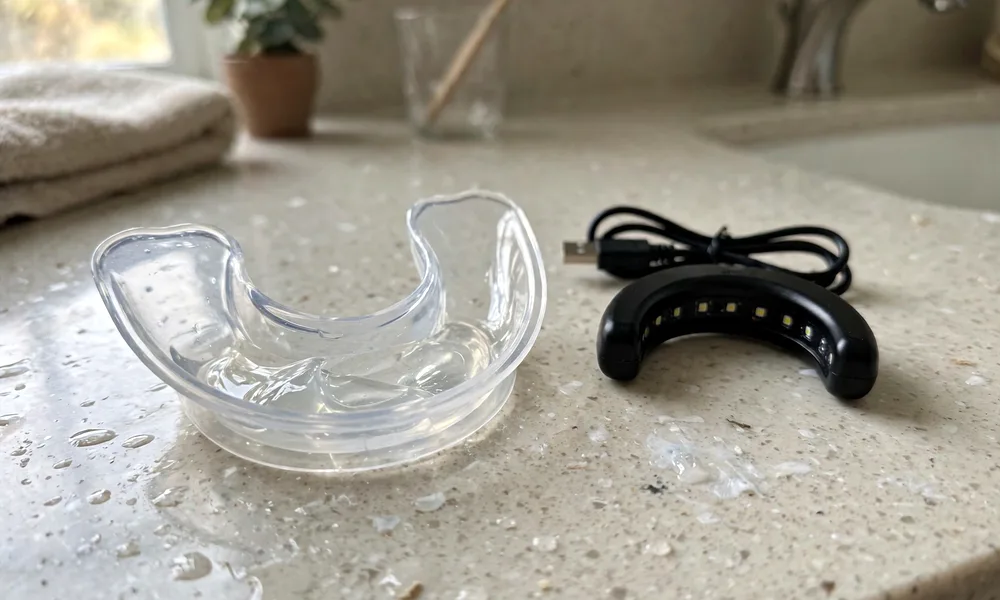
The TrayBright Complete is the kit for people who have tried strips and ended up with a brighter front row and unchanged back teeth. Its mouldable trays soften in warm water and shape to your teeth, so the gel reaches the canines and the edges that strips miss, and the small LED light speeds the gel up so each session takes fifteen minutes instead of thirty. The kit takes more effort to set up than strips, and the trays need cleaning after each use, but the result is the most even whitening of any kit here.
Best for Touch-Ups: QuickPen Touch-Up
The QuickPen Touch-Up is not a full whitening course, and it does not pretend to be. It is a pen that paints a thin layer of gel onto the teeth you can see when you smile, dries in a minute, and takes five minutes of your evening. It is the kit for the week before a wedding, a job interview or a holiday, or for keeping a bright smile topped up between full courses. It will not lift deep stains on its own, but for quick, visible freshening nothing else is as fast.
Best Value: ValueWhite Starter
The ValueWhite Starter is a straightforward strip kit sold for about half the price of the premium brands, and it whitens about as well as they do. The strips are a little less grippy than the best, so you need to press them on carefully and avoid talking during the session, but the gel is a proper mid-strength peroxide and the two-week course delivers a clear, even lift. It is the kit to buy if you are trying whitening for the first time and do not want to spend much to find out whether it suits you.
Strips vs Trays vs Pens: Which Kit Type Suits You?
Strips are the simplest kits and the best starting point for most people. You peel, stick, wait thirty minutes and throw them away, with nothing to clean and nothing to mould. Their weakness is fit: a flat strip misses the edges and back teeth. Trays shape to your mouth and whiten more evenly, but take more effort to mould, fill and clean.
Teeth Whitening Kits vs Whitening Toothpaste
This is the comparison that matters most, because the two products do different jobs. Whitening toothpaste uses mild abrasives and a small amount of peroxide to scrub surface stains off the enamel, and it can only return your teeth to their natural shade. It cannot lighten the enamel itself, so if your teeth are naturally yellowish, no toothpaste will make them white. A kit uses a stronger peroxide gel that penetrates the enamel and breaks down the coloured compounds inside it, which is why kits can move teeth several shades brighter. Our comparison of the best vs worst toothpastes shows how whitening pastes rank, and the honest finding is that the best paste is a maintenance tool, not a whitening treatment.
The practical routine is to use both, in that order. Use a kit for a two-week course to lift the stains and lighten the enamel, then use a whitening toothpaste daily to keep new surface stains from settling. The paste keeps the result; the kit creates it. Do not use a kit every month: two or three courses a year is the sensible limit.
Sensitivity: How to Whiten Without the Ache
Sensitivity is the main side effect of whitening, and it is also the most avoidable. The gel temporarily opens tiny channels in the enamel, which is why cold water, cold air and sweet food can sting during a course. The ache usually fades within a day or two of stopping, and it is a sign to slow down rather than a sign of damage. Start low, use the kit every other day, and brush with a sensitive toothpaste for two weeks before you start.
How to Use a Whitening Kit Properly
Brush and floss first, so the gel touches clean enamel rather than plaque. Dry your teeth with a tissue before you apply strips or trays, because gel slides off wet teeth and pools on the gums. When the time is up, remove the strips or trays, rinse with water, and avoid food and drink for about thirty minutes, since coffee, tea and red wine stain freshly whitened enamel fastest.
A thirty-minute session every day for two weeks whitens more evenly than a single long session, and skipping a day is fine if your teeth need a rest. Keep brushing with a good brush through the course: a clean tooth whitens better than a plaque-covered one, and our guide to the best electric toothbrushes covers the brushes that keep plaque off between courses.
What Whitening Cannot Do
Whitening gel only works on natural enamel. Crowns, veneers, fillings and dentures do not change colour, so if you have dental work on your front teeth, whitening can leave the natural teeth brighter than the repaired ones and the mismatch more obvious. Whitening also cannot fix stains from inside the tooth, such as those caused by medicines or trauma, which need a dentist.

Keeping Your Smile Bright After Whitening
The result of a whitening course lasts for months, but only if you protect it. The biggest enemies are the same stains that darkened your teeth in the first place: coffee, tea, red wine, dark berries and tobacco. Rinsing with water after each cup or glass slows new staining dramatically.
A daily rinse adds protection in the places a brush cannot reach. Mouthwash flows between the teeth and along the gum line, carrying fluoride to the enamel, and a fluoride rinse used away from brushing helps the enamel recover after a whitening course.
Your Teeth Whitening Kit Checklist
- Choose a kit type that fits your life: strips for simplicity, trays for even coverage, a pen for touch-ups.
- Check the peroxide strength and start low if your teeth are sensitive.
- Dry your teeth before applying strips or trays so the gel stays on the enamel.
- Use the kit daily for 7 to 14 days, and skip a day if your teeth ache.
- Avoid coffee, tea and red wine for an hour after each session.
- Maintain the result with a whitening toothpaste and a daily fluoride rinse.
Frequently Asked Questions
How long does teeth whitening last?
A course typically lasts three to six months, depending on how much coffee, tea, red wine or tobacco your teeth meet. Daily brushing and a whitening toothpaste stretch the result.
Do whitening kits damage enamel?
Used as directed, no. The gel temporarily opens tiny channels in the enamel, which is why sensitivity happens, but the enamel remineralises afterwards. Overuse and whitening over damaged teeth are what cause real damage.
Why do my teeth hurt after whitening?
The gel opens channels in the enamel that let cold reach the nerve more easily. The ache usually fades within a day or two. Use a lower-strength kit, whiten every other day, and brush with a sensitive toothpaste for two weeks before your next course.
Can I whiten my teeth if I have fillings or crowns?
Fillings, crowns and veneers will not change colour, so the result can look uneven. Ask your dentist first if you have visible dental work.
Are whitening strips better than trays?
Strips are simpler and easier to use, while trays give more even coverage because they shape to your teeth. Choose strips for a first course and trays if strips leave the edges or back teeth unchanged.
How white will my teeth get?
Most kits lift teeth by two to six shades over two weeks, depending on the starting shade and the stains. No kit can make teeth whiter than their natural enamel allows.
The Bottom Line
Teeth whitening kits beat whitening toothpaste because they lighten the enamel itself, while toothpaste only scrubs surface stains away. The BrightStrip Pro is our pick for most people, the GentleGlow Sensitive is the one for tender teeth, and the TrayBright Complete gives the most even result. Use the kit daily for two weeks, skip a day if your teeth ache, and maintain the result with a whitening toothpaste and a daily rinse.


