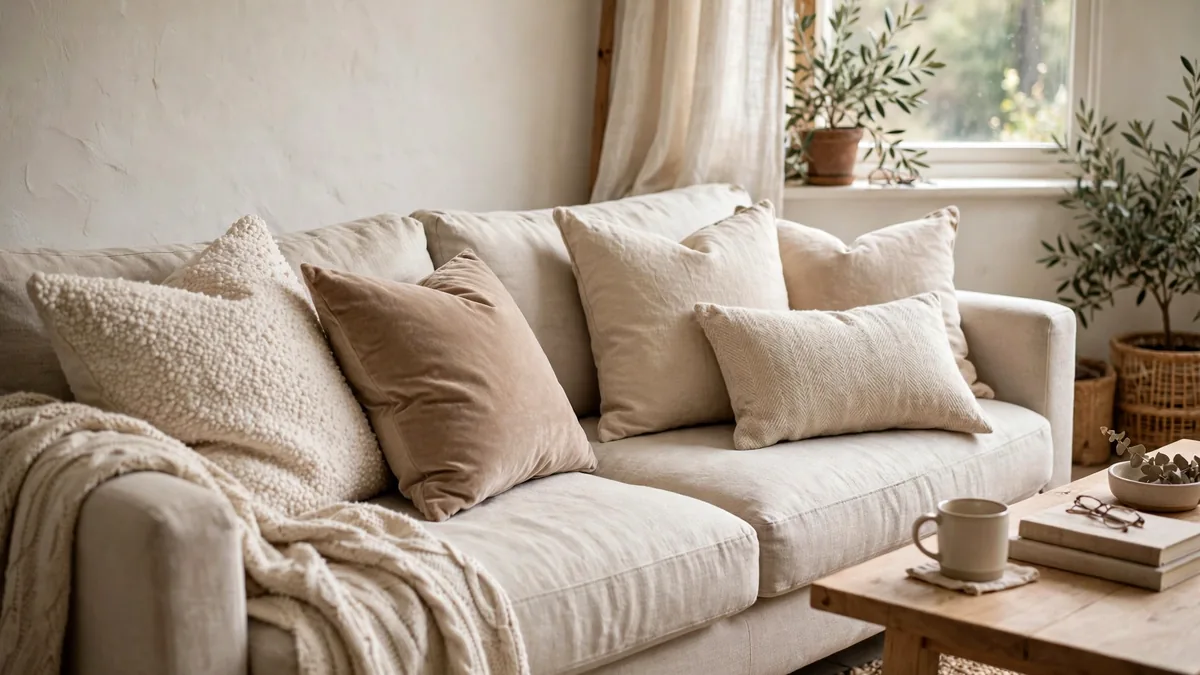
Throw pillows are the smallest change you can make to a room, and they are also the one with the biggest payoff for the money. A plain sofa that looks tired and a little bare can look styled, finished and inviting with three or four well-chosen pillows, and the whole change costs less than a new cushion, let alone new furniture. The best throw pillows in 2026 do more than add colour. They make a sofa comfortable to lean against, they pull the colours of a room together, and they survive being sat on, slept on and fought over by children and pets.
Buying them well matters, because throw pillows are one of the most returned home purchases. The pillow that looked plump in the shop goes flat within weeks, the cover pills after two washes, or the size that seemed right online disappears against the sofa cushions. This guide covers fills, fabrics, sizes, styling and care, so you can buy once and enjoy the result.
Key Takeaways
- Buy the insert one size larger than the cover, usually about five centimetres, so the pillow stays plump instead of sagging.
- Feather and down-blend fills feel the most luxurious and spring back with a shake, while good polyester fibre is the easiest to wash and the best value.
- Removable, machine-washable covers are worth paying extra for in any home with children, pets or red wine.
- Mix three textures, such as linen, velvet and boucle, rather than matching every pillow exactly, for a sofa that looks styled rather than staged.
- A pillow that goes flat, clumps or leaks filling within weeks was underfilled with cheap fibre, and it will not recover.
What Makes a Good Throw Pillow
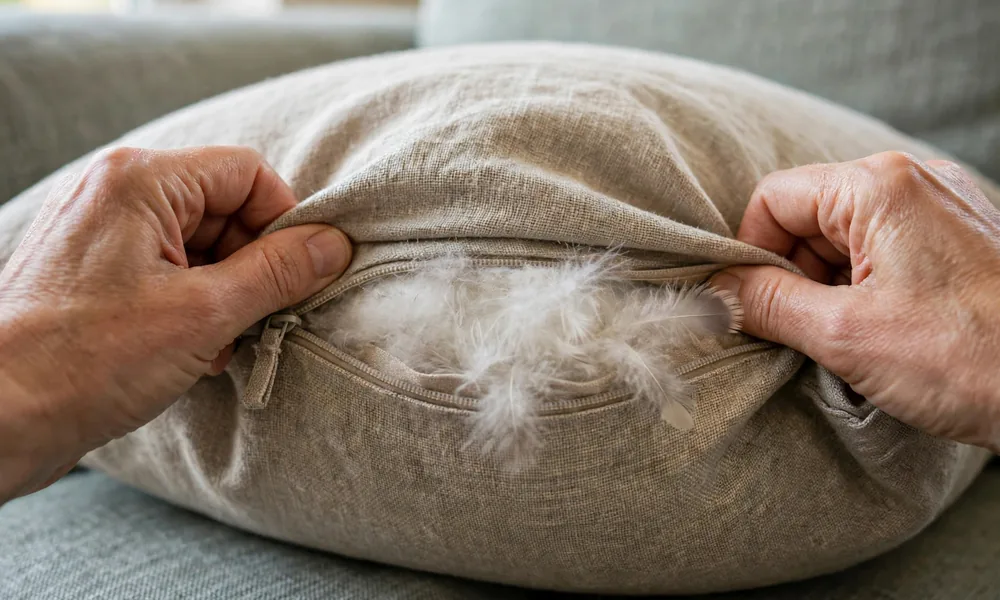
Fill is the first thing to check, and it decides how a pillow feels and how long it lasts. Feather and down-blend fills are the most comfortable: they mould to the body, spring back with a shake, and stay soft for years. Polyester fibre fill is lighter, cheaper and fully washable, and a good-quality version holds its shape well, though it never feels quite as luxurious. The worst pillows use a small amount of low-grade fibre that flattens under the lightest pressure and migrates into lumps, leaving thin, empty corners. Squeeze the pillow in the shop: a good one resists and springs back, while a bad one stays dented. The insert is the filling, not the cover, and our guide to cushion inserts explains why that hidden filling decides comfort and shape more than anything you can see.
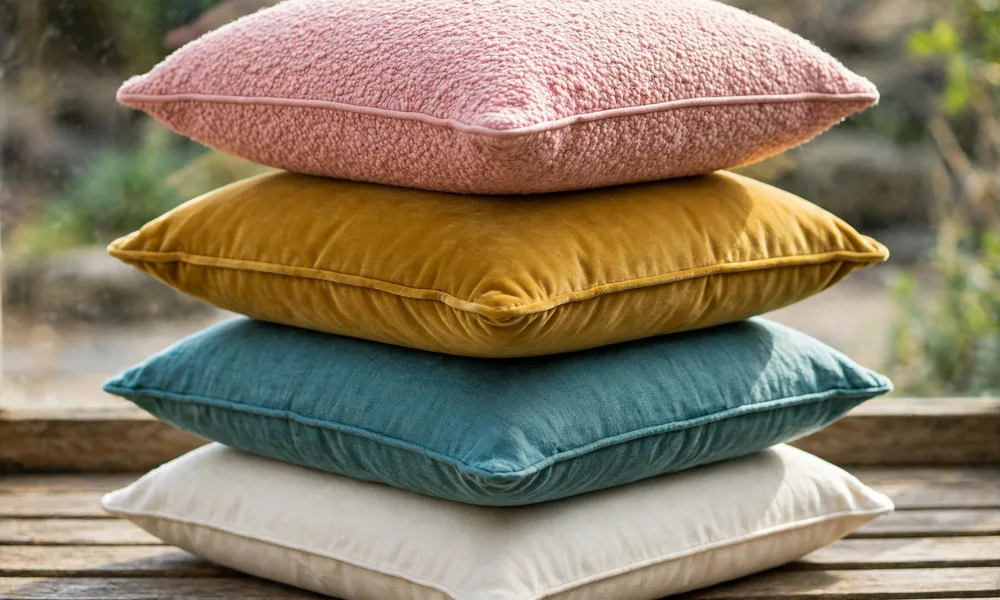
Cover and construction are the second thing, and they decide whether a pillow survives daily use. A good cover uses a tightly woven fabric with strong seams, a hidden zip that runs smoothly, and piping that keeps the edges crisp. Linen breathes and softens with use, velvet adds richness and resists crushing when the pile is short, and boucle brings texture without adding colour. A bad cover uses thin fabric that pills within weeks, a zip that catches or splits, and seams that open at the corners after a few washes. Check the corners before you buy, because that is where cheap pillows fail first. Removable covers are the practical choice, and our guide to cushion covers that survive kids and pets covers the toughest fabrics and the zips that last.
Shape and size are the third thing, and they decide whether a pillow actually works where it sits. A standard square pillow, usually 45 or 50 centimetres, suits most sofas, while a long lumbar pillow supports the lower back on a deep couch or a reading chair. A pillow that is too small disappears against the cushions, and one that is too large overwhelms the seat and ends up on the floor. The best pillows come in several sizes and colours, so you can build a set that fits your furniture rather than buying a single pillow and hoping.
Throw Pillow Fills Compared
The fill shapes almost everything about a throw pillow, from the way it moulds to your head to the way it handles washing. There is no single best fill, only the best fill for your household: children need something washable, and allergy sufferers need something that can go through the machine.
| Fill | Feel | Shape Holding | Washability | Best For |
|---|---|---|---|---|
| Feather and down blend | Soft, moulding, luxurious | Good with regular fluffing | Spot clean or dry clean | Comfort and looks |
| Polyester fibre | Soft, springy, light | Fair to good | Machine washable | Families and pets |
| Memory foam | Firm, supportive | Excellent | Spot clean only | Lumbar support |
| Down alternative microfibre | Soft, cloud-like | Fair | Machine washable | Allergy-friendly comfort |
| Kapok and natural fibre | Soft, breathable | Fair | Spot clean | Natural materials |
Feather and down-blend fills remain the benchmark for luxury, but they need a daily shake to stay plump and do not suit anyone with a feather allergy. Polyester fibre has improved enormously: a dense, high-quality fibre fill holds its shape for a year or more, washes easily, and costs a fraction of feather. If you can only buy one set, buy good polyester and spend the money you save on better covers.
The Main Types of Throw Pillows
Square Pillows
The square pillow is the workhorse of the sofa, and most rooms need two or four of them. A 45-centimetre square suits a two-seater, while a 50-centimetre square suits a three-seater with deep cushions. They prop up a reader, cushion a nap, and anchor a colour scheme. Buy them in pairs for symmetry, or mix two sizes for a more relaxed look.
Lumbar Pillows
A lumbar pillow is long and low, usually about 30 by 50 centimetres, and it fills the gap between your lower back and the seat. On a deep sofa it stops you sliding forward, and it breaks up a row of squares visually, which is why stylists almost always include one. The filling matters more here than anywhere else, because a lumbar pillow that flattens gives no support at all.
Outdoor Throw Pillows
Outdoor throw pillows look like indoor ones but are built differently, with fade-resistant acrylic covers and quick-dry fills that do not hold water. An indoor pillow left outside will fade, mildew and fall apart within a season. Bring outdoor pillows in for winter, even the outdoor ones, and they will last twice as long.
How to Style Throw Pillows on a Sofa
Styling throw pillows is simpler than it looks once you know the formula. Start with the largest pillows at the corners, work inward with smaller ones, and finish with a lumbar pillow in the centre. Odd numbers look more relaxed than even ones: three pillows on a two-seater and five on a three-seater is a good starting point. Leave a gap between the pillows and the arms of the sofa so the arrangement breathes, and do not fill every centimetre of the sofa, because a sofa covered in pillows is a sofa nobody can sit on.
Colour is where most people hesitate, and the rule is simple: pick one colour from the room and repeat it, then add one contrast. If your rug has a rust stripe, a rust pillow ties the room together. Pattern works the same way: one pattern, such as a stripe, plus solid colours in matching tones, looks deliberate. Three competing patterns look like a jumble sale.
Texture does more work than colour in a neutral room. A linen pillow, a velvet pillow and a boucle pillow in the same shade look rich and layered, while three smooth cotton pillows in the same shade look flat. Finish the look with a soft layer: our guide to the cosiest throw blankets for every room shows how a blanket draped over one arm completes the arrangement.
Sizes and How Many You Need
Size is the mistake people make most often, and it is the easiest to avoid with a tape measure. Measure the height of your sofa back and the depth of the seat before you shop. A pillow should be about two-thirds the height of the sofa back: on a standard sofa with a 55-centimetre back, a 45-centimetre pillow is about right. Smaller pillows suit low modern sofas.
A two-seater takes two or three pillows, a three-seater takes three to five, and a corner sectional takes five to seven spread across both sides. More than that and the pillows become clutter that gets piled on the floor every evening. Mixing sizes looks better than matching them: a 50-centimetre square at each corner, a 45-centimetre square inside it, and a lumbar pillow in the middle gives a sofa shape and rhythm.
Care and Cleaning
Throw pillows are low maintenance, not no maintenance, and a little regular care keeps them plump and fresh. Fluff the pillows daily with a firm shake, rotate them weekly so wear stays even, and air them outside on a dry day when you can. Wash removable covers as the label directs, and wash whole polyester pillows on a gentle cycle, drying them thoroughly with a couple of clean tennis balls to break up clumps.
Feather pillows need different care. Never machine wash a feather insert unless the label explicitly allows it, because wet feathers clump and can mildew. Air them regularly, spot clean small marks, and use a washable cover as the first line of defence. Stains need fast action: blot, never rub. Keep a spare cover in a cupboard, and a spill becomes a laundry load instead of a shopping trip.
Throw Pillow Buying Checklist
- Measure your sofa back and seat depth, and buy pillows about two-thirds the height of the back.
- Choose the fill for your household: feather for luxury, washable polyester for children and pets.
- Buy the insert one size larger than the cover so the pillow stays plump.
- Check for a hidden zip, strong corner seams and piping before you buy.
- Pick removable, washable covers, and keep a spare set for spills.
- Mix three textures and one pattern with solid colours, and stop at five pillows on a three-seater.
Frequently Asked Questions
How many throw pillows should I put on a sofa?
Two or three on a two-seater and three to five on a three-seater. More than that looks cluttered and the extra pillows end up on the floor every evening. Odd numbers look more relaxed than even ones.
What size throw pillow is best for a standard sofa?
A 45-centimetre square suits most two-seaters and a 50-centimetre square suits most three-seaters. Measure your sofa back first: the pillow should be about two-thirds of the back height.
Should the insert be bigger than the cover?
Yes, by about five centimetres. A 50-centimetre insert in a 45-centimetre cover stays plump and springs back, while an insert the same size as the cover looks flat within weeks.
Are feather or polyester throw pillows better?
Feather feels more luxurious and moulds to the body, but it needs fluffing and cannot be machine washed. Polyester is washable, cheaper and allergy-friendly, and a dense, good-quality fibre fill holds its shape well. Choose for your household, not for the label.
How do I stop throw pillows going flat?
Fluff them daily, buy a generously filled insert, and use an insert one size larger than the cover. A pillow that goes flat within weeks was underfilled with cheap fibre and will not recover.
Can I use indoor throw pillows outside?
Not for long. Indoor covers fade and mildew outdoors, and indoor fills hold water. Outdoor pillows use fade-resistant acrylic covers and quick-dry fills, and even those last longer if you bring them in for winter.
The Bottom Line
The best throw pillows are the ones that still look plump, feel comfortable and keep their colour after a year of real life. For most homes that means a dense, washable fill, a removable cover in a hard-wearing fabric, and an insert one size larger than the cover. Buy two squares and a lumbar pillow, mix three textures, and let one colour from the room tie it together.