
What Is Turkish Coffee in 2026: The Cezve, the Foam and the Grounds
Turkish coffee is coffee brewed the slow, old way: very finely ground coffee, cold water and a little sugar simmered together in a small long-handled pot called a cezve, also known as an ibrik, until a dark foam rises and the coffee is poured unfiltered into a small cup, grounds and all. It is not a roast, a bean or a brand. It is a method, and it is one of the oldest ways of making coffee that is still used every day, from Istanbul kitchens to coffee houses across the Middle East, North Africa and the Balkans.
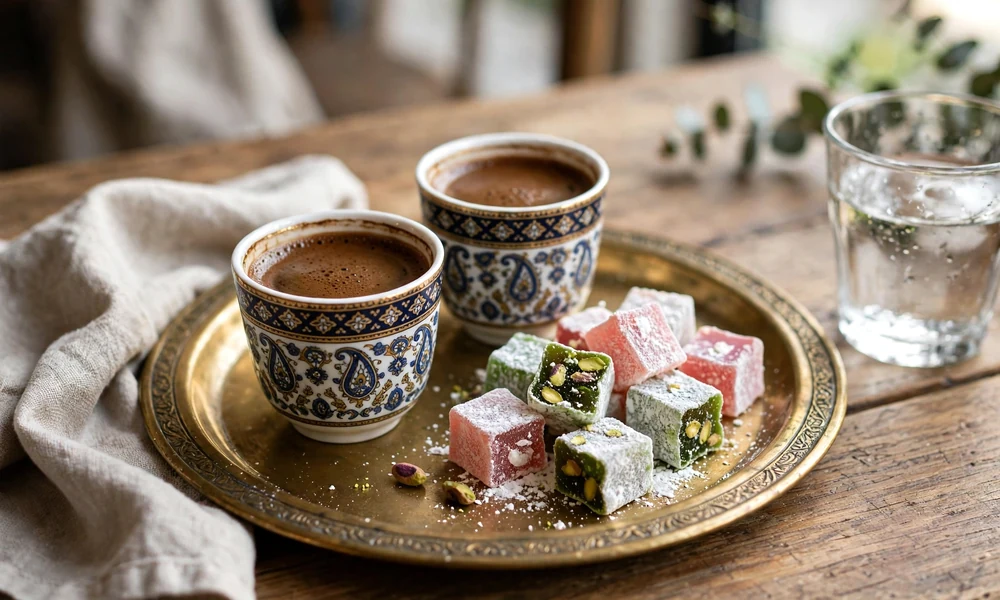
The cup it makes is unlike any other. It is small, strong and thick, with a layer of foam on top and a soft bed of grounds at the bottom that you leave behind. The flavour is intense, sweetened before brewing rather than after, and served slowly, often with a glass of water and something small and sweet on the side.
5 Key Takeaways
- Turkish coffee is a brewing method, not a bean: finely ground coffee simmered unfiltered in a cezve, with the grounds left in the cup.
- The grind must be powder-fine, finer than espresso, so it suspends in the water and settles gently instead of feeling gritty.
- Foam matters most: a good cup has a thick, dark foam on top, made by heating slowly and never letting the coffee boil hard.
- Sugar goes in before brewing, never after, because stirring a finished cup would break the foam and stir up the grounds.
- Choose a small copper or brass cezve that matches how many cups you make, and serve the coffee in small cups with water on the side.
What Turkish Coffee Actually Is
Turkish coffee starts with coffee ground to a powder so fine it feels like flour between your fingers. That powder is stirred into cold water in a cezve, a small pot with a long handle and a narrow neck, and heated very gently over a low flame until it foams. The coffee is never filtered. When the foam rises to the rim, the pot comes off the heat, the foam is spooned into the cups first, and then the coffee is poured slowly over it. The grounds sink to the bottom of each cup as the coffee sits for a minute, and the last sip, the thick sludge at the bottom, is left behind.
The result is a cup of about 60 to 70 millilitres, much smaller than a mug of filter coffee, and much stronger. Because the grounds stay in the water for the whole brew, the coffee extracts a great deal of flavour and body, and because there is no filter, the natural oils stay in the cup too. That is why Turkish coffee tastes so rich and heavy, and why it is served in small amounts: a little goes a long way.
The Cezve: The Pot That Makes It Turkish
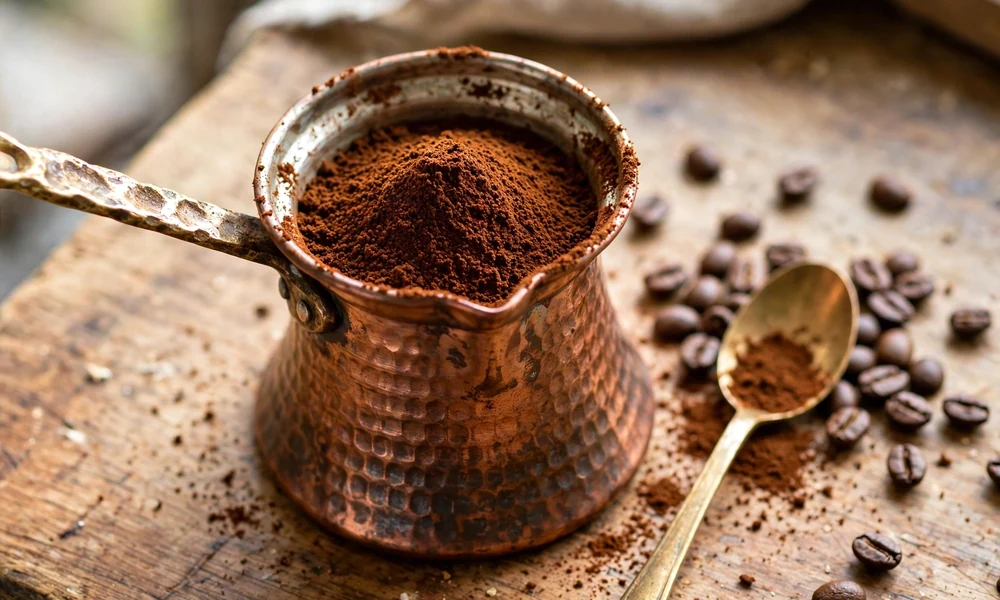
The cezve is the one piece of equipment you cannot replace and still call the result Turkish coffee. It is a small pot, usually copper or brass, with a long handle that stays cool enough to hold, a wide base that catches the heat, and a narrow neck that helps the foam build and rise. The spout is small and pinched, so you can pour slowly without disturbing the grounds.
Size matters more than most buyers expect. A cezve only works well when it is filled to near its capacity, because the foam needs the narrow neck to climb. A three-cup cezve, about 240 millilitres, suits one or two people; a six-cup cezve suits a small group. Buying a large cezve for a single cup is the most common mistake, and it produces flat, foamless coffee. Copper is the traditional choice because it heats evenly and responds quickly when you lift it off the flame. Brass is a close second, a little heavier and slower.
The Grind: Powder-Fine or Nothing
The grind is the second thing that makes Turkish coffee what it is, and it is the one most home brewers get wrong. Turkish coffee needs the finest grind of any brewing method, finer than espresso, about the texture of powdered sugar. At that fineness the coffee suspends in the water instead of sinking straight to the bottom, extracts evenly in the short brew, and settles into a soft, fine sediment rather than a gritty mouthful.
Most ordinary grinders cannot reach this fineness. Blade grinders chop unevenly and leave a mix of powder and chunks, which is why Turkish coffee made with a blade grinder often tastes both bitter and weak at once. A good burr grinder with a Turkish setting can do it, and a hand mill designed for Turkish coffee can do it very well, slowly. Our guide to the best coffee grinders for every brewing method explains which grinders reach a true Turkish fineness and which stop at espresso. If yours cannot go fine enough, buy pre-ground Turkish coffee from a roaster who grinds it fresh, and use it within two weeks, because powder-fine coffee goes stale fast. For beans, a fresh medium-dark Arabica is the usual choice; our guide to the best coffee beans and how to choose them covers origins and roasts in full.
How Turkish Coffee Is Made, Step by Step
Start with cold, fresh water, about 60 millilitres per cup, and a heaped teaspoon of finely ground coffee per cup. Put the water in the cezve first, add the coffee, and add sugar now if you want it: none for plain, one level teaspoon per cup for medium sweet, two for sweet. Stir gently until the coffee is wet through, then stop stirring. From this point on, do not stir again.
Heat the cezve over the lowest flame you can manage. The coffee should take three to four minutes to reach a foam, not one. Watch it closely, because the foam rises fast at the end. Just before it boils, when the dark foam has risen to the rim, lift the cezve off the heat. Spoon a little foam into each cup first, then return the cezve to the heat for a few seconds until the foam rises again, and pour the coffee slowly down the side of each cup so the foam stays on top. Let the cups sit for a minute so the grounds settle, then drink slowly, in small sips, and stop before the last mouthful. Serve each cup with a small glass of water.
Turkish Coffee Compared
| Method | Grind | Filter | Cup Size | Best For |
|---|---|---|---|---|
| Turkish coffee | Powder-fine | None, grounds in cup | 60 to 70 ml | Slow, strong, small cups |
| Espresso | Fine | Metal basket, pressure | 30 to 60 ml | Fast, intense shots |
| Moka pot | Fine | Metal filter, steam | 60 to 90 ml | Strong stove-top coffee |
| French press | Coarse | Metal mesh plunger | 240 ml | Full, heavy mugs |
| Pour-over | Medium | Paper filter | 240 ml | Clean, bright cups |
The table shows why Turkish coffee is not interchangeable with its neighbours. Espresso is also small and strong, but it is forced through a puck under pressure and leaves the grounds behind. A moka pot, covered in our guide to the best moka pots for stove-top coffee, also brews on the stove with finely ground coffee, but steam pushes the water up through the grounds into a separate chamber, so the cup is filtered and clear. Turkish coffee is the only common method where the grounds stay in the cup.
Choosing a Cezve and a Cup
When you buy a cezve, start with size, then material, then handle. A two- or three-cup copper cezve with a tin lining is the best first buy for most people, and it costs far less than an espresso machine. Check that the base sits flat on your hob, that the handle is long and firmly attached, and that the inside is smooth with no rough seams where grounds can collect. Avoid cezves with a non-stick coating inside: the coating can flake under direct heat, and it is not traditional.
Traditional cups are small, about 60 to 90 millilitres, with a thin rim; ordinary espresso cups work well too. A gas flame is ideal for heating, because you can control it instantly.
Common Mistakes and How to Avoid Them
The most common mistake is boiling the coffee. A hard boil breaks the foam, burns the coffee and makes the cup bitter. If the coffee boils over, it is ruined: clean the cezve and start again. The second mistake is stirring after the coffee is on the heat, which breaks the foam as it forms and stirs the grounds into suspension so they never settle properly. Stir once, before heating, and then leave it alone.
The third mistake is the wrong grind: coffee ground for a drip machine is far too coarse, leaving a weak, gritty cup. Sugar is the last easy mistake: adding it after brewing means stirring a finished cup, which breaks the foam, so decide the sweetness before you start.
Your Turkish Coffee Checklist
- Buy a cezve sized to the cups you actually make, copper or brass with a lined interior, and a long, firmly attached handle.
- Use powder-fine coffee, finer than espresso, freshly ground if your grinder can reach it, or pre-ground from a roaster and used within two weeks.
- Measure about 60 millilitres of cold water and a heaped teaspoon of coffee per cup, and add sugar before heating, never after.
- Heat low and slow for three to four minutes, lift the pot just before it boils, spoon foam into the cups first, then pour slowly.
- Let the cups sit for a minute so the grounds settle, drink slowly, and leave the last thick mouthful behind.
- Serve with a glass of water and something small and sweet, and clean the cezve with hot water only, no soap on the lining.

Turkish Coffee FAQs
Is Turkish coffee stronger than espresso?
Turkish coffee is comparable in strength to espresso, and can taste stronger because the grounds stay in the cup. A small cup has roughly the same caffeine as a single espresso shot.
Do you eat the grounds at the bottom?
No. The grounds settle to the bottom and the last mouthful is left in the cup. Drinking the sludge is not part of the method, and it tastes bitter and gritty.
Can I make Turkish coffee without a cezve?
A very small saucepan can work in a pinch, but the wide neck makes a good foam hard to build and the pour hard to control. A proper cezve is inexpensive and makes a real difference.
What beans are best for Turkish coffee?
A fresh medium-dark Arabica is the usual choice. Robusta can be added in small amounts for body, but a coffee that is mostly Robusta can taste harsh.
Why does my Turkish coffee have no foam?
The usual causes are a cezve that is too large for the amount of coffee, heat that is too high, coffee that is stale, or a grind that is too coarse. Use a smaller pot, lower heat, and fresh powder-fine coffee.
Is Turkish coffee the same as Greek coffee?
The method is essentially the same: finely ground coffee simmered unfiltered in a small pot and served in small cups. The name changes with the country, but the brew is the same tradition.
Bottom Line
The best Turkish coffee in 2026 is the slow cup: powder-fine coffee, cold water and sugar simmered gently in a small copper cezve until the foam rises, poured unfiltered into a small cup and drunk slowly, grounds left behind. Buy a cezve that matches your cups, grind as fine as you can, heat low and never let it boil, and serve it with water and something sweet. Verdict: a small copper cezve and fresh powder-fine coffee are all you need, and the foam on top is the sign you got it right.


