Your first car is one of the biggest purchases you will ever make, and the best used cars for first-time buyers in 2026 prove that you do not need a new car budget to get a great one. A well-chosen used car costs a fraction of the new price, loses value far more slowly, and still delivers the reliability, safety and comfort a new driver needs. The trick is knowing which cars age gracefully and which ones turn into repair bills, and that is exactly what this guide covers.
Buying used for the first time can feel overwhelming. There are thousands of cars on the market, sellers who promise the earth, and a long list of things that can go wrong. But the process is straightforward once you know the rules. Set a realistic budget that leaves room for insurance and a first service, focus on models with proven reliability records, and never skip the inspection. Follow those steps and you will drive away in a car you love, not a car you regret.
Key Takeaways
- A used car typically costs 40 to 60 percent less than the same model new, and it loses value far more slowly from the day you buy it.
- The Toyota Corolla, Honda Civic and Mazda 3 lead the class for first-time buyers on reliability, safety and running costs.
- Budget around $8,000 to $15,000 for a strong first used car, plus roughly $1,500 a year for insurance, servicing and routine maintenance.
- A pre-purchase inspection costs $150 to $250 and catches roughly 9 out of 10 hidden problems before you hand over any money.
- Never buy a used car without a vehicle history report and a test drive that includes motorway speeds, tight turns and a cold start.
Why Buying Used Makes Sense for Your First Car
Depreciation is the single biggest reason to buy used. A new car loses roughly 20 percent of its value in the first year and around half within three years. That means a three-year-old car with low mileage can cost half the new price while still feeling nearly new, with most of its life ahead of it. For a first-time buyer, that saving is the difference between a basic car and a genuinely good one.
Insurance is the second reason. First-time drivers face the highest premiums in the market, and insuring a cheaper used car costs far less than insuring a new one. A smaller, older car with a modest engine and a strong safety rating can cut hundreds of dollars a year from your premium, and that saving repeats every year you own the car.
The Best Used Cars for First-Time Buyers
Toyota Corolla
The Corolla has been the default sensible choice for decades, and for good reason. It is famously reliable, cheap to service and remarkably frugal on fuel, especially in hybrid form. A three to five-year-old Corolla typically costs $12,000 to $17,000, and owners routinely report trouble-free driving well past 150,000 miles. Insurance sits in the lower groups, and the safety equipment on recent models includes automatic emergency braking and lane keeping as standard.
Honda Civic
The Civic is the Corolla’s great rival and the slightly sharper choice. It is just as reliable, with a reputation for engines that last for decades, but it adds a more engaging drive, a roomier interior and a smarter cabin. Used prices run a little higher than the Corolla, typically $13,000 to $18,000 for a good three to five-year-old example, and resale values are among the strongest in the class.
Mazda 3
The Mazda 3 is the pick for buyers who want their sensible car to feel special. Its interior quality embarrasses cars costing far more, its handling is the sharpest in this group, and its reliability record has improved steadily over the past decade. Used prices sit between $11,000 and $16,000 for a three to five-year-old car, making it strong value for the quality on offer.
Hyundai i30 and Kia Ceed
These Korean siblings offer the best warranty story in the used market. A car that started life with a five or seven-year warranty may still have cover remaining when you buy it used, and that is a safety net no rival can match. Prices are competitive too, typically $10,000 to $15,000 for a good example, and equipment levels are generous, with touchscreen infotainment, reversing cameras and heated seats often included.
Volkswagen Golf
The Golf remains the benchmark hatchback for a reason. It is refined, comfortable, practical and available with a wide range of engines, from frugal diesels to punchy petrols. Used prices range from $11,000 to $17,000 depending on age and specification, and there are thousands on the market, so finding the right one is easy.
Comparison Table: Best First Used Cars at a Glance
| Model | Typical Price (3–5 yrs) | Fuel Economy | Reliability | Best For |
|---|---|---|---|---|
| Toyota Corolla | $12,000 – $17,000 | 50–55 mpg | Excellent | Lowest running costs |
| Honda Civic | $13,000 – $18,000 | 45–50 mpg | Excellent | Best all-rounder |
| Mazda 3 | $11,000 – $16,000 | 42–48 mpg | Very good | Premium feel |
| Hyundai i30 / Kia Ceed | $10,000 – $15,000 | 42–48 mpg | Very good | Best warranty |
| Volkswagen Golf | $11,000 – $17,000 | 45–55 mpg | Good | Comfort and refinement |
| Toyota Yaris | $9,000 – $13,000 | 55–60 mpg | Excellent | Tightest budget |
How Much Should a First-Time Buyer Spend?
The honest answer is less than you think. A budget of $8,000 to $15,000 buys a strong, reliable car with plenty of life left, and spending more mainly buys you a newer plate rather than a better car. The sweet spot is a car between three and five years old, where the steepest depreciation has already happened but the car still feels modern and well equipped.
If you are weighing electric options too, the best electric cars for first-time buyers covers the affordable EVs that now make sense for new drivers, while the best compact cars for first-time buyers rounds up the smallest, easiest cars to park and insure. Comparing all three guides side by side is the fastest way to find the car that fits your life.

The Test Drive That Tells You Everything
A proper test drive takes at least 30 minutes and covers more than a gentle loop around the block. Start with a cold engine, because a car that starts roughly when cold is hiding problems that disappear once it warms up. Listen for rattles, squeaks and grinding noises in the first few minutes, and watch the dashboard for warning lights that stay on after startup.
Drive on different roads. Take the car up to motorway speed and feel for vibrations through the steering wheel, which often point to worn tyres or suspension problems. Drive slowly over speed bumps and listen for clunks from underneath. Try tight turns in a car park and feel for clicking or grinding from the front wheels, a classic sign of worn drive joints. Test the brakes firmly from moderate speed and check that the car stops in a straight line without pulling to one side.
Paperwork and History Checks You Must Not Skip
A vehicle history report is non-negotiable. It reveals outstanding finance, previous accident damage, mileage discrepancies and whether the car has ever been written off or stolen. The report costs $25 to $40 and takes minutes to run, yet it is the single most effective fraud check available to a buyer. Never buy a car whose seller refuses a history check.
Service history matters just as much. A car with a full dealer or specialist service record has been looked after, and the stamps tell you exactly when the oil, filters and brakes were last changed. A missing service history does not automatically mean a bad car, but it does mean you should pay less and inspect more carefully. Ask for receipts for any major work, and be suspicious of a car whose history stops abruptly.
Checklist: Your First Used Car Purchase
- Set your total budget first, including insurance, tax, a first service and a $500 buffer for surprises.
- Run a vehicle history report before you travel to see the car, and walk away from finance, theft or write-off markers.
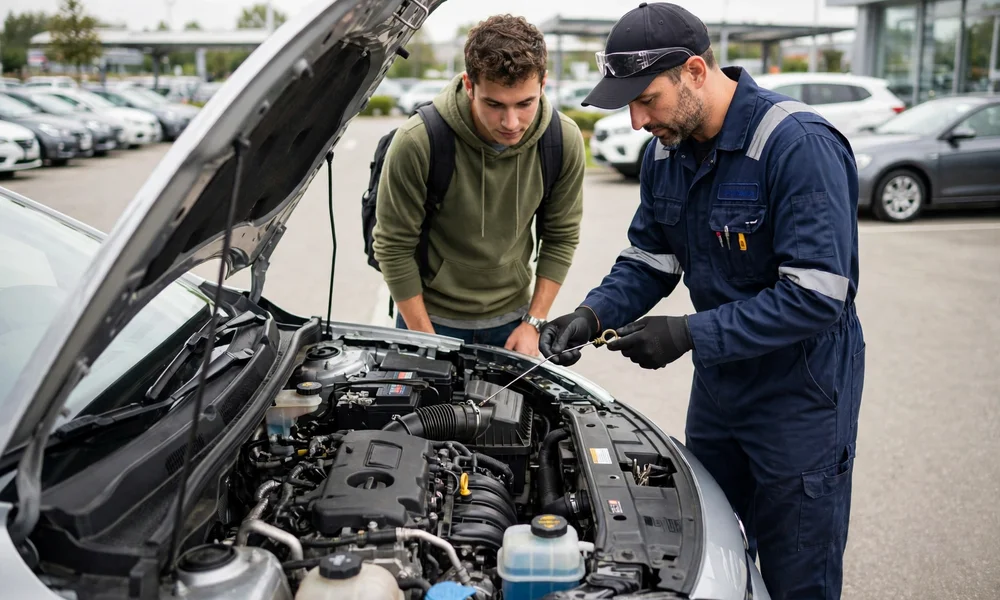
- Book a pre-purchase inspection with an independent mechanic and treat the $150 to $250 cost as part of the purchase price.
- Test drive for at least 30 minutes, including a cold start, motorway speeds, tight turns and a full check of every switch and feature.
- Check the service history, matching tyres, even panel gaps and the spare wheel, and note every fault for negotiation.
- Never pay in full before you have seen the documents, confirmed the seller’s identity and agreed the price in writing.

Frequently Asked Questions
What is the best age for a first used car?
Three to five years old is the sweet spot. The car has lost its steepest depreciation, it still feels modern and well equipped, and most of its reliable life is ahead of it. Cars older than eight years can still be great buys, but they need more careful inspection and a bigger maintenance budget.
Should I buy from a dealer or privately?
Dealers cost more but usually offer a warranty, a proper inspection and the right to return the car if something is seriously wrong. Private sellers are cheaper but offer no comeback, so a private purchase needs a more thorough inspection. For a first-time buyer, a reputable dealer or a private sale with a full inspection are both sensible routes.
How much should I budget for insurance as a first-time driver?
Expect $1,200 to $2,500 a year depending on your age, location and car. Smaller engines, strong safety ratings and cars in lower insurance groups cost the least to cover. Adding a named experienced driver to your policy and choosing a higher excess can both reduce the premium.
Is a hybrid a good first used car?
Yes, for most buyers. A used hybrid costs very little more to run than a petrol car and saves a meaningful amount on fuel, especially in city driving, as our guide to the best hybrid cars for first-time buyers explains. Just make sure to get a hybrid battery health check before you buy, and favour models with strong reliability records and remaining battery warranty where possible.
What mileage is too high for a used car?
There is no single number. A well-maintained car with 120,000 miles is often a better buy than a neglected one with 60,000 miles. Focus on condition and service history rather than the odometer, and be cautious only when high mileage comes with missing records or signs of hard use.
Can I negotiate the price of a used car?
Almost always. Private sellers typically expect some negotiation, and dealers have room to move too, especially on cars that have been listed for several weeks. Use every fault the inspection found as leverage, and be prepared to walk away. The best negotiating tool a buyer has is the willingness to leave and buy a different car.
Bottom Line
The best used cars for first-time buyers in 2026 share the same qualities: proven reliability, affordable insurance, sensible running costs and enough safety equipment to look after a new driver. The Corolla, Civic and Mazda 3 lead the field, with the Hyundai i30, Kia Ceed and Golf close behind, and the Yaris waiting for buyers on the tightest budgets. Any of them will serve a new driver well for years.
The car matters less than the process. Set a realistic total budget, choose a model with a strong record, run the history check, pay for the inspection and take a proper test drive. Do those five things and the odds are overwhelmingly in your favour. Your first car should be the start of your driving life, not a lesson in repair bills, and a careful purchase is what makes the difference.