A blanket is the layer you reach for without thinking, and it decides whether the night feels warm, clammy, or cold by three in the morning. It is the simplest piece of bedding you own, yet it does more work than almost anything else on the bed: it traps the warmth your body gives off, lets just enough of it escape, and stays comfortable for eight hours without waking you. A good blanket does all of that so quietly that you forget it is there. A bad one makes itself known all night, sliding off the bed, bunching around your feet, or leaving you sweating under a layer that never breathes.
The difference between the best and the worst blankets in 2026 is not mainly about price. The best blankets are the ones whose fibre, weight, and weave suit your bedroom and the way you sleep, with a finish that survives washing without pilling or going flat. The worst are the ones that look soft in the shop and turn thin, scratchy, or misshapen within a season. This comparison puts both sides head to head, so you can tell them apart before you buy. If you are weighing the thicker layer above the blanket too, our guide to the top comforters for every sleeper in 2026 covers the warmer option for cold bedrooms.
Key Takeaways
- A good blanket traps warm air without trapping sweat, because breathable fibres are what keep you warm and dry at the same time.
- Wool is the warmest fibre for its weight and the best choice for cold bedrooms, while cotton suits warm rooms and year-round use.
- Weighted blankets calm restless sleepers, but only when the weight is about a tenth of your body weight and the filling is evenly stitched.
- Thin polyester blankets are the worst value of all, because they pill within weeks, hold static, and offer almost no real warmth.
- Wash a blanket on a gentle cycle and dry it on low heat, because harsh washing is what kills softness long before the fibre wears out.
What Makes a Blanket Good or Bad
Fibre is the first thing to check, and it matters more than brand, colour, or price. Natural fibres such as wool and cotton breathe, which means they let moisture escape while still holding warm air close to your body. Cotton is cooler, lighter, and easier to wash, which suits warm bedrooms and people who sleep hot. Synthetic fibres can work well when they are thick and well made, but thin polyester and cheap acrylic trap heat, build up static, and feel clammy against the skin. Get the fibre wrong and no amount of thickness will save the blanket, because the material is the problem, not the weight.
Weight is the second thing, and it decides whether the blanket feels like comfort or like a burden. A good blanket has enough weight to drape properly and stay where you put it, without pressing down on your chest or trapping your legs. The right weight depends on the season and the room: a light cotton blanket suits summer, a medium wool blanket suits most of the year, and a heavy blanket belongs in a cold bedroom. Weighted blankets are a special case, and they only work when the weight is spread evenly in stitched squares, so check the stitching before you buy.
The weave and finish are the third thing, and they decide how the blanket feels after a year of use. A tight, even weave holds its shape through dozens of washes, while a loose weave stretches, sags, and lets the filling shift. The best blankets have finished edges that stay flat and a surface that stays soft instead of pilling into hard little balls. Pilling is the clearest sign of a cheap blanket, because it starts within weeks and never stops.
The Best Side: Blankets That Earn Their Place
Wool blankets are the best choice for cold bedrooms, and the warmest option that still breathes. The best of them are made from pure wool or a high wool blend, with a tight weave that holds warmth without feeling heavy. Wool regulates temperature better than any other fibre, warming you when the room is cold and cooling you when it warms up, and it resists odours naturally. A good wool blanket can last for decades if you wash it gently, which makes it one of the best value purchases in the whole bedroom.

Cotton blankets are the best choice for warm rooms and for people who sleep hot. Cotton breathes easily, feels cool against the skin, and washes without fuss, which makes it the most practical blanket for year-round use. The best cotton blankets use a waffle or cellular weave, which traps air in small pockets for warmth while staying light. The main drawback is warmth: a cotton blanket alone is not enough for a cold winter bedroom, so pair it with a heavier layer when the temperature drops.
Fleece blankets are the best choice for anyone who wants instant softness at a fair price. The best fleece is thick, dense, and double-sided, with a plush surface that feels warm the moment it touches you. Good fleece washes well, dries fast, and never needs ironing, which makes it ideal for children, pets, and everyday use. Look for a heavyweight fleece with bound edges, because thin fleece goes flat and pills within weeks.
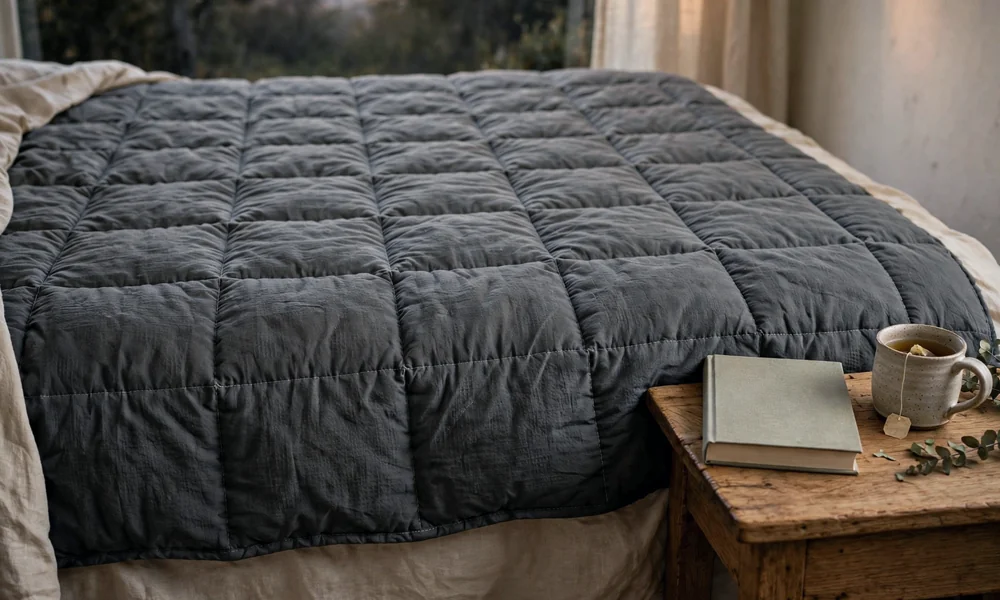
Weighted blankets are the best choice for restless sleepers who like the feeling of being gently held. The best of them use evenly stitched squares filled with glass beads, so the weight stays spread across your whole body instead of pooling at your feet. A weight of about a tenth of your body weight is the right starting point, and the blanket should cover your body without hanging over the sides of the bed. Many people find the gentle pressure helps them fall asleep faster and wake up less often during the night.
The Worst Side: Blankets to Avoid
Thin polyester blankets are the worst value in bedding, because they fail in every way that matters. They look soft and fluffy on the shelf, then go flat within a few washes, until the blanket is little more than a thin sheet with a fuzzy surface. The fibre pills into hard little balls, builds up static that crackles every time you move, and traps heat so you wake up sweating. Spend the same money on one decent cotton or fleece blanket instead, and you will feel the difference on the first night.
Blankets that are too heavy for the sleeper are the worst kind of mismatch, because the blanket itself may be well made and still ruin your sleep. A heavy blanket that weighs far more than a tenth of your body weight presses on your chest, restricts your breathing, and traps heat until you kick it off in the middle of the night. The mistake usually comes from buying the thickest blanket in the shop in the belief that thicker means warmer, when a lighter wool blanket would have kept you warmer and let you move freely.
Cheap acrylic blankets that pill are the worst blankets to live with, because they look worse every single week. Acrylic starts out soft and brightly coloured, then sheds fibres, pills across the whole surface, and fades unevenly after a few washes. Within a season the blanket looks old and tired, however little you have used it. A blanket that cannot survive a year of normal use is not worth the shelf space it takes up, and the money is better spent on a fibre that ages gracefully instead.

Non-washable blankets are the worst choice for anyone who wants their bed to stay fresh. A blanket that can only be dry-cleaned will pick up dust, sweat, and everyday smells, and without a proper wash there is no way to clean them out. Within months it smells stale, and within a year it can harbour allergens that make you wake up congested. A washable cover or a fully machine-washable blanket solves the problem, so check the care label before you fall in love with the feel.
Matching the Blanket to Your Bedroom
Cold bedrooms need wool, because no other fibre gives as much warmth for so little weight. A medium-weight wool blanket suits most cold rooms, and you can add a second light layer on the coldest nights instead of buying one very heavy blanket. Warm bedrooms need cotton, because it breathes and lets heat escape instead of trapping it against your skin. For living rooms and reading chairs, smaller throws are the practical choice, and our guide to the coziest throw blankets for every room in 2026 covers the best sizes and fabrics room by room.
Children and pets change the rules, because their blankets get washed far more often than yours. Choose a machine-washable fleece or cotton blanket with bound edges that can survive a hot wash and a tumble dry, and avoid anything that pills or sheds fibres a child might breathe in. Whatever you choose, buy the right size: a blanket that is too small leaves your feet cold and slides off the bed, while one that is too large bunches up and traps heat. Measure the bed before you shop, and remember that a blanket should cover the mattress with enough left over to tuck in at the sides.
How to Keep a Blanket Soft for Years
A good blanket lasts for years when it is washed gently and stored properly, though cheap synthetics can fail within a single season. Wash on a gentle cycle with a mild detergent, dry on low heat or on a line, and never use fabric softener on wool or fleece, because it coats the fibres and kills their ability to breathe. Air the blanket regularly, shake it out before making the bed, and store it folded in a dry place with room to breathe, not squashed into a plastic bag. The signs of a finished blanket are easy to spot: it has gone thin in the middle, it pills no matter how often you shave it, or it no longer keeps you warm. Keeping the layers underneath clean matters too, and our guide to the best mattress protector for your bed in 2026 explains how to protect the rest of your sleep setup.
The Verdict
The best blankets of 2026 are the ones whose fibre matches your bedroom, whose weight lets you move freely, and whose weave survives washing without pilling. Wool wins for cold rooms, cotton wins for warm sleepers, fleece wins for instant softness, and a well-made weighted blanket wins for restless nights. The worst blankets are the thin polyester ones that go flat in weeks, the cheap acrylic ones that pill within a season, and any blanket too heavy or too light for the person sleeping under it. A blanket that fits your room, your body, and your washing machine is a small purchase that pays you back every single night.