A lunchbox is the most ordinary object in your kitchen and one of the most judged by lunchtime. At its best, it is a small piece of engineering: a box that keeps a salad crisp, a curry sealed, a sandwich dry, and a piece of fruit unbruised, then opens with one hand and washes clean in a minute. At its worst, it is a leaking, stained, smelly rectangle that turns a good lunch into a soggy disappointment and your bag into a hazard. The gap between the best lunchboxes of 2026 and the worst is wide, and it comes down to a handful of details that anyone can learn to spot before buying.
This comparison puts the best lunchboxes of 2026 head to head against the worst, judging them the way you would actually live with them: packed in a hurry at seven in the morning, carried sideways in a bag, opened at a desk, in a classroom, or on a building site, and washed at the end of the day. We look at the seal, the compartments, the materials, the size, and how the box holds up after months of daily use. A great lunchbox earns its place in your routine. A bad one teaches you an expensive lesson about trusting a photograph.
Key Takeaways
- The seal decides everything: a silicone gasket plus locking clips is the only design that holds soup, curry, and dressing.
- Compartments keep food separate and appetising: a salad stays crisp, a grain bowl stays away from its dressing, and fruit stays dry.
- Stainless steel is toughest, glass reheats best, and good BPA-free plastic is lightest, but cheap thin plastic warps, stains, and smells.
- Most adults need 900 ml to 1.2 litres for a main meal, plus a smaller box or compartment for snacks.
- Buy a box that fits your bag, your microwave habits, and your dishwasher, not just one that looks good empty.
What Makes a Great Lunchbox
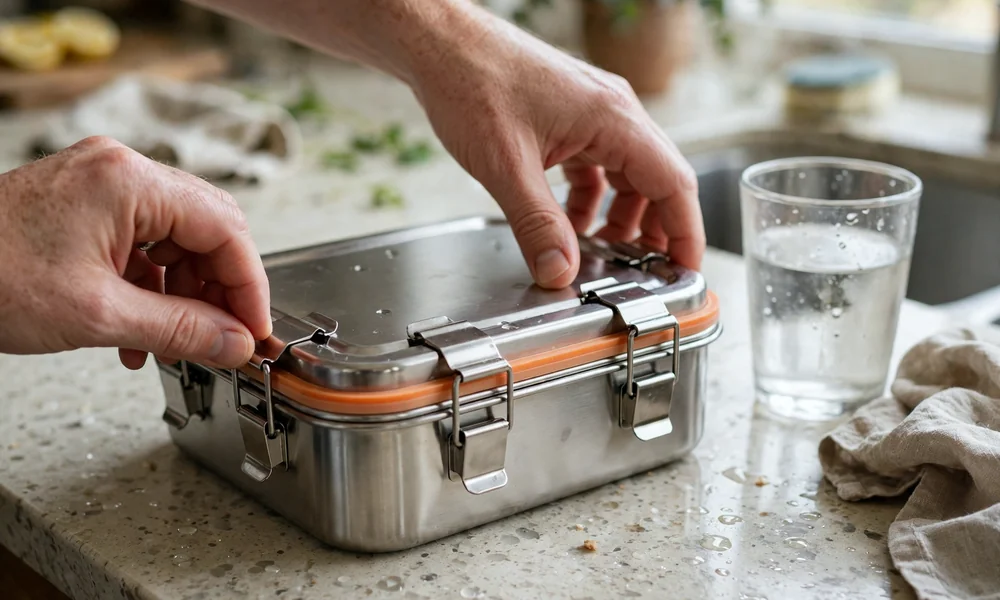
A great lunchbox has to survive a real working day. It is packed in a hurry, carried sideways in a bag, and opened with one hand at a desk. The boxes that last close with a firm click and stay closed when dropped. Start with the seal, because it decides whether the box is trustworthy. The strongest designs use a silicone gasket in the lid plus locking clips on two or four sides, which press the lid evenly onto the base. A lid that simply rests on top is fine for dry food, but it will not hold soup, curry, yoghurt, or dressing for long.
Test any box before you trust it with a real lunch. Fill it with water, close it, and turn it upside down over a sink. Then shake it gently and leave it on its side for ten minutes. A good box stays dry. A bad one weeps from a corner, and that corner is where your laptop will meet your soup on a Tuesday. Check the gasket too: it should sit snugly in its channel all the way around, without twisting or lifting out. A gasket that falls out after three washes is a box that will leak by month two.
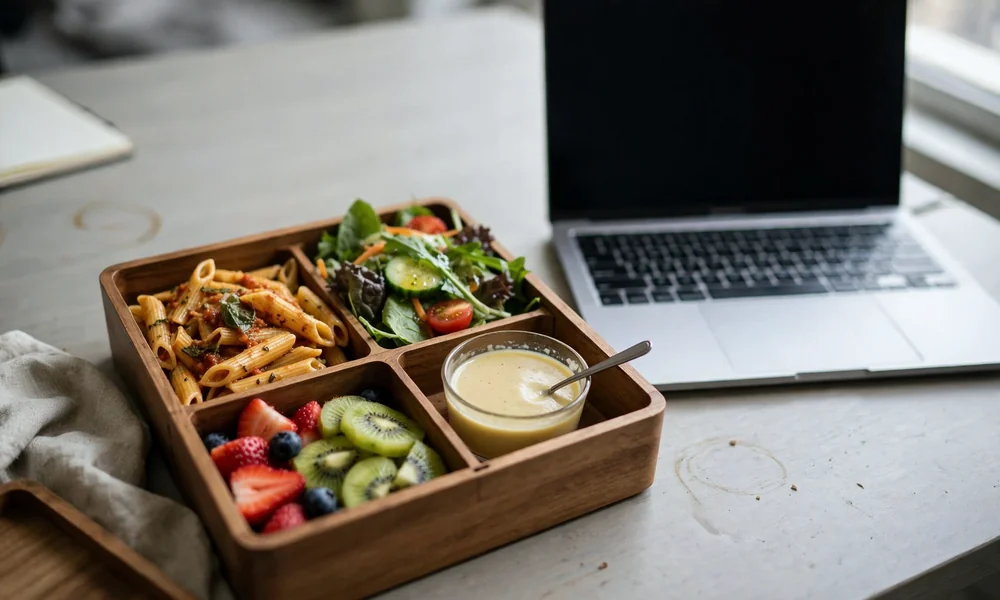
Compartments are the second thing that matters, and they are where most lunchboxes are won or lost. A divided box keeps a salad crisp, a grain bowl separate from its dressing, and fruit away from a hot main dish, so the meal still tastes like a meal at noon. The best designs have two to five compartments, with one large section for the main dish. Compartment size matters as much as count: a box with five tiny sections looks clever, but it is useless if none of them fits a sandwich or a proper portion of pasta.
The Best Lunchboxes of 2026
The strongest lunchboxes of 2026 share a simple quality: they are built for the way people actually eat lunch, not for the photograph on the box. A good stainless steel bento, with fixed dividers, a silicone gasket, and four solid clips, is hard to beat for daily use. It does not stain, it does not hold smells, it survives being dropped on a station platform, and it still looks respectable after a year. It will not go in the microwave, so it suits cold lunches, salads, grain bowls, and food you reheat in a separate dish, but for most office workers that is a fair trade.
Glass lunchboxes are the best choice when reheating matters. A borosilicate glass base with a clip-on lid goes straight into the microwave with the lid off, does not stain even after a tomato sauce, and never picks up the smell of last week’s curry. The trade-off is weight and fragility: glass is heavier in a bag and it will chip if it meets a concrete floor. Look for a thick base, a lid with a proper gasket rather than a snap-on cover, and a protective sleeve if you carry it in a busy bag.
Good plastic lunchboxes still have a place, and the best ones are honest about what they are. A well-made BPA-free polypropylene box is light, cheap, and genuinely leakproof when it has a gasket and two or four clips. It is the right choice for children, for the gym, and for anyone who wants a spare box without thinking twice. The difference between a good plastic box and a bad one is the thickness of the walls and the quality of the seal, not the colour of the lid. Squeeze the sides: a good box resists, a bad one flexes like a crisp packet.
Size is where the best boxes show their sense. Most adults need a main compartment of at least 500 ml and a total of 900 ml to 1.2 litres for a proper lunch, plus a small section for fruit or a snack. A box that is too small means a hungry afternoon; a box that is too big means carrying dead space and a lunch that slides around and arrives looking tired. The best lunch bags pair well with a good box, and our guide to picking a lunch bag that keeps food cold till noon explains how to size the two together so the box sits snugly and nothing rattles.
The Worst Lunchboxes of 2026
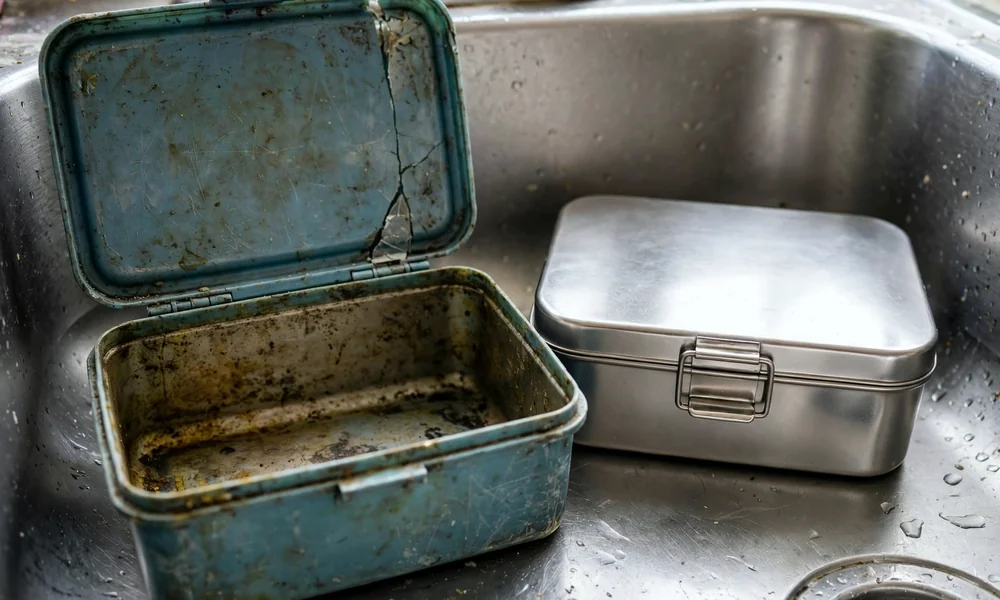
The worst lunchboxes of 2026 are built for the shelf, not for the bag. The most common failure is the lid that only looks like it seals. A thin plastic lid with no gasket and a single flimsy clip will hold a sandwich on a flat table, and it will fail the moment the box tips sideways in a bag. The first sign is a damp patch on the inside of the bag; the second is a laptop that smells of dressing. If the lid flexes when you press its centre, or pops back up after you close it, it will not survive a real commute.
Cheap thin plastic is the second failure, and it announces itself quickly. Walls so thin they bend between your fingers will warp in the dishwasher, bow in the microwave, and take on the colour of every sauce they meet. A box that was white in January and orange by March is not a box with character; it is a box that is absorbing your food. Worse, thin plastic holds smells long after washing, so Monday’s garlic pasta haunts Friday’s fruit. If a box feels light enough to blow away, it is too light to last.
Then there are the boxes that fail on design rather than materials. A box with five tiny compartments and no space for a real main dish looks clever in a photograph and useless at a desk. A box with a fixed divider that cannot be removed cannot hold a sandwich. A box whose lid has a dozen fiddly parts, valves, and hidden corners cannot be cleaned properly, and the corners are where mould starts. The same over-design problem shows up in other outdoor gear, and our comparison of the best vs worst coolers of 2026 makes the same point: the best designs are the ones with the fewest parts to fail.
How to Choose the Right Lunchbox
Start with your lunch, not with the box. If you mostly eat salads, grain bowls, and cold food, a stainless steel bento with a good seal is the strongest choice. If you reheat leftovers at work, a glass box with a clip-on lid will serve you better. If you pack for children, choose light BPA-free plastic with rounded corners and a lid a small hand can open. If you carry soup or curry more than once a week, nothing matters more than a gasket and four clips, and no box without them is worth the risk.
Check the practical details before you buy. The box should fit inside your bag without forcing, and it should fit in your dishwasher without a fight. The lid should come apart fully for washing, and the gasket should lift out so you can clean underneath it. A box you cannot clean properly will start to smell within weeks, however good its seal. Look for smooth internal corners rather than sharp ones, and avoid lids with hidden valves and crevices unless you enjoy cleaning with a toothbrush.
Think about the whole carry, not just the box. A good bottle matters as much as a good box on a long day, and our comparison of the best vs worst water bottles of 2026 covers the bottles that actually stay shut in a bag. Pack the heaviest items at the bottom, keep the dressing separate until you eat, and leave a little air out of the box so the lid does not press the food flat. A lunch that arrives looking like a lunch is a lunch you will actually want to eat.
The Verdict
The best lunchboxes of 2026 are the honest ones: a firm seal, sensible compartments, materials that survive the dishwasher, and a size that fits a real meal and a real bag. They are not always the dearest boxes, and they are rarely the prettiest on the shelf, but they reward you every working day with a lunch that arrives the way you packed it. The worst lunchboxes are the ones that hide behind a bright lid and a low price while leaking into your bag and staining after a week.
The simplest rule is also the best one. Test the seal with water, press the walls, open the lid with one hand, and imagine washing it at the end of a long day. If it passes all four tests, it will probably serve you well for years. Buy the box that fits your lunch, your bag, and your habits, and retire the one that leaks without a second thought. A great lunchbox does not need to be expensive or clever. It just needs to keep your lunch where it belongs, until you are ready to eat it.