The best water bottles for kids in 2026 are the ones children actually want to carry, can open without help, and will not leak all over a school bag. Parents know the pattern well: a bottle that looks perfect in the shop comes home, gets dropped once, leaks at the lid, and ends up forgotten in a cupboard while the search starts again.
Choosing well matters more than it first appears. A child who carries water happily drinks more through the school day, stays comfortable on long journeys, and arrives at sports practice ready to play rather than already thirsty. The best water bottles for kids in 2026 balance size, weight, spill protection, and easy cleaning.
This guide compares the types that work best for different ages, from nursery to upper primary school, and explains which features are worth paying for.
Key takeaways
- Choose a 350 to 500 ml bottle for younger children and 500 to 750 ml for older children who carry their own bag.
- Straw lids suit school desks, while flip-top spouts suit sports and outdoor play.
- Stainless steel keeps drinks cool for longer, while lightweight plastic suits small hands and short trips.
- A truly leak-proof lid matters more than any extra feature, so test the seal before the first school day.
- Pick a bottle with few parts and a wide mouth, because easy cleaning decides whether a bottle stays in daily use.
What Makes a Great Kids Water Bottle
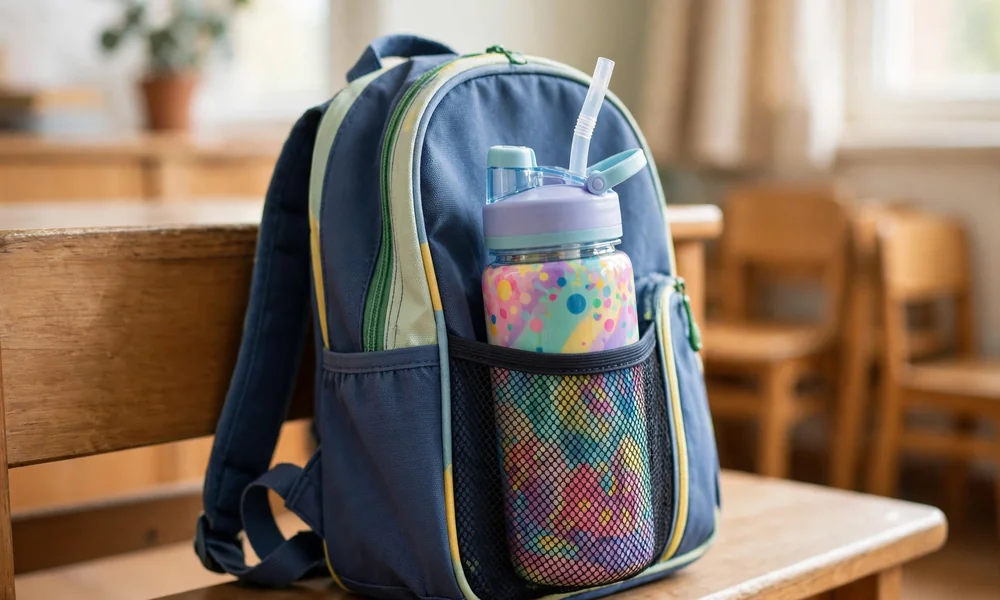
A great kids bottle starts with the child, not the brand. Small hands need a slim body and a grip they can hold with one hand. A bottle that is too wide slips, a bottle that is too heavy stays in the bag, and a bottle that is too tall will not fit the side pocket of a school bag. Check the diameter, the weight when full, and whether the bottle fits the bag your child already uses.
Weight deserves more attention than most parents give it. A 500 ml stainless steel bottle can weigh close to 700 grams when full, which is a lot for a five-year-old to carry alongside books and a lunchbox. Lightweight plastic often works better for younger children.
The lid is where most bottles succeed or fail. A straw lid lets a child sip at a desk without tipping the bottle, which keeps books dry and teachers happy. A flip-top spout gives a faster flow for sports, when a child needs a proper drink in a short break. A screw cap is simple and durable, but it needs two hands, which makes it less practical for younger children.
Size by Age
For children aged three to five, a 350 ml bottle is usually enough for a morning at nursery, and it stays light enough for small hands. Children aged six to eight do well with 400 to 500 ml, which covers a school day with one refill at lunch. Children aged nine and older can carry 500 to 750 ml, especially if they play sport after school. Buying too big is a common mistake, because a heavy bottle discourages drinking just as surely as a leaky one.
Materials Compared
Stainless steel is the strongest all-round choice for school and travel. It does not retain flavours, it survives drops, and double-wall versions keep water cool for hours on warm days. The trade-off is weight and price, and some steel bottles dent when dropped on concrete. Even so, a dented steel bottle still works, which is more than can be said for a cracked plastic one.
Tough plastics such as Tritan are lighter, cheaper, and often clearer, so a child can see how much water is left. They suit younger children and short trips, and they come in bright colours and patterns. The trade-off is that plastic does not insulate, so drinks warm up faster, and plastic bottles need replacing sooner once they scratch. Always choose BPA-free plastic, and avoid glass for children: it is heavy, it breaks, and most schools will not allow it.
Comparison Table: The Best Types at a Glance
The table below compares the main types of kids water bottle by the factors that matter most in daily use.
| Type | Best for | Weight | Keeps cool | Leak risk |
|---|---|---|---|---|
| Stainless steel, straw lid | School days | Medium to heavy | Very good | Low |
| Stainless steel, flip spout | Sport and outdoors | Medium to heavy | Very good | Low |
| Lightweight plastic, straw lid | Nursery and young children | Light | Fair | Medium |
| Lightweight plastic, flip spout | Sport for younger children | Light | Fair | Medium |
| Insulated steel, carry handle | Travel and long days out | Heavy | Excellent | Very low |
The Best Water Bottles for School
School is the hardest test for a kids bottle. It gets opened and closed dozens of times a day, knocked off desks, and squeezed into crowded bag pockets. A school bottle needs a lid a child can open one-handed, a seal that holds when the bag falls over, and a body that survives daily drops without leaking.
For most primary school children, a 500 ml stainless steel bottle with a straw lid is the best school choice. The straw lets a child drink at a desk without lifting and tipping the bottle, the steel keeps water cool through the afternoon, and the slim shape fits most bag pockets. Look for a straw that flips down and covers fully when closed, because an exposed straw collects dust and drips in the bag.
Younger children often do better with a smaller, lighter plastic bottle with a straw and a carry loop. The loop helps small hands lift the bottle, and the lighter weight means the bottle does not dominate the school bag. A child who chose the colour is also far more likely to remember the bottle and look after it, so let your child pick between two or three good options. A good bottle sits alongside the right snacks on longer days, so it is worth reading our guide to the best road trip snacks for kids when you plan journeys with children.
The Best Water Bottles for Sport and Outdoor Play
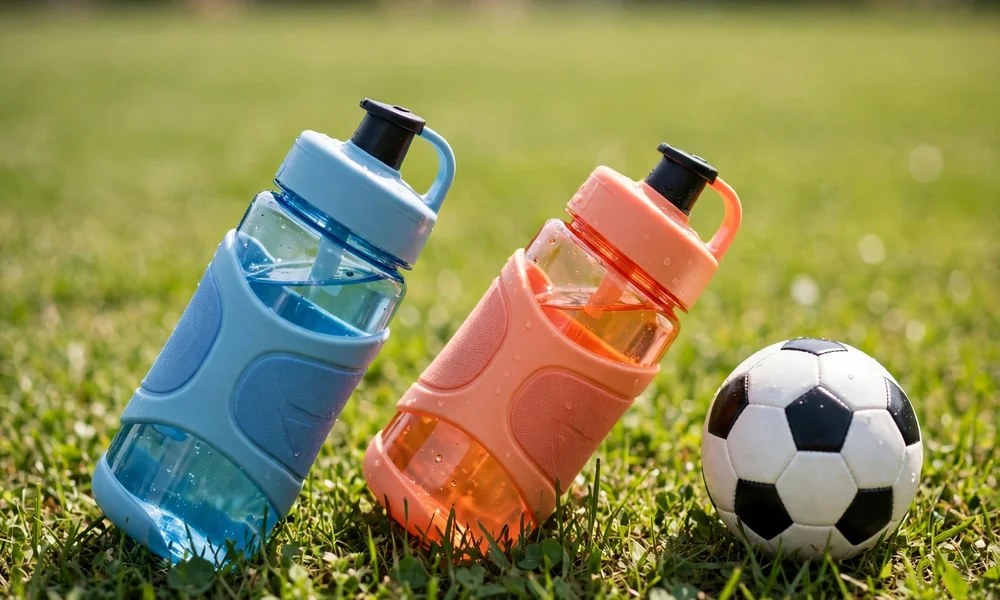
Sport changes the priorities. A child at football practice needs a fast flow, a lid that opens with one hand while moving, and a bottle that can be tipped without spilling everywhere. Straw lids can be too slow for a short drinks break, so a flip-top spout or a sports cap usually works better here.
A 500 to 750 ml bottle suits most children for sport, because a small bottle runs out halfway through practice. Look for a grippy body or a silicone band, since sweaty hands drop smooth bottles easily, and a carry handle helps when children carry bottles alongside kit bags. In warm weather, insulation earns its keep: a double-wall steel bottle keeps water cool through a long afternoon in the sun, while a plastic bottle warms up within an hour.
The Best Water Bottles for Travel
Travel puts a bottle through its toughest test: long car journeys, flights, and days out where there is nowhere to refill easily. A travel bottle needs to be leak-proof, easy to fill from a tap, and comfortable to carry for hours. A carry handle or a strap makes a real difference on a travel day.
For family travel, a 500 ml insulated steel bottle with a handle is hard to beat. It keeps water cool on a hot day out, it survives being packed and unpacked, and it fits most car cup holders. Pair it with a larger family bottle in the car for refills, so the child-sized bottle stays light enough to carry. A rested child also travels better, so our guide to the best travel pillows for toddlers is a useful companion when you plan a long trip with younger children.
For flights, remember that a bottle must be empty through security and filled afterwards. A wide-mouth bottle fills quickly at a water fountain, while a narrow bottle takes far longer and spills more. On road trips, a bottle that fits the car cup holder and opens one-handed is essential. Small comforts add up on the road, which is why many families also check our guide to the best neck pillows for kids before a long drive.
Leak-Proof Lids and Spill Protection
No feature matters more than a reliable seal. A bottle that leaks ruins books, soaks clothes, and quickly loses a child’s trust. When you buy a bottle, fill it, close it, turn it upside down, and shake it gently over a sink. If it drips, return it. A good seal should hold even when the bottle is squeezed lightly, which is exactly what happens inside a crowded school bag.
Cleaning and Hygiene
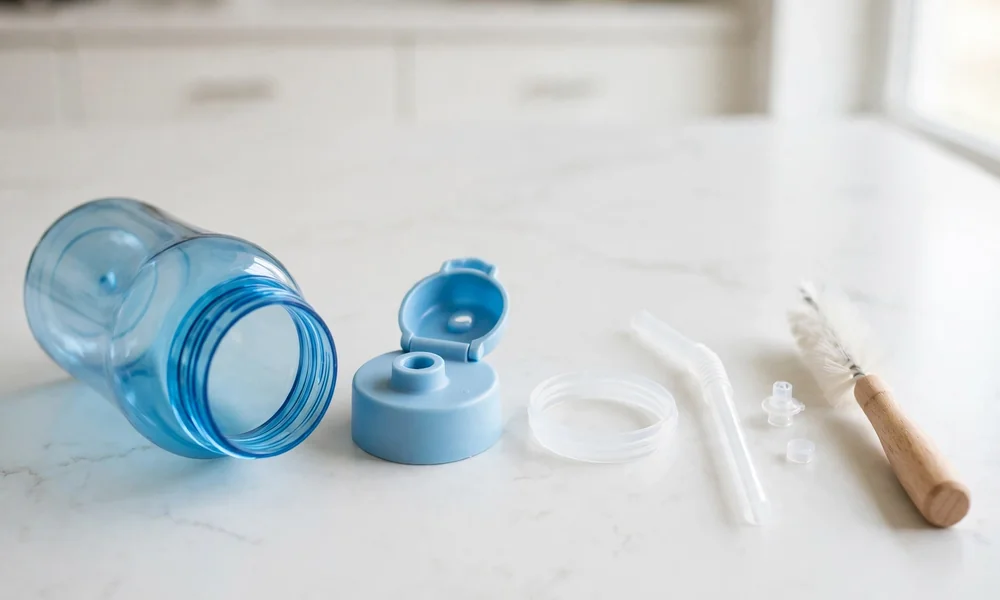
Cleaning decides whether a bottle stays safe to use. Straws, valves, and seals trap moisture and residue, and a bottle that smells stale will not be drunk from. Choose a bottle that comes apart easily, with a wide mouth you can reach inside, and check whether it is dishwasher safe before you buy.
How to Choose: A Simple Checklist
Use this checklist when you shop.
- Size: 350 to 500 ml for younger children, 500 to 750 ml for older children, and light enough to carry when full.
- Fit: the bottle fits the school bag pocket, the lunchbox, and the car cup holder.
- Lid: your child can open, drink from, and close it alone, with one hand where possible.
- Leak test: the filled bottle stays dry upside down and when squeezed gently.
- Cleaning: the bottle comes apart easily, has a wide mouth, and is dishwasher safe or simple to wash by hand.
- Durability: the body survives drops, the lid stays attached, and replacement seals or straws are available.
Frequently Asked Questions
What size water bottle is best for a five-year-old?
A 350 to 400 ml bottle is usually best for a five-year-old. It is light enough to carry, easy to hold with small hands, and large enough for a morning at school with a refill at lunch. A larger bottle is heavier, which often means the child drinks less.
Are stainless steel bottles better than plastic for kids?
Stainless steel is better for keeping drinks cool and for long-term durability, while plastic is lighter and cheaper. For school and travel, steel is usually the better choice for children aged six and older. For younger children, light plastic is often easier to carry.
How do I stop a kids water bottle from leaking in a school bag?
Choose a bottle with a locking lid, test it upside down before the first school day, and check the seal regularly. Close the lid fully every time and replace worn seals promptly.
How often should I wash my child’s water bottle?
Wash the bottle every day with warm water and washing-up liquid, rinse the straw after each use, and take the lid apart for a full clean once a week. Let all parts dry fully before reassembling.
Can kids water bottles go in the dishwasher?
Many steel and plastic bottles are dishwasher safe, but straws, seals, and some lids are not, so always check the maker’s guidance. Place the bottle on the top rack.
What is the best lid type for school?
A straw lid is usually best for school, because a child can sip at a desk without tipping the bottle. A flip-top spout is better for sport, when a faster flow matters. Avoid loose screw caps for younger children, because they need two hands and the cap is easily lost.
The Bottom Line
The best water bottle for your child is the one they can carry, open, drink from, and close without help, and that stays dry inside their bag. For most families, that means a 500 ml stainless steel bottle with a straw lid for school, a flip-top sports bottle for practice, and a lighter plastic bottle for younger children. Choose the right size, test the seal, and keep it clean.