
The whisk is the smallest tool in the kitchen that makes the biggest difference to the food that comes out of it. A good whisk turns cream into soft peaks in a minute, blends a vinaigrette that stays together, and beats eggs into a smooth, even gold without a single streak of white. A bad whisk does the opposite: it bends under pressure, leaves lumps in the batter, . The whisks worth reaching for in 2026 are the ones that move air and liquid evenly, feel balanced in the hand, and survive years of daily use without loosening or rusting.
Most kitchen drawers hold a whisk that was bought in a hurry, often as part of a set, and it shows. The handle wobbles, the wires are uneven, and the whole thing flexes sideways the moment it meets thick batter. A well-made whisk costs little more than a poor one, and the difference is obvious the first time you use it. This guide explains what separates the whisks worth reaching for from the ones that belong in the bin, which shapes suit which jobs, and how to choose the right whisk for the way you actually cook.
Key Takeaways
- The best whisk for most kitchens is a medium balloon whisk with eight to ten evenly spaced stainless steel wires, a comfortable handle, and a sealed joint where the wires meet the handle.
- Match the whisk to the job: balloon whisks whip air into cream and egg whites, flat whisks blend sauces in shallow pans, and silicone whisks protect non-stick cookware.
- Wire count matters more than wire thickness. More wires move more air and blend faster, while too few wires leave lumps and streaks behind.
- A whisk should feel balanced, not heavy at either end. If the handle is too light the head flops around, and if the head is too heavy your wrist tires within a minute.
- Cheap whisks fail at the joint. Check that the wires are firmly fixed, the handle does not twist, and there is nowhere for water to collect and rust.
What Makes a Great Whisk
A great whisk starts with its wires. The best whisks use stainless steel wires that are springy enough to flex and return to shape, but stiff enough to push through thick batter without bending flat. The wires should be evenly spaced and symmetrical, so the whisk moves the same amount of air on every stroke. Count the wires before you buy: eight to ten is the sweet spot for a general-purpose balloon whisk.
The handle matters just as much. A good handle is long enough to keep your knuckles clear of the bowl, usually around fifteen centimetres, and thick enough to grip without cramping. Silicone-coated handles offer the best grip of all and stay comfortable during long whisking sessions. Whatever the material, the joint between handle and wires is the weak point. The best whisks seal this joint completely, so water cannot creep inside during washing, and the wires are welded or firmly crimped rather than glued.
Size is the third thing to get right, and it depends on your bowls. A whisk that is too large for its bowl bangs against the sides and splashes, while one that is too small takes twice as long to do the job. A medium whisk, around twenty-five to thirty centimetres long, suits a standard mixing bowl and most everyday jobs. That is why the best mixing bowls matter as much as the whisk itself: a deep, heavy bowl holds steady while you whisk.

The Whisks Worth Reaching For in 2026
The whisks worth reaching for in 2026 are the ones that do their job so well you stop thinking about them. They whip fast, blend smoothly, clean in seconds, and still feel solid after years of use. They come in four main shapes, and most kitchens only need two of them.
The Balloon Whisk
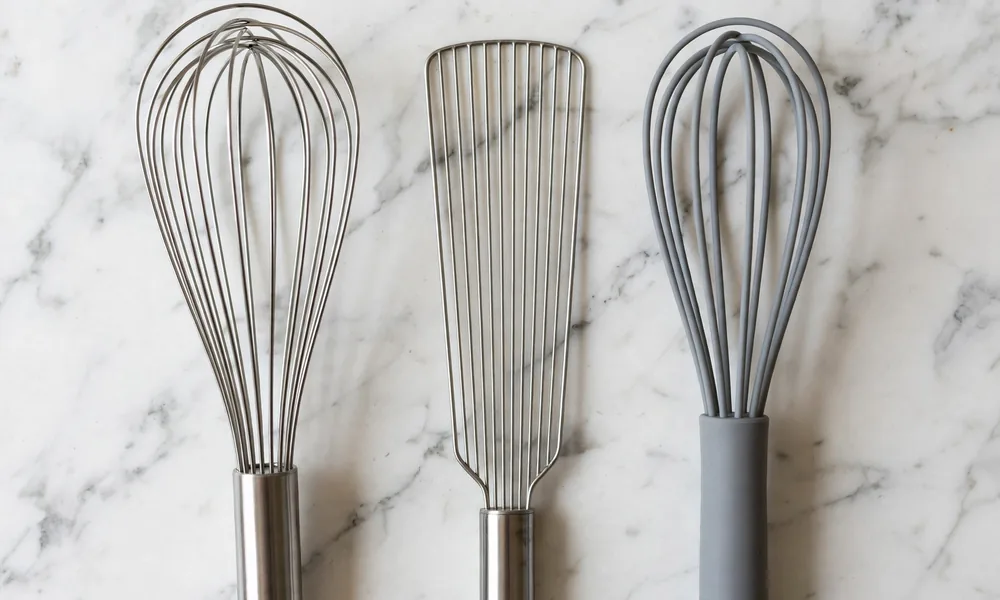
The balloon whisk is the classic, and for most cooks it is the only whisk they will ever need. Its wide, rounded head is made of many curved wires that form a cage, and that shape is designed to pull air into whatever you are whisking. Cream becomes whipped cream in under a minute, egg whites climb into stiff peaks, and pancake batter turns smooth with a few dozen strokes. The best balloon whisks have ten or twelve wires and a head about eight centimetres across.
The Flat Whisk
The flat whisk, sometimes called a roux whisk, is the quiet specialist of the drawer. Instead of a rounded cage, its wires lie in a single flat plane, which lets it reach right into the corners of a shallow pan. That makes it the best whisk for sauces, gravies, and roux, where a balloon whisk leaves flour stuck in the corners and the sauce goes lumpy. It is not a good choice for whipping cream, since its flat shape moves little air, but for anything cooked in a pan it beats the balloon whisk every time.
The Silicone Whisk
The silicone whisk is the whisk for cooks who own non-stick pans and want to keep them. Its wires are coated in heat-resistant silicone, so they glide across a coated surface without scratching it, and they are gentle on enamel and ceramic too. Silicone whisks are slightly heavier and less springy than bare steel ones, so they whip cream more slowly, but for stirring sauces in a non-stick saucepan they are the safest choice. Check the heat rating: good silicone whisks cope with temperatures up to around 200 degrees.
The Small Whisk
The small whisk, usually fifteen to eighteen centimetres long, is the one most people overlook and then wonder how they cooked without. It is perfect for small jobs that a full-size whisk turns into a mess: beating a single egg, mixing a dressing in a jam jar, blending cocoa into a mug of milk, or whisking a small amount of sauce in a milk pan. It costs very little, takes up no space, and gets used almost every day.
Whisk Comparison
Each whisk shape has a job it does best and jobs where it struggles. The table below compares the four main types, so you can see at a glance which one belongs in your kitchen and which ones you can skip.
| Whisk type | Best for | Weakest at | Price in 2026 |
|---|---|---|---|
| Balloon whisk | Whipping cream and egg whites, mixing batter | Sauces in shallow pans | Low to mid |
| Flat whisk | Sauces, gravy and roux in pans | Whipping air into cream | Low to mid |
| Silicone whisk | Non-stick and enamelled cookware | Fast whipping, very thick batter | Mid |
| Small whisk | Eggs, dressings and small quantities | Large bowls and big batches | Low |
How to Whisk Properly
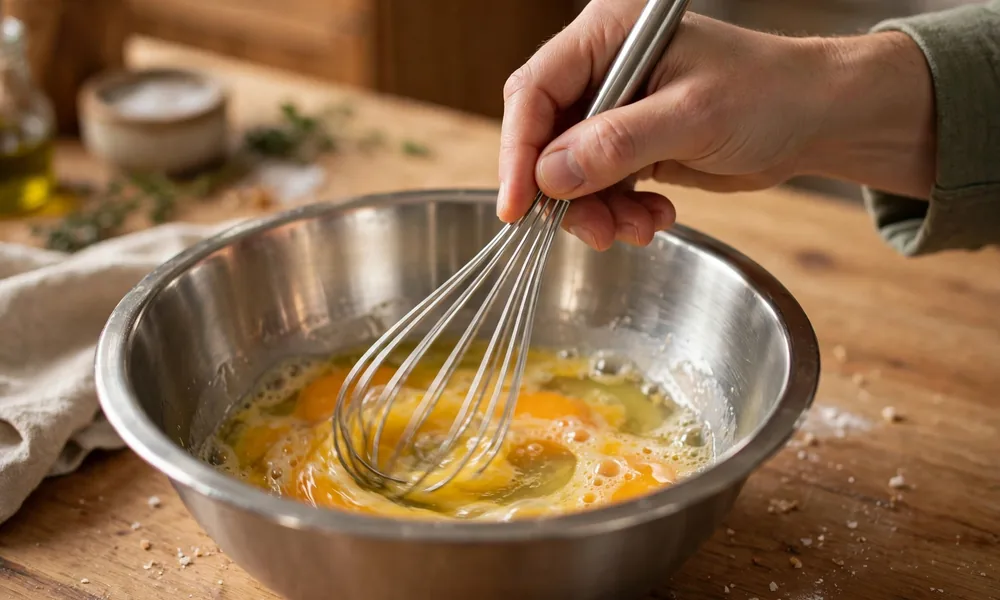
Technique matters as much as the tool. The most common mistake is whisking in circles, which pushes the mixture around the bowl without mixing it. The better method is to whisk in a figure of eight, or in short, firm strokes from side to side, which pulls the mixture through the wires again and again. Hold the bowl steady with one hand, tilt it slightly towards you, and keep the whisk head under the surface so you do not spray the worktop.
Speed is not the same as force. A whisk works by moving a lot of wires through the mixture many times, so a quick, light action beats a slow, heavy one. Let the wires do the work and keep your wrist relaxed, or your arm will tire before the cream thickens. For egg whites, make sure the bowl is spotlessly clean and completely dry, because even a trace of fat stops the whites from holding air. For a large batch of meringue, a machine earns its place: the best vs worst hand mixers show which electric mixers are worth the cupboard space.
Caring for Your Whisk
A good whisk lasts for years if it is looked after, and the care is simple. Rinse it immediately after use, before batter or egg dries between the wires, and wash it in hot soapy water with a brush or sponge. Most steel whisks are dishwasher safe, but hand washing is kinder: the dishwasher’s heat and detergent can loosen the joint over time, and wooden handles should never go in the dishwasher at all. Dry it thoroughly before putting it away.
Check your whisk every few months. Press the wires gently and see whether they spring back evenly; if one wire stays bent, the whisk will never mix evenly again. Look closely at the joint where the wires meet the handle, and replace the whisk if you see rust, movement, or a gap where water can enter.
Whisk Buying Checklist
- Count the wires: eight to ten for a balloon whisk, and check they are evenly spaced and symmetrical.
- Grip the handle and press the head against a surface. It should flex slightly and spring back, not bend flat or feel loose.
- Check the joint where wires meet handle. It should be sealed, solid, and free of gaps where water can collect.
- Match the size to your bowls: a medium whisk around twenty-five to thirty centimetres suits a standard mixing bowl.
- Choose silicone-coated wires if you cook in non-stick or enamelled pans, and plain steel if you want the fastest whipping.
- Look for a hanging loop and a handle that stays comfortable and non-slip when wet.
Frequently Asked Questions
What is the best whisk for everyday cooking?
A medium balloon whisk with eight to ten stainless steel wires is the best all-round choice. It whips cream and egg whites quickly, mixes batter smoothly, and handles most everyday jobs.
Are silicone whisks better than metal whisks?
Silicone whisks are better for non-stick and enamelled cookware, because they cannot scratch the surface. Metal whisks are better for whipping, because their thinner, springier wires move more air and work faster. Most kitchens benefit from owning one of each.
How many wires should a good whisk have?
A balloon whisk should have eight to twelve wires: more wires mean faster whipping and smoother mixing. A flat whisk needs fewer wires, usually five to seven, because its job is stirring and scraping rather than incorporating air.
Can I put my whisk in the dishwasher?
Most stainless steel whisks are dishwasher safe, but hand washing lasts longer. The dishwasher can loosen the joint between wires and handle, and wooden handles should never go in. Rinse straight after use and dry thoroughly to prevent rust.
When should I use a whisk instead of a stand mixer?
Use a whisk for small quantities, quick jobs, and anything that needs a light touch, such as folding air into batter or blending a dressing. A stand mixer suits large batches and long beating times. The best stand mixers suit bulk baking, but a good whisk is faster for everyday cooking.
How do I stop my whisk from rusting?
Dry it immediately after washing, and store it somewhere dry rather than in a damp drawer. Rust starts where water collects, usually at the joint, so choose a whisk with a sealed joint and avoid leaving it soaking in the sink.
The Bottom Line
The whisks worth reaching for in 2026 are a medium balloon whisk with eight to ten even stainless steel wires, a flat whisk for sauces, and a small whisk for everyday jobs, with a silicone whisk added if you cook in non-stick pans. Choose wires that spring back, a handle that stays comfortable when wet, and a sealed joint that keeps water out. Learn the figure-of-eight stroke, and the whisk becomes the tool you reach for first.


