Top Wrist Weights for Walking, Home Workouts and Rehab in 2026
The top wrist weights in 2026 are the simplest way to make movement you already do a little harder. Strap half a kilo to each wrist and a walk becomes a workout, an arm raise becomes a challenge, and a home routine you had outgrown feels new again. They cost less than a takeaway, need no setup, and fit in a drawer when you are done. The best wrist weights for you depend on how you plan to use them. Adjustable strap weights suit walking and home workouts, fixed-weight cuffs suit rehab and gentle strengthening, and soft fabric weights suit Pilates, yoga and older adults who want a little extra resistance without any hard edges.
Key Takeaways
- Start light: 0.5 to 1 kg per wrist is enough for most people, and 2 kg is plenty for walking and home workouts.
- Adjustable wrist weights are the best choice for most buyers, because you can add weight as you get stronger.
- Comfort matters more than capacity: a weight that chafes or slides will sit in a drawer, however good it looks.
- Wrist weights are best for slow, controlled exercises like arm raises and shadow boxing, not for running or jumping.
- Never wear wrist weights all day: use them for focused sessions of 20 to 30 minutes, then take them off.
Wrist Weight Types at a Glance
An adjustable strap weight wraps around the wrist with a wide velcro strap and lets you add or remove weight in small steps. A fixed-weight cuff holds a set weight sealed inside a soft neoprene shell, and it is slimmer and more comfortable than an adjustable weight. A soft fabric weight filled with sand moulds to the wrist and makes no noise when it moves. A weighted glove puts the weight across the back of the hand, which suits boxing-style workouts. Remember that our guide to the best ankle weights covers the matching weights for your legs, while this guide is only about your wrists.
| Weight type | Best for | Strengths | Watch out for |
|---|---|---|---|
| Adjustable strap | Walking and home workouts | Grows with you, best value | Bulkier when fully loaded |
| Fixed-weight cuff | Rehab and gentle strengthening | Slim, comfortable, simple | Needs replacing when it gets easy |
| Soft fabric sand-filled | Pilates, yoga, older adults | Moulds to the wrist, silent | Stated weight is approximate |
| Weighted glove | Boxing-style workouts | Weight sits across the hand | Harder to take on and off |
| Thumb-loop cuff | Running-style arm swing | Stays put during fast movement | Loop can rub between thumb and finger |

How Much Weight Is Safe?
Less than you think. For walking and general activity, 0.5 to 1 kg per wrist adds a real challenge without changing how your arms swing. For arm raises, lateral raises and rehab exercises, 1 to 2 kg per wrist is the sweet spot for most adults. Going heavier, 2.5 kg and above, suits short, controlled strength sets but not walking, and it should only be used by people who already train regularly. The warning sign is simple: if your shoulders ache, your elbows complain, or your arms start swinging oddly, the weight is too heavy. Take weight off until your movement looks and feels normal again.
The reason to start light is that your wrists, elbows and shoulders are small joints, and they carry the load differently from your legs. Ankle weights load big leg muscles that are built for carrying weight all day. Wrist weights load the small muscles and tendons of the arms, which tire faster and complain sooner. That is why adjustable weights are such good value: you can start at half a kilo, and add a little at a time as your arms get used to the work.
Fit, Comfort and Strap Design
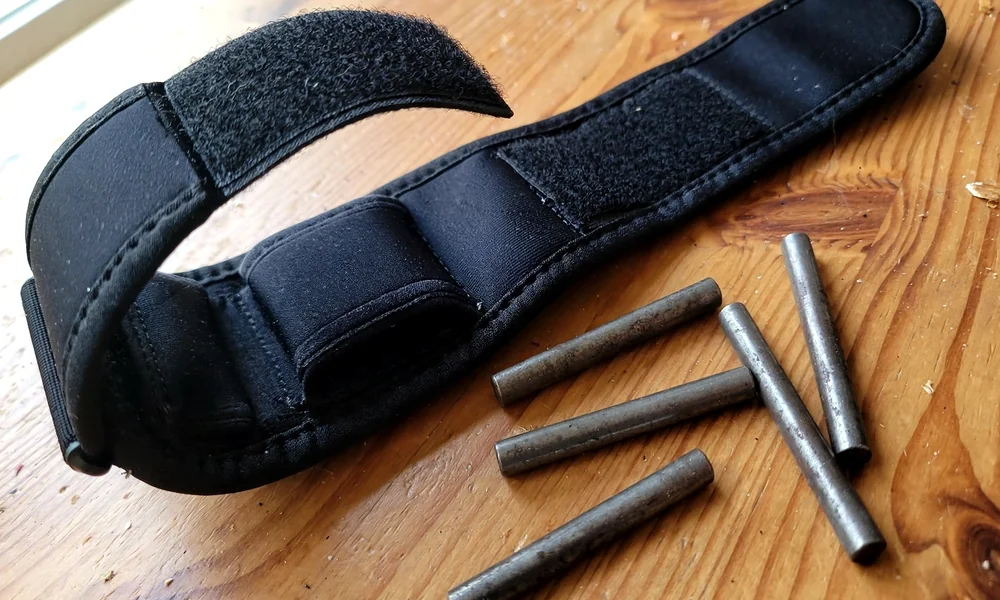
Fit is where cheap wrist weights fail. A good weight wraps snugly around the wrist, with a wide velcro strap that holds through a whole workout and a soft lining that stops chafing. Look for a contoured shape rather than a flat slab, because a contoured cuff follows the wrist and stays put. Adjustable weights with removable iron bars or sand pouches let you change the load without buying a new pair, and they are the best value for anyone who plans to progress.
The strap deserves as much attention as the weight itself. A narrow strap concentrates pressure on a small band of skin and slides around as you move. A wide strap spreads the load, stays in place, and is far more comfortable over a long session. Check the velcro too: it should grip firmly when new and still grip after months of use. Cheap velcro loses its hold quickly, and a strap that creeps loose mid-walk is a weight that slides down onto your hand.
Adjustable Strap Weights: The Best All-Round Choice
Adjustable strap weights are the best wrist weights for most people. They wrap around the wrist with a wide velcro strap and let you add or remove weight in small steps, usually 0.25 or 0.5 kg at a time, by sliding iron bars or pouches in and out of pockets. That adjustability is what makes them good value: one pair grows with you from your first workout to your fiftieth. They suit walking, home workouts, Pilates and barre, and they pack flat for travel.
The trade-off is bulk. A fully loaded adjustable weight is thicker than a fixed cuff, and the pockets can feel lumpy until you get used to them. For most buyers, that is a small price for a weight that never becomes too easy.
Fixed-Weight Cuffs and Soft Fabric Weights
Fixed-weight cuffs are the simple option. Each cuff holds a set weight, usually 0.5 or 1 kg, sealed inside a soft neoprene shell. They are slimmer and more comfortable than adjustable weights, which makes them the best wrist weights for rehab, physiotherapy and gentle daily strengthening. They are also the best choice for people who know exactly what weight they need and will not want to change it. The trade-off is obvious: when the weight becomes easy, you need a new pair.
Soft fabric weights filled with sand are the gentle, quiet option. They mould to the wrist, make no noise when they move, and are the most comfortable weights to wear for longer sessions. They are the best wrist weights for Pilates, yoga, barre and older adults who want a little extra resistance without any hard edges. The trade-off is precision: sand settles and the stated weight is approximate, and a torn seam means sand everywhere. For a wider home setup built around gentle, consistent training, our guide to the best resistance bands shows the light, joint-friendly tools that pair well with wrist weights.
Best Wrist Weights by Workout
For walking, wrist weights are the most popular use, and also the one where most people go wrong by going too heavy. A 0.5 to 1 kg weight per wrist adds a genuine challenge to a 30-minute walk without changing your arm swing. Walk at your normal pace on flat ground, keep your posture tall, and stop if your shoulders or elbows complain.
For home workouts, wrist weights shine where they turn bodyweight exercises into real strength work. Arm raises, lateral raises, shadow boxing and slow punching drills all become harder with a little weight on the wrists, and the extra load is small enough that your form stays clean. Keep the movements slow and controlled. Fast, jerky movements with wrist weights put sudden strain on the elbows and shoulders, which is exactly how injuries happen. If you want to move fast, take the weights off.
What Wrist Weights Cannot Do
It is worth being honest about the limits. Wrist weights will not build big arm muscles, because the loads are too light for serious muscle growth. They will not replace dumbbells for strength training, and they will not make you a better runner: wearing them while running changes your arm swing and puts extra strain on your elbows and shoulders, and most coaches advise against it. If you want a serious arm workout, a proper set of weights does the job better, and our guide to the best dumbbells covers the pairs that complement wrist weights best.
They also will not fix bad posture on their own. Walking with wrist weights can encourage a taller posture and a fuller arm swing, but only if you pay attention to how you move. If you hunch forward and let your arms hang, the weights just add load to a bad position.

Before You Buy: The 6-Point Checklist
- Start light: pick 0.5 to 1 kg per wrist for walking and general use, and only go heavier for short, controlled strength sets.
- Strap width: look for a wide velcro strap that spreads the load and stays put, with a soft lining that stops chafing.
- Adjustability: choose adjustable weights with removable bars or pouches if you expect to progress, so one pair grows with you.
- Even weight: check the load is spread evenly around the wrist, not bunched on one side where it pulls the wrist sideways.
- Stitching check: on sand-filled weights, inspect the seams closely, because a torn seam means sand everywhere.
- Try the swing: walk and raise your arms in the weights for a minute; if your shoulders ache or your arms swing oddly, the weight is too heavy.
Frequently Asked Questions
Are wrist weights good for walking?
Yes, if you keep them light. Half a kilo to one kilo per wrist adds a genuine challenge to a 30-minute walk without changing your arm swing. Stop if your shoulders or elbows complain, and keep sessions to 20 or 30 minutes.
Can wrist weights help with rehab?
Yes, they are a standard rehab tool. A light fixed-weight cuff lets you rebuild arm and shoulder strength in tiny, controlled steps. Always follow your physiotherapist’s advice on weight and exercises rather than guessing yourself.
Do wrist weights build muscle?
Only a little. The loads are too light for serious muscle growth, but they do build endurance and make everyday movement harder. For real arm strength, dumbbells do the job far better.
Can I run with wrist weights?
It is not a good idea. Running with wrist weights changes your arm swing and puts extra strain on your elbows and shoulders. Walk with them instead, and keep the weight light.
How do I clean wrist weights?
Wipe neoprene cuffs down after sweaty sessions and leave them out to dry. Wash fabric weights according to the label, and clean velcro straps with a stiff brush to remove lint that weakens the grip.
Are adjustable wrist weights worth it?
For most buyers, yes. One adjustable pair grows with you from your first workout onwards, so you never need to buy a heavier pair. Fixed cuffs are simpler and slimmer, but you outgrow them.
The Bottom Line
The top wrist weights are the light ones: start at 0.5 to 1 kg per wrist, pick an adjustable strap weight if you want one pair to last, and choose a fixed cuff or a soft fabric weight for rehab and gentle work. Buy for comfort first, because a weight that chafes or slides will sit in a drawer, and use them for slow, controlled movement rather than running or jerky exercise. Kept light and used well, wrist weights turn a walk you already take into training you do not need to schedule.