
Roomba and Shark are the two names most people meet first when they start shopping for a robot vacuum. Roomba, from iRobot, practically invented the category and still sets the standard for navigation and cleaning logic. Shark arrived later, learned from everything Roomba did, and undercut it on price while adding features like self-emptying bases and mopping to cheaper models. The result is a genuine rivalry, and the right choice depends far more on your floors, your pets, and your patience than on either brand name. This guide compares Roomba vs Shark robot vacuums in 2026 head to head, covering cleaning power, navigation, pet hair, dustbins, battery life, running costs, and the everyday frustrations that only show up after a month of use.
How These Two Robot Vacuum Brands Actually Differ
The deepest difference is philosophy. Roomba was built by a robotics company, and it shows. Its robots are designed around navigation first: they map the home, learn where the furniture is, remember which rooms get dirty fastest, and clean in neat, deliberate rows. Shark was built by a cleaning company, and it shows too. Its robots are designed around suction and convenience first: strong motors, big dustbins, self-emptying bases, and mopping pads, all at a price that makes the technology feel accessible. Shark asks what features a buyer wants on the box. Roomba asks how the robot should behave in a real room.
That difference shows up in the app. The Roomba app is calm and restrained, offering room-by-room cleaning, schedules, keep-out zones, and cleaning history, and it does those things well without burying you in options. The Shark app offers similar tools but can feel busier, with more prompts, modes, and settings. Neither app is bad, and both have improved a great deal, but if you like to set a schedule once and forget about it, Roomba has a small edge. If you like to tinker with suction levels and mopping modes, Shark gives you more to play with.
Cleaning Power on Hard Floors and Carpet
On hard floors, both brands clean well, and most buyers would struggle to tell them apart in a blind test. A robot vacuum on wood or tile mostly needs to pick up dust, crumbs, and hair without scattering them, and both do that reliably. The difference is in the detail. Roomba models with dual rubber rollers are especially good at pulling fine dust out of the tiny gaps between floorboards and along skirting boards. Shark models often counter with higher stated suction, which helps with heavier debris like cereal or tracked-in grit, though suction numbers alone are a poor guide because brush design and airflow matter just as much.
If your home is mostly hard floors, the choice may come down to price and features rather than cleaning power. A mid-range Shark with a self-emptying base can be a better buy than a basic Roomba without one, because the base is what makes a robot vacuum feel effortless. The best robot vacuums for hardwood floors combine strong pickup with a map that actually reaches every corner, and both brands have models that qualify. If your hard floors have many corners, thresholds, and furniture legs, Roomba navigation tends to cover the edges more thoroughly over time.
Cleaning on Carpet and Rugs
Carpet is where the two brands start to separate. Roomba has spent years refining its carpet cleaning, and its premium models lift their brushes, increase suction on carpet automatically, and make extra passes over dirty patches. The result is a carpet that looks and feels cleaner after a run, especially on low and medium pile. Shark is no slouch on carpet either, and its powerful suction can pull a surprising amount of dust out of a rug on the first pass. But some Shark models are more aggressive with their brush rolls, which can leave marks on delicate rugs, while Roomba rubber rollers are gentler and far easier to clean when hair wraps around them.

Navigation and Mapping
Navigation is Roomba’s strongest card, and it is the reason many long-term owners stay loyal. Premium Roombas use cameras and sensors to build a precise map, recognise rooms, avoid cables and pet messes, and remember where they have been. They clean in straight lines, return to the dock when the battery runs low, and resume exactly where they left off. Cheaper Roombas use simpler navigation, but even those follow a more orderly pattern than the random bouncing of early robot vacuums. The practical result is fewer missed patches, fewer robots stuck under the sofa, and a clean that finishes on time.
Shark navigation has improved enormously, and its better models now map homes properly and clean in rows too. But Shark’s budget models are still more likely to rely on simpler navigation that misses spots or takes longer to finish a room. That matters less in a small, open flat, where even a simple robot will eventually cover everything, and more in a larger home with several rooms, where a good map saves real time. Shark deserves credit for obstacle avoidance on premium models, which handles shoes, cables, and pet bowls reasonably well, though Roomba’s remains the more reliable of the two in most homes.
Pet Hair, Dustbins and Emptying
Pet owners are the most demanding robot vacuum buyers, and both brands know it. Roomba’s dual rubber rollers are the best in the business at resisting hair tangles. Hair that would wrap around a traditional bristle brush simply slides off a rubber roller, which means less time spent cutting hair off the brush with scissors. Shark has answered with its own anti-hair-wrap brush rolls, which work well on many models, though some owners still find that long human hair wraps around the ends of the roller. For a home with a heavy-shedding dog or a long-haired cat, Roomba has the edge here, and it is an edge you will notice every week.
Dustbin size is the other half of the pet equation. A small dustbin fills up halfway through a clean in a pet home, and the robot either stops or keeps going with a full bin and poor suction. Shark tends to fit larger dustbins, which is a real advantage. Roomba dustbins are often smaller, which is why the self-emptying base matters so much on Roomba models: the robot empties itself after every run, so the small bin never becomes a problem. If you buy a Roomba without a self-emptying base, be prepared to empty the bin often.
Running Costs
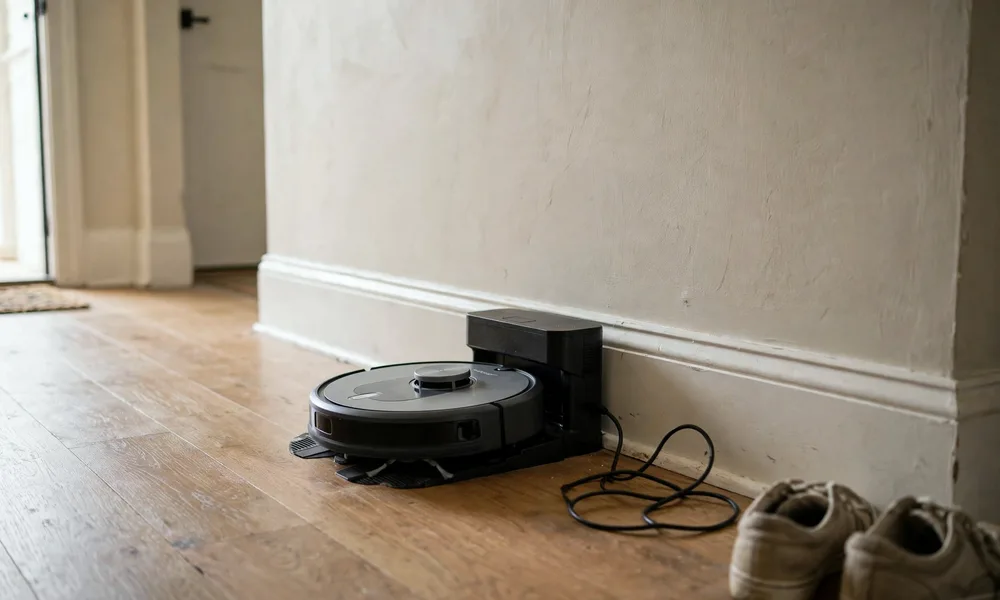
Running costs are where the brands diverge more clearly. Roomba replacement parts, filters, and bags are widely available but not cheap, and the bagged self-emptying base adds an ongoing cost. Shark parts are often cheaper, and the bagless base avoids the bag cost altogether. Over three years, a Shark can cost noticeably less to run than a Roomba, especially if you buy third-party filters and brushes. Roomba owners counter that their machines last longer, so the total cost over five years may be similar. Shark is cheaper to run year by year, while Roomba may last longer before it needs replacing.
The Best Side: Where Each Brand Wins
Roomba wins on navigation, obstacle avoidance, carpet cleaning, hair resistance, and long-term reliability. If you want a robot that maps your home properly, avoids the dog’s water bowl, cleans the carpet thoroughly, and keeps working year after year with minimal fuss, Roomba is the safer choice. Its premium models are among the best robot vacuums you can buy, and even its mid-range models feel thoughtfully engineered. The best Roomba for most people is a mid-range model with a self-emptying base, because that combination removes the two biggest chores: emptying the bin and babysitting the robot.
Shark wins on value, features per pound, suction on hard floors, dustbin size, and running costs. If you want a self-emptying robot with mopping, strong suction, and a big bin without paying a premium price, Shark is hard to beat. Its premium models offer a remarkable amount of technology for the money, and its budget models make robot vacuuming accessible to homes that would never consider a premium Roomba. The best Shark for most people is a mid-range model with a self-emptying base and a mop, because that is where Shark’s value advantage is largest.
The Worst Side: Where Each Brand Falls Short
The worst Roombas are the cheapest ones. A budget Roomba without mapping, without a self-emptying base, and with a small dustbin can feel like a step backwards, bumping around a room and needing constant emptying. It still cleans, but it does not feel like a smart robot, and buyers who expected premium behaviour are often disappointed. The worst Roomba mistake is buying the cheapest model and expecting it to behave like the flagship. If the budget only stretches to a basic Roomba, a mid-range Shark may be the better buy. The worst robot vacuums share the same flaws: poor navigation, tiny bins, and weak obstacle avoidance.
The worst Sharks are also the cheapest ones, and their flaws are different. A budget Shark can be noisy, its brush can tangle more than promised, its app can need frequent attention, and its battery can fade sooner than expected. Some owners also find that cheaper Shark models struggle with thresholds and thick rugs, getting stuck where a Roomba would climb over. Shark’s premium models avoid most of these problems, which is why the price gap between a cheap Shark and a good Shark is worth paying. The lesson for both brands is the same: the cheapest robot from a good brand is often a worse buy than a mid-range robot from either brand.

Verdict
The verdict is close, and it splits by home rather than by brand. For a carpeted home with pets, a larger house, or a buyer who wants the most reliable navigation and the least maintenance, Roomba wins. Its cleaning logic, rubber rollers, and obstacle avoidance make it the better daily cleaner in demanding homes, and its premium models justify their price over years of use. For a hard-floor home, a smaller flat, or a buyer who wants the most features for the money, Shark wins. Its value, suction, large bins, and bagless self-emptying bases make it the smarter buy when the budget matters and the floors are forgiving.
If you forced a single winner for the average home in 2026, Roomba takes it by a narrow margin, because navigation and reliability affect every single clean, while extra features only matter some of the time. But the margin is small, and a good Shark at the right price beats a bad Roomba at the wrong price every time. Buy the best model you can afford from either brand, favour a self-emptying base, and check the specific model’s mapping and brush design before you pay.
Who Each One Is For
Choose Roomba if you have pets that shed heavily, a lot of carpet, a larger or multi-room home, allergies that make a bagged self-emptying base worthwhile, or a low tolerance for babysitting a robot. Roomba suits buyers who want to set a schedule and forget the machine exists, and who are willing to pay a little more for that peace of mind. It also suits homes with cables, shoes, and clutter on the floor, because its obstacle avoidance is the most forgiving of the two.
Choose Shark if you have mostly hard floors, a smaller home, a tighter budget, or a wish list that includes mopping and self-emptying without a premium price. Shark suits buyers who like value and features, who do not mind emptying a bagless bin, and who want strong suction for everyday dust and debris. It also suits first-time robot vacuum buyers, because a mid-range Shark shows what the technology can do without a large financial commitment. The Dyson vs Shark vacuums comparison is worth reading too if you are weighing Shark against another big cleaning brand before you decide.


