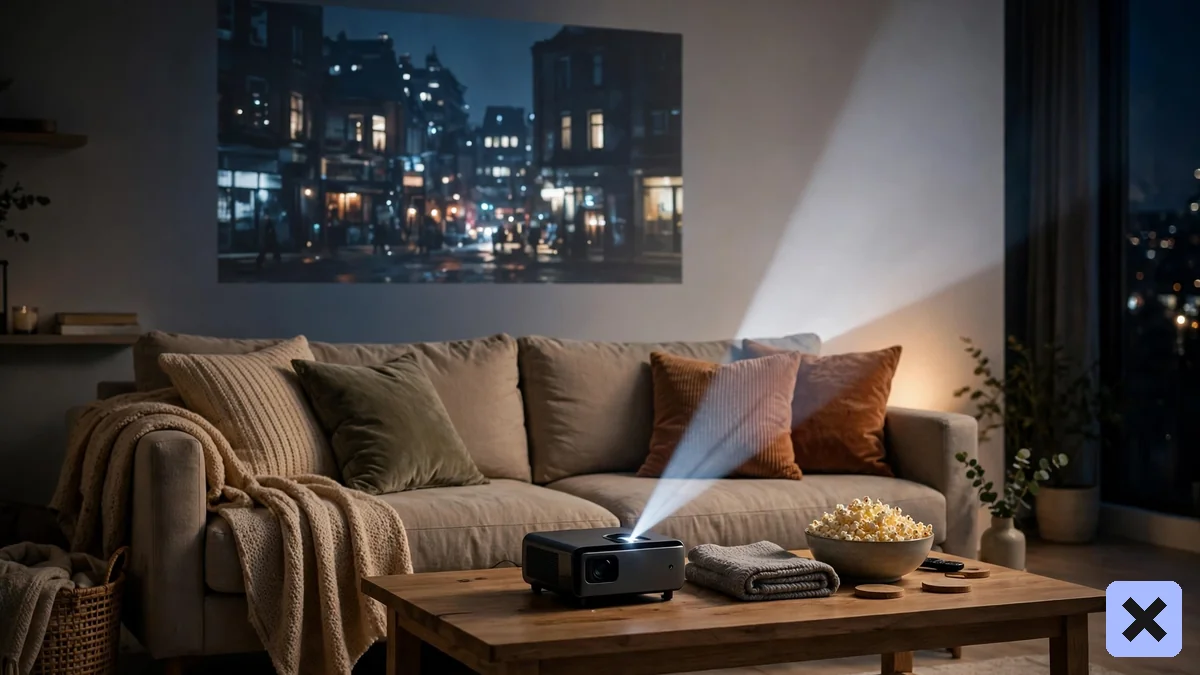
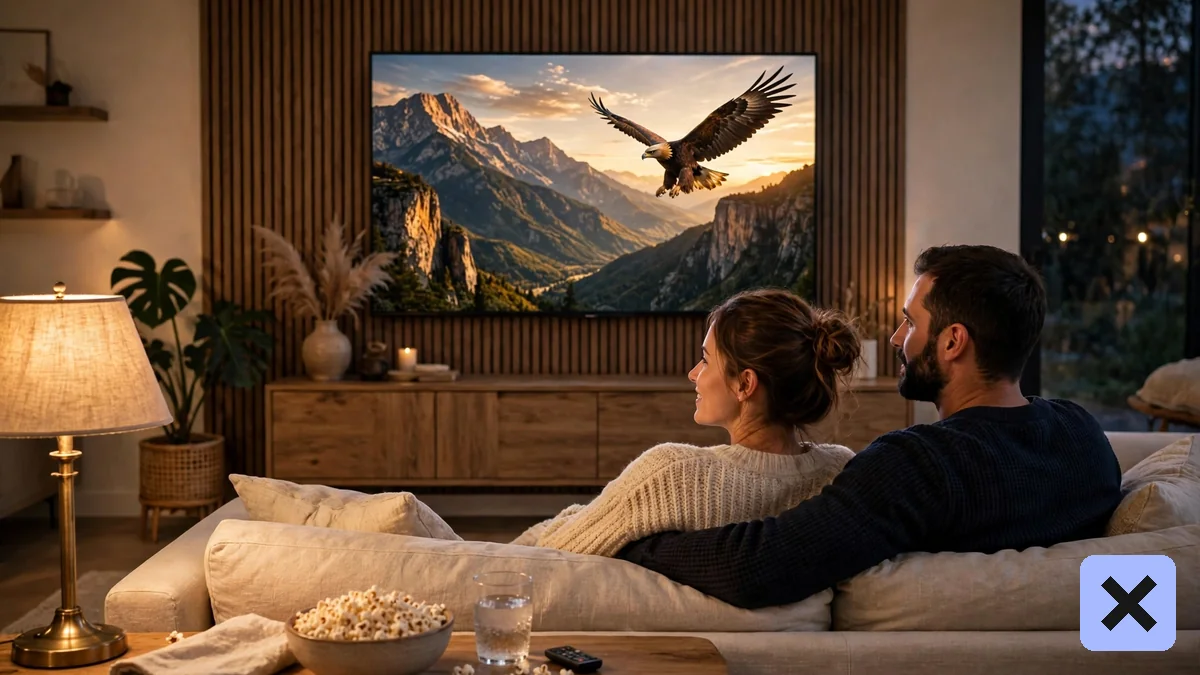
Choosing between a smart TV vs projector movie nights setup is one of the most satisfying home entertainment decisions you can make, because both options can turn an ordinary evening into a proper cinema experience. The right choice depends less on which technology is better in theory and more on your room, your habits, and how much effort you will put into setup. A bright television is effortless, while a projector can deliver a screen so large it changes how a film feels.
Movie nights have their own rhythm. Lights go down, snacks come out, and everyone settles in for two hours of story. The screen is the centre of that ritual, so it deserves more thought than a quick glance at a price tag. Brightness, contrast, sound, and seating distance all shape what you see once the credits roll.
This guide compares the two options across the things that matter most: picture quality, screen size, sound, ease of use, room conditions, and long-term cost. By the end, you will know which one fits your space and your way of watching.
Key takeaways
- A smart TV wins on brightness, sharpness, and simplicity, especially in bright rooms.
- A projector wins on sheer screen size and cinema feel, with 100-inch-plus images for far less per inch.
- Dark rooms favour projectors, while bright living rooms favour televisions almost every time.
- Both need decent sound to feel cinematic, so budget for a soundbar or speakers.
- The best choice matches your room and your patience for setup, not the biggest specification sheet.

Picture Quality: Sharpness, Brightness, and Contrast
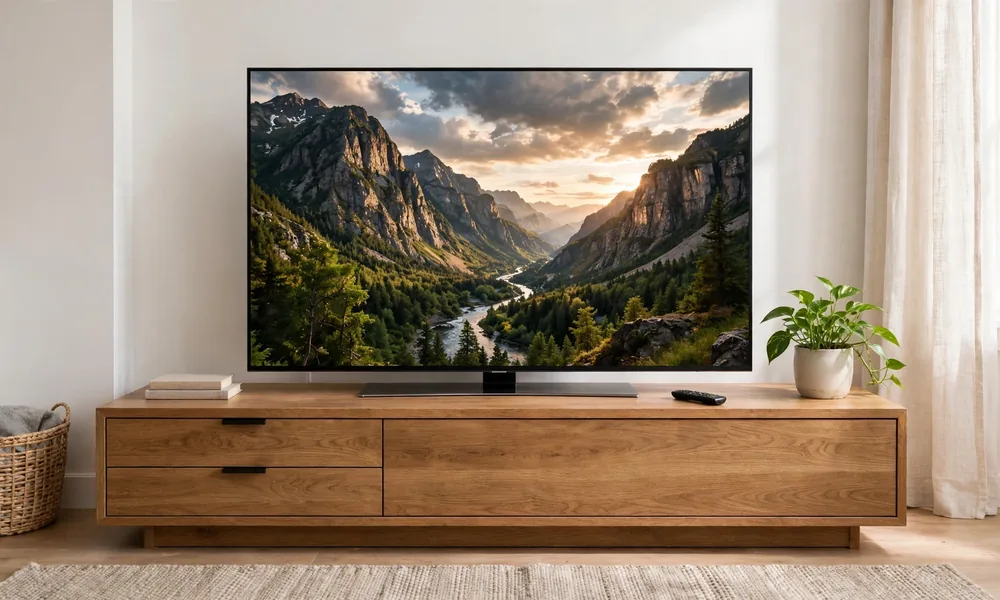
Picture quality is where the smart TV makes its strongest case. Modern televisions are bright, with vivid colours and deep blacks that hold up even when a lamp is on or daylight creeps through the curtains. A good 4K television resolves fine detail beautifully, and high dynamic range makes highlights sparkle. For most living rooms, the television looks better with less fuss.
Projectors have closed the gap, but they play by different rules. A projector throws light onto a screen or a wall, so the image is only as good as the darkness around it. In a properly darkened room, a quality projector produces a rich, film-like picture that many film lovers prefer. In a bright room, the same projector looks faded and flat, because ambient light competes directly with the projected image.
Contrast is the other half of the story. Televisions with local dimming or OLED panels deliver inky blacks that make night scenes feel deep and detailed. Projectors struggle to produce true black, since black on a screen is really just the absence of projected light. Give a projector darkness and it rewards you, while a television performs well almost anywhere.
Resolution matters too, though less than marketing suggests. A 4K television looks razor sharp at a normal viewing distance, and a true 4K projector can match it on a much larger screen. Budget projectors that simulate 4K still look good from the sofa, but fine detail is softer, so genuine 4K is worth paying for if you sit close to a very large screen.
What About HDR and Colour?
High dynamic range is more impressive on a television, because the panel can push bright highlights far above the rest of the image. Projectors handle HDR more gently, with less peak brightness but a pleasing, natural rendering of colour. The television is punchier, the projector softer and more cinematic, and fans of the real cinema look will appreciate the projector’s quiet charm.
One caution is worth remembering: not every big screen is a good buy. Our guide to the worst smart TVs for ads shows how some cheap televisions bombard you with advertising and sluggish menus, which can spoil the experience no matter how good the panel looks on paper. The software and the daily experience matter just as much.
Screen Size and the Cinema Feeling
Size is the projector’s superpower. A 65-inch television feels generous, and a 75-inch or 85-inch model feels huge, but a projector can throw a 100-inch, 120-inch, or even larger image for a fraction of the price of a television that size. That scale changes the feeling of a film: faces become life-size and the room disappears.
Immersion depends on how much of your field of view the screen fills. A smaller screen viewed from close up can feel as immersive as a larger one viewed from further away. Televisions win in small rooms where you sit close, while projectors win in larger rooms, or when you want true theatre scale that no reasonably priced television can match.
Sound: The Half of Movie Night People Forget
Great picture with thin sound is a wasted opportunity. Built-in television speakers have improved, but they are still small drivers in a slim cabinet, and they cannot produce the depth that makes action scenes thrilling. Projectors are in the same position, often worse, since many have tiny speakers designed only as a backup. Either way, plan for better audio.
A soundbar is the simplest upgrade and transforms both setups. A mid-range soundbar with a subwoofer gives dialogue clarity and bass impact that built-in speakers cannot match. If you want the full cinema effect, a surround system with rear speakers places sound around the room. Televisions pair just as well with surround sound, so audio is a shared requirement, not a deciding factor.
When the film ends, the same setup serves other kinds of entertainment too. If you love gripping stories after the credits roll, the best true crime podcasts of 2026 are a great next listen through your new speakers.
Ease of Use and Smart Features
A smart TV is the definition of convenience. You press one button, the television wakes, and your streaming apps are right there on the home screen. There is no warm-up time, no focus to adjust, and no screen to pull down. For spontaneous movie nights and families with children, the television is unbeatable.
A projector asks a little more of you. It needs a minute to warm up, the room needs darkening, and the screen needs to be in place. Modern projectors have improved enormously, with autofocus, automatic keystone correction, and built-in streaming apps, but there is still a short setup moment before the film begins. Some people enjoy that ritual; others find it a barrier on busy evenings.
Smart features are broadly similar now. Most televisions run polished streaming platforms with voice search and app stores, while many projectors include the same platforms built in. If your projector lacks smart features, a small streaming stick solves the problem for very little money. Either way, you will not be short of things to watch, though it helps to know which titles are worth your evening. Our roundup of the worst documentaries on streaming is a useful reminder that a great screen cannot rescue a dull film.
Your Room Decides More Than the Spec Sheet
Light control is the single biggest practical factor. If your living room has large windows, white walls, and lamps you like to keep on, a television is the sensible choice. It shrugs off ambient light and looks good at any hour. A projector in the same room will look washed out unless you add blackout curtains and dim the lights.
Wall colour and surface matter for projectors more than most buyers expect. A dedicated screen gives the best result, reflecting light evenly back to the seats. A plain white wall can work well if it is smooth and matte, but textured or coloured walls will tint and soften the image. Televisions have no such requirement.
Space and layout matter too. A projector needs throw distance, the space between the lens and the screen that determines image size. Short-throw models can sit close to the wall, but standard ones need several metres, which not every room can spare. You also need somewhere to mount the projector, plus cable runs for power and video. A television needs only a bracket or a stand.

Cost Over Time
Upfront cost favours the projector when you compare screen size for screen size. A good 4K projector and a decent screen can deliver a 100-inch-plus image for less than a premium 85-inch television. At smaller sizes, the television is cheaper, because a quality 55-inch or 65-inch model costs less than a projector and screen combination.
Running costs tell a different story. Projector lamps wear out and need replacing after a few thousand hours, and replacements are not cheap. Laser projectors last far longer, often 20,000 hours or more. Televisions have no lamp to replace and typically run for years with almost no maintenance. Add up the full system before comparing prices, because the screen or television alone is only part of what you will buy.
Smart TV vs Projector: Head-to-Head Comparison
| Feature | Smart TV | Projector |
|---|---|---|
| Picture brightness | Excellent, even in daylight | Best in a dark room |
| Screen size | Up to 85 inches at sensible prices | 100 inches and beyond |
| Contrast and blacks | Deep blacks, punchy HDR | Softer blacks, film-like image |
| Ease of use | Instant on, apps built in | Short setup ritual each time |
| Sound out of the box | Basic but usable | Usually weak, needs speakers |
| Best room | Bright living rooms | Dark, dedicated spaces |
| Maintenance | Almost none | Lamp or filter care over time |
Checklist: Pick the Right One for Your Movie Nights
- Measure your seating distance and wall space before choosing a size.
- Check how much light your room gets, and whether you can darken it easily.
- Decide whether you want instant viewing or enjoy a short setup ritual before the film.
- Budget for sound, because a soundbar or speakers transform either option.
- Compare the full system cost, including screen, mount, and cables.
- Think about everyday use too, since a television doubles as a daily screen.
Frequently Asked Questions
Is a projector better than a TV for movies?
A projector is better for the cinema feeling, because it delivers a much larger image that fills your vision. A television is better for picture quality in normal light, for sharpness, and for convenience. The better choice depends on your room and how you watch.
Can you use a projector in a bright room?
You can, but the picture will look faded unless you control the light. Blackout curtains, dimmed lamps, and a screen designed for ambient light all help. If your room stays bright, a television is the safer choice.
How big should a movie night screen be?
Aim for a screen that fills roughly 30 to 40 degrees of your field of view from your usual seat. For most living rooms, that means 65 to 75 inches for a television, or 100 to 120 inches for a projector.
Do projectors need a special screen?
A dedicated screen gives the sharpest, most even image, but a smooth matte white wall works well as a starting point. Avoid textured or coloured walls, which soften the picture and shift the colours.
Which is cheaper in the long run?
A television is usually cheaper over time, because there are no lamps to replace and almost no maintenance. A projector can be cheaper upfront for a very large image, but lamps and accessories add up. Laser projectors last much longer and narrow the gap.
Can I use a projector for everyday TV as well?
Yes, many people do, especially with a laser projector and a screen that handles ambient light. It is less convenient than a television for quick viewing or daytime watching, so most projector owners keep a television for everyday use and save the projector for films.
The Bottom Line
For most living rooms, a smart TV is the best choice for movie nights: bright, sharp, simple, and ready the moment you sit down. For a dedicated dark space, a projector is unbeatable, turning an ordinary film into an event. Match the screen to your room, budget for good sound, and choose the option you will enjoy using every week.