A sports bottle is not a water bottle with a sportier label. It is a bottle built to be drunk from while you are moving: one hand on the handlebars, one foot striking the pavement, or thirty seconds on the sideline before you are back in the game. The best sports bottles of 2026 let you drink without stopping, without looking down, and without wearing half the contents. The worst make you fumble, leak into your bag, or force you to unscrew a lid with both hands at exactly the moment you need both hands for something else.
Key Takeaways
- Buy the sports bottle for your sport first: cycling, running and team sports point to different bottles.
- A squeeze bottle with a bite valve is the best all-rounder for drinking on the move without stopping.
- Check the cage fit before you buy: most bike cages take a bottle about 74 millimetres across.
- Soft flasks suit runners because they collapse as you drink and never slosh, but they hold less.
- Clean the valve and cap every time you use the bottle, because mould starts in the parts you cannot see.
What Makes a Sports Bottle Different
Every bottle holds water. A sports bottle earns its name by how it behaves while you are using it. A desk bottle sits still, gets picked up with two hands, and is judged on insulation and looks. A sports bottle is judged on whether you can open it, drink from it and close it again without breaking stride, and whether it stays where you put it when the ground gets rough. That is a different test, and it changes every buying decision that follows.
The obvious difference is the cap. A sports bottle opens with a bite, a squeeze or a flip, never with a full unscrew. The second difference is the body: it is shaped to be gripped hard, pulled from a cage or a vest pocket, and dropped without splitting. The third is the seal, which has to survive being thrown into a kit bag on its side. Our guide to the best water bottles covers the everyday bottles for desks, cars and commutes, and this guide starts where that one stops: bottles for moving fast, sweating hard and drinking without stopping.
The Main Types of Sports Bottle
Squeeze Bottles: The Classic Sports Bottle
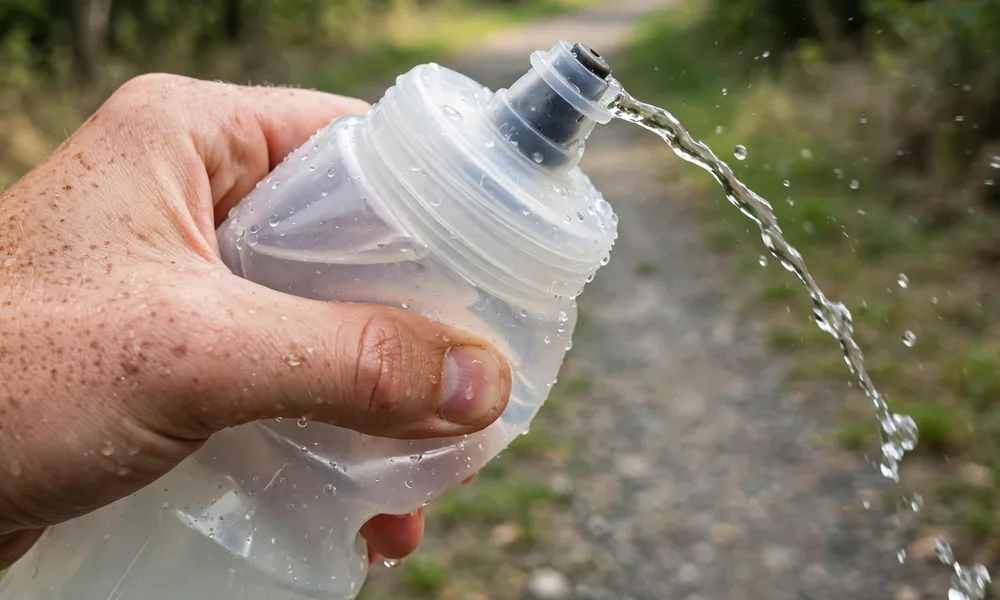
The squeeze bottle is the bottle most people picture when they hear the words sports bottle: a soft plastic body with a pull-top or bite valve, made to be squeezed. You pull it from the cage, bite or pull the valve, squeeze, and drink, all with one hand, without ever stopping. It is light, cheap, and easy to replace when it gets dropped under a wheel or left on a bench. For cycling it is still the standard, and for good reason: no other bottle is as fast to drink from at speed.
Soft Flasks: The Runner’s Bottle
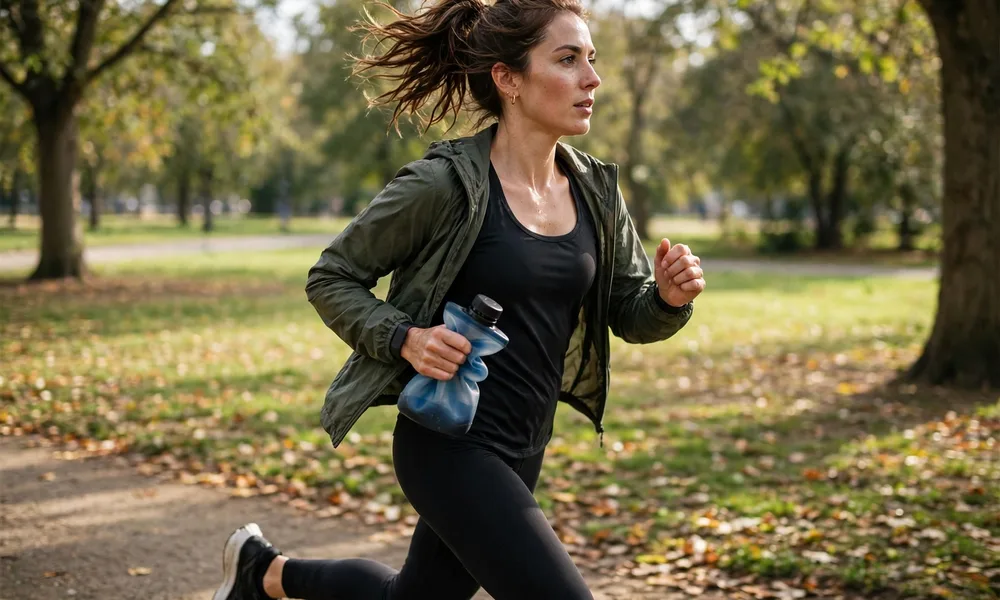
A soft flask is a flexible pouch, usually 250 to 500 millilitres, that collapses as you drink from it. It weighs almost nothing, fits in a running vest pocket or a belt, and never sloshes, because there is no air inside it to slosh around. That silence matters on a long run: a half-empty rigid bottle sloshing in a pocket is a small annoyance that grows with every mile. A soft flask just gets smaller and quieter.
An insulated steel sports bottle is the heavyweight of the family: double-wall vacuum insulation, a powder-coated grip, and a sports cap that flips or twists open. It keeps water genuinely cold for hours, survives being knocked off a bench onto concrete, and does not hold flavours. For long sessions in the heat, or for anyone who hates warm water, it is the most comfortable bottle to drink from.
Choose by Your Sport
Cycling: Cage Fit Comes First
For cycling, the bottle must fit the cage, and most cages are built for a bottle about 74 millimetres across. A bottle a few millimetres too wide will not seat, and one too narrow rattles out on the first pothole. Measure your cage, or take the bike to the shop, and test the fit before you buy: slide the bottle in and out with one hand, because that is how you will do it at speed. A 750-millilitre squeeze bottle is the standard size for road riding, big enough for an hour between refills and light enough to carry two of.
Running: Light, Quiet and Close to the Body
Runners should carry the smallest bottle that covers the run, because every gram bounces. A 250 to 500-millilitre soft flask in a vest pocket, or a small handheld squeeze bottle with a strap, beats a rigid bottle every time. The flask collapses as you drink, so it never sloshes, and a handheld bottle with a strap leaves your fingers free instead of forcing you to grip all the way round. For runs under an hour in cool weather, many runners carry nothing at all and drink before and after; for anything longer, or any run in the heat, carry water and drink little and often rather than waiting until you are thirsty.
Team Sports: Big, Tough and Easy to Refill
Football, rugby and hockey need volume and toughness. A 750-millilitre to one-litre squeeze bottle per player, with a pull-top that opens with a tug and a body that survives being dropped on tarmac, is the right call. Numbered caps or coloured bottles stop arguments about whose is whose, and a wide mouth lets a coach refill a dozen bottles from a jug in a couple of minutes. Keep a spare or two in the kit bag, because at least one bottle will be left behind every season.
Gym and Classes: Borrow From the Gym Guide
For the gym, the priorities shift: a bottle that stands steady on the floor, opens with one sweaty hand between sets, and survives being knocked off a bench. That is a different job from drinking on the move, and our guide to the best water bottles for the gym covers it in full, including shaker bottles for protein and straw lids for sipping mid-set. If your sport is the gym, start there; if your sport takes you outside, keep reading.

Valves, Caps and Lids
The valve is the part of a sports bottle you touch most, and it is where cheap bottles fail first. A bite valve opens when you bite it and seals when you let go, which makes it the fastest option on a bike or a run. The weakness is wear: after months of biting, the slit softens and the bottle starts to weep in your bag. A pull-top valve opens with a tug and closes with a push, which is simpler and tougher, but it needs a free hand and a firm grip, which is awkward at speed. A flip-top cap opens with a thumb and stays open while you drink, which suits sideline use, but the hinge is a moving part and moving parts break.
Size, Material and What You Drink
Material is a trade between weight, temperature and durability. Soft plastic is lightest and cheapest, and it is the only sensible material for a squeeze bottle or a soft flask. Steel keeps water cold and survives drops, but it is heavy and usually too wide for a cage. Hard plastic, usually Tritan, sits in the middle: light, clear, and tough enough for a sideline, though it does not insulate. Whatever you buy, look for BPA-free plastic and a bottle that is dishwasher safe or has a mouth wide enough for a bottle brush.
What you drink changes the cleaning. Plain water needs a daily rinse. Electrolyte drinks and energy mixes leave sugar and salts in the valve, so rinse the bottle and valve with hot water as soon as you finish, and wash it properly with hot soapy water at least once a day. Our guide to the best electrolyte drinks explains which formulas actually replace what you lose in sweat, and every one of them is stickier than water, so the cleaning rule stands whatever you mix. Never leave a sports drink in a closed bottle overnight: by morning it will smell, and the smell is very hard to wash out.
Sports Bottles Compared
Sports Bottle Buying Checklist
- Match the bottle to your sport first: cage fit for cycling, low bounce for running, volume for team sports.
- Test the valve with one hand, then shake the bottle upside down and check for even a single drop.
- Check the bottle fits your cage, vest pocket or bag pocket before you buy, because a bottle that does not fit stays at home.
- Pick the size for your session: 500 to 750 millilitres for most training, a litre only for long hot days.
- Make sure the valve and cap come apart for cleaning, and that spare valves or caps are sold.
- Plan the cleaning: rinse after every use, wash with hot soapy water daily, and never store it sealed while damp.
Frequently Asked Questions
What size sports bottle should I buy?
For most people, 500 to 750 millilitres is right. It holds enough for a typical hour-long session and fits a bike cage, a vest pocket or a bag. Go bigger only for long sessions, hot days or team sports, and remember that two smaller bottles often beat one huge one.
Are squeeze bottles better than steel bottles for sport?
For drinking on the move, yes: a squeeze bottle is lighter, faster to drink from with one hand, and fits a bike cage. Steel wins on keeping water cold and surviving drops, so it suits the sideline and long hot sessions. Many athletes own one of each.
How do I stop my sports bottle leaking in my bag?
Choose a bottle with a valve that seals completely and a dust cap that covers it, test it upside down before you buy, and check the valve monthly for wear. A softened bite valve is the most common cause of leaks, and it cannot be fixed, only replaced.
Can I put sports drinks in any sports bottle?
Yes, but sugary drinks leave residue in valves and straws, so rinse the bottle and valve with hot water straight after use and wash it daily. A bottle with a valve that comes apart is essential if you drink anything sweeter than water.
What is a soft flask, and do I need one?
A soft flask is a flexible pouch that collapses as you drink, so it never sloshes and weighs almost nothing. You need one if you run with a vest or a belt and want water without bounce. You do not need one for cycling or team sports, where a rigid bottle works better.
How often should I replace a sports bottle?
Replace it when the plastic turns cloudy or scratched, the valve no longer seals, or the bottle holds a smell after washing. For a bottle used several times a week, that is usually within a year or two, and a cheap squeeze bottle is worth replacing sooner rather than nursing along.
The Bottom Line
The best sports bottle in 2026 is the one that lets you drink without stopping, fits the place it has to live, and seals tightly enough to trust in your bag. For most people that means a 750-millilitre squeeze bottle with a bite valve for the bike, a soft flask for running, or a big tough team bottle for the sideline, with an insulated steel bottle alongside for long hot days. Buy for the sport you actually do, test the valve before you trust it, and wash the bottle properly every day.