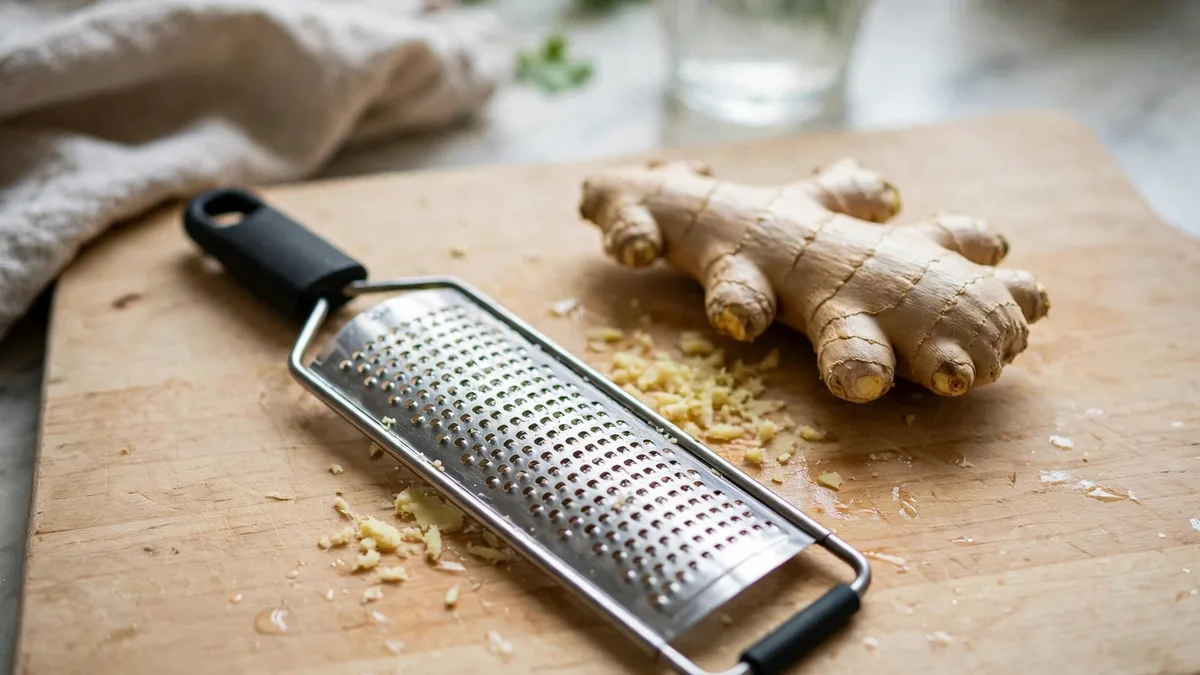
A ginger grater decides whether fresh ginger melts into a dish or sits in stringy shreds. Ginger graters shred a fresh root into a fine, wet pulp, and that pulp spreads its bright, citrusy heat evenly through a stir fry, a curry, or a mug of tea. Chopped ginger stays in lumps, and ground ginger tastes hotter and flatter. If you cook with fresh ginger more than once a week, a good grater is the cheapest upgrade your kitchen will ever get.
Most kitchens already own something that can grate ginger after a fashion: the fine side of a box grater, a rasp zester, or a garlic press. A box grater is too coarse for a fibrous root and leaves long strings that wrap around the teeth. A rasp zester does a fine job but clogs quickly with wet pulp. A dedicated ginger grater is built for one wet, fibrous ingredient, with teeth wide enough to cut fibres.
Key takeaways
- A fine rasp grater is the best all-round ginger grater, because its sharp teeth cut fibres instead of tearing them.
- Peel ginger with the edge of a teaspoon, which follows the curves of the root and wastes less flesh than a peeler.
- Grate ginger straight from the freezer: frozen ginger grates finer, with less string.
- One teaspoon of ground ginger replaces about a tablespoon of grated fresh ginger, so never swap them one for one.
- Rinse a ginger grater straight after use, or the sticky pulp dries into the teeth.
Why grated ginger beats chopped ginger
Ginger is the rhizome of a tropical plant, and its flavour comes from gingerols, the compounds that give fresh ginger its sharp, warming heat. When ginger is dried or cooked, those gingerols partly convert into shogaols, which are hotter and less bright. That is why the forms taste different: fresh ginger is bright and citrusy, dried ginger is hotter, and cooked ginger is mellow. Grating releases the flavour best, because it breaks the most cell walls.
Chopped ginger cannot do the same job: even finely chopped, it stays in pieces, and each piece delivers a burst of heat in one bite and nothing in the next. Grated ginger spreads evenly. The best ginger for cooking is fresh, firm, and heavy for its size, with thin skin and pale yellow flesh that smells sharp and citrusy when you cut it. A tired root is dry and stringy, and no grater can rescue it.
The main types of ginger grater
Every ginger grater falls into one of four families, each trading fineness against cleaning. Most cooks need only one, and the right one depends on how often you grate ginger.
Flat rasp graters
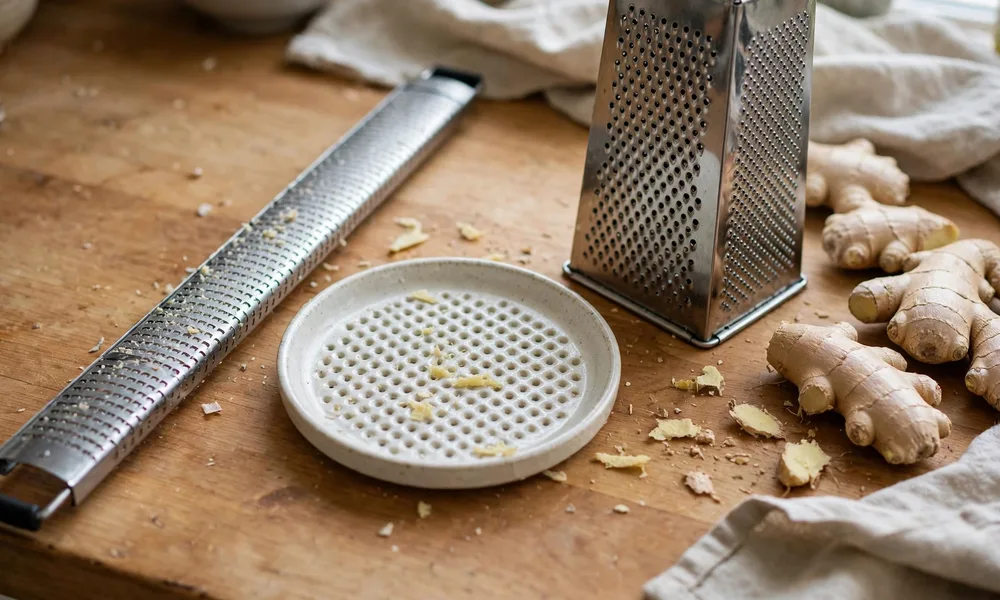
A flat rasp grater is a long steel blade with hundreds of tiny etched teeth, and it is the best all-round ginger grater. The teeth are razor sharp and cut the fibres cleanly, turning a knob of ginger into a fine, wet pulp in a few strokes. It also handles garlic, citrus zest, hard cheese, and nutmeg. The best zesters use exactly this rasp design, and for citrus it is the whole story. For ginger, the rasp is fast and fine, but it clogs with pulp, so rinse it between batches.
Ceramic grater plates
A ceramic grater plate is a small, shallow dish covered in tiny raised bumps, and it is the traditional Japanese way to grate ginger. You rub the peeled root in circles over the plate, and the pulp collects in the dish while the juice pools around it. The plate grates finer than any steel rasp, with almost no string. Its weakness is speed: it suits small amounts, a teaspoon or two for a dressing or a tea, rather than a whole root for a curry.
Box graters and paddle graters
A box grater is the all-rounder most kitchens already own, and its fine side grates ginger well enough for everyday cooking. The shreds are coarser than a rasp, and the fibres wrap around the teeth, so it is slower and stringier, but it costs nothing extra. A flat paddle grater is a better middle ground: a single steel plate with a handle, laid over a bowl, so the pulp falls straight where it is needed. It is light, quick, and easy to rinse.
Ginger graters compared at a glance
| Grater type | Fineness | String | Cleaning | Best for |
|---|---|---|---|---|
| Flat rasp | Finest pulp | Very little | Rinse or brush | Everyday grating, garlic, zest |
| Ceramic plate | Finest, smoothest | Almost none | Easiest, rinse clean | Small amounts, tea, dressings |
| Paddle grater | Fine pulp | Little | Easy rinse | Grating over a bowl or pan |
| Box grater, fine side | Medium, coarser | Most string | Needs a brush | Everyday cooking, cheese, vegetables |
Ginger grater vs nutmeg grater: the sibling distinction
Ginger graters and nutmeg graters look like siblings, but they are built for opposite jobs. A ginger grater is a fine rasp built for a fresh, wet root: it shreds fibrous, juicy ginger into a fine, wet pulp that melts into a stir fry, with wide, sharp teeth that cut through fibres instead of clogging. A nutmeg grater is built for a whole, dry, hard spice, and it shaves a small, dense seed into a dry, fine dust, with a chamber or a holder that keeps a seed the size of an olive under control.
The distinction matters in practice. Use a rotary nutmeg grater on fresh ginger and the wet pulp smears across the drum and clogs the teeth. Use a ginger rasp on nutmeg and it will work, but you will be holding a tiny hard seed with bare fingertips against a razor edge. The rule is simple: a ginger grater handles wet roots, a nutmeg grater handles dry seeds, and the rasp is the one shape that crosses over with a guard or a holder.
How to grate ginger properly
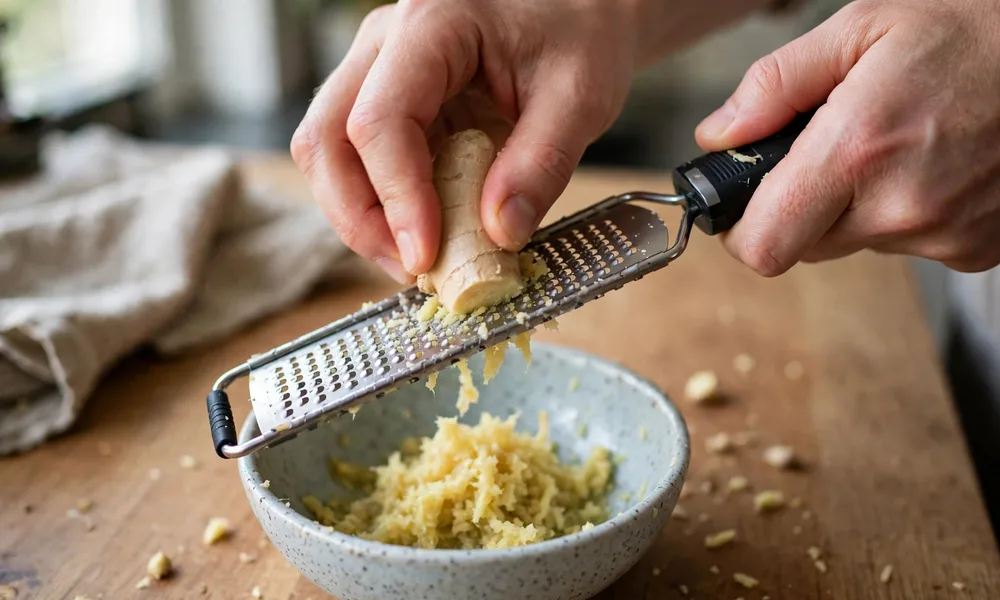
Peel the ginger first, with the edge of a teaspoon. The spoon follows the curves of the root and wastes far less flesh than a peeler or a knife. Young ginger, with thin skin, barely needs peeling at all. Older ginger is more fibrous and hotter, and it suits long cooking. Grate only what you need, because grated ginger loses its brightness within hours.
Hold the grater firmly with one hand and use long, even strokes with the other, letting the teeth do the work. Press lightly: pressure makes the root slip, and a slipping root is how knuckles meet teeth. Grate over a bowl, so the juice is caught with the pulp. For the finest result, grate ginger straight from the freezer: frozen ginger grates finer, with less string, and a frozen root keeps for months.

What makes a good ginger grater
Sharpness decides everything. A good ginger grater uses sharp, etched stainless steel teeth, cut cleanly and spaced evenly, so each stroke cuts the fibres instead of tearing them. Dull teeth mash the root into stringy shreds, and stringy ginger is the complaint that puts most cooks off fresh ginger entirely. Stainless steel beats thin plastic, because it stays sharp longer and does not stain.
Size and grip matter more than they look. A long rasp blade of about twenty centimetres gives the longest stroke and the fastest work, and the handle stays well clear of your knuckles. A shorter blade suits small hands and crowded drawers, but it means more strokes and more chances to slip. A comfortable, non-slip handle matters most when your hands are damp and the root is cold from the fridge.
Common mistakes that spoil the ginger
The most common mistake is grating ginger with the skin still on. The skin is thin, but it is tough and bitter, and it wraps around the teeth and clogs the blade. Peel first, even when you are in a hurry. The second mistake is using the wrong form: fresh ginger for stir-fries, curries, and tea, ground ginger for baking, where it spreads evenly through a batter. Ground ginger is roughly four times stronger by volume than fresh, so one teaspoon of ground ginger replaces about a tablespoon of grated fresh ginger.
The third mistake is grating too much at once. Grated ginger loses its brightness within hours, so grate only what the dish needs. The fourth mistake is buying a tired root: soft, wrinkled, or mouldy ginger is dry and stringy, and no grater can rescue it. Pick a piece that feels heavy and solid, with smooth, tight skin.
Cleaning and care
Cleaning is where a ginger grater lives or dies. Ginger pulp is sticky, and once it dries in the teeth it is almost impossible to shift. Rinse a rasp under running water straight after use, brushing along the teeth in the direction they point, never against them. A ceramic plate needs only a rinse, and a box grater needs a brush across each side. Never leave a used grater in the sink to soak: the pulp sets like glue.
Most good graters are dishwasher safe, but hand washing keeps the teeth sharp for longer, and it takes less than a minute. Dry the grater fully before putting it away, and keep the blade cover on whenever the grater is not in use. Replace a rasp when the teeth feel smooth, when it tears the root instead of cutting it, or when it needs real pressure to take anything off.
Checklist: buying a ginger grater
- Choose a flat rasp for everyday grating, or a ceramic plate for the finest pulp.
- Check the teeth are sharp, etched stainless steel, evenly spaced, with no rough burrs.
- Pick a blade about twenty centimetres long, with a handle that keeps your knuckles clear.
- Make sure the handle is comfortable and non-slip, especially for damp hands and cold roots.
- Look for a blade cover, so a bare rasp cannot cut you in a busy drawer.
- Confirm it rinses or brushes clean in under a minute.
Frequently asked questions
Do I need to peel ginger before grating it?
Yes, except for very young ginger with thin skin. The skin is tough and bitter, and it wraps around the teeth and clogs the blade. Peel with the edge of a teaspoon, which follows the curves of the root.
Can I grate ginger straight from the freezer?
Yes, and it works better frozen. Frozen ginger grates finer, with less string, and a frozen root keeps for months. Peel it first, wrap it well, and grate exactly what you need straight from the freezer.
Can I use a ginger grater for garlic and nutmeg?
Yes, within limits. A rasp ginger grater turns garlic into a paste and grates hard cheese and citrus zest beautifully. It also grates nutmeg, but a nutmeg grater is safer for a tiny, hard seed, because it holds the nut.
How much grated ginger should I use?
About a tablespoon of grated fresh ginger for a family stir fry or curry, and a teaspoon for a single mug of tea. Fresh ginger is milder than ground ginger by volume, so one teaspoon of ground ginger replaces about a tablespoon of grated fresh ginger.
Why is my grated ginger so stringy?
Stringy ginger usually means a dull grater, an old root, or the wrong side of a box grater. Use a sharp rasp, buy firm, heavy roots with smooth skin, and grate across the fibres rather than along them.
How do I clean a clogged ginger grater?
Rinse it under running water straight after use, brushing across the teeth from the back, or dried pulp glues itself in. Never soak a grater, and never brush against the teeth.
The bottom line
The ginger grater that earns its place in 2026 is a long, flat rasp with fine, etched teeth, a comfortable handle, and a blade cover for the drawer. Peel with a teaspoon and grate over a bowl so the juice is caught. Our verdict: a sharp rasp grater is the difference between fresh ginger that melts into a dish and fresh ginger that sits in stringy shreds.