
Best Ginger for Cooking, Tea and Baking in 2026
The best ginger for cooking, tea and baking in 2026 is fresh, firm and heavy for its size, with thin, papery skin and pale yellow flesh that smells sharp and citrusy the moment you cut it. A good piece of ginger is juicy, fragrant and warm in a way that lifts everything it touches, from a stir-fry to a mug of tea to a tray of gingerbread. A tired root, by contrast, is dry, stringy and hot without flavour. The difference is not the price on the shelf. It is freshness and form, because fresh, ground and crystallised ginger are not interchangeable, and using the wrong one is the fastest way to a flat result.
Most kitchens already have ginger in some form and most of them use it badly. A jar of ground ginger sits at the back of the cupboard for three years and tastes of dust. A piece of fresh root dries out in the fridge drawer and turns to wood. A cook reaches for fresh ginger in a cake where ground ginger would have spread its warmth evenly, or stirs ground ginger into tea where slices of fresh root would have given a clean, bright heat. This guide explains what ginger actually is, how to pick a good piece, which form suits cooking, tea and baking, how to store it, and the mistakes that quietly ruin it.
Key Takeaways
- Buy fresh ginger that is firm, heavy and smooth-skinned, with a sharp citrus smell when you scratch the skin; avoid soft, wrinkled or mouldy pieces.
- Fresh, ground and crystallised ginger are different ingredients: fresh for stir-fries, curries and tea, ground for baking, crystallised for finishing and snacking.
- Ground ginger is roughly four times stronger by volume than fresh, so one teaspoon of ground ginger replaces about a tablespoon of grated fresh ginger.
- Peel ginger with the edge of a teaspoon, which follows the curves of the root and wastes far less flesh than a peeler or a knife.
- Store fresh ginger wrapped in the fridge for three weeks, or peeled and frozen for months, and grate it straight from frozen when you need it.
What Ginger Actually Is
Ginger is the rhizome, the underground stem, of a tropical flowering plant, and the part we eat is the knobbly, pale-gold root in the vegetable aisle. Its flavour comes from gingerols, the compounds that give fresh ginger its sharp, warming heat. When ginger is dried or cooked those gingerols partly convert into shogaols, which are hotter and less bright. That chemistry is why the forms taste different: fresh ginger is bright and citrusy, dried ginger is hotter and more pungent, and cooked ginger is mellow and warm.
Ginger earns its place in almost every cuisine because it does several jobs at once. It adds heat without the burn of chilli, brightness without the sourness of citrus, and a warm, almost floral note that makes rich food taste lighter. In baking it is the backbone of gingerbread and ginger snaps, where its heat balances the sweetness of sugar and treacle. It is worth remembering that ginger ale and ginger beer are flavoured drinks, not substitutes for ginger in cooking: most contain only a little real ginger, and none gives you the fresh heat or texture a recipe needs.
The Main Types of Ginger
You will find ginger in at least five forms, and choosing between them is the single most useful ginger skill there is. Each form has a job it does well and jobs it does badly, and the failures people blame on ginger are usually failures of form.
Fresh Ginger
Fresh ginger is the whole root, and it is the most versatile form there is. It grates, slices, minces and juices, and it works in stir-fries, curries, soups, marinades, dressings and tea. Look for pieces that feel heavy for their size, with smooth, tight skin and no soft spots; snap off a tip and it should break cleanly and smell sharp and lemony. Older ginger is more fibrous and hotter, and it suits long cooking where its flavour has time to mellow. Fresh ginger keeps about three weeks wrapped in the fridge, and months in the freezer.
Ground Ginger
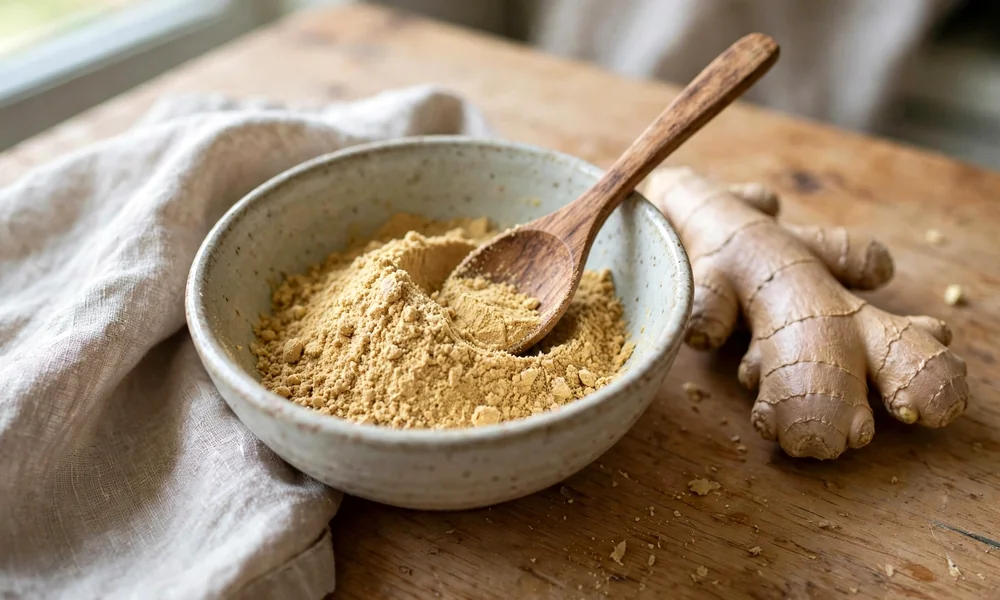
Ground ginger is fresh ginger dried and milled into a fine powder, and it is the right choice for baking above all else. It spreads evenly through a batter or dough, where fresh ginger would sit in wet lumps, and its hotter flavour stands up to sugar, butter and treacle in a way fresh ginger cannot. Remember the strength rule: one teaspoon of ground ginger is roughly equal to a tablespoon of grated fresh ginger, and using them one-for-one in either direction is the most common ginger mistake in baking. Buy ground ginger in small jars, because like all ground spices it fades within six months of opening, and a stale jar tastes of dust, not ginger.
Crystallised and Candied Ginger
Crystallised ginger is fresh ginger cooked in sugar syrup and rolled in sugar, and it is a finishing ingredient rather than a cooking one. It is chewy, sweet and fiercely gingery, and it belongs chopped into biscuits, folded through fruit cake, scattered over ice cream or eaten on its own. Do not use it as a substitute for fresh ginger in a savoury dish: the sugar changes the flavour and the texture, and a stir-fry made with crystallised ginger tastes like a pudding gone wrong.
Ginger Paste and Ginger Juice
Ginger paste is fresh ginger blended smooth, sold in jars and tubes, and it is a genuine time-saver for weeknight curries and marinades, where grating ginger every night is a chore too far. Ginger juice is the pressed liquid from fresh root, sold in small bottles, and it is useful in dressings, glazes and drinks where you want the flavour with no fibre at all. Both are conveniences, not replacements: neither keeps as long as the whole root, and both lose their brightness within a few weeks of opening, so buy small and use them quickly.
How to Pick the Best Ginger in 2026
The best ginger of 2026 is fresh, firm and fragrant, and you can judge all three in ten seconds at the shelf. Pick the piece up: it should feel heavy and solid, not light and dry. Squeeze it gently: the skin should be taut and smooth, not wrinkled or soft, and the flesh should not give under your thumb. Scratch the skin with a fingernail and smell it: good ginger smells sharp, citrusy and clean, while old ginger smells of little or nothing at all. Break off a small tip if the shop allows it: the cut face should be pale yellow and juicy, not grey, brown or dry.
Shape matters more than size. A piece with fat, plump fingers and few thin, woody branches is easier to peel and grate, and it gives you more usable flesh for your money. Thin, spindly pieces are mostly skin and fibre, and they take twice as long to prepare. Avoid any piece with mould, which shows as dark or greenish patches in the creases, and any piece that feels soft or damp, which is already rotting from the inside.
For ground ginger, the test is the jar, not the root. Check the packing or best-before date and buy the freshest jar you can find, because ground ginger starts losing flavour the moment it is milled. Open the jar and smell it: it should hit you with a warm, peppery heat, not a faint, dusty sweetness. The colour should be a pale, warm beige, not grey or dark brown. And read the ingredients: the list should say ginger and nothing else, or ginger plus an anti-caking agent at most. If sugar, salt or flavourings appear, you are holding a ginger-flavoured product, not ginger.
| Form | Best for | Strength | Watch out for |
|---|---|---|---|
| Fresh ginger | Stir-fries, curries, tea, dressings | Bright, citrusy heat | Dries out in the fridge if unwrapped |
| Ground ginger | Baking, spice rubs, dry marinades | Hot and pungent, about 4x fresh by volume | Fades within six months of opening |
| Crystallised ginger | Biscuits, cakes, garnishes, snacking | Sweet and fiercely gingery | Too sugary for savoury cooking |
| Ginger paste | Weeknight curries and marinades | Close to fresh, slightly milder | Loses brightness once opened |
| Ginger juice | Dressings, glazes, drinks | Clean heat, no fibre | Short shelf life, buy small |
How to Use Ginger in Cooking, Tea and Baking
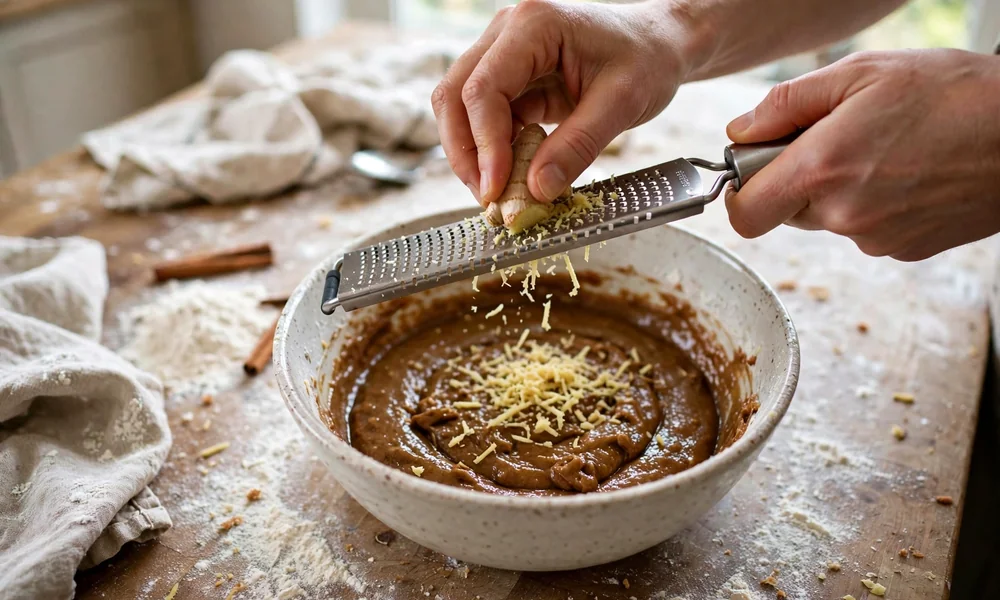
Peel ginger with the edge of a teaspoon, which follows the curves of the root and wastes far less flesh than a peeler. For stir-fries and curries, grate or mince it and add it early so its heat mellows into the dish; for a fresh lift in a finished soup or dressing, stir grated ginger in at the end. For tea, slice a thumb-sized piece thinly, pour over just-boiled water and steep for five minutes, adding honey or lemon to taste — and our guide to the best lemon tea covers the citrus side of that cup. For baking, use ground ginger and measure it properly: too little and the cake tastes sweet and flat, too much and it bites. Ginger also pairs well with its fellow warm spices, covered in our guides to the best turmeric and the best garlic powder.

Storing Ginger and the Mistakes to Avoid
Store fresh ginger wrapped tightly in cling film or a sealed bag in the fridge, where it keeps for about three weeks. For longer storage, peel it, wrap it well and freeze it; frozen ginger grates easily straight from the freezer. Keep ground ginger sealed, cool and dark, and replace it every six months. The mistakes to avoid are simple: never store fresh ginger loose in the fridge drawer, where it dries out in days; never swap fresh and ground ginger one-for-one; and never add fresh ginger to a dry, smoking-hot pan, because it burns in seconds and turns bitter.
Ginger Buying Checklist
- Firm, heavy and smooth-skinned, with no soft spots or mould.
- Sharp, citrusy smell when you scratch the skin or snap a tip.
- Fat, plump fingers rather than thin, woody branches.
- Right form for the dish: fresh for cooking and tea, ground for baking.
- Ground ginger bought in a small, fresh jar with ginger as the only ingredient.
- Stored wrapped in the fridge, or peeled and frozen for the long term.
Frequently Asked Questions
Is fresh ginger better than ground ginger?
Neither is better overall; they are different ingredients. Fresh ginger is bright and citrusy and suits cooking and tea, while ground ginger is hotter and suits baking and rubs.
How much ground ginger equals fresh ginger?
About one teaspoon of ground ginger replaces one tablespoon of grated fresh ginger, because ground ginger is roughly four times stronger by volume.
Do I need to peel ginger?
Yes, usually. Peel with a teaspoon to waste as little flesh as possible.
How long does fresh ginger last?
About three weeks wrapped in the fridge, and several months peeled and frozen. Unwrapped in the fridge drawer it dries out within days.
Can I use crystallised ginger in cooking?
Not in savoury cooking: the sugar changes the flavour. Save it for biscuits, cakes and garnishes.
Why does my ginger taste bitter?
It was probably burned in a dry, smoking-hot pan, or it is old and dried out.
The Bottom Line
Buy fresh ginger that is firm, heavy and fragrant, match the form to the dish, and store it properly, and ginger will repay you in every kind of cooking. Fresh for the pan and the teapot, ground for the oven, crystallised for the finish: that is the whole secret. Verdict: 10 out of 10 — bxw_verdict [10]


