
Top Frosting That Spreads Smooth and Holds Its Shape in 2026
The top frosting that spreads smooth and holds its shape in 2026 is a proper buttercream made with soft butter, sifted icing sugar and a little milk or cream, beaten until it is pale, fluffy and free of lumps. Good frosting does two jobs at once: it spreads without tearing the cake underneath, and it holds its shape for hours once it is piped or smoothed. Bad frosting slides off a warm cake, weeps in a warm room, or tastes grittily sweet. The difference is rarely the brand on the tub. It is the type of frosting, the ratio of fat to sugar, and a few small technique choices that decide whether a cake looks bakery-bought or home-made in the worst sense.
Most frosting failures come from the same few causes: frosting a warm cake, using fridge-cold butter, skipping the sift, or choosing the wrong type for the job. This guide explains what frosting actually is, how it differs from icing, which type suits which cake, how to pick a good ready-made tub, how to spread and pipe it cleanly, and how to store it so it stays smooth.
Key Takeaways
- Buttercream is the most versatile frosting: it spreads smooth, pipes well and holds its shape at room temperature for hours.
- Always cool a cake completely before frosting it, because even a slightly warm cake melts frosting into a sliding mess.
- Use butter at room temperature and sift the icing sugar, or the frosting will be lumpy no matter how long you beat it.
- Frosting is not icing: frosting is thick, soft and spreadable, while icing is thinner, sets hard and is used for drizzling and detail.
- Store frosted cakes covered at room temperature for a day, or in the fridge for up to five days, and bring them back to room temperature before serving.
What Frosting Actually Is
Frosting is a thick, sweet, spreadable topping made by beating fat, usually butter, with sugar and a liquid until it is smooth and fluffy. It sits on top of a cake or cupcake in a generous layer, and it is meant to be eaten as part of every bite: it adds sweetness, richness and moisture to the crumb underneath, and it gives the baker a surface to smooth, swirl or pipe. A good frosting spreads with a knife, holds a piped rosette, and keeps its shape at room temperature.
The confusion to clear up first is frosting versus icing, because the two words are used as if they meant the same thing and they do not. Frosting is thick and creamy, made with butter or cream cheese, and it is spread or piped in a thick layer. Icing is thinner, usually made from icing sugar and water or egg white, and it is poured, drizzled or piped in fine lines, then sets hard: think of the crisp white lines on a gingerbread house, or the thin glaze on a lemon drizzle cake. Royal icing belongs in the icing family, and it will never spread like buttercream.
Frosting also differs from the cake it sits on, which is why the two are judged separately. A cake mix can be excellent and still be ruined by bad frosting, and a plain sponge can be rescued by a good one. Our guide to the best cake mix covers the sponge side of that partnership in full, and the frosting side is what this guide is about: the topping itself, judged on smoothness, flavour, hold and ease of use.
The Main Types of Frosting
There are five frosting families worth knowing, and each has a clear job. The one to buy or make depends on the cake, the weather, the occasion and how long the cake needs to sit before it is eaten.
Buttercream
Buttercream is the default frosting for a reason: beaten butter, icing sugar, a splash of milk or cream and a little vanilla, whipped until pale and fluffy. It spreads smoothly, pipes clean rosettes and borders, takes colour and flavour well, and holds its shape for hours at room temperature. American buttercream, the simple beaten version, is the easiest to make and the sweetest tasting. Meringue buttercreams are silkier, less sweet and more stable in warm rooms, but they take more time. If you only learn one frosting, learn buttercream: it suits almost every cake, from a birthday sponge to a tray of cupcakes.
Cream Cheese Frosting
Cream cheese frosting is buttercream’s tangy cousin, made by beating cream cheese with butter and icing sugar, and it is the right choice for carrot cake, red velvet and spice cakes, where its gentle tang cuts the sweetness and balances the warm spices. It spreads beautifully and tastes richer and less sugary than plain buttercream, but it is softer and less stable: it needs the fridge in a warm room, and it does not hold tall piped shapes as well as buttercream. Use full-fat block cream cheese, never a whipped tub or a low-fat spread, because the extra water in those makes the frosting runny. Our guide to the best cream cheese explains which blocks to buy: a good block makes a good frosting.
Chocolate Ganache
Ganache is chocolate and cream, melted together and cooled until it is thick enough to spread, and it is the most luxurious frosting there is. Poured warm it gives a glossy, mirror-like drip; whipped once cool it becomes a light, mousse-like frosting that spreads like buttercream. Ganache is more expensive than buttercream and more sensitive to temperature: too warm and it slides off, too cold and it sets hard and cracks. Make it the day you need it, and let it cool to spreading consistency before you touch the cake.
Whipped Cream Frosting
Whipped cream frosting is simply cream whipped with a little sugar and vanilla until it holds soft peaks, and it is the lightest frosting of all. It suits summer cakes, strawberry shortcake and any cake that will be eaten within a few hours, because it tastes fresh and clean rather than rich and sweet. Its weakness is stability: it softens in a warm room and weeps within a day, even in the fridge. Use whipped cream when lightness matters and the cake will not wait around.
Ready-Made Frosting
Ready-made frosting, sold in tubs in the baking aisle, is a genuine convenience, and the best tubs are surprisingly good. Look for a short ingredient list led by sugar and vegetable oil or butter, with no artificial flavourings you can taste, and a texture that is smooth rather than greasy or gritty. A good tub spreads straight from the pot and holds for a day; a bad one tastes only of sweetness and slides off within the hour. Ready-made frosting is at its best on cupcakes and traybakes, where speed matters more than a showpiece finish, and it is worth keeping a tub in the cupboard for emergencies.

How to Pick the Best Frosting in 2026
The best frosting of 2026 is the one that matches the cake, the occasion and the room it will sit in, and that is the test to apply before you buy or make anything. A tall layer cake for a warm summer party needs a stable buttercream or ganache, not whipped cream. A carrot cake needs cream cheese frosting, because the tang is part of the flavour. A tray of cupcakes for a school fair needs a frosting that pipes fast and holds for hours, which is buttercream again. Start with the cake and the day, and the frosting chooses itself.
For a ready-made tub, judge it the way you would judge anything else in the baking aisle: read the ingredients, check the date, and look at the texture through the lid if you can. The ingredient list should be short, with sugar and fat first and flavourings you recognise. The frosting should look smooth and even, not separated, grainy or oily on top. And buy the flavour that suits the cake: vanilla buttercream goes with everything, chocolate suits chocolate and vanilla sponge alike, and strawberry or lemon frosting suits plain cakes where a little fruit flavour lifts the whole thing.
For homemade frosting, the choice is the recipe, and the rule is to match the effort to the occasion. American buttercream takes ten minutes and a bowl, and it is good enough for almost everything. Meringue buttercream takes forty minutes and a thermometer, and it earns that time on a wedding cake or a cake that will sit in a warm room for hours. Ganache takes patience while it cools, and it earns it on a chocolate cake. Whichever you make, use good butter: frosting is mostly butter, so a good butter makes a good frosting.
| Type | Best for | Hold | Watch out for |
|---|---|---|---|
| Buttercream | Most cakes, cupcakes, piping | Hours at room temperature | Very sweet if under-beaten |
| Cream cheese | Carrot cake, red velvet, spice cake | Needs the fridge in warm rooms | Soft, will not hold tall piping |
| Ganache | Chocolate cakes, drip finishes | Sets firm once cool | Slides off if too warm |
| Whipped cream | Summer cakes, shortcake | A few hours, chilled | Weeps within a day |
| Ready-made tub | Cupcakes, traybakes, emergencies | A day at room temperature | Can taste only of sweetness |
How to Spread and Pipe Frosting
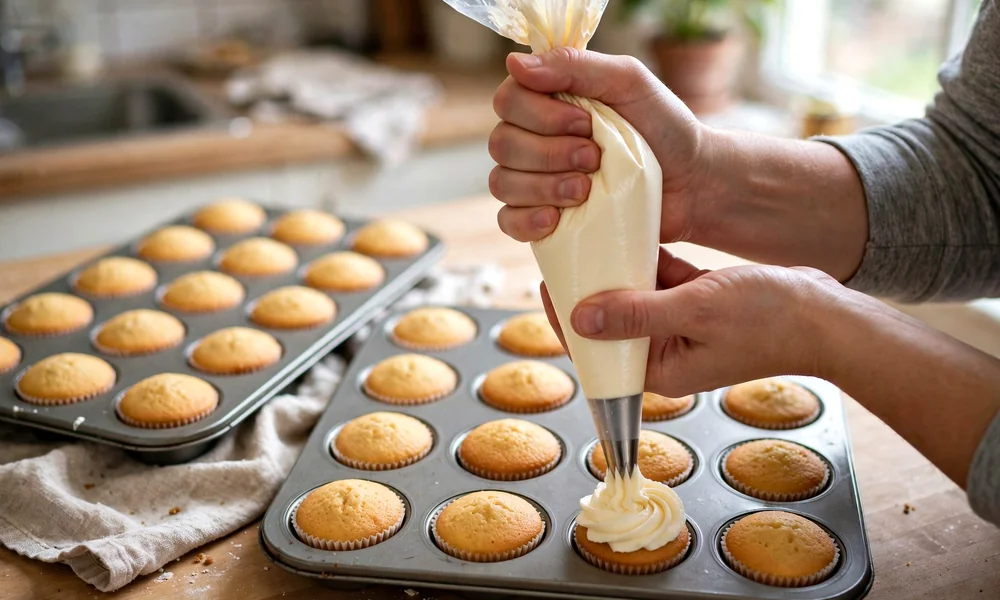
Cool the cake completely, brush off loose crumbs, and spread a thin crumb coat, chilled for twenty minutes before the final coat. Spread the final layer with a palette knife or the back of a spoon, working from the centre outwards, and smooth it with long, even strokes. For piping, fill the bag only two-thirds full, twist the top closed, and squeeze steadily from the top, not the middle. For cupcakes, a simple swirl is enough, and our guide to the best cupcakes covers the cakes underneath. Too stiff? Beat in a teaspoon of milk. Too soft? Chill it for ten minutes rather than adding more sugar.
Storing Frosting and Frosted Cakes
Store a frosted cake covered at room temperature for up to a day, or in the fridge for up to five days, and always bring it back to room temperature before serving, because cold frosting tastes dull and firm. Leftover frosting keeps a week in the fridge or a month in the freezer; re-beat it before using it again. Never leave a cream cheese or whipped cream cake out overnight, and never freeze a frosted cake uncovered.

Frosting Buying Checklist
- Right type for the cake and the room.
- Room-temperature butter, sifted icing sugar.
- Cake completely cool before any frosting touches it.
- Short ingredient list on a ready-made tub, sugar and fat first.
- Crumb coat first, chilled, then the final smooth coat.
- Stored covered; served at room temperature.
Frequently Asked Questions
What is the difference between frosting and icing?
Frosting is thick, soft and spreadable, made with butter or cream cheese. Icing is thinner, sets hard, and is used for drizzling and fine detail.
Why does my frosting slide off the cake?
The cake was probably still warm, or the frosting too soft. Cool the cake fully and chill soft frosting first.
Can I make frosting ahead of time?
Yes: a week in the fridge or a month in the freezer, sealed. Re-beat it before using.
How do I fix lumpy frosting?
Lumps mean unsifted sugar or cold butter. Sift the sugar and use room-temperature butter next time.
Is ready-made frosting any good?
The best tubs suit cupcakes and traybakes. Look for a short ingredient list and a smooth texture.
How long does a frosted cake last?
A day covered at room temperature, or up to five days in the fridge. Serve at room temperature.
The Bottom Line
Pick the frosting that suits the cake and the day, cool the cake fully, and use room-temperature butter and sifted sugar. Verdict: 10 out of 10 — bxw_verdict [10]


