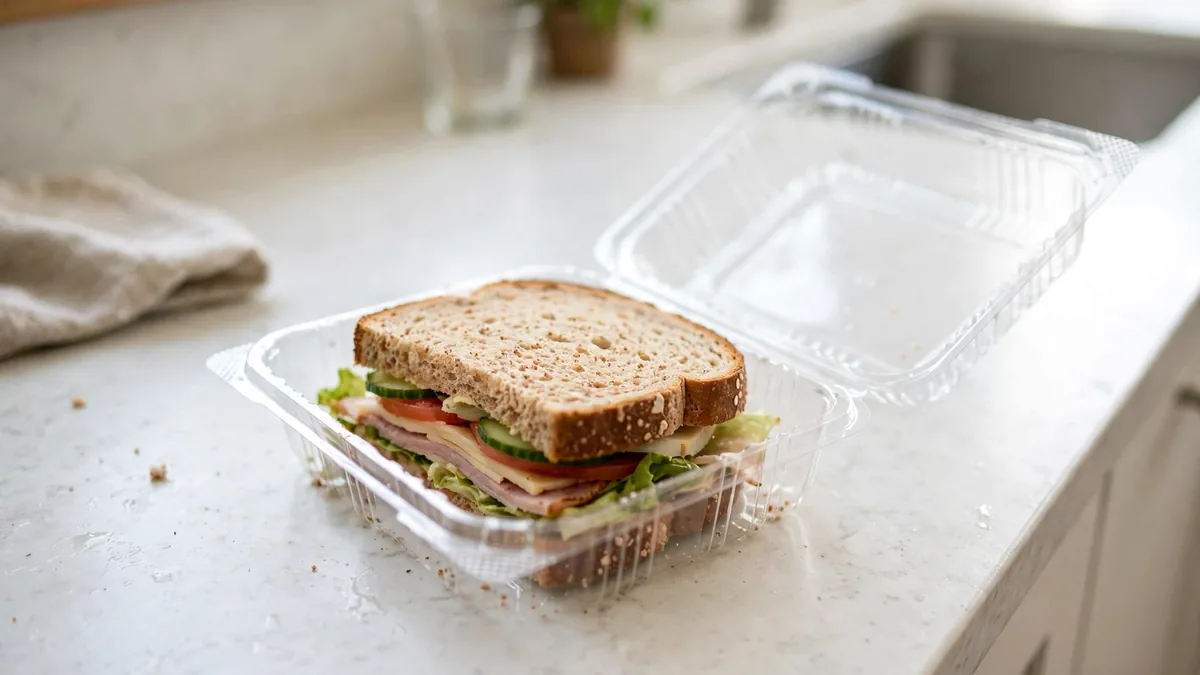
The best sandwich boxes in 2026 do one job that no bag, wrap or tub does well: they carry a single sandwich to work or school and deliver it in the shape it left the kitchen in. Bread stays crisp instead of crushed, the filling stays inside, and the box keeps crumbs and butter off everything else in the bag. A sandwich box is a flat, sandwich-shaped carrier, not a small lunch box, and that narrow focus is why it works. This guide compares the strongest sandwich boxes of 2026, and shows how to pick the right size and material, and how to pack one so lunch still looks appetising at noon.
Key Takeaways
- A sandwich box is a flat, single-sandwich carrier, not a small lunch box: it protects one sandwich from crushing, while a lunch box carries a whole meal.
- Measure your sandwich first: a standard square sandwich needs about 15 by 15 centimetres, and a club or triple-decker needs a deeper box.
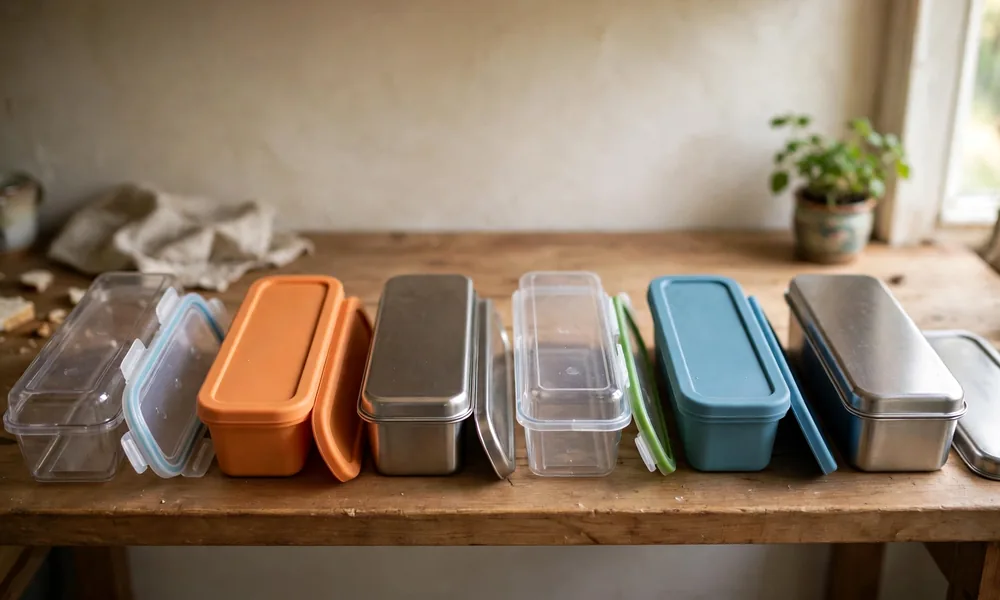
- Rigid plastic is lightest and cheapest, stainless steel is toughest and never stains, and silicone folds flat when empty.
- A lid that clicks or clips shut beats one that simply rests on top, because a sandwich box rides sideways in a bag all morning.
- Keep wet fillings away from bread until you eat, or the bread will be soggy by noon.
Sandwich Box vs Lunch Box: What Is the Difference?
A sandwich box and a lunch box look similar on a shelf, but they solve different problems. A lunch box is built around a whole meal: several foods, kept apart, in a box of roughly 900 millilitres to 1.2 litres, with compartments and a serious seal for sauces. A sandwich box is built around one sandwich: flat, roughly the footprint of two slices of bread, with a shallow lid that stops it sliding. Our guide to the best lunch boxes of 2026 covers the whole-meal carriers in full, including bento and insulated designs.
That difference matters at the till. If you pack a sandwich plus fruit, crisps and a snack, buy a lunch box. If you pack one sandwich and carry the rest separately, a sandwich box is lighter, cheaper, and far less likely to crush the bread, because there is no empty space for it to slide around in. Many people own both, using the sandwich box on light days and the lunch box on full days.
The Types of Sandwich Box
Sandwich boxes come in four broad forms, and the right one depends on what you pack, how rough your bag is, and whether the box must vanish into a drawer when empty.
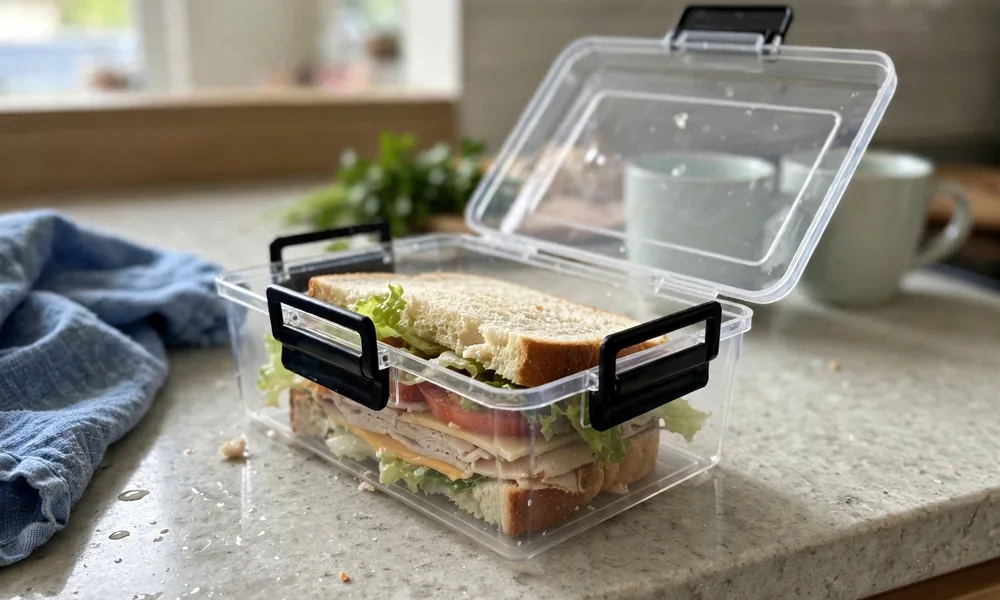
Rigid plastic sandwich boxes
Rigid plastic is the most common sandwich box material, and for most people it is the right one: thick BPA-free plastic with a lid that clips on two or four sides, weighing almost nothing. It survives daily drops and goes in the dishwasher. The weakness is staining, and very cheap thin plastic warps in a hot dishwasher.
Stainless steel sandwich boxes
Stainless steel is the toughest option, and the only one that never stains or holds smells. A steel box keeps a sandwich cool longer than plastic and still looks new after a year of daily use. The trade-offs are weight and price: steel is heavier, costs more, and cannot go in the microwave.
Silicone and folding sandwich boxes
Silicone sandwich boxes fold flat when empty, the best choice if drawer or bag space is tight: a silicone box collapses to a few millimetres thick and survives being sat on. The catch is that soft walls protect a sandwich less than rigid ones, so a heavy book can still squash it.
Insulated sandwich boxes
A few sandwich boxes have an insulated double wall, which keeps a cold sandwich cold for a few hours. These suit anyone without a fridge at work, or a child whose lunch sits in a warm classroom until noon. Insulation adds bulk and cost, so it is only worth it if your sandwich needs to stay cool. If you pack hot food as well, a bento-style carrier is better, and our guide to the best bento boxes of 2026 compares the compartment designs that keep hot and cold foods apart.
The 6 Best Sandwich Boxes in 2026
| Sandwich box | Material | Best for | Fits | Price |
|---|---|---|---|---|
| Sistema Sandwich Box | Rigid plastic | Most people | Standard | $5–$8 |
| Tupperware Sandwich Keeper | Rigid plastic | School bags | Standard | $8–$12 |
| Lock & Lock Sandwich Box | Rigid plastic | Leakproof seal | Standard | $6–$10 |
| LunchBots Stainless Sandwich Box | Stainless steel | Tough daily use | Standard | $18–$25 |
| Joseph Joseph GoEat Compact | Rigid plastic | Neat packing | Standard | $10–$15 |
| Stojo Collapsible Sandwich Box | Silicone | Small bags and drawers | Standard | $12–$18 |
Prices move often, so treat these ranges as a rough ranking, not a promise.
1. Sistema Sandwich Box — Best Sandwich Box for Most People
The Sistema Sandwich Box is the sandwich box we would buy first in 2026: a flat, rigid plastic box sized exactly around a standard sandwich, with a lid that clips firmly on two sides. It weighs almost nothing and goes in the dishwasher every day.
2. Tupperware Sandwich Keeper — Best Sandwich Box for School Bags
The Tupperware Sandwich Keeper earns its place in school bags because it is built to be dropped, kicked and sat on. The rigid base is thicker than most rivals, the lid clicks shut with a reassuring snap, and the flat profile slides into a school bag pocket.
3. Lock & Lock Sandwich Box — Best Sandwich Box for a Leakproof Seal
The Lock & Lock Sandwich Box is the pick when your sandwich has wet fillings. Its four-sided locking lid presses a silicone gasket evenly onto the base, so tomato, pickle or a runny egg will not leak into the bag.
4. LunchBots Stainless Sandwich Box — Best Stainless Steel Sandwich Box
The LunchBots Stainless Sandwich Box is the toughest here, and the only one that will never stain, smell or warp. A single piece of food-grade stainless steel forms the base, with a snug lid that clips on. It costs three times a plastic box, but if you want to buy one and never think about it again, this is the one.
5. Joseph Joseph GoEat Compact — Best Sandwich Box for Neat Packing
The Joseph Joseph GoEat Compact is the neatest sandwich box in this guide. Its lid has a small built-in compartment for a snack or a sauce pot, so a sandwich and a handful of grapes travel in one flat unit instead of two loose boxes.
6. Stojo Collapsible Sandwich Box — Best Folding Sandwich Box
The Stojo Collapsible Sandwich Box is the pick when space is the problem. Made from food-grade silicone, it folds flat to a few millimetres when empty, so it slips into a jacket pocket or a crowded drawer, then pops open at lunchtime. The soft walls protect a sandwich less than a rigid box.
How to Choose the Right Size
Size is the first decision, and it is easy to get wrong. A standard sandwich is about 12 by 12 centimetres, but a filled sandwich with salad and cheese is closer to 15 by 15 centimetres once it is cut. Buy a box that fits the sandwich you actually make. A box that is too small squashes the filling out; a box that is too big lets the sandwich slide around and fall apart.
Club sandwiches and triple-deckers need a deeper box, usually at least 5 centimetres deep, while a baguette roll or a wrap needs a long, narrow box. Children need smaller boxes than adults, not just for the sandwich but for small hands: a box a child cannot open alone comes home unopened.
Packing a Sandwich That Stays Fresh Until Noon
A good box cannot rescue a badly packed sandwich. The most common mistake is packing a wet filling straight against the bread in the morning and expecting it to be crisp at noon. Put wet fillings such as tomato, pickle or coleslaw in the middle of the sandwich, or carry them separately in a small pot and add them at lunchtime. Buttering the bread right to the edges slows sogginess.
Keep the sandwich cool if you can. A sandwich box on its own does not chill food, so on a warm day, pack the box in a bag with a small ice pack, or choose a steel box, which stays cooler than plastic. Cut the sandwich at home: a sandwich cut in the morning holds together better, and a diagonal cut gives two triangles that fit a square box neatly. If you pack a snack too, use a separate small container, and our guide to the best snack containers of 2026 covers the small boxes that suit school and work lunches.

Cleaning and Looking After a Sandwich Box
A sandwich box is easy to look after if you clean it the same day. Rinse it as soon as you get home, wash it in warm soapy water or the dishwasher, and let it dry completely before closing the lid, or it will smell stale by morning. Plastic boxes stain over time, and a soak in warm water with bicarbonate of soda lifts most marks. Replace a box when the lid no longer clicks shut or the clips have cracked.
Sandwich Box Buying Checklist
- Measure your sandwich, then buy a box that fits it with a little room to spare, not one that squashes it or lets it slide.
- Choose rigid plastic for lightness, stainless steel for toughness, or silicone if it must fold flat.
- Check the lid closes with a firm click or clip, and test it upside down over a sink first.
- Pick a box that fits your bag as well as your sandwich, so it rides flat, not wedged sideways.
- Make sure the box is dishwasher-safe and the clips are easy for whoever opens it at lunchtime.
- Buy a second box if two people pack lunch, so a forgotten box never means a squashed sandwich.
Frequently Asked Questions
What is the best sandwich box in 2026?
The Sistema Sandwich Box is the best choice for most people in 2026, because it is flat, light, cheap and sized exactly around a standard sandwich. If you want a box that lasts for years, the stainless steel LunchBots is tougher.
What is the difference between a sandwich box and a lunch box?
A sandwich box carries one sandwich in a flat, sandwich-shaped carrier, while a lunch box carries a whole meal in a larger box with compartments. A sandwich box is lighter and better at stopping a sandwich being crushed.
What size sandwich box do I need?
Most adults need a box of about 15 by 15 centimetres for a standard sandwich, with at least 4 centimetres of depth for a filled one. Club sandwiches need a deeper box, wraps a long, narrow one.
Are sandwich boxes leakproof?
Most sandwich boxes are splash-proof rather than fully leakproof, because a sandwich does not need the seal a soup does. Boxes with a silicone gasket and four locking clips come closest.
Can I put a sandwich box in the dishwasher?
Most rigid plastic and silicone sandwich boxes are dishwasher-safe, though very hot cycles can warp thin plastic. Stainless steel boxes are dishwasher-safe too, but hand-washing keeps the lid seal in better shape.
How do I stop my sandwich going soggy in a sandwich box?
Butter the bread to the edges, keep wet fillings in the middle of the sandwich or in a separate pot, and never pack the sandwich while the bread is still warm.
The Bottom Line
A sandwich box is a small purchase that fixes a daily annoyance: the squashed, soggy sandwich at noon. Buy a rigid box that fits the sandwich you make, with a lid that clicks shut properly, and pack wet fillings separately. The Sistema is the best all-rounder, the LunchBots the buy-once choice, and the Lock & Lock safest for wet fillings.