How to Choose Storage Bags That Keep Food Fresh in 2026
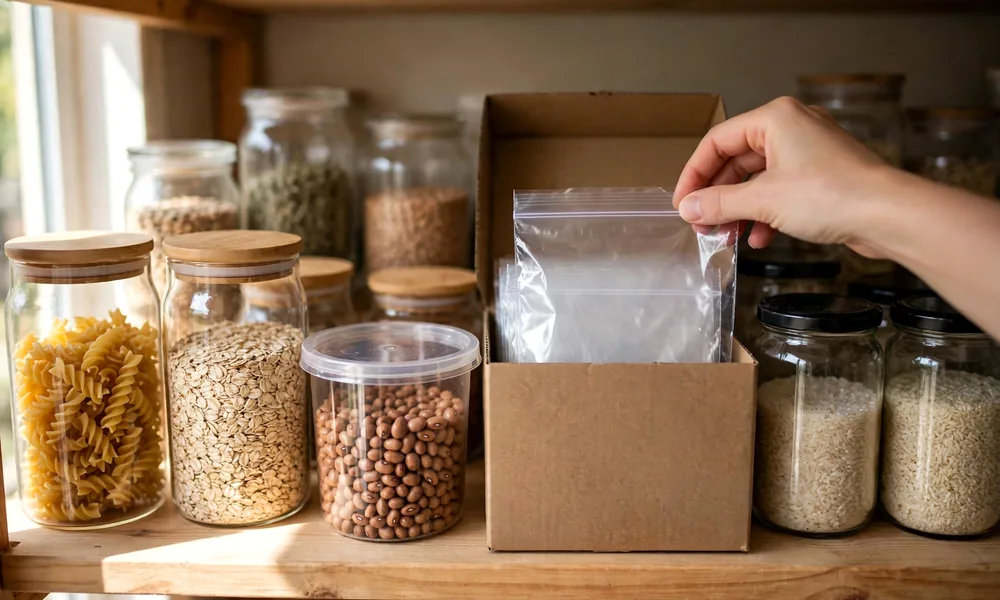
Storage bags are the quiet workhorses of the kitchen: clear zip-top bags that hold leftovers, chopped vegetables, snacks and dry goods, and keep them fresh for days longer than an open bowl ever could. The best storage bags in 2026 are the ones that seal on the first try, stand up while you fill them, and survive the fridge and pantry without splitting or leaking. This guide explains how to choose storage bags that keep food fresh, which sizes and seals suit which foods, and when a different bag does the job better.
The mistake most people make is treating all storage bags as the same bag. A sandwich bag, a quart storage bag, a gallon freezer bag and a reusable silicone bag all look like clear plastic with a zip, but they are built for different jobs. A storage bag sits in the middle of that family: thicker than a sandwich bag, thinner than a freezer bag, and sized for everyday fridge and pantry storage rather than for months in the freezer. Our guide to the best freezer bags covers the thick bags for long freezing.
Key takeaways
- A storage bag is an everyday fridge and pantry bag, thicker than a sandwich bag and thinner than a freezer bag, made for days, not months.
- Quart bags suit leftovers and chopped vegetables, gallon bags suit bulk items and marinating, and snack bags suit single portions.
- A zip seal beats a fold-top seal for anything wet, and a double zip is worth paying for if the bag will be carried or tipped.
- Pressing the air out before sealing matters more than the brand: air is what dries food out and speeds up staling.
- Never heat food in a storage bag, and never use a thin storage bag for long freezing; use a proper freezer bag instead.

What a storage bag actually is
A storage bag is a disposable zip-top plastic bag made for general food storage in the fridge and pantry. It is made from polyethylene, the same clear plastic as a sandwich bag, but a little thicker, around 1.5 to 2 mil, so it survives a few days in the fridge without tearing. The most common sizes are quart and gallon, with a snack size for single portions, and most boxes offer a plain press-to-close zip or a slider tab.
The bag’s job is simple: keep air out, keep moisture in, and keep smells from spreading. A chopped onion in an open bowl will scent the whole fridge within hours; the same onion in a sealed bag stays put. A bag also stops food drying out, because the plastic slows moisture loss. That is why leftovers in a sealed bag still taste fresh on day three, while leftovers left uncovered dry out overnight.
Storage bags, sandwich bags and freezer bags: the family
It helps to see the three bags as one family with three jobs. A sandwich bag is the smallest and thinnest, made for one sandwich and a few hours. A storage bag is larger and a little thicker, made for leftovers over several days. A freezer bag is the thickest, made for weeks or months in the freezer. The sizes follow the same pattern: sandwich bags are about 16 by 15 centimetres, quart storage bags about 18 by 20, and gallon bags about 27 by 28.
The overlaps are where people go wrong. A sandwich bag used for leftovers tears easily and its seal gives up after a day. A storage bag used for long freezing lets moisture escape, and the food gets freezer burn within a week or two. A freezer bag used for everyday storage works, but it costs more and is stiffer than it needs to be. Our guide to the best sandwich bags compares the lunch-sized end of the family directly with freezer bags.
Storage bags compared
| Feature | Snack bag | Quart storage bag | Gallon storage bag |
|---|---|---|---|
| Typical size | About 16 by 15 centimetres | About 18 by 20 centimetres | About 27 by 28 centimetres |
| Best for | Single portions, snacks | Leftovers, chopped vegetables | Bulk food, marinating, freezing |
| Thickness | About 1 to 1.5 mil | About 1.5 to 2 mil | About 2 to 2.5 mil |
| Seal | Zip or fold-top | Zip or slider | Double zip or slider |
| Freezer use | No, a day at most | Short freezing only | Short freezing, not months |
| Cost per bag | Cheapest | A few pence | Most expensive of the three |
The table shows why most kitchens need two sizes, not one. A quart bag is the everyday size: a portion of leftovers, a chopped pepper, a handful of berries. A gallon bag is the bulk size: a whole chicken for marinating or a large batch of soup. A snack bag is the portion size. Buying only one size means either wasting a big bag on a small portion, which traps air, or cramming too much into a small bag, which strains the seal.
How to choose the right seal
The seal is the part of a storage bag that fails first, so it deserves more attention than the brand name. A press-to-close zip is the standard: you pinch the two sides together along the top edge until they click shut. It seals well when closed properly, from one end to the other, and folds flat when empty. Its weakness is that a zip closed in a hurry can have a small gap in the middle, and that gap lets air in and smells out.
A slider seal adds a small plastic tab that closes the zip as it moves. It is easier to close one-handed and easier for children, but it is a hard piece that does not fold flat, and slider bags usually cost more. A double zip, with two parallel sealing lines, is the most secure seal for anything wet or carried sideways, and it is worth the extra cost for marinating. A fold-top seal has no zip at all and only suits dry food eaten within a day. Whatever seal you choose, test it first: fill a bag with a little air, seal it, and press gently. If air hisses out, the seal is not doing its job.

What to store in a storage bag, and what not to
Storage bags are at their best with foods that dry out or spread smells: chopped vegetables, cut fruit, leftovers, cooked rice, grated cheese, herbs and nuts all keep far better in a sealed bag than in an open bowl. The bag also suits marinating: a chicken breast in a gallon bag coats evenly and takes up far less room than a dish. For dry pantry goods like flour or rice, a bag works for a short stay, but a rigid container is better for months.
Some foods do not suit a storage bag at all. Hot food should never go straight into a bag, because the steam condenses and the food turns soggy; let food cool completely first. Sharp foods like bones or dried pasta can puncture a thin bag, so double-bag them or use a rigid container. Liquids need a double zip and a bag only half full, because a full bag of soup will burst its seal at the first knock.
How to pack a storage bag so food stays fresh
Packing well matters more than buying well. Cool food completely first, because warm food steams inside a sealed bag and turns soggy. Fill the bag only three-quarters full, so there is room to press the air out without squeezing the food, then close the zip from one end to the other, running a finger back along it to check for gaps.
Label the bag with the contents and the date, using the white panel if the bag has one or tape if it does not. Food that has been in the fridge for three days all looks the same, and a label is the difference between eating it and throwing it away out of caution. Store bags flat in the fridge where you can, because a flat bag cools faster and stacks neatly. In the freezer, lay bags flat until frozen solid, then stand them upright like files.
Reusable storage bags: when they are worth it
Disposable storage bags are cheap and simple, but a household that uses several a day will go through hundreds a year, and that is where reusable bags earn their place. The main reusable option is silicone: a thick, flexible bag with a pinch-lock or slider seal that survives the freezer, the microwave and the dishwasher. A silicone bag costs far more up front, but it replaces hundreds of disposable bags and seals better, because the silicone is thicker.
Reusable bags are worth it for foods you store every day, like chopped vegetables and leftovers, and for marinating, where the strong seal matters. They are not worth it for foods you store once in a while, or for anything greasy that stains silicone. If you want the reusable option in detail, our guide to the best silicone bags covers the types and the cleaning routine.
The 6-point checklist before you buy
- Sizes: buy quart bags for everyday leftovers and gallon bags for bulk and marinating.
- Seal: choose a zip for most foods, a double zip for anything wet or carried sideways, and test the seal with a puff of air first.
- Thickness: about 1.5 to 2 mil is right for everyday storage; thinner tears, thicker wastes freezer-bag money.
- Clarity: a clear bag lets you see the contents without opening it.
- Labelling: pick bags with a write-on panel, or keep tape nearby, because an unlabelled bag is a gamble after three days.
- Freezer plan: if you freeze food for weeks, buy proper freezer bags as well; do not expect storage bags to do both jobs.
FAQs about storage bags
Can storage bags go in the freezer?
For a short stay, yes, but not for months. A storage bag is thinner than a freezer bag, so food gets freezer burn within a week or two. For longer, use a proper freezer bag.
What is the difference between a storage bag and a freezer bag?
A storage bag is a thinner, everyday bag for the fridge and pantry over several days, while a freezer bag is thicker, with a heavier zip, and made for weeks or months in the freezer.
Can I reuse a disposable storage bag?
It is not a good idea. A used bag has crumbs and bacteria in the seams, and washing it does not clean the zip. If you want a reusable bag, buy a silicone one designed for it.
Can storage bags go in the microwave?
No. Storage bags are not made for heat and can melt or split. Always take food out of the bag before heating it.
How long does food last in a storage bag in the fridge?
Most cooked leftovers last three to four days in a sealed bag in the fridge, and chopped vegetables last three to five days. Always label the bag with the date, and throw food away if it smells off.
Are slider storage bags better than zip-top bags?
Sliders are easier to close one-handed, but they cost more and the slider adds bulk. A plain zip-top bag seals just as well when closed properly.
The bottom line
Choosing storage bags is a small decision that pays off every day. Buy quart bags for everyday leftovers and gallon bags for bulk, pick a zip you can trust, press the air out before sealing, and label every bag with the date. Keep freezer bags for the freezer, sandwich bags for lunch, and reusable silicone bags for the foods you store every day.