Top Silicone Bags for Reusable Food Storage That Actually Seals in 2026
The best silicone bags in 2026 are the reusable storage bags that seal tight on the first try, stand up on their own while you fill them, and survive the freezer, the microwave and the dishwasher without warping or picking up yesterday’s garlic. A good silicone bag replaces hundreds of disposable bags: it holds soup without leaking, keeps berries fresh for days, and goes from freezer to microwave to dishwasher in a single day.
It helps to be clear about what a silicone bag is. A silicone bag is a flexible, reusable bag made from food-grade silicone, with a seal at the top that closes with a pinch-lock bar, a zip or a slider. A freezer bag is a different tool: a disposable plastic bag, cheap and thin, made to be used once and thrown away. A beeswax wrap is different again, a cloth coated in beeswax that seals with the warmth of your hands and suits covering bowls, not holding liquids. And a rigid food container is a hard box that protects delicate food from being crushed, while a silicone bag moulds around its contents and folds flat when empty.
Key Takeaways
- The seal decides everything: a pinch-lock bar that clicks shut beats a plain press-seal, and a bag that leaks on its side is a bag you will stop using.
- Buy food-grade, platinum-cured silicone: flexible in the freezer, safe for the microwave and sous vide.
- Stand-up bags are the most useful shape, because they stay open while you pour soup or spoon in leftovers.
- Size matters more than brand: quart bags suit portions, gallon bags suit family meals and marinades, small bags suit lunchboxes.
- A silicone bag pays for itself in about three to six months of regular use.
What a Silicone Bag Actually Is
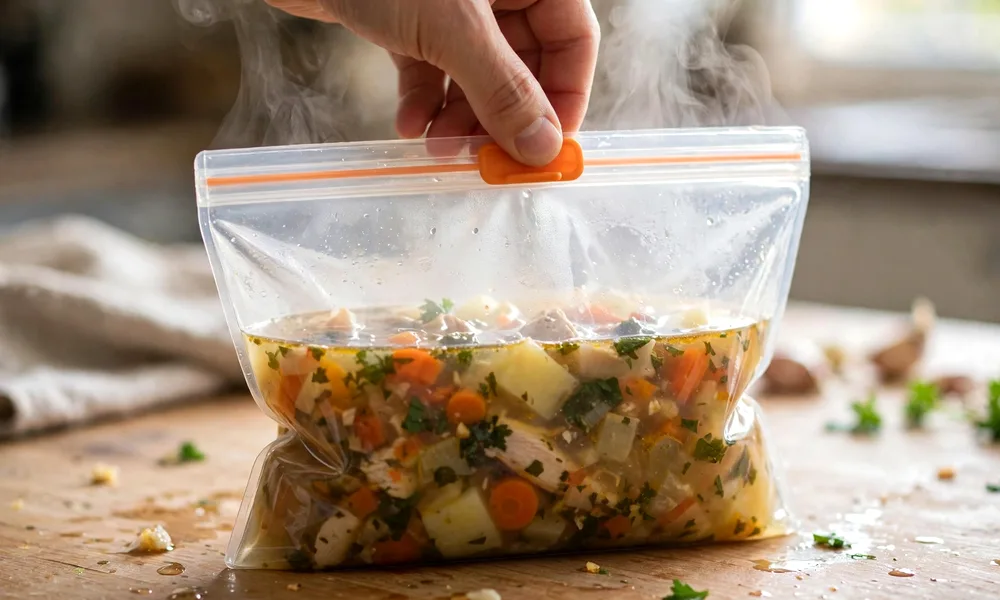
A silicone bag is a pouch made from flexible silicone rubber, usually food-grade and platinum-cured, with a sealed base and a closing mechanism at the top. Most are translucent, with a wide opening and a flat base that lets them stand upright. The silicone itself is the point: it stays flexible at freezer temperatures, tolerates boiling water and microwave heat, does not absorb odours the way plastic can, and can be washed hundreds of times without going cloudy or stiff.
The seal is where silicone bags differ most. A pinch-lock bar is a rigid strip that snaps over the top and pinches it shut; it is the most reliable seal and the easiest to check, because you can see and feel it click. A zip seal is a press-to-close track moulded into the silicone; it works well when clean and dry, but crumbs or oil in the track stop it sealing. A good bag is about 0.6 to 1 millimetre thick: thick enough to stand up and resist punctures, thin enough to fold flat.
The 7 Best Silicone Bags in 2026 at a Glance
| Best for | Bag type | Seal | Standout strength |
|---|---|---|---|
| Best overall | Stand-up pinch-lock bag | Pinch-lock bar | Stands alone, seals first time |
| Best for sous vide | Thick sous-vide bag | Pinch-lock bar | Heat-safe, air presses out easily |
| Best for the freezer | Flat gallon bag | Zip seal | Freezes flat, stacks like files |
| Best for liquids | Stand-up bag with wide base | Pinch-lock bar | No leaks on its side |
| Best for snacks | Small snack bag | Zip seal | Fits lunchboxes and pockets |
| Best for marinades | Large gallon bag | Pinch-lock bar | Coats meat evenly, no spills |
| Best on a budget | Flat zip-seal set | Zip seal | Cheapest way to start reusable |
Best Overall: Stand-Up Pinch-Lock Bags
Stand-up pinch-lock bags remain the best all-round silicone bag for most kitchens. Look for a quart or half-gallon bag with a flat base, a wide opening, and a rigid bar that snaps over the top. The bag should stand upright when empty, so you can pour soup in with one hand, and the bar should click shut with a snap you can feel. The bar is what makes this type reliable: unlike a press-seal track, which can look closed while leaving a gap, a bar either snaps shut or it does not.
Best for Sous Vide: Thick Sous-Vide Bags
Sous vide is one of the best uses for a silicone bag, because the bag goes straight into a water bath at a controlled temperature for hours. Look for thick, platinum-cured silicone, rated for boiling water, with a pinch-lock seal. Lower the open bag into the water slowly, let the water press the air out, then snap the bar shut just above the waterline. Check the label first: a bag rated for sous vide should state a maximum temperature, usually around 200 to 230 degrees Celsius, and be free of fillers.
Best for the Freezer: Flat Gallon Bags
Silicone bags earn their keep in the freezer, where they replace the disposable bags most households burn through fastest. A flat gallon bag lies flat, freezes into a thin slab, and stacks like a file in a drawer. Fill it no more than three-quarters full, because liquids expand as they freeze and an overfilled bag strains its seal. Press the air out before sealing, lay the bag flat on a baking tray, and freeze it until solid before stacking. Silicone bags do not split along the seams when frozen solid, which is where cheap plastic bags fail.

Best for Liquids: Wide-Base Stand-Up Bags
Liquids are the hardest test for any bag, and silicone bags beat disposable ones here because they stand up and seal hard. A wide-base stand-up bag holds soup, stock, sauces and smoothies without tipping, and a pinch-lock bar keeps the seal shut even when the bag is knocked on its side. Test a bag before you trust it with soup: fill it with water, seal it, turn it on its side for ten minutes, then squeeze it gently. A good bag stays dry. Liquids also expose a weakness of zip-seal bags: oil or sauce in the track stops the seal closing, so wipe the track clean and dry before you seal.
Best for Snacks, Marinades and Budgets
Small snack bags, about half a pint to a pint, are the ones that get used every day: they hold nuts, crackers, cut fruit and sandwiches, fit in a lunchbox or a coat pocket, and replace the small disposable bags that pile up fastest. Look for a zip seal rather than a bar, because a bar adds bulk a small bag does not need. Check the seal every few weeks with the water test, and keep two or three in rotation so one is always clean.
Marinating is where a large gallon bag beats every other container. A gallon bag holds a whole chicken or a large piece of meat, the marinade coats every surface because the bag moulds around the food, and you can turn the bag over without opening it. Look for a pinch-lock bar and thick silicone that resists punctures from bones. Keep one bag aside for raw meat and label it, so it never gets used for snacks by mistake, and wash it on a hot cycle after use.
Sizes, Heat and Cleaning
Size is where most silicone bag purchases go wrong, because the names are not standardised. A snack bag is usually about half a pint, a quart bag holds about a litre, a half-gallon bag holds about two litres, and a gallon bag holds about four. Buy a mixed set first, not five of the same size: most households need two small bags, two quart bags and one gallon bag.
Heat is the silicone bag’s biggest advantage over disposable plastic, and also the area where the label matters most. A good bag is safe in the microwave, in boiling water and in a sous-vide bath, but only buy one that states a maximum temperature, and never use a bag whose seal contains metal. For the microwave, open a corner of the seal so steam can escape and heat in short bursts. For boiling, keep the seal above the waterline.
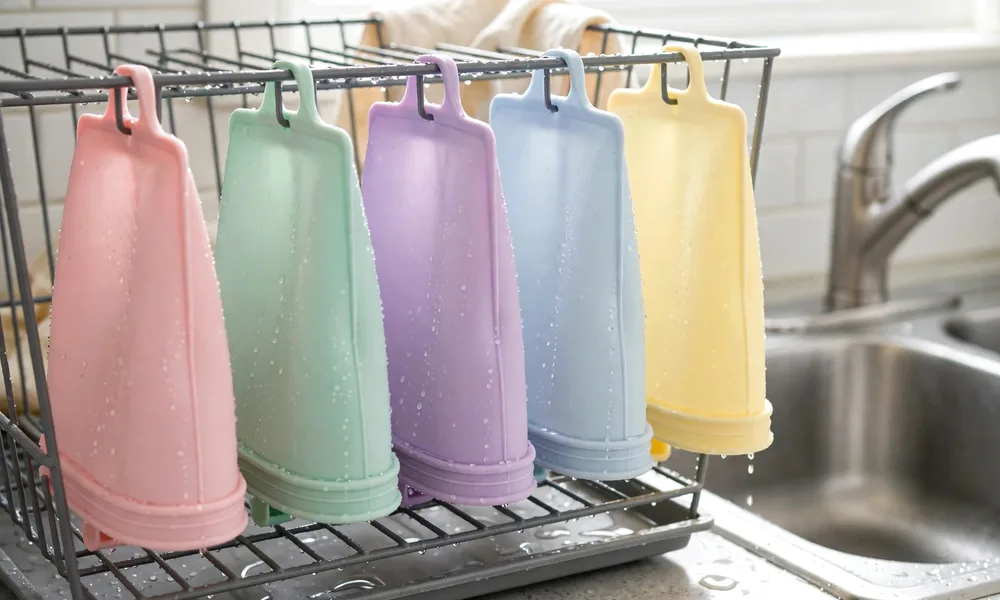
A silicone bag only saves money if you wash it and use it again. Turn the bag inside out, rinse it in hot soapy water, and pay attention to the corners and the seal track, where food collects. Most bags are dishwasher-safe on the top rack, propped open so the water reaches inside, and they must air-dry fully before storage, because a damp bag sealed shut grows mildew. Tomato sauce and turmeric stain silicone, but baking soda paste lifts most stains and white vinegar removes smells.
Mistakes to Avoid
The most common mistake is buying a matching set before knowing which size you use: five identical bags solve nothing if your household needs two small bags, two quart bags and one gallon bag. The second is choosing a bag for its colour instead of its seal. The third is sealing a bag while it is still damp inside, which traps moisture and grows mildew. The fourth is overfilling: fill to three-quarters and no more.
Silicone Bag Checklist
- Check the seal first: fill the bag with water, seal it, and turn it on its side for ten minutes before you trust it with soup.
- Look for food-grade, platinum-cured silicone, with a stated maximum temperature and no white streaks when you twist it.
- Pick the right size: snack bags for lunchboxes, quart bags for portions, gallon bags for family meals and marinades.
- Choose a pinch-lock bar for liquids and sous vide, and a zip seal for dry snacks and light use.
- Test the stand: a good bag stands upright on its own when empty, so you can fill it with one hand.
- Plan the washing: check it is dishwasher-safe, dries fully before storage, and is stored open so air circulates.
FAQs About Silicone Bags
Are silicone bags safe for the microwave?
Yes, if the bag is food-grade silicone and the maker states it is microwave-safe. Open a corner of the seal so steam can escape, heat in short bursts, and never use a bag with a metal part in the seal.
Can silicone bags go in the dishwasher?
Most can, on the top rack, turned inside out or propped open so the water reaches inside. Let the bag air-dry fully before you store it, because a damp bag sealed shut grows mildew.
Do silicone bags stain?
They can, especially with tomato sauce, turmeric and beetroot, but stains are usually surface-only. A paste of baking soda and water left for an hour lifts most stains, and a soak in white vinegar removes smells.
How long do silicone bags last?
A well-kept bag lasts two to three years of regular use, which is hundreds of washes. The seal wears first, so check it every few weeks with the water test and replace the bag when it no longer holds a seal.
Can I use silicone bags for sous vide?
Yes, if the bag is rated for boiling water and has a pinch-lock seal. Use the water-displacement method to press the air out, keep the seal above the waterline, and never use a slider seal for sous vide.
Are silicone bags better than disposable freezer bags?
For long-term cost and for liquids and sous vide, yes. For the longest freezer storage and the strongest seal, a heavy-duty disposable bag or a vacuum-sealed bag still wins, which is why many kitchens keep both.
The Bottom Line
The best silicone bag is the one whose seal you trust, in the size you reach for most, made from food-grade silicone that survives the freezer, the microwave and the dishwasher. Start with a mixed set, test every bag with water before you trust it with soup, and upgrade the size you use most to a pinch-lock bag. A silicone bag that gets used every day pays for itself in months and replaces hundreds of disposable bags, while a bag with a weak seal saves nothing. Buy the seal first and the size second.


