Sandwich Bags vs Freezer Bags in 2026: Which Bag Keeps Lunch Fresh?
Sandwich bags are the thin, cheap bags most of us reach for when packing a lunch, yet the wrong bag can turn a good sandwich soggy or stale before noon. A sandwich bag is made for hours, not weeks: it holds one sandwich, keeps crumbs and butter off the rest of the bag, and gets thrown away after lunch. A freezer bag is a different tool, thicker and tougher, built to protect food for months in the cold. This guide compares sandwich bags vs freezer bags in 2026, so you can see where each one wins.
The two bags look almost identical on the shelf. Both are clear plastic, both close with a zip or a fold, and both come in sizes that look about right for a sandwich. The difference is in the plastic. A sandwich bag is usually around 1 to 1.5 mil thick, thin enough to fold flat and cheap enough to use once and bin. A freezer bag is usually 2.5 mil or thicker, with a heavier zip that stays shut in the cold. That extra thickness stops freezer burn, but it also makes the bag stiffer, bulkier and more expensive. For a sandwich eaten at noon, the thin bag is the right tool; for food stored for a month, it is a false economy. Our guide to the best freezer bags covers the thick bags in depth.
Key takeaways
- Sandwich bags are for hours, freezer bags are for months: match the bag to how long the food will be stored.
- Thickness decides the job: sandwich bags are about 1 to 1.5 mil, freezer bags are about 2.5 mil or more, and that gap stops freezer burn.
- A zip seal beats a fold-top seal for anything wet, because a fold-top can open sideways and leak dressing onto everything else.
- Size matters more than brand: a sandwich needs a bag roughly 16 by 15 centimetres, and a bag that is too big traps air around the food.
- Never use a thin sandwich bag in the freezer for more than a day or two, or the bread dries out and picks up freezer smells.
What a sandwich bag actually is
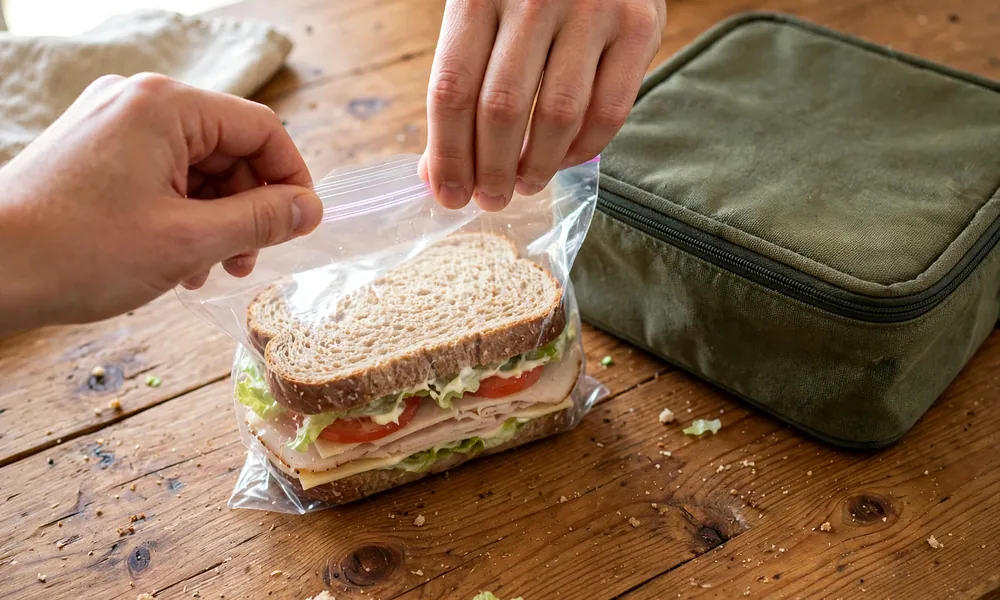
A sandwich bag is a small, thin, disposable plastic bag made to carry one sandwich for a few hours. The standard size fits a square sandwich cut in half, and most boxes offer a snack size too. The plastic is deliberately thin, which keeps the bag light, flexible and cheap, and lets it fold flat around the sandwich: a bag that only has to survive a morning in a school bag does not need the armour of a freezer bag.
The seal matters most in daily use. Fold-top bags are the cheapest and work well enough for a dry sandwich eaten within a few hours, but the folded top can work loose if the lunchbox tips on its side. Zip-top bags cost a little more and seal along the whole top edge, which is why they suit anything with mayonnaise, tomato or a soft filling. Slider bags add a small tab that pulls the zip shut, and they are the easiest for children to open.
What a freezer bag actually is
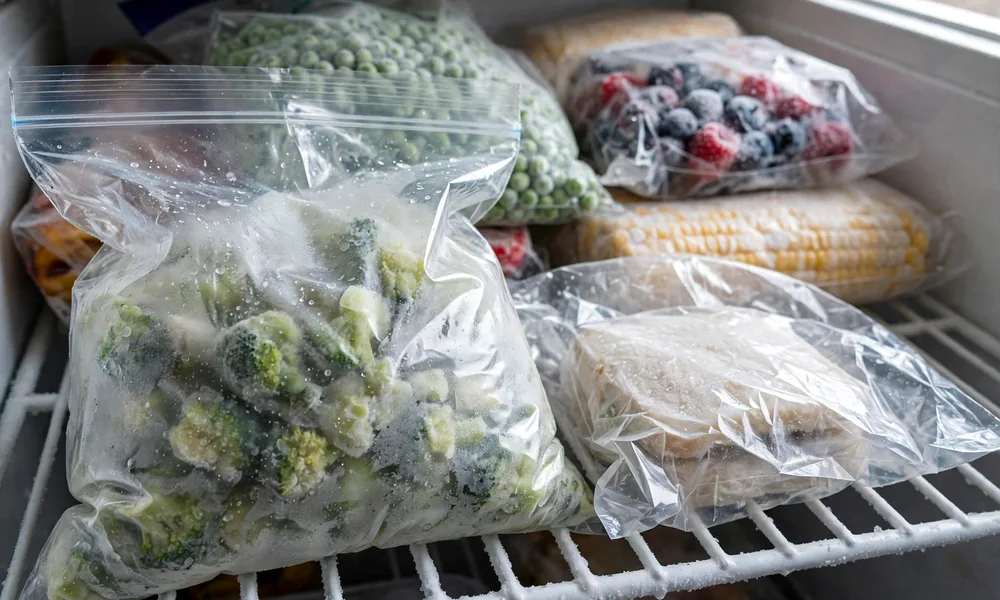
A freezer bag is a thick, heavy-duty bag made to protect food in a freezer for weeks or months. The plastic is roughly twice as thick as a sandwich bag, which slows the moisture loss that causes freezer burn, and the zip is heavier and wider, so it stays shut as the plastic stiffens in the cold. Most have a white panel for writing the contents and the date, and they come in quart and gallon sizes, far too big for a single sandwich.
The freezer bag earns its price in the freezer and nowhere else. Used for a sandwich at noon, it is heavier, stiffer and more expensive than it needs to be, and it keeps a sandwich no fresher over four hours than a thin bag does. Used in the freezer, it is the difference between berries that taste freshly picked and vegetables that come out grey, icy and stale.
Sandwich bags vs freezer bags compared
| Feature | Sandwich bag | Freezer bag |
|---|---|---|
| Typical thickness | About 1 to 1.5 mil | About 2.5 mil or more |
| Best use | One sandwich, a few hours | Food stored for weeks or months |
| Seal | Fold-top, zip or slider | Heavy double zip |
| Cost per bag | A few pence, cheapest option | Two to three times a sandwich bag |
| Freezer safe | A day or two at most | Yes, designed for it |
| Microwave safe | No, never heat in the bag | Only if the box says so, and vented |
| Best size for lunch | About 16 by 15 centimetres | Too big and stiff for a lunchbox |
The trade-off is plain: everything a freezer bag does better costs money and bulk, and everything a sandwich bag does better is about lightness, cheapness and fit. A freezer bag used for lunch is just wasteful; a sandwich bag used for a month in the freezer ruins the food inside, and the saving is lost many times over.
Choosing the right size and seal
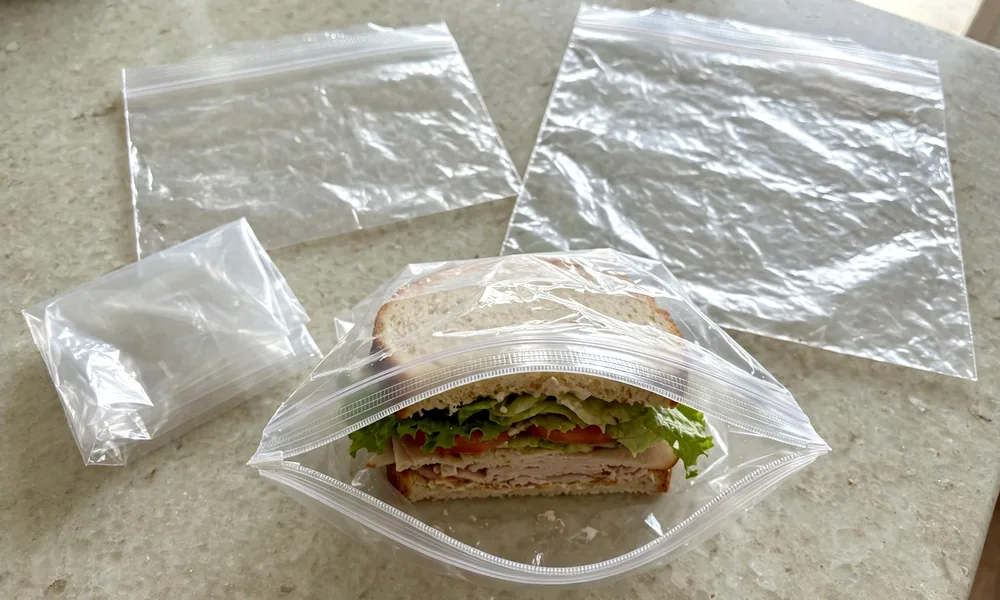
Size is the cheapest freshness trick there is. A bag that is too big leaves air trapped around the food, and air is what dries bread out; a bag that is too small cannot seal properly, because the stretched zip pops open at the first knock. A standard sandwich needs a bag of about 16 by 15 centimetres, and snack-size bags suit half a sandwich or a handful of grapes.
Choose the seal for the filling. A zip-top bag is the safest all-round choice for wet fillings; a fold-top bag is fine for a dry sandwich eaten within a few hours and is the cheapest option. Close the zip properly, from one end to the other, then run a finger back along it: a zip with a gap in the middle is worse than no zip at all.
How to pack a sandwich so it stays fresh until noon
The bag is only half the story: a sandwich packed badly will go soggy in the best bag on the shelf. Toast the bread very lightly and let it cool completely before building the sandwich, because warm bread steams inside a sealed bag and the crust turns soft. Butter both slices right to the edges, as a waterproof layer, and put wet ingredients like tomato in the middle, between cheese or meat, rather than against the bread.
When the sandwich is built, put it in the bag and press the air out gently before sealing it. Do not press so hard that you squash the sandwich, just flatten the bag around it and close the zip. If the sandwich has to survive a warm morning, add a small ice pack to the lunchbox. A rigid box protects a sandwich from crushing better than any bag can, so if your lunchbox gets thrown around, read our guide to the best sandwich boxes.
When a freezer bag wins, and when it loses
A freezer bag wins whenever food will be frozen for more than a couple of days: batch-cooked meals, bread bought in bulk, meat bought on offer, and fruit frozen for smoothies. In all of those cases the thick plastic and heavy zip pay for themselves by protecting food that would otherwise be thrown away. A freezer bag also wins for anything sharp or heavy in the freezer, because the thick plastic resists punctures that would tear a sandwich bag open within a day.
A freezer bag loses for everyday lunch. It is stiffer, so it does not fold neatly around a sandwich, and it costs two to three times as much per bag, which adds up across a year of packed lunches. It does nothing extra for a sandwich eaten four hours later: the bread does not care how thick the plastic is, as long as the seal is shut and the air is pressed out.
Mistakes that ruin a good sandwich bag
The most common mistake is reusing a disposable sandwich bag: a bag that held yesterday’s sandwich has crumbs and bacteria in the seams, and washing it does not clean the zip. The bag is designed to be used once. The second mistake is heating food in a sandwich bag, because thin plastic is not made for heat and can melt or split in a microwave.
The third mistake is wrapping a sandwich in cling film and then putting it in a bag, which traps moisture against the bread and makes sogginess worse. If you want a wrap instead, our guide to the best storage bags explains which wraps cling properly. The fourth mistake is storing a bagged sandwich somewhere warm, like a car dashboard, where the bread sweats.
The 6-point checklist before you buy
- Size: the bag should fit one sandwich with a little room to spare, about 16 by 15 centimetres, with snack sizes for smaller portions.
- Seal: choose a zip for anything wet, a fold-top only for dry sandwiches eaten within a few hours, and test the seal with a puff of air before you buy a big box.
- Thickness: about 1 to 1.5 mil is right for lunch; if the bag feels like a freezer bag, you are paying freezer prices for a lunch job.
- Clarity: a clear bag lets you see the sandwich without opening it.
- Quantity: buy the size you actually use most, not the biggest box on the shelf.
- Freezer plan: if you also freeze food, buy a separate box of proper freezer bags instead of expecting sandwich bags to do both jobs.
FAQs about sandwich bags
Can I use a sandwich bag in the freezer?
For a day or two, yes, but no longer. A thin bag lets moisture escape and air in, so food dries out and picks up freezer smells within days. For longer, use a proper freezer bag.
What is the difference between a sandwich bag and a storage bag?
A sandwich bag is sized for one sandwich and a few hours, while a storage bag is a larger quart or gallon bag for general food storage. A sandwich bag is simply the smallest member of the same family.
Are zip sandwich bags better than fold-top bags?
For anything wet, yes: the zip seals the whole top edge and holds when the bag tips over. For a dry sandwich eaten within a few hours, a fold-top bag works well and costs less.
Can sandwich bags go in the microwave?
No. Thin sandwich bags are not made for heat and can melt or split. Always take food out of the bag before heating it.
How do I stop my sandwich going soggy in a bag?
Butter both slices to the edges, keep wet fillings in the middle away from the bread, let toasted bread cool fully, and press the air out before sealing. A dry filling and a sealed bag matter more than the brand.
Are reusable sandwich bags worth it?
For a daily packed lunch they can be, if you wash and dry them properly after every use. A silicone bag costs far more up front but replaces hundreds of disposable bags.
The bottom line
Sandwich bags vs freezer bags is not a contest with one winner, it is a choice between two tools made for different jobs. Buy thin zip-top sandwich bags for lunch, sized to the sandwich and used once, and thick freezer bags for the freezer, labelled with the date. Never ask a sandwich bag to do a freezer bag’s job for more than a day or two.