Every backpacker crossing Europe faces the same first decision: train vs bus Europe backpacking. Both cross the continent, but in very different ways. The train is fast, smooth and romantic. The bus is cheap, far-reaching and surprisingly comfortable.
The truth is that train vs bus Europe backpacking is not a contest with one winner. It is a trade-off between speed and savings, comfort and coverage, spontaneity and planning. Trains win on Western Europe’s high-speed corridors; buses win where trains are slow, expensive or absent.
Most experienced backpackers use both, and the skill is knowing which to book for each leg. This guide compares the two on cost, journey times, comfort, luggage, sleeping and flexibility, so you can build a route that is cheaper and easier than either option alone.
Key takeaways
- Trains are faster and more comfortable between big cities; buses are cheaper and reach more small towns.
- A rail pass only pays off if you travel long distances often; slow trips are cheaper by bus.
- Night trains offer a real bed, while overnight buses offer only a reclining seat.
- Buses take big bags more easily; trains let you walk around, stretch and buy food on board.
- The best routes mix both: trains for long legs, buses for short hops and places trains do not serve.
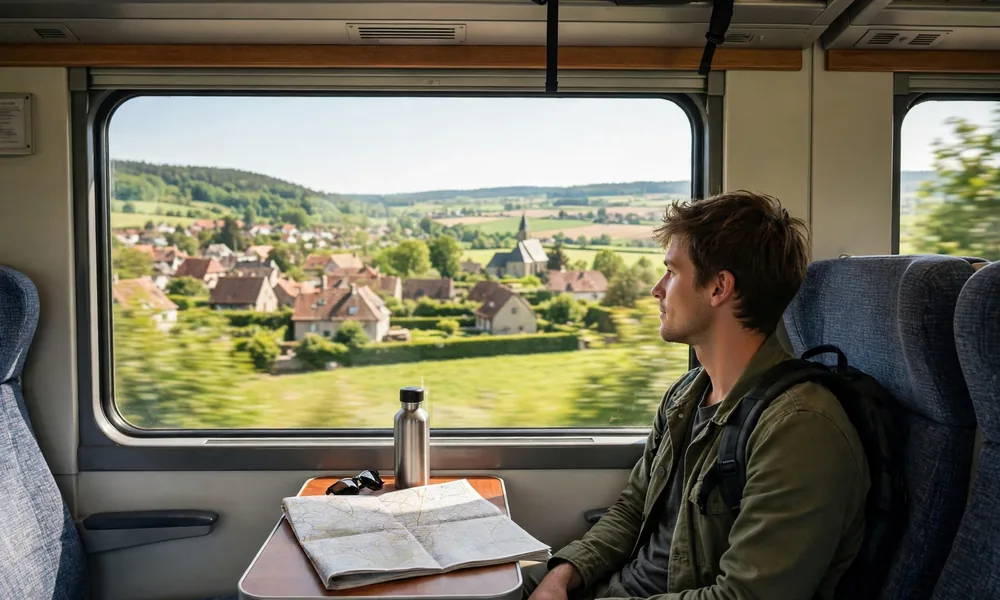
Train vs Bus for Europe Backpacking at a Glance
For speed and comfort between big cities, take the train. For the lowest fare and small towns, take the bus.
| Factor | Train | Bus |
|---|---|---|
| Typical cost | Higher, especially last minute | Lower, often much lower |
| Speed on major routes | Fast, often twice as quick | Slower, affected by traffic |
| Comfort | Roomy seats, walk around | Good seats, limited movement |
| Small towns served | Fewer, mainly larger towns | Many more destinations |
| Luggage | Carry on, limited storage | Large hold, generous allowance |
| Sleeping overnight | Night trains, bunks available | Overnight coaches, seats only |
| Booking flexibility | Passes and advance fares | Cheap fares, easy changes |
| Scenery | Excellent, big windows | Good, road-level views |
Cost: Which One Saves More Money?
Cost is where the bus usually wins, often by a lot. A coach ticket booked a few weeks ahead can cost a third of the equivalent train fare. Berlin to Prague by bus is routinely far cheaper than the same trip by train booked late.
Trains reward early booking. High-speed services in France, Spain, Italy and Germany sell advance tickets at deep discounts, and a fare bought two months ahead can be close to bus prices. But backpacking rarely runs on a fixed timetable, and once the cheap fares are gone you pay full price.
When a Rail Pass Makes Sense
A rail pass suits fast, frequent travel: moving every day or two, covering long distances and crossing several countries. For slow travel, with four or five days per city, the money is better spent on cheap bus tickets and occasional advance train fares. A comparison of train vs plane for European travel shows the same lesson: match the ticket to the trip.
When the Bus Is Clearly Cheaper
The bus is clearly cheaper on short and medium hops, on routes with little rail competition, and on overnight journeys where the ticket replaces a hostel bed. In Eastern and Southern Europe, where coach networks are dense, buses can be half the price of the train. Compare both options for every leg, book trains early when cheap, and take the bus when the train price jumps.
Speed and Comfort on the Road
Speed is the train’s strongest card. High-speed trains run at two or three times the speed of a coach on the same route and arrive in the city centre, not a bus station on the edge of town. Paris to Lyon, Madrid to Barcelona and Berlin to Munich all turn a long day into a short morning by rail.
Comfort is closer than most people expect. Modern coaches have reclining seats, legroom, power sockets, Wi-Fi and air conditioning, and a four-hour ride is perfectly pleasant. The train still wins on longer journeys, because you can stand up, walk to the buffet car, stretch and use a proper toilet without waiting for a rest stop.
The Train Experience
Train travel feels like part of the trip, not a chore between places. Big windows, a smooth ride and the rhythm of stations give you a sense of the country passing by, and regional trains are often scenic, winding through valleys and along rivers the motorway never sees. Stations are usually central, so you step off straight into the old town. Most backpackers still rate the train as the more enjoyable way to travel.
The Bus Experience
Coaches have improved enormously in the last decade: new, clean and quiet, with seats that recline properly and Wi-Fi good enough for planning the next stop. A daytime ride through the countryside can be genuinely lovely, showing villages and landscapes the railway misses. For two to four hours, the bus is just as comfortable as the train. On very long journeys, though, eight or ten hours in a coach seat is tiring.
Routes, Flexibility and Where Each Wins
Coverage is the bus’s quiet superpower. Coaches serve thousands of towns with no railway station, and in many parts of Europe the bus network is denser than the rail network. If your trip includes small coastal towns, mountain villages, national parks and ferry ports, you will be taking buses.
Trains are built for the big flows between major cities, and they do that job brilliantly. The network is densest in Western Europe, with frequent services and good information in English. In the east and south it is patchier, with slower trains and gaps only a bus can fill.
Flexibility and Spontaneity
Flexibility matters because backpacking plans change. A bus ticket is usually cheap enough to abandon without regret, and many can be changed or refunded for a small fee, so staying an extra day somewhere you love costs little. Cheap advance train tickets are often fixed to one departure, so changing your mind means buying a new ticket at full price. Keep the plan loose and book trains early only for long legs where the saving is real.
Planning Around the Best Destinations
Start with the places, not the transport. Pick the cities and towns you most want to see, then connect them. Some city pairs are made for the train, with a fast direct service every hour; others are made for the bus, with a cheap direct coach and no sensible rail link. A look at the best city breaks in Europe shows how many rewarding short trips sit on routes where both options exist.
Luggage, Sleeping and Practical Realities
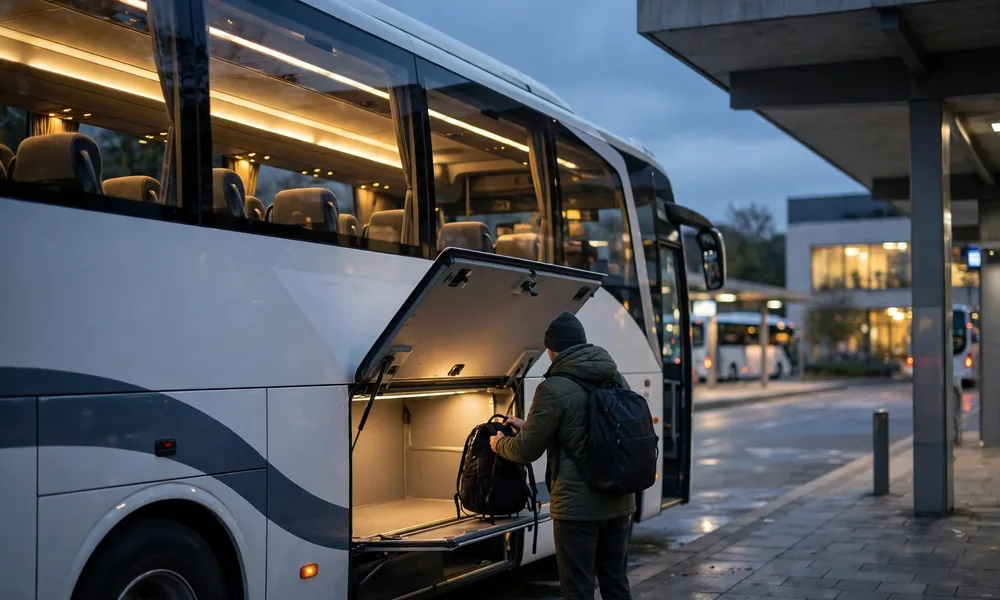
Luggage matters more than first-time backpackers expect. A bus takes your big pack in the hold without a fuss, with a generous allowance. A train expects you to carry your bag on and off, lift it onto a rack and keep it close, which is fine with a light pack and hard work with a heavy one.
Sleeping is where the two split most sharply. A night train with a couchette or sleeper is a genuine bed, and you wake in a new city having saved a night’s accommodation. An overnight bus is a seat, however much it reclines. If your budget depends on overnight travel, the night train is the better investment.
Food, Toilets and Breaks
Food on the train is easy: buffet cars, station shops and your own supplies. The bus is more limited, with rest stops every few hours and whatever is in your day bag. Carry water, snacks and a sandwich on both, since station food is expensive and rest-stop food is unpredictable. Toilets follow the same pattern: trains have proper facilities any time, while buses rely on rest stops and a cramped on-board toilet.
Avoiding the Classic Mistakes
The classic mistakes are simple: missing a train because platform information was not in English, losing money on non-refundable tickets, and arriving at a closed rural station with no onward transport. Others pack too much, forget a night bus is not a bed, or book the cheapest option without checking where it arrives. Reading the common train travel mistakes before you go avoids the errors that cost the most time and money.
Which Backpackers Should Choose Which?
Fast travellers with two weeks and a long list of cities should lean towards trains, booking long legs early. Slow travellers with a month or more and a taste for small towns should lean towards buses, enjoying lower prices and places trains never reach.
A Simple Rule for Deciding Each Leg
If the train takes less than half the time of the bus and costs less than twice as much, take the train. If the bus is dramatically cheaper and only a little slower, take the bus. If there is no direct train, take the bus without hesitating. For overnight journeys, take the night train when you can afford it and the overnight bus only when you need to save the hostel money.
How to Combine Trains and Buses Into One Trip
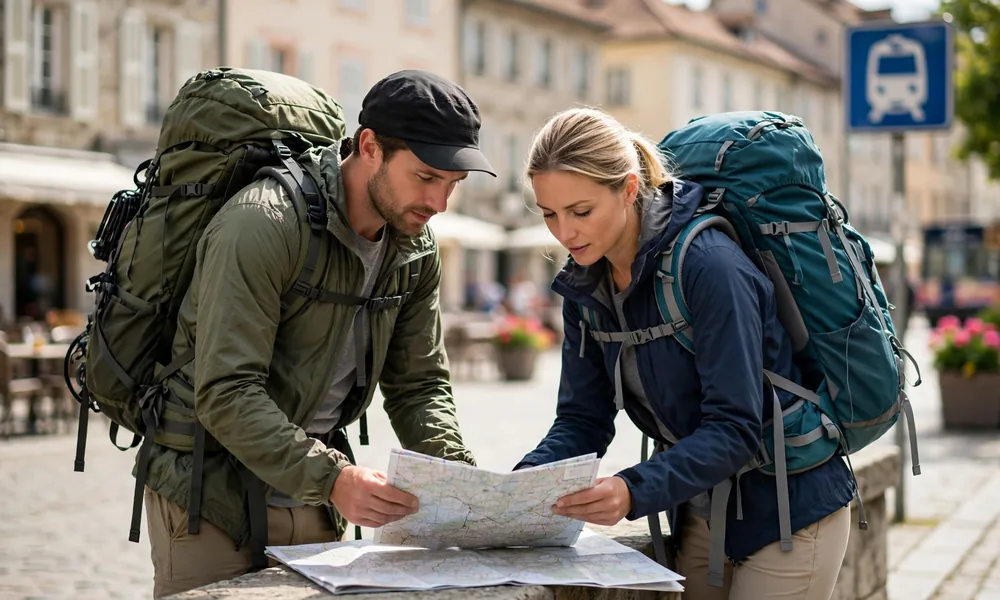
The best routes are a thoughtful mix. Use trains for long, fast corridors between major cities, where the time saved is worth the price. Use buses for short hops, small towns and scenic detours trains do not serve. Book expensive legs early, keep cheap legs flexible, and leave gaps for places you fall in love with along the way.
Mixing the two also protects you from disruption. If a train is cancelled, there is often a bus on the same corridor; if a bus is full, the train may have space. A delay becomes an inconvenience rather than a disaster, and that confidence makes the whole trip more relaxed.
Your Pre-Departure Checklist
- Map your must-see places first, then connect them with the best mix of trains and buses.
- Compare prices for every leg, and book expensive train fares as early as you can.
- Check whether a rail pass genuinely saves money for your pace of travel.
- Pack light enough to lift your bag onto a train rack; keep valuables in your day pack.
- Download offline maps and timetables; rural stations often have no Wi-Fi or staff.
- Have a backup plan for the last connection of the day, and carry water and snacks.
Frequently Asked Questions
Is the train or the bus cheaper for backpacking in Europe?
The bus is usually cheaper, especially close to departure. Trains can match bus prices when booked well in advance, and a rail pass can help on fast trips with many long journeys.
How much slower is the bus than the train?
On major corridors the bus can take twice as long. On short hops the difference is often under an hour, and sometimes the bus is faster because it runs direct.
Can I sleep on an overnight bus in Europe?
Yes, but it is a reclining seat, not a bed. Night trains offer a proper bed and a much better sleep for a higher price.
Do I need to book European trains and buses in advance?
Advance booking saves the most on trains, where cheap fares sell out early. Buses stay cheap closer to departure, but book a day or two ahead in peak season.
Is a Eurail pass worth it for backpacking?
It is worth it if you travel long distances frequently. For slow trips, point-to-point tickets and bus fares usually cost less.
Which is better for reaching small towns in Europe?
The bus, because coaches serve thousands of small towns with no railway station. Trains are best between larger cities.
The Bottom Line
For most backpackers, the train is best for long, fast journeys between major cities, and the bus is best for cheap fares and small towns trains do not reach. Mix the two, choose leg by leg, pack light, and let the route decide.