
Lost in the Terminal: The Worst Airports of 2026
The worst airports of 2026 do not fail because flying is unpleasant. They fail because the building between the kerb and the aircraft makes the journey harder than it needs to be. The worst airports of 2026 do the opposite at every step. This guide ranks airports by type and pattern, not by name, because the same design faults appear in terminals all over the world, and naming one airport would miss the point: the patterns are the problem.
This guide is about airports as travel hubs: the buildings, layouts and systems that move passengers from arrival to departure. That makes it different from a guide to the vehicles that serve them, such as our guide to the worst trams of 2026, which ranks city transport rather than the hub itself, and from our guide to the worst ferries of 2026, which covers another way of leaving a city altogether. An airport is judged here on what happens inside the terminal: check-in, security, transfers, gates, baggage and the long walk in between. No specific airport is named as the worst anywhere in this guide; the ranks describe types of airport and the design patterns that make them punishing, so you can recognise the warning signs wherever you fly.
Key takeaways
- An airport is judged by the journey through it, not by its shops or its architecture: the best terminal is the one you barely notice.
- Transfers are the biggest warning sign: if changing planes takes longer than the flight, the hub is badly designed.
- Signage is the cheapest fix in aviation, and an airport that cannot get its signs right has failed at the easiest job.
- Judge an airport by its security queue at peak time: a hub that collapses every morning has not planned for its own passengers.
- Build slack into every trip through a bad-pattern airport, and treat a tight connection there as a missed flight waiting to happen.
How the worst airports of 2026 were ranked
Every type below was scored on five measures. Wayfinding comes first: can a first-time passenger find the right desk, the right queue and the right gate without asking for help? Transfers are second, judged on the time, distance and re-screening needed to change planes. Queues are third, because check-in and security are where an airport either respects your time or steals it. Comfort is fourth, covering seating, food, water and somewhere to rest during a delay. The scores below are worst scores out of ten, with ten meaning the most punishing airport experience of the year.

Comparison table: the worst airports of 2026
| Rank | Airport type | Main flaw | Warning sign | Worst score |
|---|---|---|---|---|
| 1 | The Endless Transfer Hub | Changing planes takes hours | A second security check mid-transfer | 10/10 |
| 2 | The Security Bottleneck | Queues swallow the morning | A queue that starts outside the terminal | 10/10 |
| 3 | The Single-Corridor Squeeze | One narrow spine for everyone | Two flights boarding down one corridor | 9/10 |
| 4 | The Gate Desert | Gates far from everything | A twenty-minute walk past closed shops | 9/10 |
| 5 | The Arrivals Maze | No clear path out of the building | Signs pointing in three directions | 9/10 |
| 6 | The Baggage Black Hole | Bags take an hour or vanish | A carousel that never starts moving | 8/10 |
| 7 | The Overnight Nowhere | Nowhere to rest during a delay | Seats with armrests and no food open | 8/10 |
The worst airports of 2026
1. The Endless Transfer Hub: changing planes takes longer than the flight
The Endless Transfer Hub is the worst type of airport in 2026 because it turns the simplest part of flying, changing from one aircraft to another, into a journey of its own. The hub was usually built in stages, with each new terminal added wherever there was space, and the passenger pays for that history with their legs and their patience. A good hub is designed around the transfer, with short walks, one security check and clear signs; the endless hub is designed around everything except the passenger changing planes.
2. The Security Bottleneck: a queue that swallows the whole morning
The Security Bottleneck is the airport where the queue for screening is the main event of the day. It often starts before the terminal doors, snakes through a roped maze inside, and moves so slowly that passengers begin doing mental arithmetic about whether they will make their flight. Some airports in this pattern also make the experience worse with contradictory instructions, so the queue is not only slow but confusing, and passengers reach the front only to be sent back for a liquid, a laptop or a belt they were told to keep on.

3. The Single-Corridor Squeeze: one narrow spine carrying every passenger
The Single-Corridor Squeeze is the terminal built around one long, narrow corridor that every passenger must use for everything. The result is a building that works perfectly on a quiet Tuesday in February and collapses every Friday evening, every holiday and every morning rush. The squeeze is worst at the pinch points: the single set of escalators, the one narrow doorway into the food court, the stretch where the corridor narrows to pass a shop that was clearly added later. A terminal needs more than one way through it, and an airport that funnels ten thousand people a day down a single spine has built a queue out of architecture.
4. The Gate Desert: a twenty-minute walk to nowhere
The Gate Desert is the airport that puts its furthest gates at the end of a long, empty pier with nothing in between. The moving walkways, if they exist, are broken, and the departure screens are spaced so far apart that you walk for minutes without knowing whether your gate has changed. A gate should be a place, with seats, screens and something to drink; in the gate desert it is a number at the end of a corridor, and the journey there is the worst part of the trip.
5. The Arrivals Maze: no clear path out of the building
The Arrivals Maze is the airport that cannot get you out of the door. You land, you follow the signs to passport control, and then the signs begin to disagree with each other: one points left, one points right, and a third points back the way you came. The maze is not an accident; it is a design choice, because every forced detour is a chance to sell something, and the passenger’s time is treated as free. A good arrivals hall is a straight line from the aircraft to the kerb, with the transport options visible from the exit. The maze replaces that line with a puzzle, and the prize for solving it is simply leaving the building.
6. The Baggage Black Hole: bags that take an hour, or never arrive at all
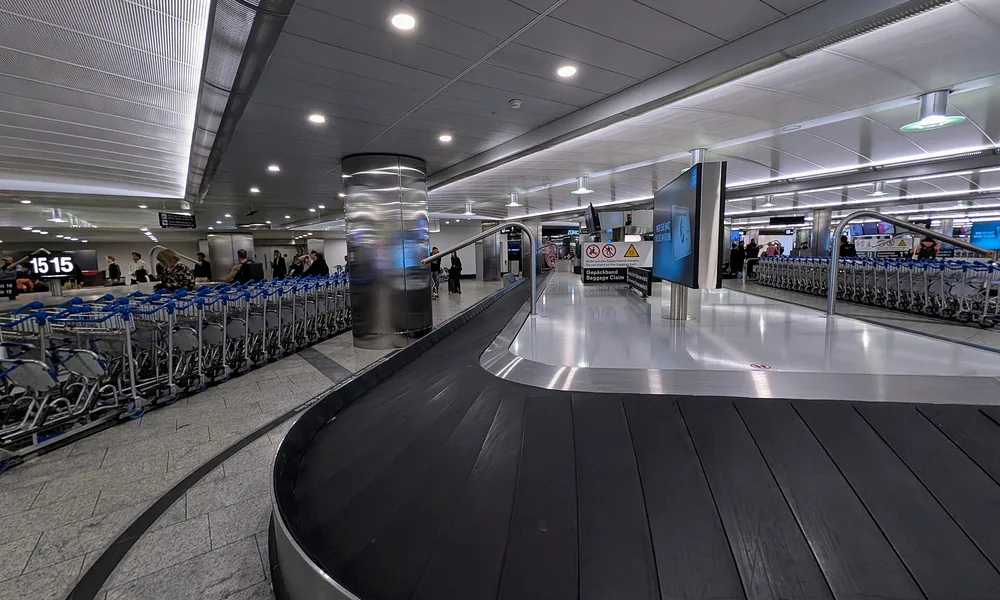
The Baggage Black Hole is the airport where the carousel is the last and longest queue of the journey. When the bags do arrive they come in drips, a few at a time, and the last passengers are still waiting an hour after landing. The black hole is more than an annoyance, because a delayed bag can mean a missed train, a ruined first evening, or a night without the medication that was packed in the hold. An airport’s final job is to reunite you with your luggage, and the black hole fails at it in full view of everyone it has already kept waiting.
7. The Overnight Nowhere: nowhere to rest when the flight is delayed
The Overnight Nowhere is the airport that has nothing for the passenger whose flight is delayed or cancelled. The seats all have armrests in the middle, so nobody can lie down. The food outlets close at ten, the water fountains are hard to find, and the only quiet corner is a corridor that the cleaners need to use. An airport does not need to be a hotel, but it needs somewhere to sit, something to drink and a place to rest when the schedule falls apart, and the overnight nowhere provides none of the three.
What to avoid when flying through a bad-pattern airport
The most common mistake is booking a tight connection through a hub you have never used. A forty-five minute transfer is only possible in an airport designed for transfers, and the endless transfer hub in this guide will eat that time before you have even reached the bus. Before you book, check the airport’s own minimum connection time, add thirty minutes for a peak-time security queue, and treat any connection under ninety minutes through a large hub as a risk, not a bargain. Avoid the last flight of the day through a gate-desert airport if you have reduced mobility, and avoid overnight connections through an airport with no rest facilities. The same thinking applies to the journey after the airport, and our guide to the worst trolley buses of 2026 makes the same point about onward transport that fails when you need it most, because the trip does not end at the arrivals door.
Checklist: surviving a bad-pattern airport
- Book connections of ninety minutes or more through large hubs, and two hours if you must change terminals.
- Check the airport map before you travel and count the walk from your arrival gate to your departure gate.
- Arrive early at peak times: a security bottleneck can add an hour that no timetable accounts for.
- Carry water, snacks and a phone charger, because the gate desert and the overnight nowhere offer none of them.
- Keep essentials in your cabin bag, so a baggage black hole costs you an evening, not a whole trip.
- Know your onward transport before you land, so the arrivals maze cannot strand you at the kerb.
Frequently asked questions
What makes an airport bad?
The journey through the building. Long transfers, slow security, confusing signs, faraway gates and lost baggage are design and management failures, and they matter far more than the shops or the architecture.
How long should a transfer take?
In a well-designed hub, thirty to sixty minutes within one terminal, including one security check. If changing planes takes two hours or needs a bus between terminals, the hub has a transfer problem.
Why do some airports have such long walks to the gate?
They grew outwards: new gates were built on the cheapest land far from the main building, and nobody planned seats, food or water along the way. The result is the gate desert in this guide.
Can I avoid a bad airport entirely?
Often, yes: check the connection airport before you book, compare the minimum connection time with your layover, and choose a different hub or a direct flight if the pattern looks bad.
What should I do if my flight is delayed overnight?
Ask staff about rest areas and rebooking before the crowds form, keep water and snacks with you, and use a lounge or a nearby hotel if the terminal offers nowhere to rest.
Does this guide name any specific airport as the worst?
No. It ranks types of airport and design patterns, because the same faults appear in terminals all over the world, and the patterns are what travellers should learn to recognise.
Bottom line
The worst airports of 2026 fail in the same few ways: endless transfers, security bottlenecks, single corridors, gate deserts, arrivals mazes, lost baggage and nowhere to rest. Learn the patterns, build slack into your connections, check the hub before you book, and choose a different hub when the warning signs are there.


