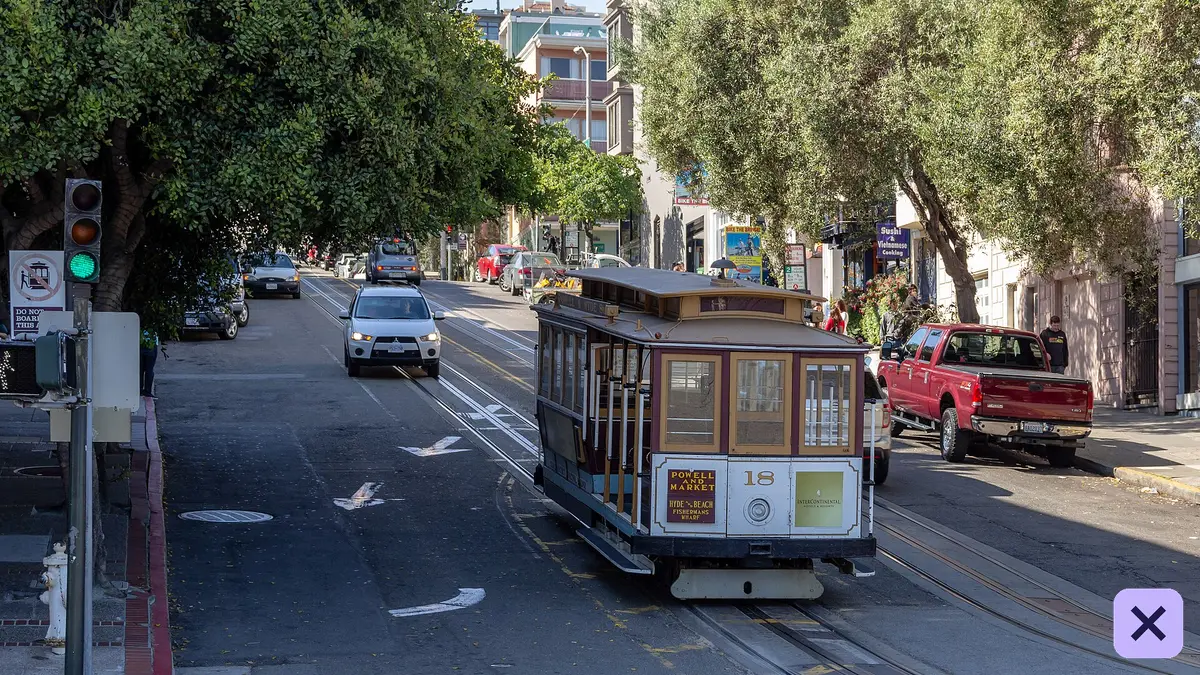
The Worst Cable Cars of 2026: Packed Cars, Long Queues and Hills That Beat Them
The worst cable cars of 2026 are not the ones with the oldest paint or the slowest top speed. They are the rides that turn a short trip up a hill into a long wait, a crush of standing passengers, or a crawl a fit walker could beat on foot. A cable car is a simple machine: a car gripped to a moving cable under the street, pulled along rails by a powerhouse far away. When it works, it is the easiest way up a steep city hill. When it does not, the same simplicity becomes the problem, because there is no motor on board to push past a fault and no second gear when the grade gets steep.
Key takeaways
- A cable car is hauled by a cable under the street, not driven by a motor on board, so a cable fault stops the whole line at once.
- The worst rides fail on capacity first: too few cars, too many people, and standing room gone at the first stop.
- A cable car is not a tram or a trolley bus: trams draw power from overhead wires, trolley buses run on rubber tyres, and cable cars grip a moving cable on rails.
- Queues are part of the ride now, so a car that only runs a short tourist loop costs more in waiting than the ride is worth.
- Check the queue, the weather cover and the real journey time before you join the line.
How the worst cable cars of 2026 were chosen
Every type below was scored on five measures. Capacity comes first: can the car carry its passengers without packing people onto the running boards? Reliability is second, judged on how often the car stalls and whether one fault halts the whole line. Journey time is third, because a cable car that crawls between stops is worse than walking. Comfort is fourth: shelter from rain and wind, and a seat for the ride. Value is fifth: the real cost once the queue, the fare and the waiting time are all counted.
Two notes before the list. First, this guide is about street cable cars only: rail cars on city streets, hauled by a cable in a slot under the road. Aerial gondola cabins that hang from a wire overhead are a different machine, and funiculars on their own short track are different again, so neither appears here. Second, no single car is named as the worst, because the same bad patterns appear on many lines, and what matters is learning to recognise them before you join the queue. Travellers who ride other city transport will find the same logic in our guides to the worst trams of 2026 and the worst trolley buses of 2026, where capacity, wires and waiting time matter just as much.

Comparison table: the worst cable cars of 2026
| Rank | Cable car type | Worst for | Watch out for |
|---|---|---|---|
| 1 | Packed open-sided car at peak hour | Comfort, safety | No grip, no seat, standing only |
| 2 | Car that stalls on the steepest grade | Reliability | Cable slip, long mid-hill stops |
| 3 | Queue-first car | Journey time | Hour-long line, ten-minute ride |
| 4 | Car with no shelter in bad weather | Comfort | Open benches, rain, cold wind |
| 5 | Short-hop car that goes nowhere useful | Value | Tourist loop, no real stops |
| 6 | Car that stops at every block | Journey time | Constant boarding, endless crawl |
| 7 | Night car with no light and no call | Comfort, safety | Dark car, no announcements |
The worst cable cars of 2026
1. The packed open-sided car at peak hour: the car to avoid first
The worst cable car experience in 2026 starts before the car even moves. At peak hour the car arrives already full, and the crowd at the stop pushes on anyway, until every seat is taken and late boarders cling to the outside rails with nowhere to put their feet. The open design that makes the car charming on a quiet morning becomes a hazard when it is packed, because there are no doors to close and no straps to hold.
2. The car that stalls on the steepest grade: a cable fault stops everything
A cable car has no engine of its own, and that fact shows most clearly on the steepest part of the hill. When the grip slips or a fault in the powerhouse cuts the pull, the car stops where it is, and nothing on board can move it again. The worst version stalls halfway up the grade, where walking is hardest and there is nowhere to step off safely, and the minutes stretch out with no announcement and no estimate of when the car will move.
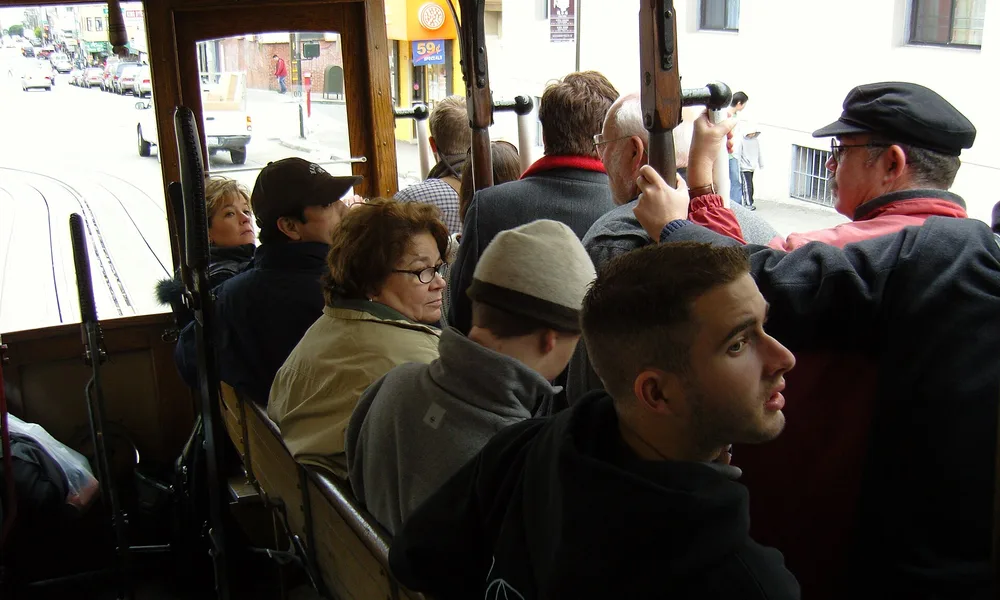
3. The queue-first car: an hour in line for a ten-minute ride
Some cable cars are now queues with a ride attached. The line at the terminus stretches around the block before the first car of the day leaves, and the wait grows until it is longer than the journey itself. The worst version makes the queue part of the ticket: you pay, you wait, and the ride at the end lasts ten minutes. The queue hides the real problem, which is capacity: too few cars on the line and no booking system to spread the demand.
4. The car with no shelter in bad weather: open benches in rain and wind
A cable car is an open car by design, and in good weather that is the whole point. In bad weather it is the whole problem. The worst version offers no shelter at all: open benches, no roof over the standing platforms, and wind that drives the rain sideways across the car for the full climb. Passengers arrive at the top soaked and cold, and the design makes it worse, because the car moves slowly up the hill, so the exposure lasts longer than a bus ride through the same weather.
5. The short-hop car that goes nowhere useful: a tourist loop with no real stops
Not every cable car is transport. Some are loops built for visitors, running a short distance between two points that are already easy to reach, with no stops that serve the people who live nearby. The worst version charges a full fare for a ride that gets you nowhere you needed to go: it starts at a tourist square, climbs a short hill, and drops you at a viewpoint you could have reached on foot in fifteen minutes.
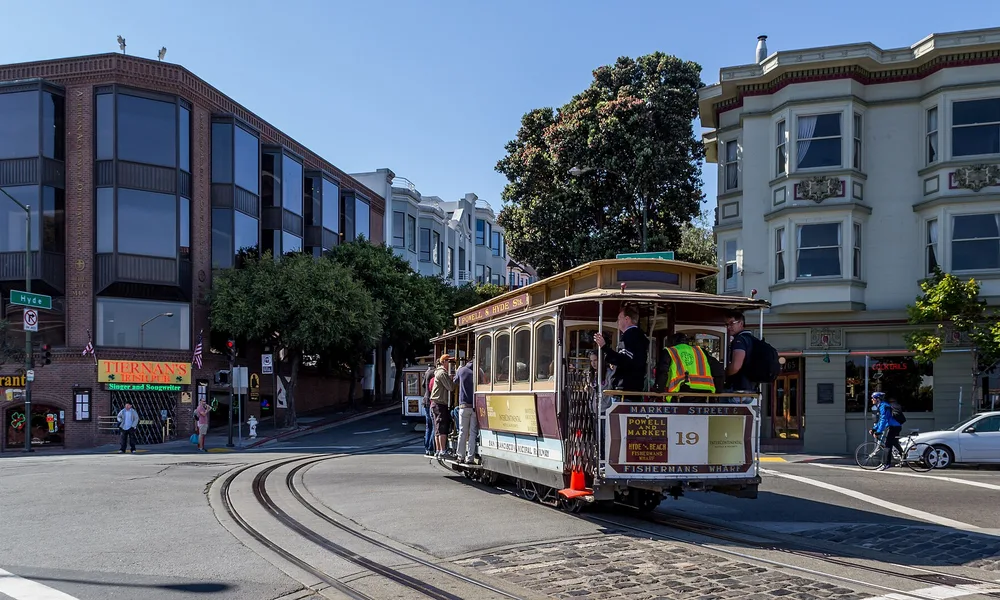
6. The car that stops at every block: a crawl that walking beats
A cable car should be faster than walking up a steep hill, but the worst ones are not. This car stops at every block, and sometimes between blocks, for passengers who flag it down and for cars crossing the tracks, and each stop is short but they add up until a fit walker on the pavement is keeping pace with the car. The problem is the route, not the machine: a line with too many stops and no priority at junctions will always crawl.
7. The night car with no light and no call: dark, quiet and confusing
The worst cable car after dark is the one that forgets its passengers are still there. The car runs with dim lights or none at all, no announcement of the stops, and no call from the crew when the terminus approaches, so riders sit in the dark guessing where they are. The open sides make it worse, because the street lights flash past and the car feels faster and less safe than it is, and there is no display inside to say which stop is next.
What to avoid when riding a cable car
The most common cable car regret is not a bad car but a wrong choice: joining an hour-long queue for a ten-minute ride, boarding a packed car when the next one would have been empty, or riding in the rain in an open car when a bus would have been dry. Check three things before you pay: the queue at the terminus, the weather cover on the car, and the real journey time including every stop. Our guide to the worst ferries of 2026 makes the same point about queues and weather, because the traps are the same on the water as on the rails.
Checklist: riding a cable car in 2026
- Look at the queue before you pay, and walk away if the line is already around the block.
- Let a packed car go and wait for the next one, rather than clinging to the outside rails.
- Check the weather cover, and skip the ride in rain or wind if the benches are open.
- Count the stops on the route map, and walk if the car stops more than once a block.
- Have a walking route in mind, because a cable fault stops the whole line at once.
- Ride in daylight when you can, and count the stops yourself if the car runs dark at night.
Frequently asked questions
What is the worst cable car ride of 2026?
The packed open-sided car at peak hour, because it combines the two failures that matter most: no room to stand safely and no seat to sit in. A stall or a queue is annoying, but a crush on an open car is the ride to avoid first.
Are cable cars the same as trams?
No. A cable car is hauled by a moving cable under the street and has no motor on board, while a tram draws electric power from overhead wires and drives itself. A cable fault stops every car on the line at once.
Are cable cars the same as trolley buses?
No. A trolley bus runs on rubber tyres on the road and draws power from overhead wires, while a cable car runs on rails and is pulled by a cable. A trolley bus can be towed off its wires, but a cable car waits for the cable.
Why do cable car queues get so long?
Because a cable line can only run as many cars as its cable, turntables and termini allow, so demand quickly outruns supply. There is no easy way to add cars, and the queue becomes part of the ride.
Is it safe to ride a cable car in the rain?
The car is safe, but the ride is miserable in an open car, and the benches and platforms get slippery. If the car has no covered seating, wait for a better day or take a bus up the hill.
What should I do if my cable car stalls on a hill?
Stay on the car and wait for the crew, because stepping off mid-hill is the dangerous option. Once moving again, plan a walking route for next time, because a line that stalls once is likely to stall again.
Bottom line
The worst cable cars of 2026 fail on the basics: too many people for the car, too long a queue for the ride, too many stops for the journey, and no shelter when the weather turns. On a quiet day a cable car is still the best way up a steep hill. But when the queue is around the block, the car is already full, and the rain is coming sideways across the open benches, walk, and let the cable car keep its charm for another day.


