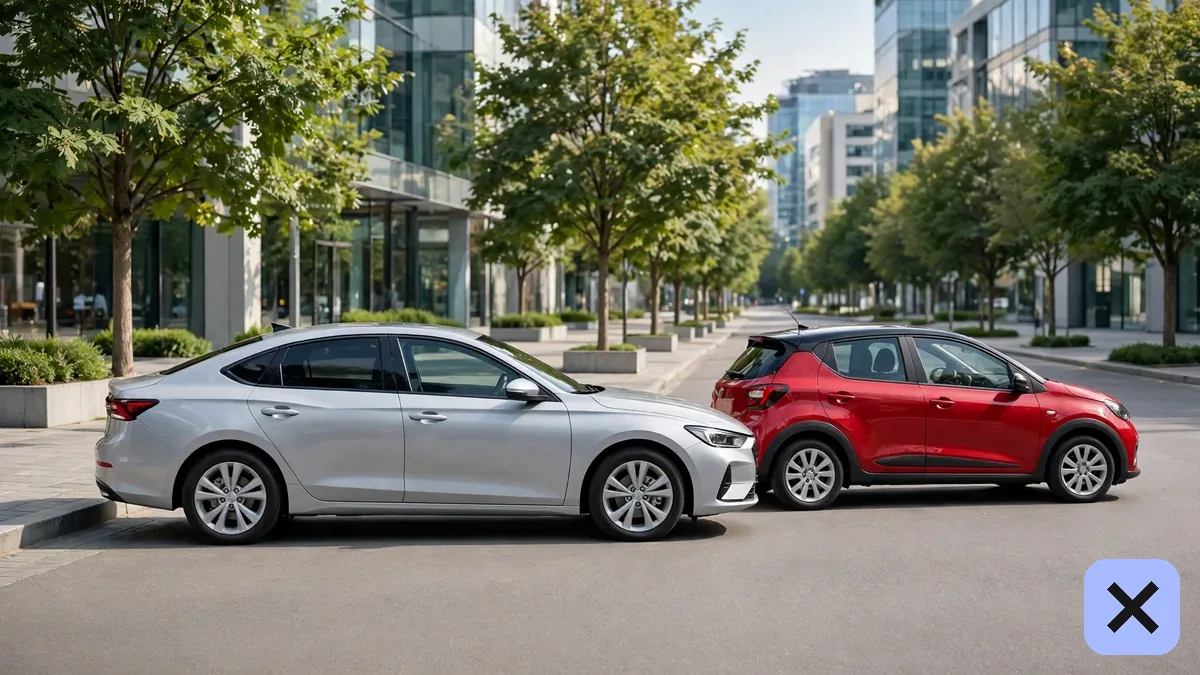
Car buying traps are not accidents of a confusing process. They are deliberate, practised techniques that dealers still use because they work, and they work on careful buyers as well as impulsive ones. The showroom, the test drive and the paperwork are all designed to work on you.
The worst car buying traps share a simple pattern. Something that sounds like a saving turns out to be a cost moved somewhere else. A monthly payment that sounds affordable hides a loan stretched over extra years, and a free extra turns out to be something you paid for in the price of the car.
This guide walks through the traps dealers still use, explains how each one costs you money, and shows you the exact response that neutralises it. You need a firm out-the-door price, your own financing arranged in advance, and a willingness to leave if the numbers stop making sense.
Key takeaways
- Negotiate the total out-the-door price, never the monthly payment, and get it in writing before discussing finance.
- Arrange your own loan before visiting the dealer so the dealer cannot inflate your rate.
- Price every add-on separately and refuse it by default, adding it back only if you want it.
- A low advertised price usually excludes fees, requires dealer financing, or applies to a car that does not exist.
- If a deal depends on signing today, it is not a deal. Walk away and let the dealer call you back.

Why Car Buying Traps Still Work
Car buying is one of the few purchases where the price is openly negotiable, the product is expensive, and the buyer usually arrives emotionally invested. Most people have already imagined themselves driving the car before they reach the showroom, and that feeling is exactly what the sales process is built to exploit.
The second reason traps work is complexity. A car deal is not one price but a bundle: the car, the trade-in, the loan, the fees and the extras. A dealer can give you a win on one element while quietly taking it back on another, so the monthly payment drops while the total cost rises by thousands. Add fatigue after three to five hours in the showroom, and most buyers will agree to things they would refuse fresh.
The Bait Price Trap
The bait price is the oldest trap in the book and still the most common. You see a car advertised far below other dealers, drive to the showroom, and somehow that car is unavailable or already sold. What remains is a more expensive version. Sometimes the car does exist, but the advertised price excludes destination charges, dealer fees and taxes that add thousands, or it requires dealer financing at a high rate.
How to Spot a Bait Price
Compare the advertised price with the same model at three other dealers before you travel. A price far below the rest is a warning, not a bargain. Call ahead and ask for the full out-the-door price in writing, including every fee and tax. A genuine dealer will send it; a bait dealer will insist you come in, because the trap only works face to face. Confirm which vehicle the price applies to and that it is still on the lot. A related trick is the price that grows at the desk: you agree a figure, then the written offer shows a higher number. Each increase is small; together they add up to a large sum, so agree nothing you have not seen in writing.
The Monthly Payment Trap
The monthly payment trap is the single most expensive trick in car sales. The salesperson asks what monthly payment you can afford, then builds a deal around that number. It lets the dealer hide the true cost behind the length of the loan, because almost any price fits almost any budget if the term is stretched far enough.
On a $30,000 car, the payment is roughly $690 a month over four years, but about $430 over seven years, which feels like a saving. The total interest nearly doubles, though, and you will owe more than the car is worth for most of the loan. The lower payment also creates room to add extras and raise the price while keeping the monthly figure where you wanted it. Many buyers fall into this pattern, as our guide to common car-buying mistakes explains. Negotiate only the total out-the-door price, decide the loan term yourself beforehand, and cap it at 48 months. If the car only becomes affordable over six or seven years, the car is too expensive.
The Finance Office Trap
The finance office is where dealers make much of their profit, and buyers understand it least. After hours of negotiation, a finance manager congratulates you and presents a stack of documents. This is where rates are marked up and high-margin products are sold in a rush, so slow down and read every line.
The Interest Rate Markup
When a dealer arranges your loan, the lender offers a wholesale buy rate, and the dealer may add a markup of one or two points and keep the difference. On a $30,000 loan over five years, a two-point markup costs you roughly $1,700 in extra interest. You will never see the markup; you will only see a normal-looking monthly payment.
The defence is to arrive with your own pre-approved loan from a bank or credit union. That gives you a rate to compare against. If the dealer can beat it, take it; if not, use yours. Ask to see the buy rate in writing, and refuse any deal where the rate rises between quote and contract.
The Rushed Signature
Documents are flipped, summarised in a sentence, and placed in front of you with a pen. The pressure is polite but real, and it works because you are tired and everyone is waiting. Read the loan term, the rate, the total amount financed and every product listed. If a document differs from what you agreed, stop and ask for it to be corrected.
| Trap | What It Costs You | Your Defence |
|---|---|---|
| Bait price | Hours wasted and a higher-priced car | Get the out-the-door price in writing first |
| Monthly payment focus | Thousands in extra interest | Negotiate total price, cap the loan at 48 months |
| Rate markup | Around $1,700 on a typical loan | Arrive with your own pre-approval |
| Packed add-ons | $1,000 to $3,000 or more | Refuse everything by default, price items separately |
| Low trade-in offer | $1,000 to $2,500 below market value | Get three independent valuations first |
The Add-On Avalanche
Add-ons are the finance office’s most profitable products. Warranties, paint protection, gap insurance and tyre cover are presented as a package, at a monthly cost so small it sounds silly to refuse. Over six years, those few dollars a month add up to thousands, plus interest.
Some add-ons have genuine value: gap insurance can be sensible if you owe more than the car is worth, and a warranty can suit a buyer keeping a complex car for years. But dealer versions are usually the most expensive, sometimes double the same cover bought elsewhere, and paint treatments are often a spray applied in minutes for hundreds. As our look at feature overload explains, extras that sound impressive often add cost without adding real value. Refuse every add-on by default. If you later want gap insurance or a warranty, buy it from your bank or insurer, where the same cover typically costs far less. Check the contract before signing: refused add-ons have a habit of reappearing.
The Trade-In Trap
Your trade-in is a second negotiation hidden inside the first. The offer for your old car is usually low; the dealer then appears generous by raising it, while quietly raising the new car’s price by the same amount. You feel you won the trade-in negotiation, but nothing changed except which line carried the profit.
Some dealers offer a strong trade-in figure, get you committed, and then reduce it after an inspection finds supposed faults. By then you have invested hours, and the reduced figure feels like a detail. It is the deal. Get three independent valuations before visiting the dealer and treat the highest credible one as your floor. Negotiate the new car’s price first, with no mention of a trade-in, and only introduce it once the price is agreed in writing. Better still, sell the car separately: more effort, but usually more money in your pocket.
Pressure, Scarcity and the Vanishing Deal
Another buyer is coming at five. The rebate ends tonight. Your trade-in value is only good today. Almost none of it is true. Cars are not rare, rebates return, and a price that vanishes overnight was never fair. The scarcity tactic is especially effective on popular models: a salesperson may show you the only car in your specification for miles and use it to rush you. Accept that someone else might buy it. There will be another car, and careful buying saves more than waiting costs.
Excitement can override every rational check, so read an honest account of sports car reality before you buy: running costs, insurance and depreciation matter far more than the first test drive suggests. Buy the car you can afford to own, not just the car you can afford to finance this month.
Your Pre-Visit Checklist
Run through this checklist before every dealer visit.
- Set your maximum out-the-door price in writing before you leave home.
- Get pre-approved financing from your own bank and bring the offer.
- Research the fair price of the exact model from three sources.
- Get three independent trade-in valuations in writing.
- Know your credit score before the dealer runs a check.
- Set a hard departure time; walking away is always an option.
Frequently Asked Questions
What is the worst car buying trap?
The monthly payment trap: it hides the total cost behind a low monthly figure. A long loan makes any price look affordable while doubling the interest and leaving you owing more than the car is worth.
Should I tell the dealer my monthly budget?
No. Keep the conversation on the total out-the-door price. Once the dealer knows your monthly budget, the deal can be adjusted to hit that number while the total cost rises.
Is dealer financing ever a good idea?
Yes, if it genuinely beats your pre-approved rate; manufacturer-backed low-rate offers can be excellent. Never accept dealer financing without a comparison rate.
Are extended warranties worth buying from a dealer?
Rarely at the dealer’s price. The same cover is usually available elsewhere for far less, and many dealer warranties carry exclusions that limit their value.
How do I know if a trade-in offer is fair?
Get three independent valuations first and treat the highest credible figure as your floor. Negotiate the new car’s price separately, in writing, before mentioning the trade-in.
What should I do if I feel pressured to sign today?
Leave. A genuine deal will still be available tomorrow. If the price changes overnight, it was never a fair price.
The Bottom Line
The worst car buying traps are not clever or new: the bait price, the monthly payment, the marked-up loan, the add-ons, the undervalued trade-in and the pressure to sign today. Each one moves the cost somewhere you are not looking, and each one fails the moment you look in the right place. Negotiate the total price, arrange your own financing, refuse extras by default, value your trade-in independently, and never let urgency decide for you. The best deal is not the one that feels exciting in the showroom, but the one that still looks fair a year later.