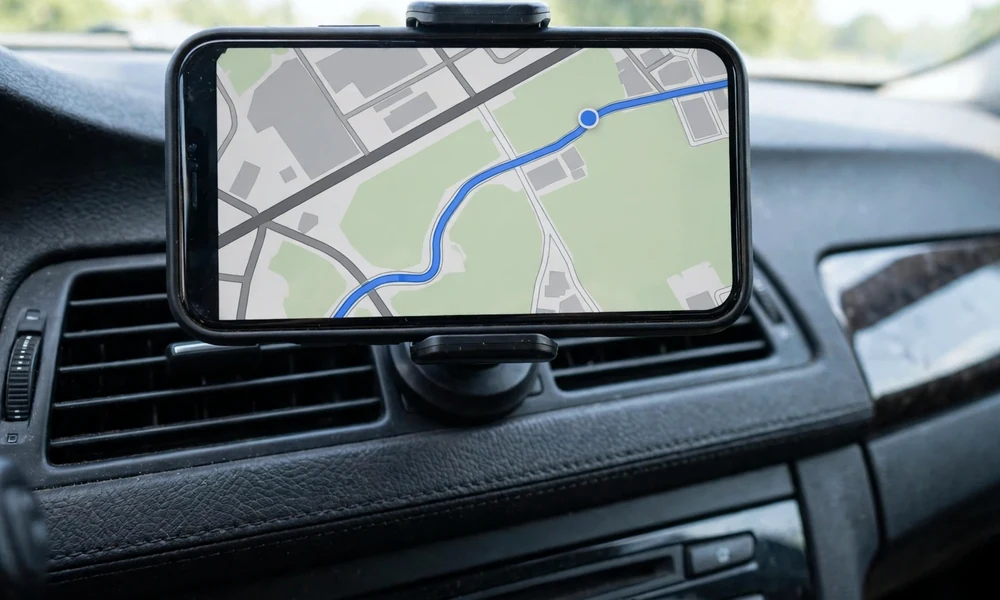
A car phone mount for the dashboard has one job: to hold the phone where the driver can see it, through potholes, sharp turns and summer heat, without blocking the view of the road. The worst car phone mounts for dashboard use in 2026 fail at it in ways that leave a phone in the footwell at the worst possible moment. They fall off on the first warm afternoon, slide across a curved dash, or wobble so much the screen is unreadable. Drivers buy them hoping for a proper navigation screen. What they get is a mount that drops, a mount that melts, or a mount that blocks the very road it was meant to help them watch.
Suction Cups That Fail on Textured Dashes
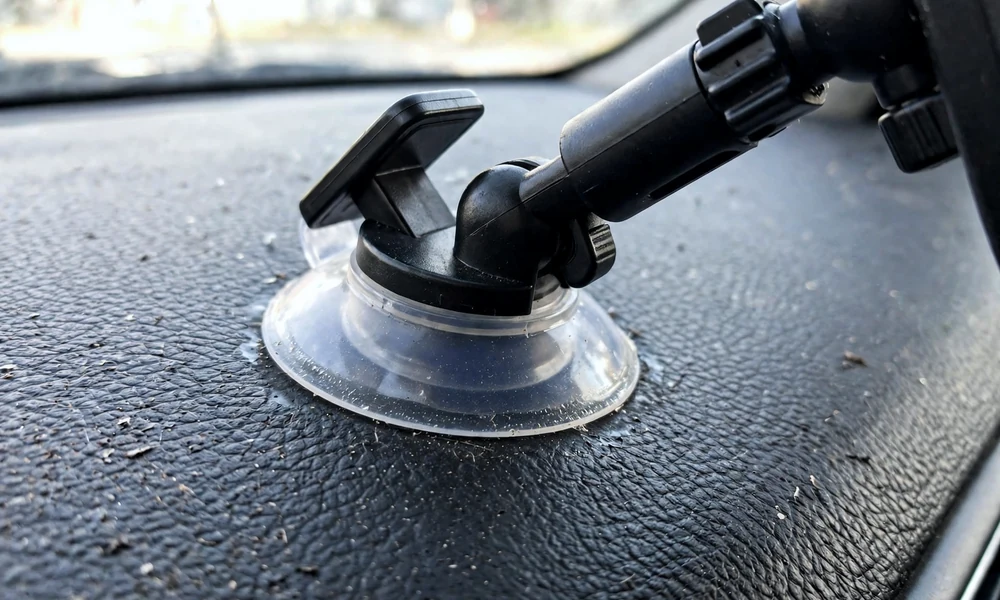
Most dashboard mounts rely on a suction cup, and most modern dashboards defeat them. A suction cup needs a clean, smooth spot to grip, and a dashboard is usually neither: it is textured, curved, and covered in a fine layer of dust that breaks the seal within days. The cup sticks in the shop, holds for a week, and then falls off on the first warm afternoon, usually while the driver is following directions. Cheap suction cups are the worst of all, because they use thin rubber that hardens in heat and loses its seal even faster. A mount that cannot grip the dashboard it was sold for is a mount that was never tested on a real car.
The fix is to check your dashboard before you buy. Run a hand over the spot where the mount will sit: if it feels grained or pebbled, a plain suction cup will not hold it. Gel-pad suction cups grip textured dashboards far better than ordinary ones, and an adhesive dash disc gives a smooth surface for the cup to hold, though it leaves a mark if it is ever removed. Clean the surface before fitting, and avoid dashboards that sit in direct sun for hours. A mount with a proper bracket and a gel pad will hold where a cheap cup fails, and a mount that falls off in heat is a mount that should never have been bought.
Adhesive Pads That Bake Onto the Dash
Adhesive mounts solve the suction problem by sticking to the dashboard, and the worst ones create a worse problem: they bake onto the dash in summer heat and cannot be removed without damage. The adhesive softens in the sun, the mount slides a few millimetres a day, and when the owner finally pulls it off, the pad leaves a sticky residue, a pale mark, or a patch of lifted trim. Some adhesive pads harden in winter instead, so the mount pops off on a cold morning and the pad stays behind as a permanent scar. A mount that damages the dashboard it sits on is a mount that costs more than its price, because the repair costs more than the mount ever did.
Look for an adhesive pad that is made for dashboards, not a generic sticky pad, and check whether the maker promises residue-free removal. A mount with a proper bracket that screws or clips into place is a better answer for a dashboard that will be used for years, because it does not rely on glue at all. If you do use an adhesive mount, fit it on a flat part of the dash away from direct sun, and test the removal on a hidden spot first. A mount that comes off cleanly is a mount that respects the car, and a mount that leaves a mark is a mount that has damaged the very thing it was meant to sit on.
Arms That Wobble and Droop
A dashboard mount holds the phone at the end of an arm, and the worst arms cannot hold their position. The ball joint loosens after a week, so the phone slowly droops until it faces the floor, or the arm vibrates on every bump, so the screen shakes too much to read. A telescopic arm that slips under the weight of a large phone is worse still, because the phone sinks a little further on every journey until it rests against the dashboard.
Test the arm before you commit: fit the mount, put your phone in it with its case on, and shake the dashboard firmly. A good arm locks solidly and stays where it is put, with a ball joint that tightens properly and an arm that does not flex. Short, stiff arms hold steadier than long telescopic ones, and a metal arm holds better than a plastic one. If the arm droops under the weight of your phone in the shop, it will droop worse on the road. A mount that holds the phone steady on a rough road is the difference between a calm drive and a phone in the footwell at seventy miles an hour.
Mounts That Block Vents and Controls
A dashboard mount has to live somewhere, and the worst ones live in the wrong place. A mount fitted to the centre of the dash blocks the air vents, so the heater and the air conditioning cannot reach the driver, or it covers the hazard light button, the volume knob, or the touchscreen. Some mounts sit so high they block the driver’s view of the road, and some sit so low the phone cannot be seen without looking away from the windscreen. A mount that blocks a vent, a control or the view is a mount that makes the car less safe, however well it holds the phone.
Before you buy, sit in the driver’s seat and picture where the mount will go. It should sit below your line of sight, never cover an airbag or a mirror, and leave the vents and the controls clear. A mount that clamps to a vent is a different product from a dashboard mount, and it brings its own problems with round vents and weak blades, but at least it does not block the dash. If the only spot for a dashboard mount covers something important, the mount is the wrong answer for that car, and a vent mount or a cup holder mount will serve better. Our guide to the best car phone mounts of 2026 covers the mounts that hold firm without blocking anything.
Clamps That Cannot Hold a Cased Phone
Most drivers keep a case on their phone, and the worst dashboard mounts cannot hold one. The clamp is too narrow for a thick case, so the phone will not fit at all, or the jaws are too weak, so a heavy phone in a heavy case slides out on the first bump. Magnetic mounts have the same problem in a different form: the magnet is strong enough for a bare phone but too weak once a thick case sits between the magnet and the phone, and a wallet case or a pop socket defeats them entirely. A mount that only works with a bare phone is a mount that does not work for most drivers, because most drivers will not take the case off to drive.
Always test the grip with your case on, exactly as you will use it on the road. A clamp-style mount usually handles thick cases well, but a magnetic mount needs the magnet close to the phone, so a very thick case weakens the grip. MagSafe cases work with magnetic mounts, while wallet cases and pop sockets usually need to be removed. Check the weight limit too: large phones in heavy cases can exceed a cheap mount’s grip, especially on hot days when suction weakens. A mount that holds your phone, in its case, on a hot day, is a mount that works, and a mount that only holds a bare phone in a cool shop is a mount that will drop it.
Mounts That Melt in Summer Heat
A dashboard is the hottest place in a car in summer, and the worst mounts are not built for it. Cheap plastic arms soften in the sun and sag, suction cups harden and lose their seal, and adhesive pads turn to liquid and slide. A mount that worked all winter can fail on the first hot day of the year, dropping the phone into the footwell on a motorway. The phone suffers too: a phone held on a sun-baked dashboard overheats, throttles its charging, and wears its battery down faster. A mount that cannot survive a summer on the dashboard is a mount that was never tested in the conditions it will actually face.
Look for a mount made from heat-resistant materials, with a metal arm and a gel-pad suction cup that is rated for hot dashboards. Park in the shade when you can, and take the phone off the mount when you leave the car, because a phone left on a sun-baked dashboard will overheat even in a good mount. A mount that survives a summer on the dash is a mount that was built for real cars, and a mount that melts in July is a mount that should never have been sold for dashboard use. If the rest of the cabin needs tidying first, our guide to the best car organizers of 2026 covers the trays and crates that keep a car interior in order.
What to Buy Instead
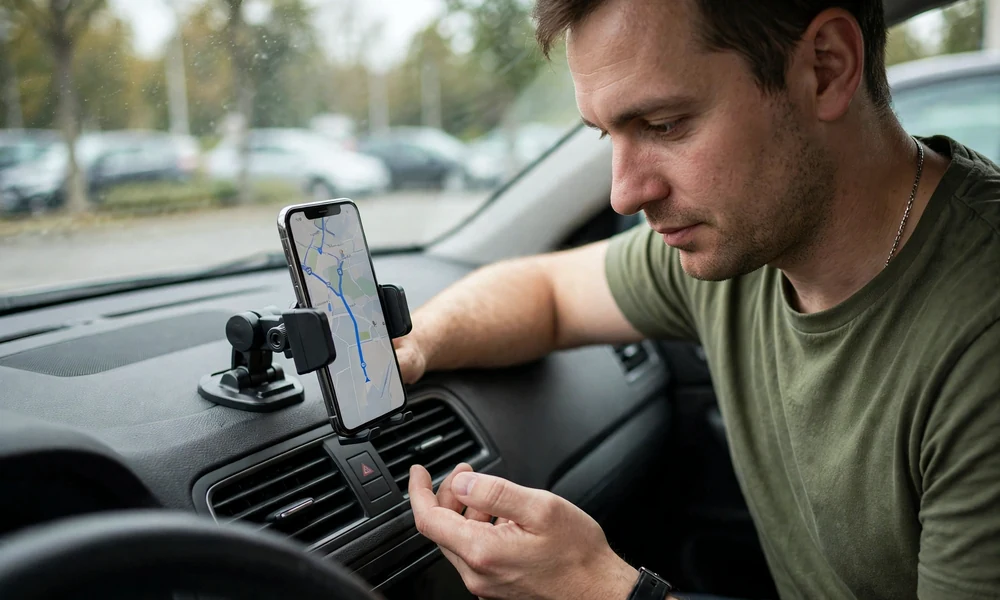
The dashboard phone mounts worth buying share a short list of features, and none of them is expensive on its own. A gel-pad suction cup or a proper bracket that grips a textured dashboard, a short stiff arm with a ball joint that locks solidly, and a clamp that holds the phone with its case on. A mount that sits below the line of sight, leaves the vents and the controls clear, and is made from materials that survive a summer on the dash. Expect to pay twenty to sixty dollars for a mount that lasts, because the cheapest ones usually fail at the suction cup or the ball joint first.
Fit matters as much as build, and the mount should suit the car in front of you rather than the car in the photograph. Check your dashboard texture, test the grip with your case on, and check the weight limit against your phone. A mount that holds firm on a rough road is the difference between a calm drive and a phone in the footwell. If you want to record the road as well as navigate it, our guide to the best dash cams of 2026 covers the cameras that record clearly in all conditions.
The Bottom Line
The worst car phone mounts for dashboard use in 2026 share a pattern: suction cups that fail on textured dashes, adhesive pads that bake onto the dash, arms that wobble and droop, mounts that block vents and controls, clamps that cannot hold a cased phone, and mounts that melt in summer heat. Avoid those six failures and you avoid almost every dashboard-mount regret. Test the grip with your case on, check the dashboard texture, and keep the mount out of your line of sight. Do that, and the mount you buy will be the one that holds the phone steady for years, not the one that drops it into the footwell on the first warm afternoon.