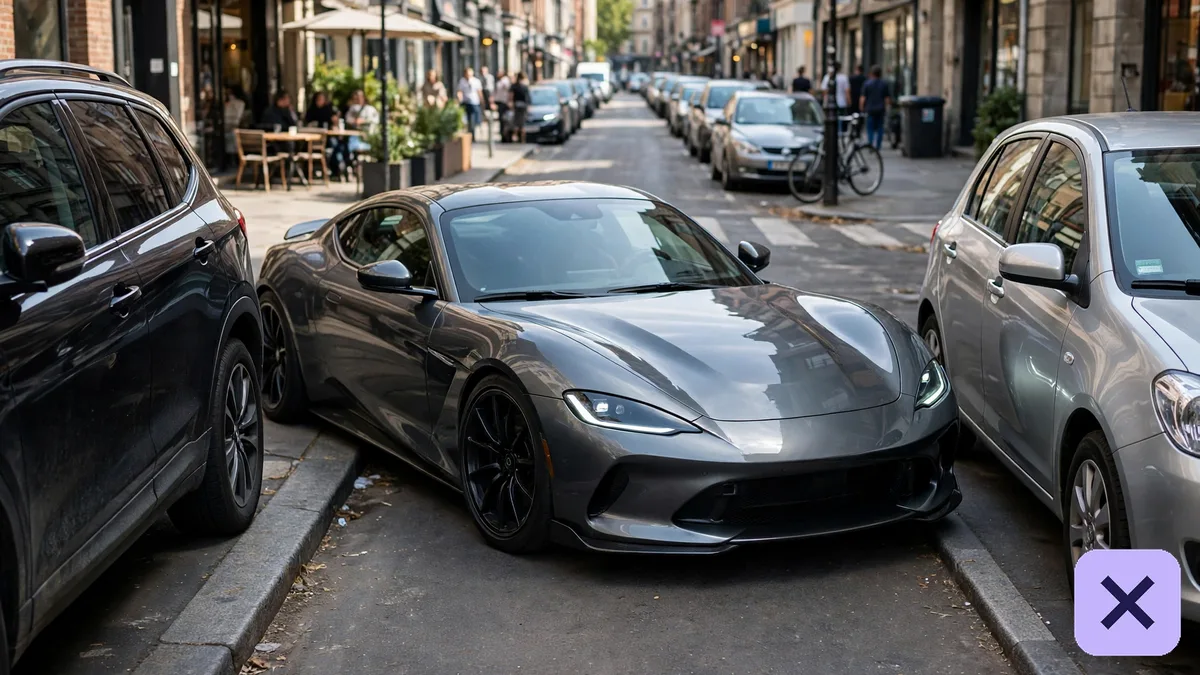
The worst coupes for city driving in 2026 are the cars that look sensational in a showroom and then punish you on every street. A coupe in the city squeezes into tight parking bays, turns around in narrow residential streets, stops and starts a hundred times a day, and threads through traffic that never really flows. This guide ranks the seven worst coupes for city driving in 2026 on the things that decide whether a car works in town: length, turning circle, visibility, ride comfort at low speed, fuel economy in traffic, and how much of your life disappears into parking.
City driving exposes a coupe’s weaknesses fast. A long bonnet that looks elegant on a country road becomes a blind spot at a junction, a stiff suspension becomes a punishment on a potholed street, and a tiny boot becomes a daily problem when the weekly shop will not fit. Several coupes below are superb on an open road, but in a city, where most owners actually use them, they are the wrong tool for the job.
Key takeaways
- A turning circle over 12 metres is the single most useful warning sign for a city coupe, because it decides whether you can turn around in one move or three.
- Coupes over 4.8 metres long struggle in parking spaces built for smaller cars, and the extra length costs time on every single trip into town.
- Thick pillars and tiny rear windows make junctions and reversing genuinely stressful, and parking sensors cannot fully fix poor visibility.
- Stiff suspension and low-profile tyres turn potholes, speed bumps and drain covers into a daily jolt, especially for passengers.
- A thirsty engine in stop-and-go traffic can return under 20 miles per gallon, doubling the fuel bill of a sensible city car over a year.
How we picked the worst coupes for city driving 2026
We judged coupes the way a careful driver would on a normal week, starting with the measurements that decide city life. Length matters first: a car 4.9 metres long does not fit in parking bays designed for cars a metre shorter. Then we weighed turning circle, because a wide circle turns every three-point turn into a five-point turn.
After size came visibility and comfort: rear windows, pillar thickness and blind spots, low-speed ride quality, fuel economy in traffic, boot space, and the everyday costs of kerbed wheels and scraped splitters. A coupe made this list when its city weaknesses were severe, frequent, and impossible to work around.
The worst coupes for city driving 2026 compared
| Coupe | Biggest city problem | Length | Turning circle |
|---|---|---|---|
| Large grand tourer coupe | Too long to park | 4.9 m | 12.4 m |
| High-performance sports coupe | Stiff ride, thirsty engine | 4.7 m | 12.1 m |
| Retro-styled muscle coupe | Terrible rear visibility | 4.8 m | 11.9 m |
| Luxury flagship coupe | Wide body, huge bills | 5.0 m | 12.6 m |
| Track-focused coupe | Rock-hard suspension | 4.5 m | 11.4 m |
| Convertible-based coupe | Tiny boot, poor visibility | 4.6 m | 11.7 m |
| Entry-level sports coupe | Cramped cabin, noisy ride | 4.4 m | 11.2 m |
The large grand tourer: too long for the city
The large grand tourer is built for crossing continents, and it shows in the city. At nearly five metres long, it overhangs parking bays, blocks narrow streets while you wait for a gap, and needs a turning circle of more than 12 metres to change direction. In a multi-storey car park the ramps are tight, the pillars are close, and the long bonnet hides where the front ends.
It is also the most expensive car here to run in town: a large engine that returns 30 miles per gallon on a motorway can drop below 18 in stop-and-go traffic, costing over 2,000 pounds a year more in fuel than a sensible hatchback. For a wider sense of how city cars compare, see our guide to the worst hatchbacks for city driving 2026.
The high-performance sports coupe: fast everywhere except the traffic jam
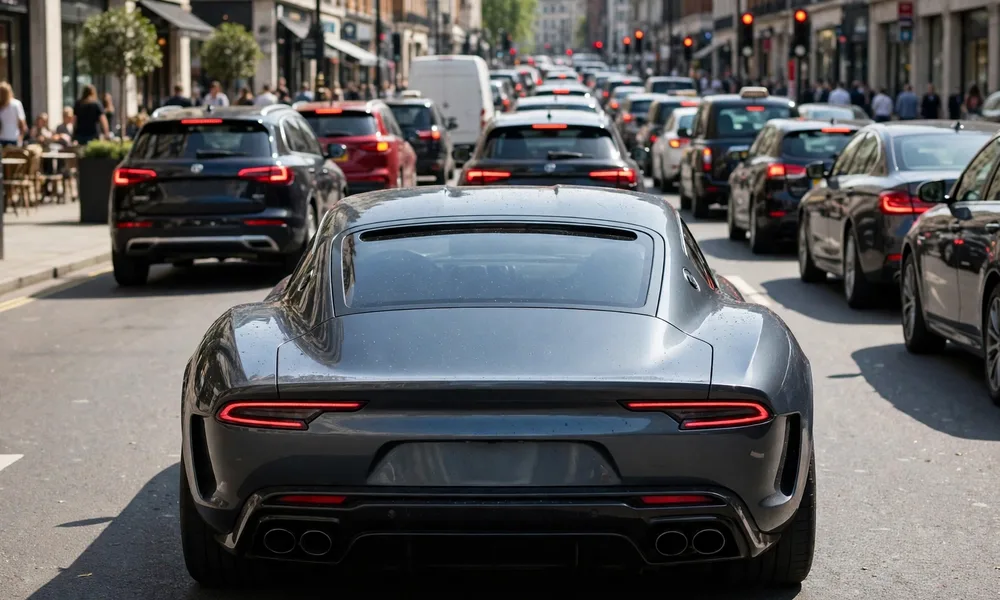
The high-performance sports coupe is the most frustrating car in city traffic, because its talents are entirely unusable there. Hundreds of horsepower mean nothing when traffic moves at 12 miles per hour, and a stiff, track-tuned suspension becomes a punishment on a potholed street.
The engine is the second problem: a large turbocharged unit that is efficient at a steady cruise becomes thirsty at idle, and low-profile tyres are easily damaged by kerbs and potholes. The car is superb on a Sunday morning on an empty road, and a poor companion for the other six days.
The retro-styled muscle coupe: you cannot see out of it
The retro-styled muscle coupe has the worst visibility on this list, and that is a serious problem in a city. Thick pillars, a high beltline and a tiny rear window create blind spots at exactly the places where a city driver needs to see: junctions, roundabouts, cycle lanes and car parks.
Parking sensors and a reversing camera help, but they cannot replace a clear view at junctions, where you need to see a car coming from the side. The muscle coupe is also wide, long and heavy, with a turning circle that makes tight streets a chore. The opposite approach works far better in town, and our guide to the best coupes for city driving 2026 shows which coupes actually fit city life.
The luxury flagship coupe: wide, heavy and expensive to repair
The luxury flagship coupe is the widest car on this list, and width is the enemy of city driving. Narrow residential streets, tight car park ramps and width restrictions become daily obstacles, and even with folded mirrors the car feels too big for the space.
The repair bills make it worse: a kerbed 21-inch alloy wheel can cost 400 pounds to refurbish, and a scraped front splitter twice that. It is also the thirstiest car here in traffic, often under 18 miles per gallon. It is a comfortable, beautifully built car, and the wrong size for the city in every dimension.
The track-focused coupe: a race car in a traffic jam
The track-focused coupe is the most uncomfortable car on this list at city speeds. Its suspension is tuned for a circuit, not a street, so speed bumps must be taken at walking pace, potholes are felt through the steering wheel, and the low front splitter scrapes on steep ramps.
Racing seats are restrictive in traffic, the engine is loud at low speed, and the tiny boot will not hold a weekly shop. The track coupe is the most fun car here on the right road, and the least practical on the roads most owners actually drive.

The convertible-based coupe: style over space
The convertible-based coupe looks like a good idea in the city until you try to live with it. The boot is small and awkwardly shaped, because the folding roof mechanism eats into the space, and a weekly shop will not fit without folding the rear seats. The rear window is small and the view backwards is poor, which makes parking harder than it should be.
The soft top is also vulnerable to damage and noise when the car is parked in public all day. The car is charming on a sunny evening and a compromise on every other day, and our guide to the worst convertibles for daily driving 2026 shows which ones disappoint most.
The entry-level sports coupe: cramped and noisy
The entry-level sports coupe is the smallest car on this list, and it still fails in the city. The cabin is cramped, the rear seats are unusable for adults, the ride is noisy and firm, and the boot barely holds a weekend bag.
It offers sports-car compromises without sports-car performance in town: slow in traffic like every other car, but also uncomfortable, noisy and impractical. A small hatchback would be cheaper, quieter, roomier and easier to park.

What a bad city coupe really costs you
Fuel is the biggest expense: a thirsty coupe returning under 20 miles per gallon in traffic can cost 1,500 to 2,000 pounds a year more in fuel than a sensible city car. Low-profile tyres and wide alloys are easily damaged by kerbs and potholes, and a scraped splitter is a regular event in a tight car park.
Time is the second cost: a car that is hard to park costs ten minutes on every trip into town. Over a year, that is dozens of hours spent manoeuvring or walking from the only car park with room. A good city car gives that time back, and a bad one takes it every day.
Worst coupes for city driving 2026 by problem type
If parking is your main problem, avoid the large grand tourer and the luxury flagship: their length and width make every bay a challenge. If comfort is your main problem, avoid the track-focused and high-performance coupes: their stiff suspension turns every street into a punishment. If visibility is your main problem, avoid the retro muscle and convertible-based coupes: their blind spots make junctions stressful.
If running costs are your main problem, avoid any coupe with a large engine and a thirst for fuel in traffic, and check the real-world economy figures rather than the official ones. The best city coupe is the one that fits your streets, your parking spaces and your weekly shop, and the worst is the one that fights all three.
Checklist: before you buy a coupe for city driving
- Measure the car against your parking space: a coupe over 4.8 metres long will struggle in bays built for smaller cars.
- Check the turning circle: over 12 metres means three-point turns become five-point turns on narrow streets.
- Sit in the car and check the rear view: thick pillars and a tiny rear window make junctions and reversing stressful.
- Test drive over speed bumps and potholes: stiff suspension that feels sharp on a smooth road is a punishment in town.
- Check the real-world fuel economy in traffic, not the official figure: under 20 miles per gallon doubles the fuel bill.
- Open the boot with your weekly shop in mind: a small, awkwardly shaped boot is a daily problem, not a minor one.
Frequently asked questions
Are coupes bad for city driving?
Not all of them. Short coupes with a tight turning circle, good visibility and a comfortable ride work well in town. The worst ones are long, wide, stiff and thirsty.
What is the worst thing about driving a coupe in the city?
Parking is the most common complaint, followed by poor rear visibility and a stiff ride over potholes and speed bumps. A long coupe that is hard to park costs time on every single trip into town.
How much fuel does a coupe use in city traffic?
A large-engined coupe can return under 20 miles per gallon in stop-and-go traffic, while a small, efficient coupe can manage 35 or more: a difference worth 1,500 pounds a year in fuel.
Is a sports coupe practical as an only car?
Only if it is short, comfortable and has a usable boot. Most sports coupes are poor only cars in a city, because the boot is small and the ride too firm for daily use.
Do parking sensors fix a coupe with poor visibility?
They help with parking, but they cannot fix poor visibility at junctions, where you need to see a car or cyclist coming from the side. A clear view matters more than any sensor.
What should I buy instead of a bad city coupe?
A short coupe with a tight turning circle and good visibility, or a small hatchback if practicality matters more than style. Both are cheaper to run, easier to park, and far less stressful in daily traffic.
The bottom line
The worst coupes for city driving in 2026 put showroom appeal ahead of the streets their owners actually drive on. The grand tourer is too long to park, the sports coupe too stiff for potholes, the muscle coupe too blind at junctions, and the flagship too wide for narrow streets. Buy the car for the roads you drive every day, not the roads you dream about.