Avoid the Worst Donut Shops of 2026
The worst donut shops of 2026 do not announce themselves with a warning sign. They look cheerful enough from the street: a bright display and a sweet smell drifting out of the door. The trouble starts at the first bite. The first bite gives it away. This guide ranks the worst types of donut shop by what goes wrong, so you can spot the pattern before you pay.
Key takeaways
- A fresh donut is light and soft; a heavy, greasy or chewy ring means the frying or storage has gone wrong.
- Stale donuts are the most common failure: rings fried hours earlier, sold at full price as if fresh.
- Thick icing often hides a dry ring underneath, so judge the donut, not the decoration.
- Small portions at luxury prices are a pattern: compare the ring with the price before you order a dozen.
- A tired display and a queue that never moves tell you more than any menu board.
How the worst donut shops were chosen
Every type below was scored on five measures. Freshness comes first: is the donut sold while still at its best, or hours old and merely warmed up? Texture is second: a good ring yields easily and leaves almost no oil on your fingers, while a bad one is dense, soggy or tough. Flavour is third: a donut should taste of its dough and topping, not of old frying oil. Value is fourth: the real cost of what you get, once size and quality are counted, not the headline price of a single ring. Service is fifth: the queue, the counter and honest answers about freshness.
Two notes before the list. First, no single shop is named as the worst: the same bad patterns appear in many places, and what matters is recognising them. Second, a donut shop is not a bakery and not a coffee shop, our guide to the worst bakeries of 2026 covers stale loaves and yesterday’s pastries, and our guide to the worst coffee shops of 2026 covers burnt shots and syrup-heavy drinks, while this guide stays with the ring itself. If you want to know what a good one tastes like, our guide to the best donuts of 2026 sets the standard these shops fail to meet.
Comparison table: the worst donut shops of 2026
| Rank | Shop type | Main failure | Who it catches out |
|---|---|---|---|
| 1 | The Stale Ring Shop | Yesterday’s donuts sold as fresh | Morning buyers in a hurry |
| 2 | The Grease Sponge Shop | Under-fried rings soaked in oil | Anyone eating on the move |
| 3 | The Sugar Mask Shop | Thick icing hiding a dry ring | Children and first-time visitors |
| 4 | The Tiny Luxury Ring Shop | Small rings at luxury prices | Buyers ordering a dozen |
| 5 | The One-Flavour Shop | Every ring tastes the same | Regulars who want variety |
| 6 | The Queue That Never Moves | Slow service, cold donuts | Commuters and families |
| 7 | The Display-Case Relic Shop | Donuts left on show all day | Afternoon buyers |
The worst donut shops of 2026
1. The Stale Ring Shop: yesterday’s donuts sold as fresh
This is the most common bad donut shop, and the hardest to spot from the door. The display looks full and the rings look glossy, but the batch was fried hours earlier, or even the day before, and has been sitting ever since. The first bite gives it away: the dough is firm instead of soft, the crumb is dry, and the glaze has gone sticky or cracked. Ask when the batch was fried: a good shop answers straight away, a stale-ring shop changes the subject.
2. The Grease Sponge Shop: under-fried rings soaked in oil
A donut is fried, so some oil is part of the deal, but a good one leaves your fingers almost clean. The grease sponge leaves them shining, the bag translucent, and your stomach heavy within minutes. The cause is usually oil that is too cool, or oil that has been used for too many batches, so the dough soaks it up instead of sealing against it. The ring looks pale and sags instead of holding its shape. If the tray is swimming or the bag darkens in seconds, put the box down: no topping can fix dough that has drunk the fryer.
3. The Sugar Mask Shop: thick icing hiding a dry ring
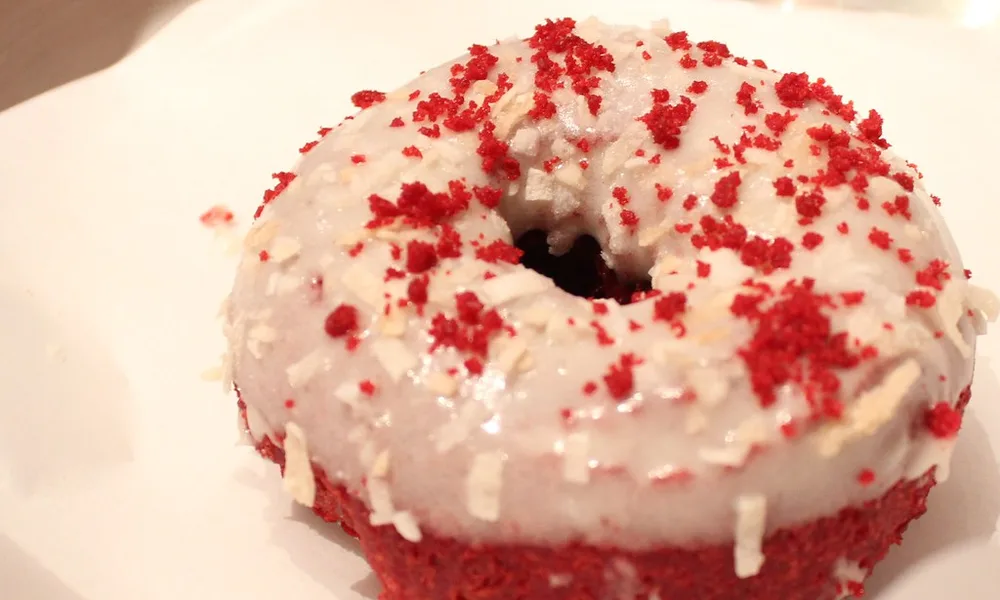
Some shops treat the topping as the product and the donut as the delivery system. The ring arrives under a thick cap of icing, a drift of sprinkles, a drizzle of syrup and a scatter of crushed sweets, and it photographs beautifully. Underneath, the dough is dry and often stale, because the shop knows the decoration does the selling. The test is simple: scrape the topping off one ring and taste the dough on its own. If the dough is soft and fresh, the topping is a bonus. If it is dry and flavourless, the icing was doing all the work, and you paid for decoration.
4. The Tiny Luxury Ring Shop: small rings at luxury prices
A small donut can be a fine thing, but only when the price matches the size. The tiny luxury shop charges a premium price for a ring barely bigger than a coin, then dresses the deal up with words like artisan, handcrafted and small-batch. The ring itself is often decent; you are simply being sold a small one at a large price. The damage shows when a dozen for the office costs as much as breakfast for everyone. Compare the ring with your palm, and work out the price per ring. A shop that hides its single-ring price is usually hiding the maths as well.
5. The One-Flavour Shop: every ring tastes the same
A donut shop lives or dies on variety, and the one-flavour shop has quietly given up. The display holds a dozen colours and names, but the dough is the same, the glaze is the same sugar base in a different tint, and the fillings are the same paste in different shades. The chocolate tastes like the strawberry, and the fancy flavour tastes of nothing you can name. The cause is usually one dough and one glaze made in bulk, with variety faked at the decorating stage. The rings are often fresh and well fried, but it wastes the whole point of a donut shop. Buy two flavours and taste them side by side; if you cannot tell them apart, the menu is decoration. A menu that changes with the seasons is a good sign; a menu that never changes is usually a menu nobody tends.
6. The Queue That Never Moves: slow service, cold donuts
Some shops are busy because they are good, and some are busy because they are slow. The queue that never moves is the second kind: one person serving, one person frying, a till that needs three attempts, and a line that grows while the donuts in the display go cold. By the time you reach the counter, the ring you wanted is gone and the replacement is the one nobody else chose. A short wait for a fresh batch is worth it, and a good shop will tell you how long the wait is. If the line has not moved in five minutes and nobody is frying, your morning is worth more than the donut.
7. The Display-Case Relic Shop: donuts left on show all day
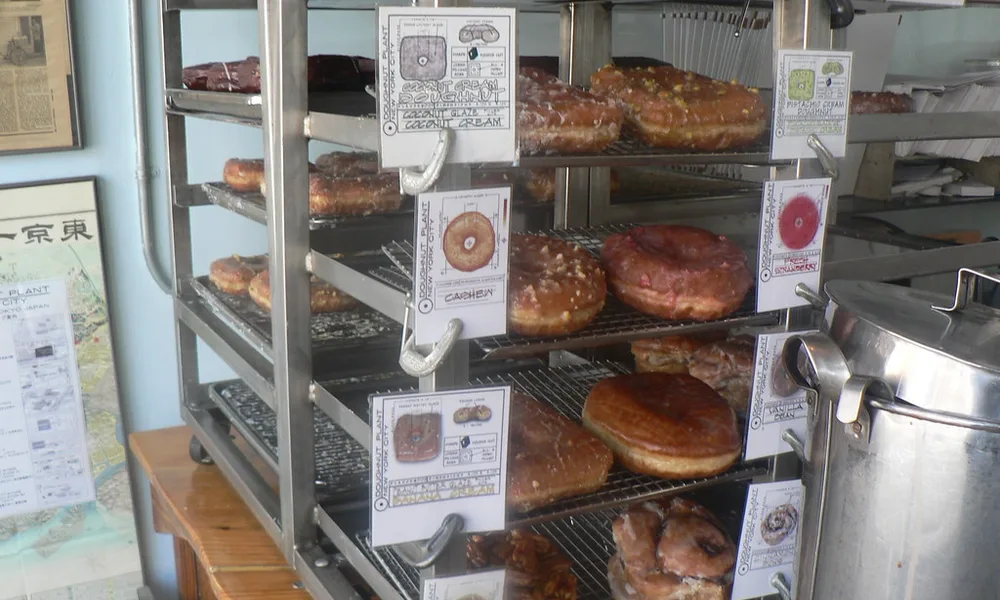
The display case is supposed to sell donuts, not store them. In the relic shop, the same rings sit behind the glass from opening time until closing, drying out under the lights while the staff top up the trays around them. The glaze dulls, the sprinkles soften, the filled rings weep into their paper, and the whole case takes on a tired, dusty look. Some rotate stock so fresh rings sit at the front and old ones hide at the back. Look at the case: are the rings glossy or dull, the trays full or picked over, the glass dusty? A good shop clears the case and fries fresh through the day.
What to avoid when choosing a donut shop
Start with your eyes, not your appetite. A good display is full, glossy and busy; a bad one is picked over, dull or dusty. Ask one question before you order: when was this batch fried? The answer tells you almost everything, and a shop that cannot answer it is a shop that does not want to. Buy one ring first, and eat it before you commit to a box. A shop that fries in small batches through the day is almost always worth more than one that fries once and sells all day. Check the price per ring, and be wary of shops that only sell by the dozen. Finally, trust the queue: short and moving is good, long and still is not.
Checklist: how to spot a bad donut shop in five minutes
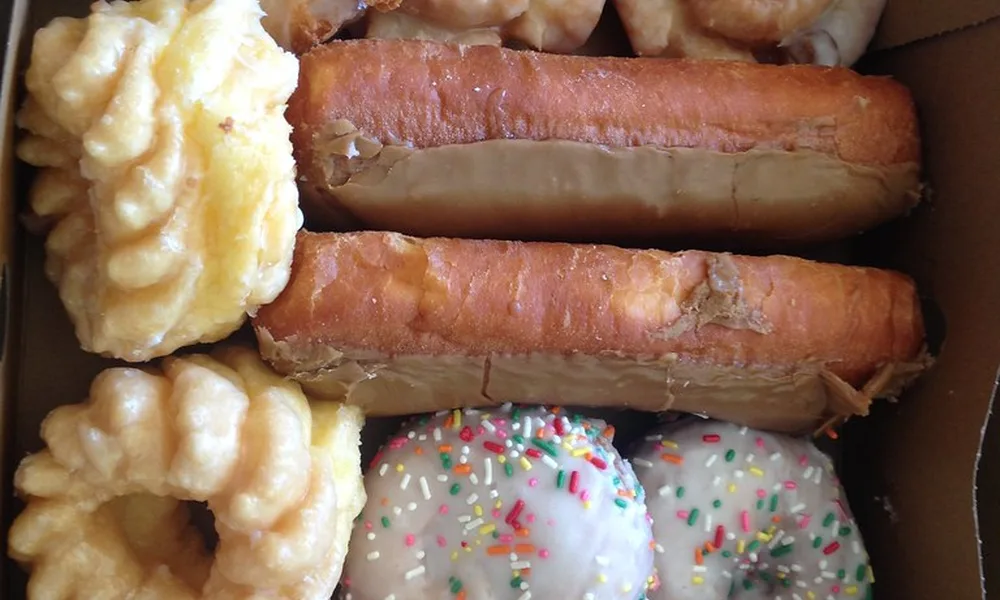
- Press a ring gently: a fresh one springs back, a stale one holds the dent or crumbles.
- Check your fingers after one bite: they should be almost clean, not shining with oil.
- Look at the display case: glossy, full and refilled beats dull, dusty and picked over.
- Ask when the batch was fried, and walk away from a shop that will not say.
- Scrape the topping off one ring: the dough underneath should taste of something on its own.
- Work out the price per ring before you order a box, and compare the ring with your palm.
Frequently asked questions
What is the worst type of donut shop in 2026?
The stale ring shop, because it is the most common and the hardest to spot: yesterday’s donuts sold at full price as if they were fresh, .
How can I tell if a donut is fresh before I buy it?
Look for a glossy glaze, a soft ring that springs back, and a display being refilled. Ask when the batch was fried: a straight answer is good, an evasive one is not.
Why are some donuts so greasy?
Greasy donuts usually come from frying oil that is too cool or has been used for too many batches, so the dough soaks up oil instead of sealing against it. The ring looks pale, sags when picked up, and leaves the bag translucent.
Is a donut shop the same as a bakery?
No. A bakery makes bread, cakes and pastries across a wide range, while a donut shop specialises in fried rings. The frying, glaze and toppings are problems only a donut shop can have.
How much should a donut cost in 2026?
There is no single fair price, because size and location vary, but the test is the price per ring against its size. Compare the ring with your palm, and be wary of shops that hide the single-ring price.
Should I complain if my donuts are stale?
Yes, politely and promptly, at the counter. A good shop will replace them or refund you; a shop that shrugs has told you all you need to know.
Bottom line
The worst donut shops of 2026 fail in familiar ways: stale rings sold as fresh, grease-soaked dough, icing that hides a dry ring, tiny portions at luxury prices, one flavour wearing many colours, queues that never move, and displays that store donuts instead of selling them. Press the ring, check your fingers, look at the case, ask when the batch was fried, and buy one before you buy a box.