Pass on the Worst Drag Racing of 2026: Seven Drag Types That Waste a Race Day
The worst drag racing of 2026 is not the slowest racing on the strip or the oldest machinery in the pits. A slow car can still be honest, and an old car can still make a clean pass. The worst drag racing fails in a much more basic way: it takes your whole day, your entry money and your enthusiasm, and it gives you hours of standing in a staging lane, four seconds of racing per hour, cars that break before the finish line, and results decided by gamesmanship instead of speed.
Key takeaways
- Drag racing is about passes, not waiting: if the cars spend more time in the staging lanes than on the strip, the meeting has failed.
- A race decided by dial-in games and sandbagging is not a race, it is a guessing contest with engines.
- Power means nothing if the car cannot finish a pass: a car that breaks every run is worse than a slow car that finishes.
- Track preparation is part of the racing: an unprepped surface turns every launch into a lottery.
- Check the format, the car count and the surface preparation before you commit a day to any drag meeting.
How the worst drag racing was ranked
Every type below was scored on five measures. Racing quality comes first: does the format produce real passes, close finishes and uncertain results, or does it produce waiting, breakage and processions? Fairness is second, judged on whether the quicker car usually wins or whether the rules reward sandbagging, guessing and games. Reliability is third, because a meeting where half the field breaks before the finish line is not a race, it is a repair shop with a loudspeaker. Track time is fourth: the real number of passes a driver or a fan gets for a day spent at the strip. Two notes before the list. First, no real driver, team, series or championship is named as the worst, because this guide ranks types and patterns, not people. Second, this is about the kinds of racing inside drag racing itself, not about drag racing against other disciplines, and our guide to the worst motorsport shows how the whole discipline compares with other forms of racing, while our guide to the worst race cars covers the machines that waste a good circuit.

Comparison table: the worst drag racing 2026
| Rank | Drag type | Main failure | Worst moment |
|---|---|---|---|
| 1 | The waiting-room meeting | Hours of waiting, seconds of racing | An hour of track preparation for one run |
| 2 | The sandbagged bracket race | Dial-in games decide the winner | The quicker car lifting off to avoid breaking out |
| 3 | The no-prep chaos night | Unprepped surface, no grip at all | Both cars spinning through the first sixty feet |
| 4 | The trailer-queen show car | Built for display, never finishes a pass | Pushed back to the trailer after one aborted launch |
| 5 | The one-pass wonder | Huge power, breaks every single run | Smoke from the engine before half track |
| 6 | The mismatched grudge race | Cars so unequal the result is decided early | A car lengths ahead before the sixty-foot mark |
| 7 | The test-and-tune traffic jam | Too many cars, too little track time | Three hours in the lane for one pass |
The worst drag racing of 2026
1. The waiting-room meeting: four seconds of racing per hour
The waiting-room meeting is the worst type of drag racing, because it breaks the one promise the sport makes: that you will see racing. Each run needs the track prepared, the cars warmed up, the crews to check every bolt, and then the run itself is over before you have finished cheering. Between runs there is sweeping, oiling and long pauses while a problem is fixed somewhere you cannot see, and nobody tells the crowd what is happening. A full day at the strip can mean less than a minute of actual racing, spread across eight hours of standing around in the sun.
2. The sandbagged bracket race: won by guessing, not by speed
Bracket racing should be the fairest form of drag racing, because the slower car gets a head start and the first car across the line wins, as long as neither car beats its predicted time. The sandbagged version ruins it. Drivers deliberately run slower than their cars can go in qualifying, post a soft predicted time, and then drive flat out in the race, knowing they have room to spare. The honest driver, who posted a true time, is beaten by someone who never intended to run it. The crowd watches two cars launch, and the winner is the one who lied better on the entry form, not the one who drove better on the strip.
3. The no-prep chaos night: no grip, no racing, just spinning
No-prep racing, on a surface with no sticky preparation at all, sounds exciting, because it promises raw driving skill instead of glued-down launches. The chaos-night version delivers the opposite: two cars spinning their wheels through the first sixty feet, pedalling the throttle, fishtailing, and sometimes crossing into the other lane. The winner is usually the car that spun least, not the car that was fastest, and half the field never gets a clean launch all night. It is not driving skill on display, it is luck with a loud exhaust note.
4. The trailer-queen show car: polished, parked and pointless
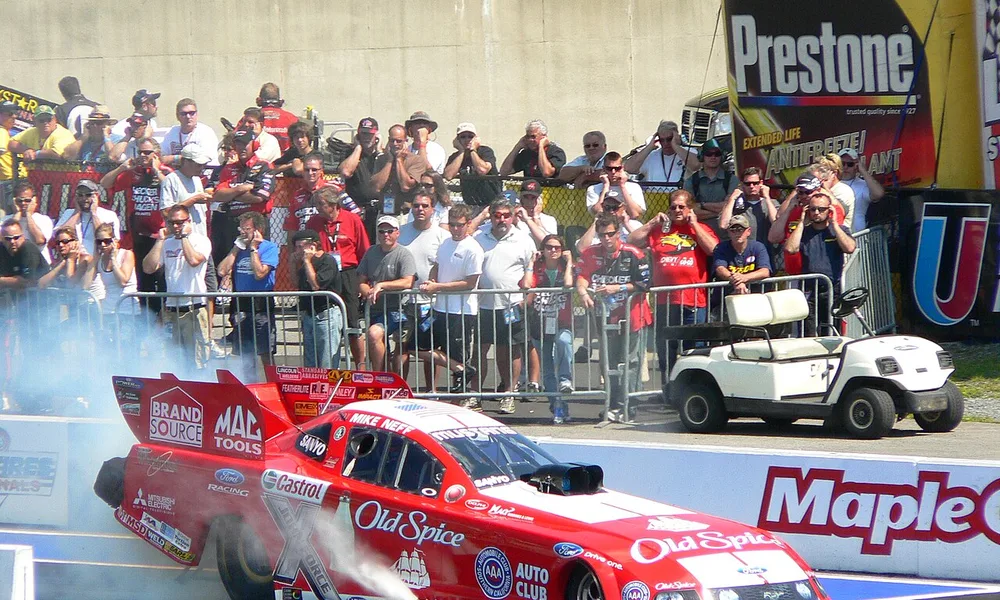
Every drag meeting has a car that looks like it should win everything: perfect paint, a gleaming engine, chrome in places you did not know chrome could go, and a crew that spends more time polishing it than working on it. The trailer queen is that car, and the problem is that it is built for the pits, not for the strip. It makes one tentative launch, something rattles or overheats, and it is pushed back to the trailer while the crew explains that it is too valuable to risk. The crowd came to see it run, and all they saw was a very expensive ornament being towed.
5. The one-pass wonder: huge power, broken before half track
The one-pass wonder is the cruellest kind of drag car, because it shows you what could have been before it takes it away. On the burnout it sounds unbeatable, the launch is violent and quick, and then, somewhere before half track, something lets go: smoke pours from the engine, the car coasts, and the crew walks slowly down the return road. Once is bad luck. Three times in one meeting is a pattern in a car built with more power than its parts can carry.
6. The mismatched grudge race: decided before the lights
Grudge racing should be a duel, two cars and two drivers with something to settle, run heads-up with no head start and no excuses. The mismatched version is a duel in name only, because the cars are so unequal that the result is decided before the lights fall. One car is lengths ahead before the sixty-foot mark, the other is still trying to find grip, and the rest of the pass is a parade down a straight strip. The crowd watches a foregone conclusion at full volume, and the loser knew it was coming before they staged.
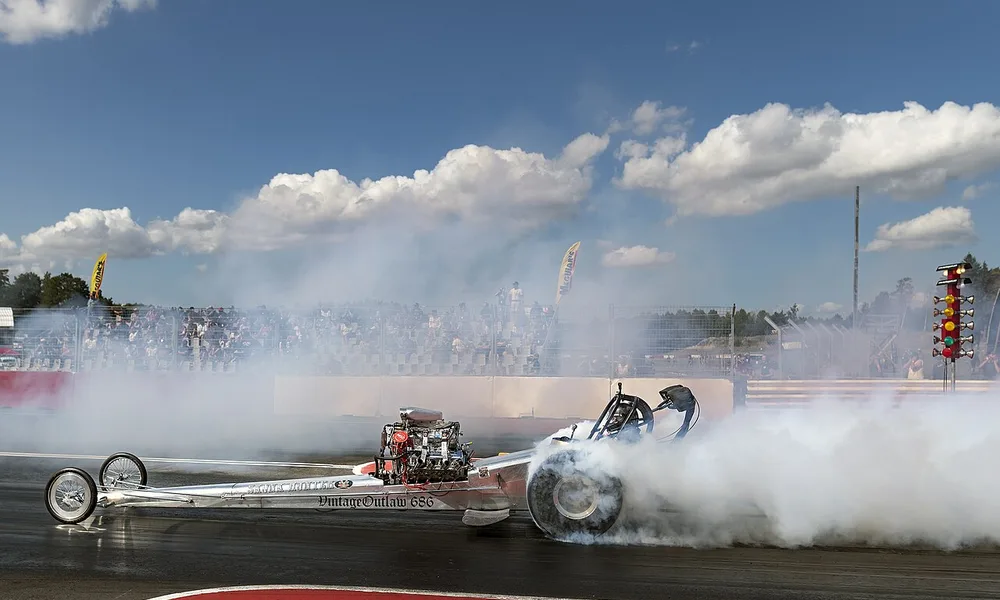
7. The test-and-tune traffic jam: three hours in the lane for one pass
Test-and-tune nights exist so drivers can try changes, learn their cars and make passes without the pressure of eliminations, and at their best they are the most useful nights on the calendar. The traffic-jam version takes too many cars, too few lanes and too little organisation, and turns a practice night into a queue. Drivers sit in the staging lanes for three hours, engines cooling, tyres going cold, and finally get one pass, often a bad one, because the car has been sitting so long. The night ends with drivers who learned nothing except that the queue was long.
What to avoid at a drag meeting
The most common drag racing regret is not a bad car but a wrong meeting: a full-price ticket for a night with three hours of waiting, a bracket race full of sandbaggers, or a test night with two hundred cars in the queue. Avoid the trap by checking three things before you go: the real schedule, not the poster, and how many runs the crowd actually sees; the format, and whether it rewards honest racing or dial-in games; and the surface, and whether the meeting prepares the track or leaves it to luck. The same checks work at other venues too, and our guide to the worst race tracks makes the same point about venues that waste your time before the racing even starts, because a bad track makes every kind of racing worse.
Checklist: picking a drag meeting worth your day
- Check how many passes the meeting actually runs per hour, not how many hours it lasts.
- Ask whether bracket numbers are policed, so sandbaggers cannot win by posting a soft dial-in.
- Look for a prepared, swept surface and a crew that works the track between rounds.
- Count the entries against the lanes and the hours, and walk away if the queue is longer than the racing.
- Watch one full round before you pay for the next meeting, and judge it by the passes, not the poster.
- Leave early if the meeting is all waiting and no racing, and spend the next Saturday somewhere that runs cars.
Frequently asked questions
What is the worst type of drag racing in 2026?
The waiting-room meeting, where a full day at the strip means less than a minute of actual racing. Hours of track preparation, sweeping and unexplained pauses leave the crowd watching an empty strip instead of cars.
Is bracket racing fair, or is it all sandbagging?
Bracket racing is fair when the numbers are policed, because the head start only works if both drivers post honest predicted times. It turns unfair when drivers post soft times on purpose and then run flat out, so the honest driver loses to paperwork.
Why do drag cars break so often?
Because they run at the edge of what their parts can carry, with huge power through parts built as light as possible. A car built with room to spare finishes its passes, while a car built to the edge breaks, often before half track.
What is no-prep drag racing?
It is racing on a surface with no sticky preparation, so grip is low and the launch depends on the driver and the setup. It works when the surface is swept and the cars are set up for low grip, and it fails when the track is dusty and nobody can launch at all.
How many passes should a good drag meeting run?
There is no single number, but a good meeting keeps cars coming every few minutes, with short gaps between rounds. If you are waiting an hour between passes, the meeting is wasting your day, whatever the poster promised.
Should I go to a test-and-tune night as a spectator?
Yes, if the entries are capped and the lanes keep moving, because you will see plenty of passes and plenty of variety. Skip it if the queue is huge, because you will spend the night watching staging lanes instead of racing.
Bottom line
The worst drag racing of 2026 wastes the one thing you cannot get back, your day, whether through endless waiting, sandbagged brackets, unprepped surfaces, show cars that never run, or queues longer than the racing. Pick a meeting that runs cars every few minutes, polices its numbers, prepares its surface and caps its entries, and the strip will give you a day worth the ticket.