Worst Sports Judges 2026: Seven Scoring Habits That Cost Athletes Medals
The worst sports judges of 2026 are not the ones who make a single honest mistake on a difficult routine. Every judge gets a score wrong sometimes, and most of them own it, reset and carry on. The worst sports judges are the ones whose habits repeat from event to event: the scores that drift with the running order, the marks that always favour the home athlete, the long pauses that leave a whole arena waiting, and the refusal to explain a score nobody in the building understands. This guide ranks the worst types of judge in 2026 by the damage they do to athletes.
Key takeaways
- The worst sports judges are types and patterns, not people: the same bad scoring habits show up in every judged sport.
- Consistency matters more than generosity: athletes can live with a strict panel, but not with one that changes its standard mid-event.
- Home-country bias is the most damaging habit, because it decides medals before the athlete has even performed.
- A judge who never explains a score leaves the athlete, the coach and the crowd with nothing to learn from.
- Watch the panel, not just the performance: the worst results are decided by the judges long before the final score appears.
How the worst sports judges were chosen
Every type below was scored on five measures. Consistency comes first: does the same performance earn the same mark in the first round and the last, for every athlete, whatever the running order? Neutrality is second, judged on whether the marks follow the performance or drift towards the home athlete, the famous name or the loudest crowd. Clarity is third, covering whether the judge explains the score or hides behind it. Timing is fourth, because a panel that takes forever to post a mark kills the rhythm of the whole event. Courage is fifth: the willingness to give an unpopular mark when the performance earns it. No single judge is named here, because the same bad patterns appear in many panels, and what matters is learning to recognise them for yourself. These are judges in scored sports, gymnastics, diving, boxing and figure skating, where marks decide the result. The officials in team ball sports are a different problem, and our guide to the worst referees of 2026 covers the habits that spoil a game.

Comparison table: the worst sports judges of 2026
| Rank | Judge type | Main fault | Who suffers most |
|---|---|---|---|
| 1 | The Drifting Scorer | Marks move with the running order | Early performers |
| 2 | The Home-Country Favourite | Home athletes always score higher | Visiting athletes |
| 3 | The Reputation Scorer | Scores the name, not the routine | Unknown newcomers |
| 4 | The Slow Deliberator | Long pauses before every mark | Athletes, fans and the broadcast |
| 5 | The Never-Explains Judge | No reason ever given for a mark | Coaches and young athletes |
| 6 | The Inconsistent Panel | Wild spreads between judges | Fair play itself |
| 7 | The Showman Judge | Makes the event about himself | The athletes on the floor |
The worst sports judges of 2026
1. The Drifting Scorer: a different standard every hour
The drifting scorer is the worst type of all, because the damage is invisible until it is too late. In the first hour the marks are generous; by the middle of the event the same quality of performance earns half a point less; by the final round the standard has moved again, and nobody on the floor knows where it sits. Athletes who perform early are judged by one scale and athletes who perform late by another, and the running order matters more than the routine. The marks feel right in the moment, and only when the scores are laid side by side does the drift show. Consistency is the one thing a judge owes every athlete, and the moment it goes, nothing else can rescue the result.
2. The Home-Country Favourite: the medal decided before the routine
The home-country favourite does not need to cheat, because the bias works quietly. The home athlete gets the benefit of every doubt: the wobble that costs a visitor half a point costs the home athlete nothing, the landing that would be marked down for a stranger is forgiven for a familiar face. Over a whole event those small gifts add up to a medal, and the visiting athlete who performed better goes home with the worse result. The crowd makes it worse, because the roar that greets the home routine sounds like approval of the score. The same crowd pressure ruins games in other sports, and our guide to the worst umpires of 2026 shows how decisions drift towards the home crowd. A judge who cannot score the home athlete honestly should not be on that panel.
3. The Reputation Scorer: the name gets the mark
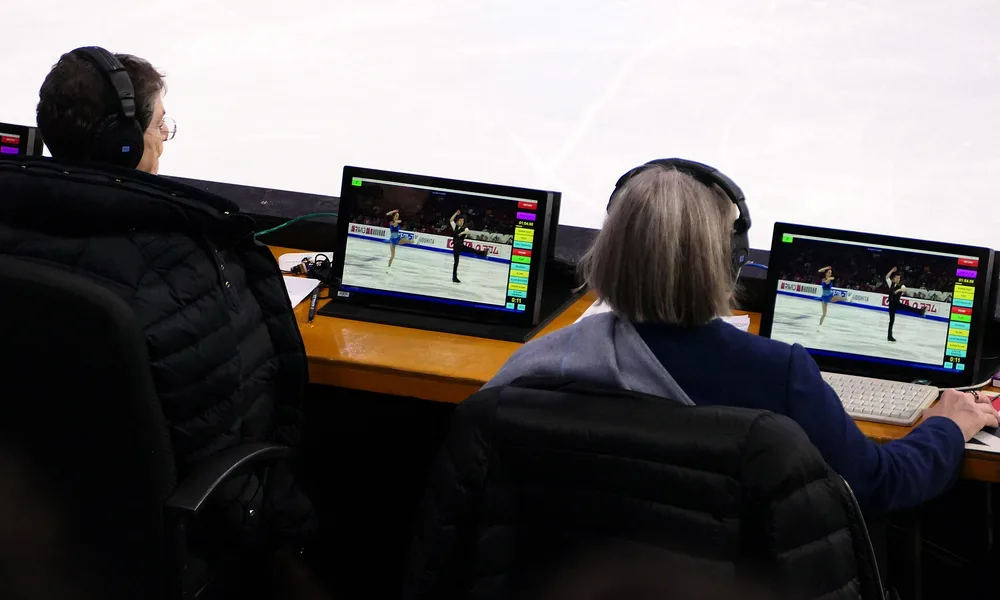
The reputation scorer watches the name on the start list, not the performance in front of them. A famous athlete can stumble, wobble and miss a landing and still receive a mark that flatters the routine, because the judge is scoring the reputation built over years rather than the ninety seconds just performed. The newcomer suffers the reverse: a clean, brave routine earns a cautious mark, because the judge has no name to lean on. The result is a sport where the podium is decided before the event starts. Our guide to the worst gymnasts of 2026 covers the routines that never stick the landing, judged on the performance alone. Score what you saw, not who you saw.
4. The Slow Deliberator: theatre where a mark should be
The slow deliberator treats every score like a ceremony. The routine ends, the athlete stands waiting, the crowd holds its breath, and the judge sits still, staring at the notes, while the whole arena waits for a number that should have been ready. Minutes pass, the broadcast fills the silence, the next athlete stands cold at the side of the floor, and the rhythm of the event dies a little with every delay. Slow scoring does not make the mark more accurate: the judge saw the routine once, and staring at the paper for another two minutes adds nerves, not information. A good judge decides quickly, posts the mark and moves on, because the event belongs to the athletes.
5. The Never-Explains Judge: a number with no reason
The never-explains judge posts a mark and offers nothing behind it. The athlete who lost half a point has no idea why, the coach who asks is met with silence, and the crowd that watched a clean routine cannot understand why the score is low. Without an explanation, the mark feels arbitrary, and arbitrary marks destroy trust faster than any wrong call. Young athletes suffer most, because they need to know what to fix, and a number with no reason teaches them nothing at all. A short explanation costs the judge ten seconds and buys the sport its credibility. The judge who refuses to explain is not protecting the panel, they are protecting themselves.
6. The Inconsistent Panel: five judges, five different events
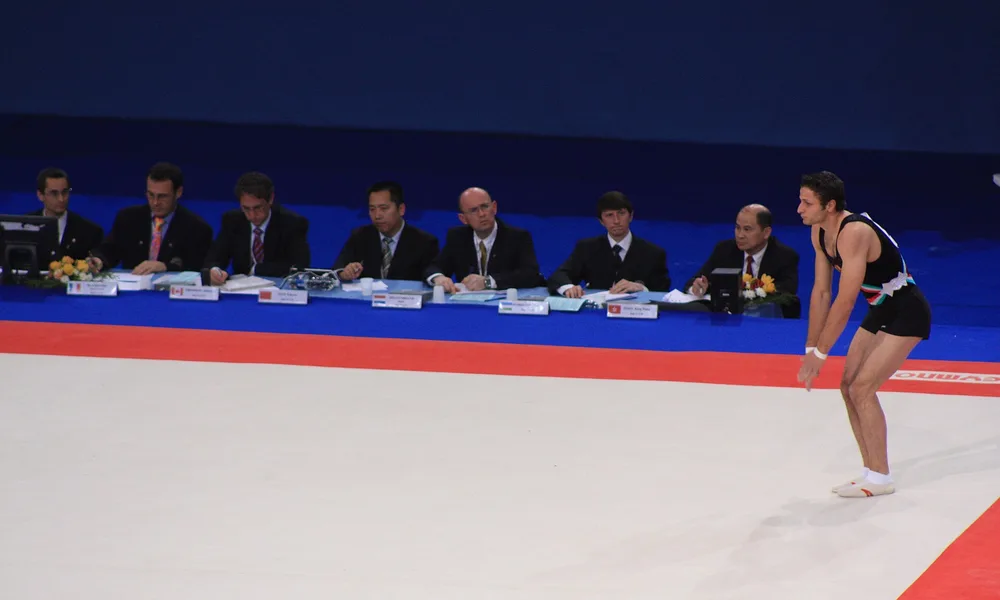
The inconsistent panel is not one bad judge but five judges who are not watching the same sport. One marks the difficulty, another marks the artistry, a third marks the landing, and the scores spread so widely that the average is a compromise nobody believes in. The same routine can earn marks a full point apart, and the athlete has no way of knowing which judge was right. A panel should be trained to a shared standard before the event, with the same deductions applied the same way by every seat. When that training is missing, the panel becomes a lottery. The fix is boring, calibration before the event and review after it, but without it the scores are just five opinions wearing the same uniform.
7. The Showman Judge: the event becomes about the official
The showman judge wants to be noticed. The dramatic pause before the mark, the visible disagreement with the rest of the panel, the gesture towards the crowd, the long consultation that everyone can see: every habit turns the spotlight away from the athlete and onto the official. The athlete who has trained for years becomes a supporting act in the judge’s performance, and the event stops being a contest and starts being a show. A judge’s job is to be invisible, to score fairly and disappear. The showman judge fails at that job so reliably that the event becomes about them, and the athletes are the ones who pay for it.
What to watch for in a judging panel
The most common judging regret is not one bad mark but a panel that was never going to be fair: a running order that rewards late performers, a home crowd that pulls the scores, or a panel that never trained to a shared standard. Watch for three things before you trust a result: the spread of the marks, because a panel that agrees within a tenth is a panel that trained together; the running order effect, because early athletes should not score lower for going first; and the explanations, because a panel that explains its marks is a panel that can be held to account. The marks should follow the performance, and nothing else.
Checklist: spotting a bad judging panel
- Compare the marks across the running order: early athletes should not score lower for going first.
- Watch the spread between judges on the same routine: a gap of a full point means the panel is not watching the same sport.
- Check whether the home athlete’s marks rise when the crowd roars, and fall again when the arena is quiet.
- Listen for an explanation after a surprising mark: silence is a warning sign, not a sign of authority.
- Notice whether famous names outscore unknown athletes on equal performances, and ask why.
- Time the delay between the routine and the mark: a panel that takes minutes is stalling, not thinking.
Frequently asked questions
What makes a sports judge bad?
A bad sports judge fails at consistency, neutrality or clarity: the marks drift with the running order, favour the home athlete or the famous name, or arrive with no explanation.
Why do early athletes score lower?
Judges often hold marks back early in an event, saving room in case a later athlete is better. The habit punishes the athletes who perform first, and it is one of the clearest signs of a drifting panel.
Is home-country bias real in judging?
Yes, and it is the most studied bias in judged sport: home athletes consistently receive slightly higher marks, especially on subjective elements. The effect is small per mark but decisive across an event.
Should judges explain their scores?
Yes. A short explanation of the main deduction costs ten seconds and gives the athlete, the coach and the crowd a reason to trust the mark. A panel that never explains its scores invites suspicion, even when the marks are fair.
How wide should the spread between judges be?
On a well-trained panel, judges watching the same routine should land within a few tenths of each other. A spread of a full point or more means the panel has not agreed on what it is marking.
Can video review fix bad judging?
It helps with clear errors, like a missed element or a wrong landing call, but it cannot fix bias, drift or reputation scoring. Review corrects what the judge saw wrong, not what the judge chose to value.
Bottom line
The worst sports judges of 2026 are the ones whose habits decide results before the athletes do: the drifting scorer, the home-country favourite, the reputation scorer who marks the name, and the panel that never explains a mark. Watch the spread, the running order and the explanations, and a fair panel will show itself, because its marks follow the performance and nothing else.