The Worst Dry Cleaners of 2026 — What to Avoid
The worst dry cleaners of 2026 do not announce themselves with a warning sign. They look ordinary from the pavement: a tidy counter, a rail of clothes in plastic, a ticket stub pressed into your hand. The trouble only shows up later, when a suit comes back a size smaller, a silk blouse returns with a stain that was not there before, or a favourite coat simply never comes back at all. This guide ranks the worst types by the patterns that keep repeating.
Key takeaways
- A bad dry cleaner is recognised by patterns, not one mistake: repeated shrinkage, lost items and stains that appear after cleaning.
- Check the ticket before you leave the counter: garment count, colour, buttons and any existing marks should all be written down.
- Clothes that come back smelling strongly of chemicals, damp or smoke have not been finished properly, whatever the price was.
- A cleaner that cannot say how it handles silk, wool and beaded work should not be trusted with any of them.
- Photograph valuable garments before drop-off, and walk away from any shop that refuses to note damage or give a proper receipt.
How the worst dry cleaners were chosen
Every type below was scored on five measures. Garment safety comes first: does the cleaning shrink, fade or damage the clothes it is meant to care for? Reliability is second, judged on lost items, mixed-up orders and promised dates that slip without a call. Honesty is third, because a shop that hides its prices or blames the customer for its own stains is a shop to avoid. Finishing quality is fourth: pressing, button checks and stain treatment. Value is fifth, the real cost once extras are added. Readers who judge other local services the same way will find the same logic in our guide to the worst barbershops of 2026

Comparison table: the worst dry cleaners of 2026
| Rank | Dry cleaner type | Worst habit | Who gets hurt most |
|---|---|---|---|
| 1 | The shrinkers | Clothes come back a size smaller | Wool, cashmere and suit owners |
| 2 | The losers | Items vanish or come back as someone else’s | Anyone with a favourite or valuable piece |
| 3 | The stain makers | New marks appear after cleaning | Silk, white and evening-wear owners |
| 4 | The price creepers | The bill grows between drop-off and collection | Occasional users who never ask first |
| 5 | The smell leavers | Clothes return reeking of chemicals or damp | People with sensitive skin or noses |
| 6 | The button breakers | Buttons, beads and trims come back cracked or missing | Owners of detailed or vintage garments |
| 7 | The never-ready shops | Ready dates slip again and again with no call | Anyone cleaning for a wedding or interview |
The worst dry cleaners of 2026
1. The shrinkers: clothes that come back a size smaller
The worst dry cleaners of 2026 are the shrinkers, the shops where a favourite jumper comes back sized for a child and a suit jacket no longer closes across the chest. Shrinkage happens when wool, cashmere and other natural fibres are cleaned at the wrong temperature or with the wrong process, and a good cleaner knows which garments need a gentle cycle. A shrinker does not check the label, does not ask about the fabric, and does not warn you before the damage is done. If you own wool or cashmere, ask directly how the shop cleans it, and if the answer is a shrug, take the garment somewhere else.
2. The losers: garments that vanish or come back as someone else’s
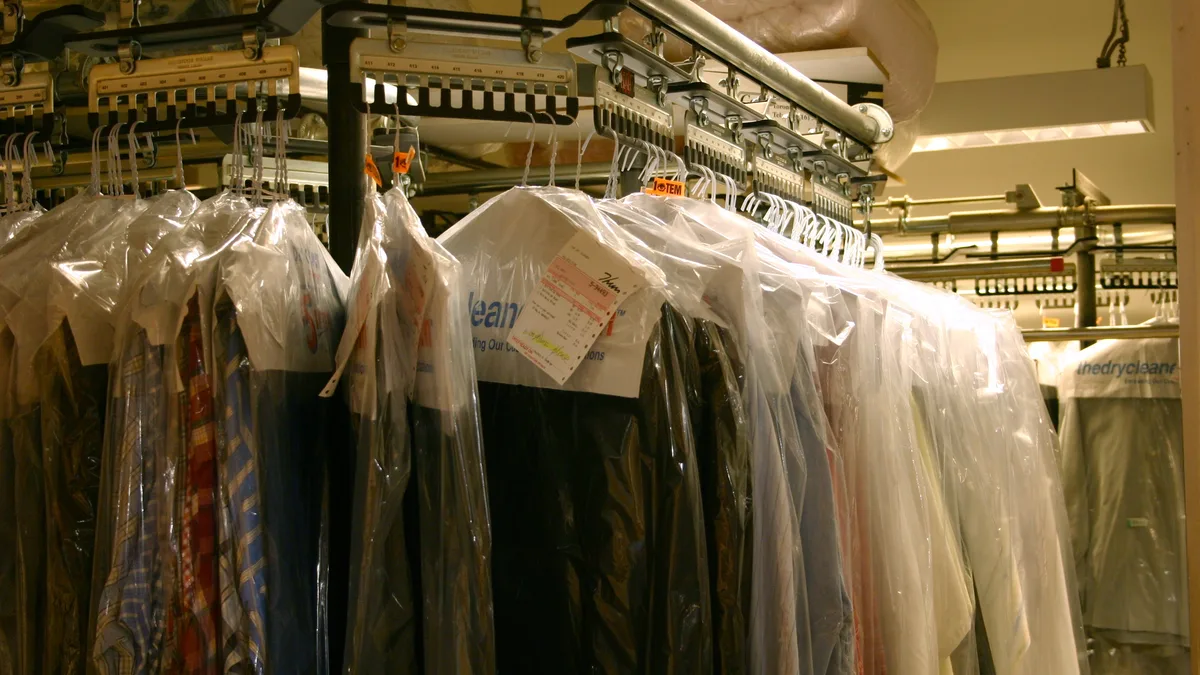
A dry cleaner that loses clothes is worse than one that cleans badly, because the loss is total. The pattern is always the same: the ticket lists three items and only two come back, or the bag that returns holds a shirt you have never seen before. The losers run on memory and loose piles, with tickets written in pencil and rails so crowded that one customer’s order slides into the next. The warning sign is a counter where nothing is counted in front of you. Stand there while the assistant counts the pieces aloud and checks the ticket against the bag, because that two-minute check is the only proof you have if something goes missing.
3. The stain makers: new marks that appear after cleaning
Few experiences are more frustrating than collecting a clean garment and finding a stain that was not there when you dropped it off. Stain makers cause this in two ways: dirty solvent that leaves a grey film on light fabrics, and careless handling that presses one garment’s dye onto another. A careful cleaner changes its solvent on schedule, separates darks from lights, and inspects each garment under a good light before bagging it. That is why the before photograph matters: one clear photo of each valuable garment at the counter ends the argument before it starts, and a shop that objects to the photograph is a shop to avoid.
4. The price creepers: bills that grow between drop-off and collection
Price creepers quote one price at the counter and charge another at the till. The suit was meant to cost one amount, but at collection there is a fee for stain treatment, a fee for pressing, a fee for the bag, and sometimes a fee that nobody can explain at all. Honest cleaners put a full price list on the wall and write the total on the ticket before the customer leaves. The defence is simple: ask for the total in writing before you leave the garment, including stain treatment and pressing, and if the assistant cannot give you a number, the real number is the one you will not like.
5. The smell leavers: clothes that return reeking of chemicals or damp
Clean clothes should smell of nothing at all, or faintly of fresh air. Clothes from a smell leaver come back sharp with solvent, musty with damp, or stale with smoke from a back room that doubles as a drying area. The smell is not a small complaint: it means the solvent was not properly extracted, the garments were bagged while still damp, or the shop stores finished work next to something it should not. The test costs nothing: hold the bag to your nose at the counter before you pay. If the smell is strong, ask for the garment to be aired and re-finished,
6. The button breakers: trims and beads that come back cracked or missing
Buttons, beads, sequins and belt loops are the first casualties of a careless cleaner. A good shop protects them before cleaning, covering buttons and checking trims, and inspects them again before the garment is pressed. A button breaker throws everything into the same cycle, presses over beaded work with a hot iron, and returns a jacket with a cracked button, a missing bead, or a sequin melted into the fabric. The warning sign is a counter that never asks about trims at all. Point out the buttons and beads yourself when you drop the garment off, ask how they will be protected, and watch whether the assistant writes it down.
7. The never-ready shops: ready dates that slip again and again
The never-ready shop is the mildest offender on this list until the day you need a suit for a wedding or an interview. The promised date passes, the shop says tomorrow, tomorrow passes, and nobody calls. The pattern usually means the shop sends work out to another cleaner and has no control over the return, or it takes in more orders than it can finish. A reliable cleaner gives a date it can keep, writes it on the ticket, and calls if anything changes. The test is to ask what happens if the garment is not ready on the date promised, and to listen to the answer.
What to avoid when choosing a dry cleaner
The most common mistake is choosing a dry cleaner the way people choose a coffee shop, by whichever one is nearest. Avoid any shop that will not give a written total before you leave, any shop that will not count the garments in front of you, and any shop where the assistant cannot explain how silk or wool is handled. Avoid handing over a whole wardrobe on a first visit: test the shop with one ordinary garment first, check how it comes back, and only then trust it with the suit or the dress. The same habit of testing a local service before committing applies well beyond the laundry, and our guide to the worst vintage shops of 2026 makes the same point about sellers who rush you past the details.
Checklist: choosing a dry cleaner in 2026
- Ask for the full total in writing before you leave the garment, including stain treatment, pressing and bags.
- Count the garments aloud with the assistant and check the ticket lists every piece, colour and button detail.
- Photograph valuable garments at the counter, front and back, so any new damage can be proven.
- Ask how the shop cleans wool, silk and beaded work, and walk away if the answer is a shrug.
- Smell the bag before you pay, and refuse any garment that comes back damp or reeking of chemicals.
- Test a new shop with one ordinary garment first, and only trust it with favourites after it passes.
Frequently asked questions
How can I tell if a dry cleaner is bad before I use it?
Watch the counter for two minutes. A good shop counts your garments aloud, writes the details on the ticket, and can explain how it handles wool and silk.
What should I do if my clothes come back shrunk?
Do not pay and leave quietly. Show the ticket, show a photograph of the garment before cleaning if you have one, and ask for the shop’s complaints process in writing. Shrinkage from the wrong process is the cleaner’s responsibility.
Why do dry-cleaned clothes sometimes smell of chemicals?
A strong chemical smell usually means the solvent was not properly extracted or the garments were bagged too soon.
Should a dry cleaner charge extra for stain treatment?
It can, but the charge must be agreed before the garment is left, not discovered at collection. Ask for the total in writing at drop-off, including stain treatment and pressing, so the price at the till is the price you already accepted.
Is it safe to dry-clean a beaded or sequinned dress?
Only at a shop that protects trims before cleaning and checks them before pressing. Ask how the beads will be covered and what happens if one is lost. If the assistant says nothing special is needed, take the dress somewhere else.
What if the dry cleaner loses my clothes?
Your ticket and your before photographs are your proof. Ask for a written record of the loss, the shop’s compensation policy, and a named person to follow up with.
The bottom line
The worst dry cleaners of 2026 are not hard to spot once you know the patterns: clothes that shrink, orders that go missing, stains that appear after cleaning, bills that grow at the till, smells that should never be there, trims that come back broken, and dates that keep slipping. Choose the shop that counts your garments, writes the total down, explains its fabric care and returns clothes smelling of nothing at all, and your wardrobe will last years longer for it. The same eye for honest service is worth using for holiday stays too, as our guide to the worst villas of 2026 shows.