The Worst Barbershops of 2026
The worst barbershops of 2026 are not the small ones with three chairs, a worn floor and a barber who remembers how you like your hair. The worst barbershops fail in a simpler way: they rush the cut, reuse dirty tools, charge you for every extra, and leave you looking in the mirror wondering what just happened. This guide ranks the worst types of barbershop you will meet in 2026, so you can spot a bad one before you sit in the chair.
Key takeaways
- A barbershop is judged by the cut you walk out with, not by the chairs or the music: a quiet shop that listens beats a smart one that rushes.
- If the tools are not clean, the cut does not matter, so look at the clippers, combs and capes before you sit down.
- The price on the board is only real if it includes the wash, styling and beard trim, so ask what is extra before the cape goes on.
- A barber who never asks what you want is cutting the hair they always cut, not yours.
- Walk out of the shop that keeps you waiting, keeps upselling you, or will not show you the back.
How the worst barbershops were chosen
Every type below was scored on five measures. The cut comes first: does the barber listen, check your head and hair, and finish the job properly, or rush through one style for every customer? Hygiene is second, judged on whether the tools are cleaned between customers, the capes are fresh and the chair is brushed down. Honest pricing is third, because a price on the board that doubles at the till is not a price at all. Waiting is fourth: does the shop respect the appointment you booked, or treat your time as free? Pressure is fifth: does the shop sell you the cut, or a shelf of products you did not ask for? Two notes before the list. First, no single shop is named as the worst, because the same seven traps turn up in every town. Second, the tools matter as much as the hands, and our guide to the best versus worst beard trimmers shows how much difference a clean, sharp tool makes.

Comparison table: the worst barbershops of 2026
| Rank | Barbershop type | Main fault | Warning sign |
|---|---|---|---|
| 1 | The Ten-Minute Conveyor Belt | Every cut rushed | Next customer already caped |
| 2 | The Dirty Tools Drawer | Tools never cleaned | Hair on the clippers, no sanitiser |
| 3 | The Price-Board Bait | Board price doubles at the till | Wash, styling, beard trim all extra |
| 4 | The No-Consultation Clippers | One style for every customer | No questions before the clippers start |
| 5 | The Waiting-Room Black Hole | Booked appointments ignored | Walk-ins jump the queue |
| 6 | The Hard-Sell Product Shelf | Products pushed at triple price | Oils and waxes offered mid-cut |
| 7 | The Never-Cleaned Chair | Chair and floor left dirty | Last customer’s hair on the chair |
The worst barbershops of 2026
1. The Ten-Minute Conveyor Belt: the worst barbershop of all
The Ten-Minute Conveyor Belt is the worst barbershop you will ever sit in, and it is not close. The cape goes on, the clippers start, and ten minutes later the cape comes off, finished or not. There is no pause to check the shape, no mirror at the back, no question about whether the sides match. The next customer is already caped beside you, because the shop makes its money on volume, not on cuts. A good haircut takes as long as it takes: time to look, time to blend, time to check the neckline. A rushed cut shows itself the next morning, when the uneven sides are suddenly obvious. If the barber is watching the clock instead of your head, stand up and find a shop that books enough time for the job.
2. The Dirty Tools Drawer: clean tools or no cut
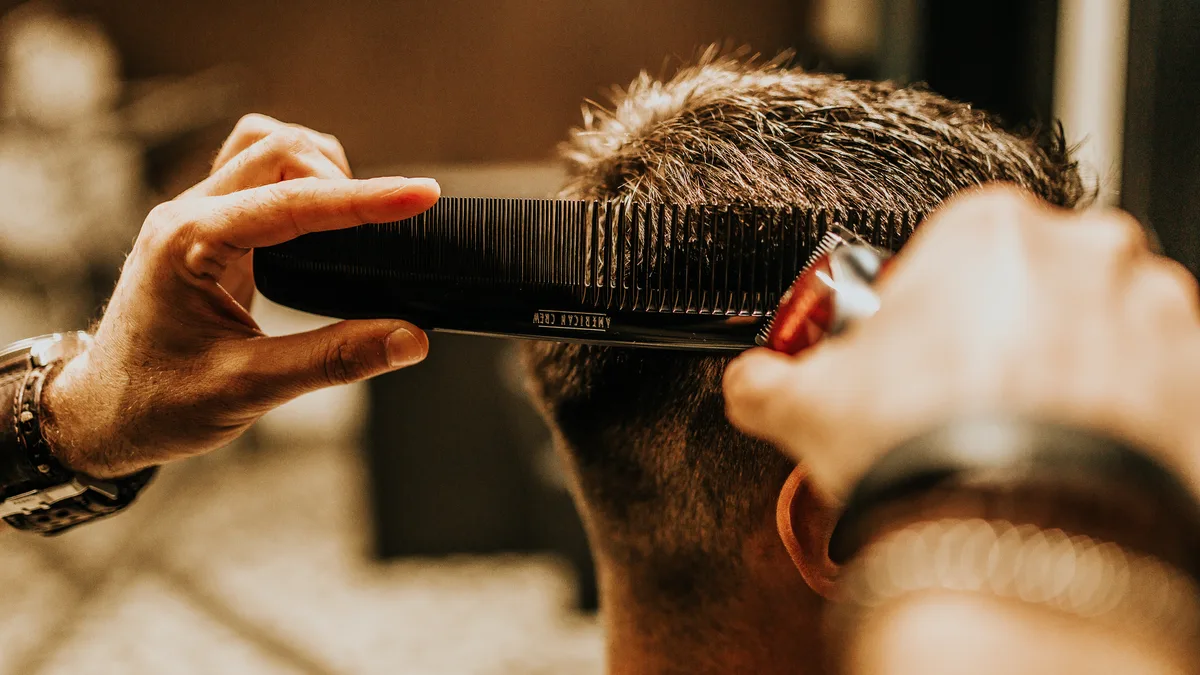
The Dirty Tools Drawer is the shop where the clippers still carry the last customer’s hair, the combs sit in a jar of cloudy water, and there is no sanitiser anywhere you can see. That is not a shortcut, it is a health risk. Clean tools are the cheapest part of a barbershop, which is why dirty ones are the clearest warning sign there is. A good barber cleans the clippers between every customer, wipes the comb, and puts a fresh cape on the chair. A bad one treats cleaning as time wasted, and your skin pays for it. Look at the tools before you sit down, and walk out of any shop where the drawer is dirtier than the floor.
3. The Price-Board Bait: the cut is cheap, everything else is not
The Price-Board Bait is the shop where the price on the board is a promise the till will not keep. The haircut is cheap, but the wash, the styling and the beard trim are all extra, and the hot towel you never asked for appears on the bill as well. By the time you pay, the cheap cut has cost more than the honest shop down the road. Ask before the cape goes on: what does the board price include, and what costs extra? A shop that answers plainly is a shop you can trust. A shop that waves the question away is about to worry you at the till.
4. The No-Consultation Clippers: your hair, their habit
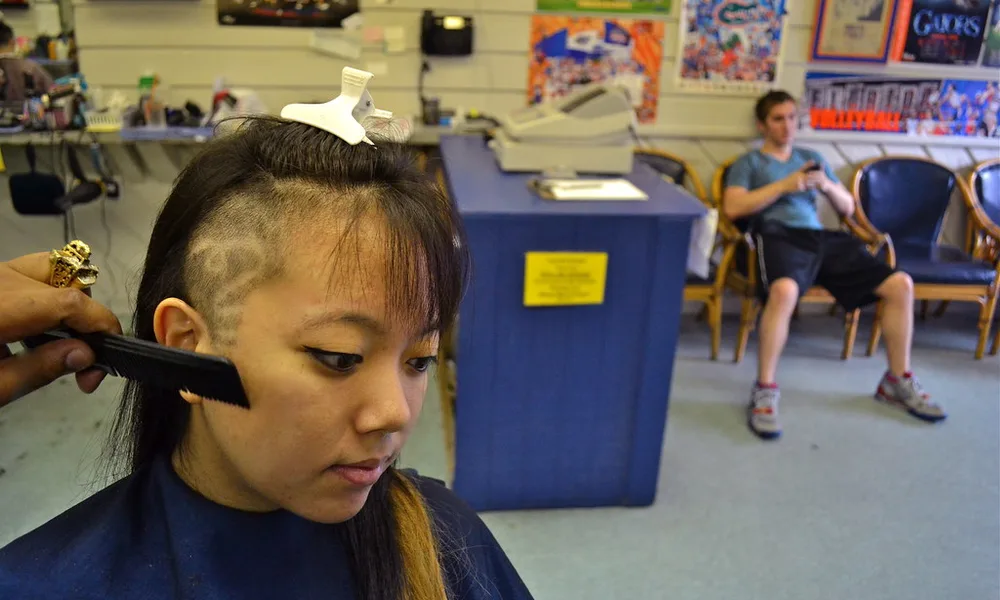
The No-Consultation Clippers is the shop where nobody asks you anything. You sit down, the cape goes on, and the clippers start on the same guard they use for everyone. Your hair is thick or thin, straight or curly, and none of it matters, because the shop cuts one style and calls it a haircut. A consultation takes thirty seconds: what do you want, and how short on the sides? Those thirty seconds are the difference between a cut that suits you and one that suits the barber’s routine. If the clippers start before the questions, stop them and say what you want. If the barber will not listen, the chair is not worth your head. The best barbers ask first and cut second, every time.
5. The Waiting-Room Black Hole: your appointment means nothing
The Waiting-Room Black Hole is the shop where your appointment is a suggestion and your time is free. You book for half past two, arrive on time, and sit waiting while walk-ins are taken first and nobody tells you how long it will be. A booking is a promise in both directions: you turn up on time, and the shop cuts on time. The shops that keep their books properly run on time because they book fewer customers. The worst shops overbook every chair, take every walk-in, and treat the waiting room as a warehouse. Give a late shop one chance, then book elsewhere.
6. The Hard-Sell Product Shelf: the cut is the advert
The Hard-Sell Product Shelf is the shop where the haircut is only the start of the sale. Before the cut is finished, the wax is in your hair and the bottle is held up for you to buy at three times the price of the same product online. Saying no is treated as a personal insult, and the barber keeps going. A good barber uses products because the cut needs them. A bad barber uses them because the shelf needs clearing. Our guide to the hair clippers that cut cleanly at home shows how much less the tools cost when nobody is selling them to you mid-cut. Buy the cut, not the shelf, and leave the shop that will not take no for an answer.
7. The Never-Cleaned Chair: sit in the last customer’s hair
The Never-Cleaned Chair is the shop where you sit down in the last customer’s hair. The cape is still warm and the floor around the chair is covered in clippings. The barber does not notice, because they stopped noticing a long time ago. A clean chair takes twenty seconds: brush it down, shake the cape, sweep the floor. Twenty seconds is nothing. If the shop cannot be bothered to clean the chair, it cannot be bothered to clean the tools or finish the cut properly either. Cleanliness is not a luxury in a barbershop, it is the job. Stand up before the cape goes on, and find a chair that was cleaned for you.

Checklist: spotting a bad barbershop before you sit down
- Look at the clippers, combs and capes before you sit down, and walk out if the tools are dirty or the cape is used.
- Ask what the board price includes, and what the wash, styling and beard trim cost, first.
- Wait for the consultation, and say what you want before the clippers start, even if you have to stop the barber to do it.
- Check whether appointments run on time, and give a late shop a second chance, not a third.
- Say no to the products once, and leave the shop that keeps selling after you have said no.
- Ask to see the back of your head before you pay, and do not pay for a cut you have not been shown.
Frequently asked questions
How long should a good haircut take?
Most good cuts take twenty to thirty minutes, including a short consultation and a check at the end. Ten minutes is a rush job. The right length is however long it takes to finish the cut properly, and a barber who watches the clock instead of your head is cutting for the till.
How can I tell if a barbershop is clean enough?
Look at the clippers, combs and chair before you sit down. The clippers should be free of hair, the combs in clean solution, the cape fresh, and the chair brushed down. If any of those are wrong, walk out before the cape goes on.
What should a haircut price include?
It should include the consultation, the cut, a check with the mirror, and a tidy-up of the neckline. A wash, a beard trim and styling are often extra, and that is fair, as long as the shop tells you before the work starts. Ask what is included and what costs extra first.
What should I do if the barber will not listen to what I want?
Stop the cut, say plainly what you want, and ask the barber to start again from there. If the barber argues, or keeps cutting the same style, stand up and leave. You are paying for a cut that suits you, not for the barber’s routine.
Should I buy the products my barber recommends?
Only if you want them, and only after you have checked the price elsewhere. A good barber recommends a product because it suits your hair, and is happy for you to buy it anywhere. A bad barber sells it because the shop needs the sale. Our guide to the best beard oils shows what good beard care costs without a mid-cut sales pitch.
How do I find a good barbershop instead?
Look for a shop where the tools are clean, the appointments run on time, the barber asks what you want before the clippers start, the price is given before the cape goes on, and the back of your head is shown before you pay. The best barbershops are often the quiet ones with three chairs and a full book.
Bottom line
The worst barbershops of 2026 rush the cut, skip the cleaning, hide the real price, and sell you the shelf instead of the haircut. Skip the shop where the tools are dirty and the clock matters more than your head, and spend your money where the barber asks first, cuts carefully, and shows you the back before you pay. Your hair grows back, but a bad cut stays with you for weeks.