
The Worst Educational Games of 2026: Seven Learning Games That Teach Almost Nothing
The worst educational games of 2026 are not the ones with the plainest graphics or the smallest budgets. An educational game has a harder job than any other kind of game: it has to be fun and it has to teach something, and if it fails at either, it fails at both. The worst ones are worksheets with sound effects, quizzes with a cartoon mascot, or games that teach the wrong thing with great confidence. This guide ranks the worst types of educational game you can buy in 2026, what goes wrong with each, and what to try instead, so the time spent learning is actually spent learning, and the money spent on it buys a lesson rather than a badge.
Key takeaways
- An educational game must be judged on learning, not on fun alone: a game children love that teaches nothing is a toy, not a lesson.
- Memorising is not understanding: if a game only tests recall, it will not survive the first question asked in a different way.
- Wrong facts are worse than no facts, because a confident game teaches a confident mistake that is hard to unlearn.
- A game that only works for one age, one level or one kind of learner will leave most children behind, however polished it looks.
- Before you buy, play the game yourself, check what it claims to teach against a trusted source, and ask the learner to explain one thing back to you.
How the worst educational games of 2026 were ranked
Every type below was scored on five measures. Learning comes first: does the player understand something new at the end, or can they only repeat what the game showed them? Accuracy is second, because a game that teaches the wrong fact is worse than a game that teaches nothing. Progression is third: does the game adapt to the learner, offering harder ideas when they are ready and help when they are stuck, or does it march every child through the same level at the same speed? Engagement is fourth, because a lesson nobody wants to finish teaches nobody, however correct it is.
Two notes before the list. First, no single game is named as the worst, because the same broken patterns appear across many releases, and what matters is learning to recognise them before you pay. Second, educational games are learning-focused titles, not light pick-up-and-play titles: they are judged on what the player can do afterwards, not on how pleasant five minutes felt. That is what separates them from casual games, which are built for short, easy sessions, and from the games in our guides to the worst video games of 2026, which rank the big cross-genre patterns, and the worst puzzle games of 2026, which rank games that are meant to challenge thinking, not to teach a subject. A puzzle game can be hard without teaching anything, and an educational game can teach well without being a puzzle at all.
Comparison table: the worst educational games of 2026
| Rank | Educational game type | Biggest flaw | Who gets hurt most |
|---|---|---|---|
| 1 | Flashcard drills in disguise | Recall, not understanding | Every learner |
| 2 | Narrow maths drill games | One operation, forever | Children who need breadth |
| 3 | Spelling games with unfair word lists | Obscure words, no rules taught | Early readers |
| 4 | Science games that get it wrong | Confident, wrong facts | Curious children |
| 5 | History games that teach myths | Stories sold as facts | Young historians |
| 6 | Phrasebook language games | Phrases you never use | Real beginners |
| 7 | Coding games with no coding | Blocks that teach nothing | Future programmers |
The worst educational games of 2026
1. Flashcard drills in disguise: recall, not understanding
The flashcard drill is the oldest educational game and the easiest to get wrong. It shows a question, you answer, it shows the next question, and a mascot cheers when you get one right. The problem is that it only ever tests recall: can you remember the answer the game showed you five minutes ago? It never asks you to use the idea, explain it, or recognise it in a different form. A child who has played for a month can score perfectly on the game and fail the first real question that asks the same thing in different words.
2. Narrow maths drill games: one operation, forever
Maths games should build number sense: why numbers work, how they relate, and when to use them. The worst educational maths games pick one operation, usually multiplication tables, and drill it until the child can recite it in their sleep, while never touching anything else. The child gets faster at one narrow skill and no better at maths, because the game never asks them to choose an operation, estimate an answer, or solve a problem that is not already set out for them.
3. Spelling games with unfair word lists: obscure words, no rules taught
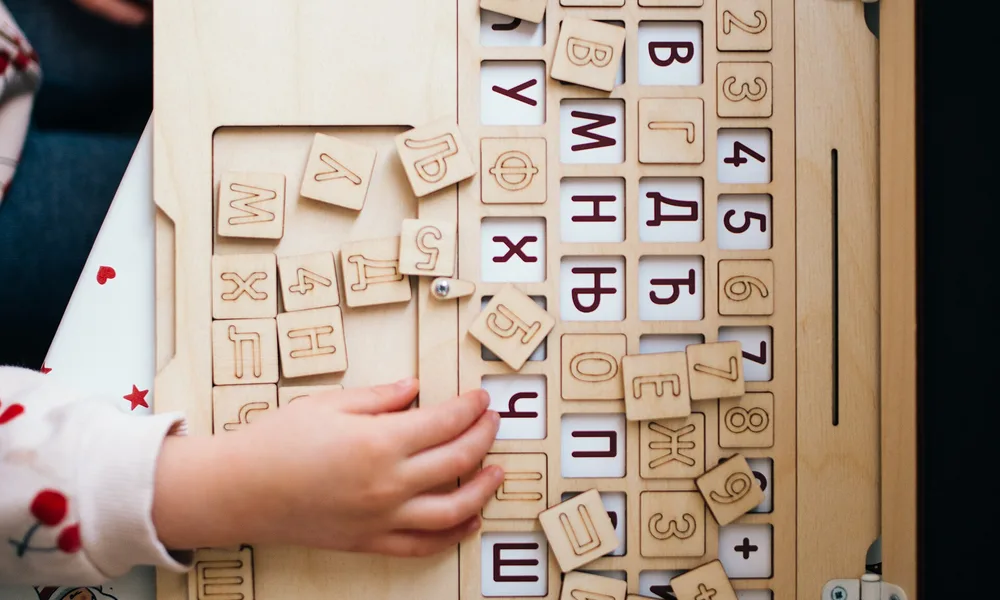
Spelling games depend on a fair agreement: the words are ones a learner could reasonably know, the rules are taught, and mistakes are explained. The worst educational spelling games break that agreement on both sides. The word list is full of obscure terms and exceptions nobody uses, while the game never teaches the spelling rule that would make the word learnable. The child is not learning to spell; they are memorising the game’s private vocabulary, and the only way to progress is to fail the same words until they stick.
4. Science games that get it wrong: confident, wrong facts
Science games carry a special responsibility, because a child has no easy way to check whether the game is right. The worst educational science games get the facts wrong with complete confidence: they simplify a process until it is false, show a diagram that contradicts the text, or teach a model that scientists stopped using decades ago. The child learns the wrong thing, and because the game presented it as a fun fact with a badge and a cheerful voice, the mistake sticks.
5. History games that teach myths: stories sold as facts
History games should teach children that the past was complicated, that sources disagree, and that stories need checking. The worst educational history games do the opposite: they take a myth, a legend or a simplified story and present it as fact, with no source, no doubt and no alternative view. The child learns a neat story that never happened, and because the game is colourful and the story is memorable, it survives long after the real history is taught. The worst versions add a quiz that tests the myth, so the child is rewarded for repeating the wrong answer and punished for the right one.
6. Phrasebook language games: phrases you never use
Language games should teach a learner to say something real, to understand a reply, and to build a sentence of their own. The worst educational language games teach a phrasebook: a list of tourist sentences, drilled in order, with no grammar, no listening and no speaking practice. The learner can repeat the phrases perfectly and cannot hold a conversation, because the game never asked them to understand a word, only to memorise a string of sounds. The worst versions add a streak and a leaderboard, so the learner keeps drilling the same phrases to protect the streak, rather than learning anything new.

7. Coding games with no coding: blocks that teach nothing
Coding games for children should teach a way of thinking: breaking a problem into steps, spotting a pattern, and fixing a mistake. The worst educational coding games teach none of that. They give the child a set of coloured blocks to drag into a line, and the game solves the puzzle as long as the blocks are in roughly the right order, with no explanation of why. The child finishes a level, earns a badge, and cannot write a single line of code, or even explain what a loop is, because the game never asked them to think like a programmer.
What to try instead of the worst educational games
The fix for a bad educational game is not a prettier game, it is a better lesson. Look for games that ask the learner to explain, apply or build something, not just to recall an answer. The same checks work for other learning tools too, and our guide to the worst board games of 2026 makes the same point about judging a game by the fifth play, not the first, because the best games change each time and the worst ones repeat themselves.
Checklist: choosing an educational game in 2026
- Play the game yourself first and ask whether it teaches understanding, or only tests recall of answers it just showed you.
- Check one fact the game teaches against a trusted source, and look for sources, explanations and corrections inside the game.
- Look for progression that adapts to the learner, with harder ideas when they are ready and help when they are stuck.
- Ask the learner to explain one thing back to you after playing, in their own words, and see whether the game gave them the words.
- Add up the cost of the extra levels, subjects and subscriptions before you judge the free download or the box price.
- Read recent reviews from teachers and parents, not just store ratings, and look for complaints about wrong facts and paywalls.
Frequently asked questions
Are educational games a good way to learn?
Yes, when they teach understanding and not just recall. A good educational game asks the learner to use an idea, and the learning survives after the game is closed.
How can I tell if an educational game is accurate?
Check one fact against a trusted source, and look for sources and explanations inside the game. A game that hides its sources is asking you to trust it blindly.
Should children play educational games every day?
Short, regular sessions work best, and the game should be one part of learning, not the whole of it. A book, a conversation and a real problem all teach things a screen cannot.
Are free educational games worse than paid ones?
Not always. Some free games are excellent, and some expensive ones are drills with a mascot. Judge the lesson, not the price, and watch for paywalls.
What age should an educational game be for?
The age on the box is a guide, not a guarantee. Play it yourself and check whether the ideas match the learner in front of you.
When should I stop using an educational game?
When the learner can score perfectly but cannot explain what they learned, or when the game keeps asking for money to teach the next idea.
Bottom line
The worst educational games of 2026 all make the same mistake: they dress a worksheet, a drill or a myth in game clothes and call it learning. Flashcard drills, narrow maths, unfair spelling, wrong science, myth history, phrasebook language and block coding without coding are all versions of the same failure, a game that asks for a learner’s time and gives them a score instead of an understanding. The good ones prove the idea works: they teach a real skill, adapt to the learner, and leave something behind when the game is closed. Judge an educational game by what the learner can explain afterwards, not by the badges they collected. A game that cannot do that is not a lesson, however bright its mascot or loud its applause.


