Burned Out Before the Bow: The Worst Fire-Eaters of 2026
The worst fire-eaters of 2026 fail in a way no other act can afford, because fire does not forgive a bad routine. A fire-eater puts a burning torch to their mouth in front of a live audience, and the whole act rests on one promise: that the performer is in control of the flame. When it works, the fire vanishes cleanly, the crowd gasps, and the performer stands there unhurt, holding a torch that has just been inside their mouth. When it fails, there is no hiding it.
This guide is about fire-eating as a single dangerous act: the routines a fire-eater performs, judged on control, pacing and safety, and on whether the flame craft is real. That makes it different from the circus ring, covered in our guide to the worst circus acts of 2026, where one ranked type is the fire act that fizzles among aerial, trapeze and juggling acts: that failure belongs to the ring, and it is not ranked here. It is also different from the street, covered in our guide to the worst street performers of 2026, where one ranked type is the fire act in the wrong place: that failure is about where the flames are lit, and it is not ranked here either. And it is different from the mixed bill, covered in our guide to the worst variety shows of 2026, where the failure is the running order. No real performer is named as the worst here, and nothing in this guide explains how to perform the act: fire-eating is dangerous, the failures below are described so audiences can recognise them and walk away, and nobody should try any of it.
Key takeaways
- A fire-eating act lives or dies on control: if the flame will not go out cleanly, the performer is not in charge of it.
- Fire-eating and fire-breathing are not the same act, and a performer who sells one as the other is already misleading the room.
- Watch the first swallow: a clean routine shows control in the first minute, and a bad one shows panic instead.
- Smoke, coughing and repeated relighting are the signs of an act with no flame craft underneath the noise.
- If the safety looks missing, leave: no fire act is worth watching from a seat with no way out.
How the worst fire-eaters of 2026 were ranked
Every type below was scored on five measures. Control comes first: does the flame go out cleanly, every time, or does it sputter, flare and linger? Pacing is second, judged on whether the routine builds to a peak or rushes through its only trick in the first minute and then stalls.

Comparison table: the worst fire-eaters of 2026
| Rank | Fire-eater type | Main flaw | Warning sign | Worst score |
|---|---|---|---|---|
| 1 | The Torch That Will Not Stay Lit | Relighting again and again | Three matches before the first swallow | 10/10 |
| 2 | The One-Trick Eater | One swallow, then nothing | The act is over in sixty seconds | 10/10 |
| 3 | The Smoky Stage Act | Smoke instead of flame craft | You smell the act before you see it | 9/10 |
| 4 | The Rushed Routine | Swallowing too fast, coughing | The performer rushes the torch | 9/10 |
| 5 | The Breather in Eater’s Clothing | Breathing sold as eating | Flame goes out, never in | 9/10 |
| 6 | The Act With No Safety Net | No spotter, no space, no calm | Nobody is watching the flame but you | 8/10 |
| 7 | The Finale That Fizzles | No closing swallow at all | The act ends with a wave | 8/10 |
The worst fire-eaters of 2026
1. The Torch That Will Not Stay Lit: relighting again and again while the room waits
The Torch That Will Not Stay Lit is the worst fire-eater type of 2026 because the torch is the whole act, and a torch that will not burn is a performer with nothing to eat. The routine starts with the performer holding the torch up for the audience to see, and the flame is weak from the first moment: it flickers, shrinks, and dies before the torch reaches the mouth. The performer lights it again, and again, and the audience watches the same small ceremony three times before a single swallow happens. By the third relighting, the room has stopped holding its breath and started checking the time.
2. The One-Trick Eater: one swallow, then nothing but stalling
The One-Trick Eater is the fire-eater who has exactly one move and builds a whole evening around it. The swallow itself is often fine: the torch goes in, the flame goes out, the performer stands there unhurt, and the crowd gasps. Then nothing happens. The performer waves the torch, walks the stage, talks to the front row, and the audience waits for the second trick, which never comes.

3. The Smoky Stage Act: smoke machines and noise instead of flame craft
The Smoky Stage Act is the fire-eating routine that hides a weak flame behind smoke, darkness and noise. The stage fills with haze before the performer even appears, the music swells, the lights go down, and when the torch finally comes out, the flame is small and far away, lost in the fog. The audience smells the act before they see it, and what they see is not fire craft but atmosphere: a silhouette in the smoke, a torch waved through the haze, a glow that could be anything. Real flame craft shows in the control of the fire, the timing of the swallow and the distance kept from the audience.
4. The Rushed Routine: swallowing too fast, coughing, and the room holding its breath for the wrong reason
The Rushed Routine is the fire-eating act where the danger stops being theatre and starts being real. The performer hurries the torch to the mouth, the swallow is fast and shallow, and the flame does not go out cleanly. The performer coughs, steps back, waves the smoke away, and the audience realises that the person on stage is not in control of the fire. A good fire-eating routine is slow on purpose: the torch is shown, the moment is held, the swallow is calm, and the performer stands still afterwards so the room can see they are unhurt.
5. The Breather in Eater’s Clothing: fire-breathing sold as fire-eating
The Breather in Eater’s Clothing is the fire act that sells the audience one trick and performs another. Fire-eating and fire-breathing are different acts: eating takes the flame in and puts it out, while breathing throws a plume of flame outwards into the air. Both are dangerous, both need skill, and they are not interchangeable. The breather in eater’s clothing is billed as a fire-eater, walks on with a torch, and then blows a great plume of flame across the stage, and the audience applauds a fire-eater who has never eaten a single flame.
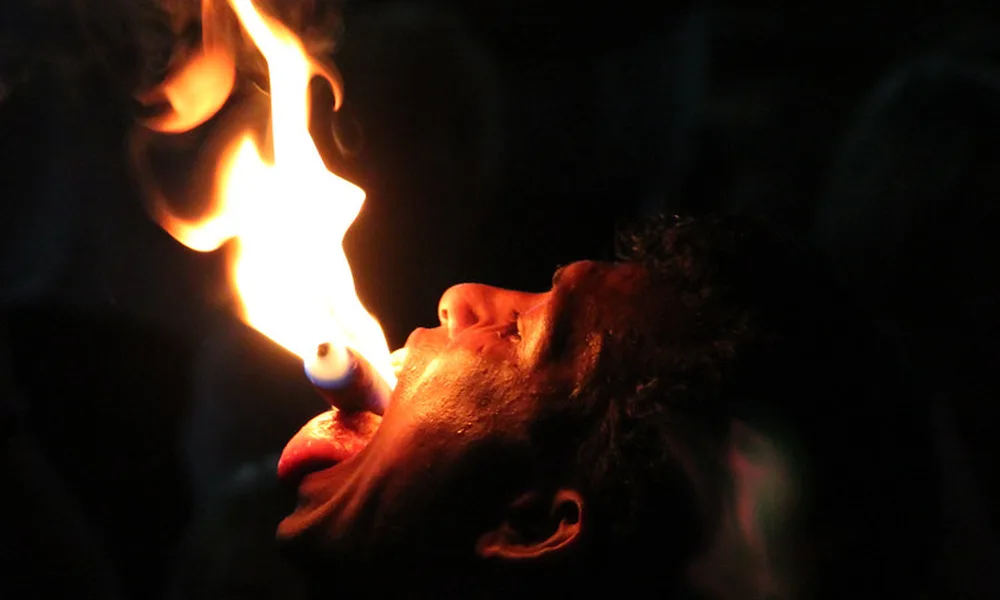
6. The Act With No Safety Net: no spotter, no space and no calm anywhere on stage
The Act With No Safety Net is the fire-eating routine where the danger is real and the preparation is missing. The signs are visible before the first swallow: the stage is crowded, the front row is too close, there is no clear space around the performer, no second person watching the flame, and no calm in the way the act is set up. A well-run fire act shows its safety without making a show of it: a clear circle, a spotter standing by, a performer who moves slowly and deliberately, and a room where everyone can see the flame and the exits. The worst version shows none of it.
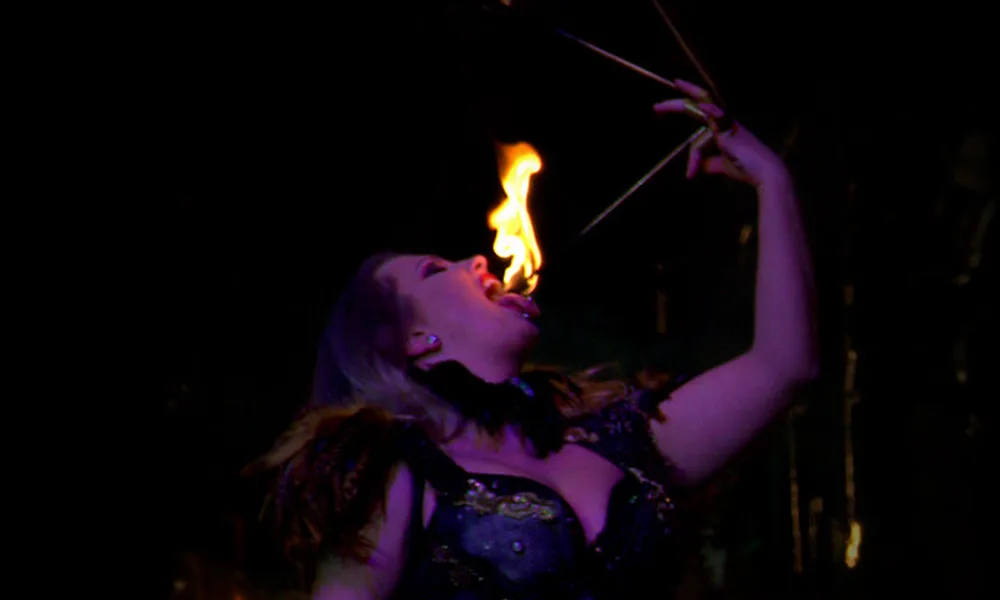
7. The Finale That Fizzles: the act ends with a wave instead of a closing swallow
The Finale That Fizzles is the fire-eating act that forgets its own ending. The finale is supposed to be the peak of the routine: the biggest swallow, the longest hold, the flame that goes out cleanest, performed while the whole room watches. The worst versions deliver the opposite. The music starts, the performer waves the torch, bows, waves again, and the lights come up, and the audience realises the act is over without a closing swallow.
Warning signs: spot a bad fire-eater in one minute
Watch the first minute before you commit to the whole routine. If the torch needs relighting more than once, the flame is not under control. If the first swallow is rushed, or ends in a cough, the danger is real and the skill is not.
How to pick a better fire-eater instead
Pick an act where the first swallow is slow, clean and calm. Look for a performer who shows the torch before the swallow, who holds the moment instead of rushing it, and who stands still afterwards so the room can see they are unhurt. Check that the flame goes in as well as out, that the stage is clear, and that a second person is watching the fire.
Checklist: choosing a fire-eating act in 2026
- Watch the first torch: if it needs relighting more than once, the flame is not under control.
- Check the first swallow: slow, clean and calm beats fast, and a cough means the act is out of control.
- Ask whether the flame goes in or out: a breather sold as an eater is a different act wearing the wrong name.
- Look for a clear stage and a spotter: no space and no second pair of eyes means no safety.
- Be wary of smoke and darkness: if you cannot see the flame clearly, neither can the performer.
- Leave if the act rushes, coughs or ends with a wave instead of a closing swallow.
Frequently asked questions
What is the worst fire-eater type of 2026?
The Torch That Will Not Stay Lit, where the flame dies before the first swallow and the audience watches a performer struggle with the one tool the act depends on.
Are fire-eating and fire-breathing the same act?
No. Fire-eating takes the flame in and puts it out, while fire-breathing throws a plume of flame outwards. They are different acts with different risks, and a performer who sells one as the other is misleading the room.
How are fire-eaters different from circus acts?
A circus act is one item on a whole bill in the ring, judged alongside aerial, trapeze and juggling acts, while a fire-eating act is a single dangerous routine judged on its own flame craft, control and safety.
How are fire-eaters different from street performers?
A street fire act is judged on where the flames are lit and whether the crowd can step back, while a fire-eating act is judged on the routine itself: the torch, the swallow and the control of the flame.
Is fire-eating dangerous?
Yes. Fire-eating carries real risk, which is why control, pacing and safety matter, and why this guide describes failures so audiences can recognise them and walk away. Nobody should try any of it.
How long should I give a new fire-eating act?
One minute. The first torch and the first swallow show whether the flame is under control, and a bad act shows panic instead of calm within seconds.
Bottom line
The worst fire-eaters of 2026 are not the ones with the least spectacular flames. They are the ones where the control is missing: a torch that will not stay lit, one swallow and then nothing, smoke instead of flame craft, a rushed routine that ends in a cough, breathing sold as eating, an act with no safety net and a finale that fizzles.