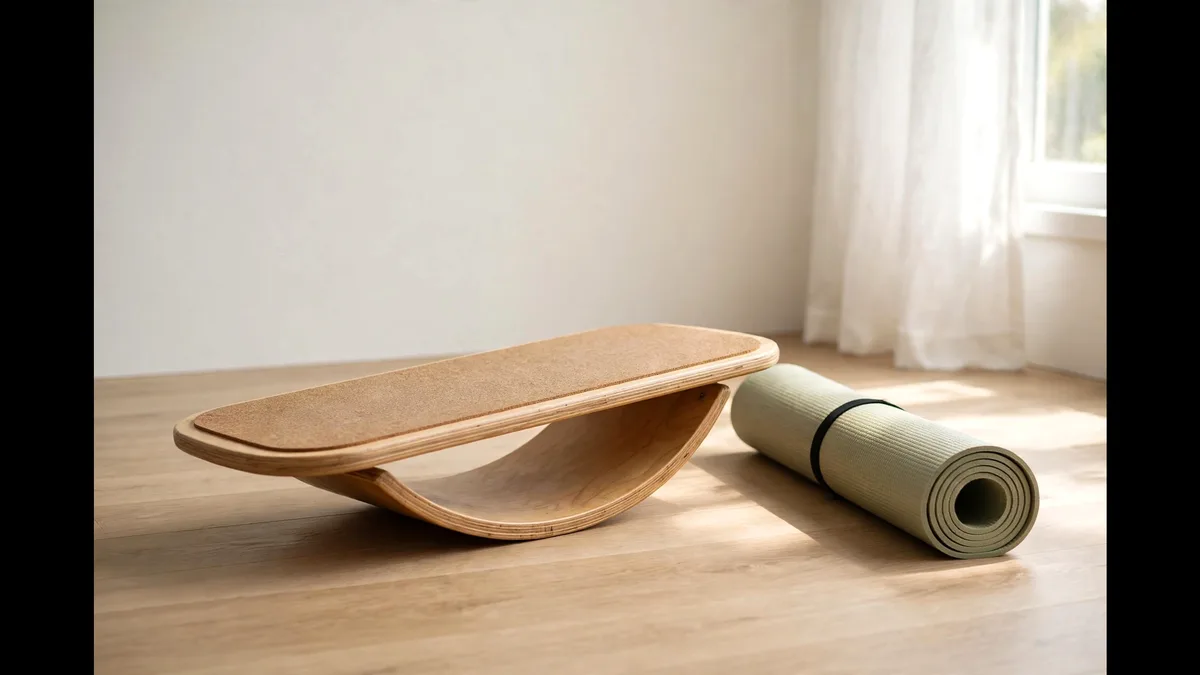
Why the Best Balance Boards in 2026 Are Worth the Wobble
A balance board is a flat deck that rocks, tilts or rolls under your feet, and the best balance boards in 2026 turn a few unsteady minutes a day into steadier ankles, a stronger core and better posture. There is no motor, no screen and no subscription. You stand on the board, it moves, and your body has to answer. Balance is a skill, and it improves with short, regular practice.
Key takeaways
- A rocker board is the best starting point, because it moves in one predictable direction and cannot roll away.
- Grip matters more than looks: a deck without full grip tape or texture becomes a slide the moment your feet get damp.
- Roller boards are the hardest type and need end stops or a track, or the roller will shoot out.
- Check the weight rating and deck thickness, and look for seven or more plies on a wooden deck.
- Five minutes a day, most days, beats one long weekly session.
What a balance board actually trains
Standing on solid ground is easy because the ground does not move. A balance board takes that certainty away in a controlled way, and your body responds with hundreds of tiny corrections a second. The muscles around your ankles fire first, then your calves, then your hips and core. That chain reaction trains proprioception, your body’s sense of where it is in space. The payoff is practical: steadier steps on stairs, better posture at a standing desk, and ankles that feel more trustworthy on uneven ground.
Surfers, skaters and skiers have used boards for decades to keep their edge between seasons, and physiotherapists use them to rebuild ankle strength after a sprain. Pairing board work with a short stretch on an exercise ball makes a well-rounded home routine, since the ball trains the same core control from a seated position, and a foam roller is a good partner for warm-ups and recovery. Be honest about what a board will not do: it will not build big muscle or replace cardio. The first week feels clumsy, the second week feels possible, and by the fourth week standing still feels boring, which is when you know it is working.
The main types of balance board
Every balance board is one of four ideas, and the type decides how hard it is and how safe it feels. A rocker board pivots on a fixed curved base, so it tips side to side or front to back along one line. It cannot leave its pivot, which makes it the safest type and the right choice for beginners and anyone coming back from an ankle injury. A wobble board tilts in every direction on a central dome underneath, so it is harder than a rocker but still contained. A roller board balances a flat deck on a free cylinder; it is the hardest common type, but it needs stops or it will drop you. A spring board uses springs to add resistance, which suits people who want a workout rather than a skill drill.

The differences matter more than the brand name. A rocker board with a gentle curve is a learning tool; the same shape with a tight curve is a challenge. A wobble board with a low dome is a desk companion; a tall dome makes it a serious training device. Roller boards split into models with a track that keeps the roller centred and models with nothing at all, and that single detail is the difference between a board that catches you and one that dumps you.
Balance boards compared
| Type | Movement | Difficulty | Best for | Watch out for |
|---|---|---|---|---|
| Rocker board | Tips one way on a fixed curve | Easy | Beginners, rehab, desk use | Tight curves that tip too fast |
| Wobble board | Tilts in all directions on a dome | Medium | Core work, daily practice | Smooth decks with no grip |
| Roller board | Deck rolls on a free cylinder | Hard | Board sports, advanced training | Rollers with no end stops |
| Spring board | Tilts against spring resistance | Medium to hard | Strength and stability combined | Springs that wear unevenly |
What makes a good balance board
The deck is the first thing to judge. A good wooden deck is made from seven or more plies of hardwood, which keeps it rigid and silent under your weight, while a thin three-ply deck flexes, creaks and can split along the grain. Check the weight rating too: a deck rated for a hundred kilos should feel solid under eighty.
Grip is the second thing, and it decides whether a board is safe or dangerous. The standing surface must hold your feet when they are damp, tired or in socks, so look for grip tape covering the whole standing area, a textured rubber top, or a cork surface with real bite. Bare varnished wood slides under socks and smooth plastic slides under bare feet. Rub the surface hard with a damp hand before you commit: if your hand slides, your feet will slide too.
The base and the stops come next. On a rocker board, the curve should be smooth and even, with no flat spots that catch mid-tilt. On a wobble board, the dome should be firmly fixed and low enough that the board cannot tip past recovery. On a roller board, end stops are not optional: look for rubber end caps, a track or rails that keep the roller centred, or raised deck ends that catch it before it escapes. A roller without stops fails at the exact moment you are least balanced.
How to choose for your level
Beginners should buy the easiest board they can find, not the hardest. A gentle rocker board with a wide deck, a shallow curve and full grip lets you stand for a minute on day one. Start near a wall, wear socks or bare feet on a non-slip surface, and practise for two or three minutes at a time. A yoga mat under the board protects the floor and stops it sliding on a polished floor.

Intermediate riders want a board that grows with them. A wobble board with an adjustable dome, a rocker board with interchangeable fulcrums, or a roller board with a track and stops all let you raise the difficulty in small steps instead of jumping from easy to impossible. This is the stage where most people quit, because they buy a board that is too hard and spend every session falling off instead of learning. Add a few seconds of hands-free standing, then try shifting your weight deliberately, then try a slow squat.
Advanced riders should look at roller boards with real difficulty. A roller board with a long deck and a free cylinder rewards the balance you have already built and punishes sloppy footwork, which is what a surfer or snowboarder wants in the off-season. Check that the deck is long enough for your stance and that the stops can catch a hard shift.
How to start without falling off
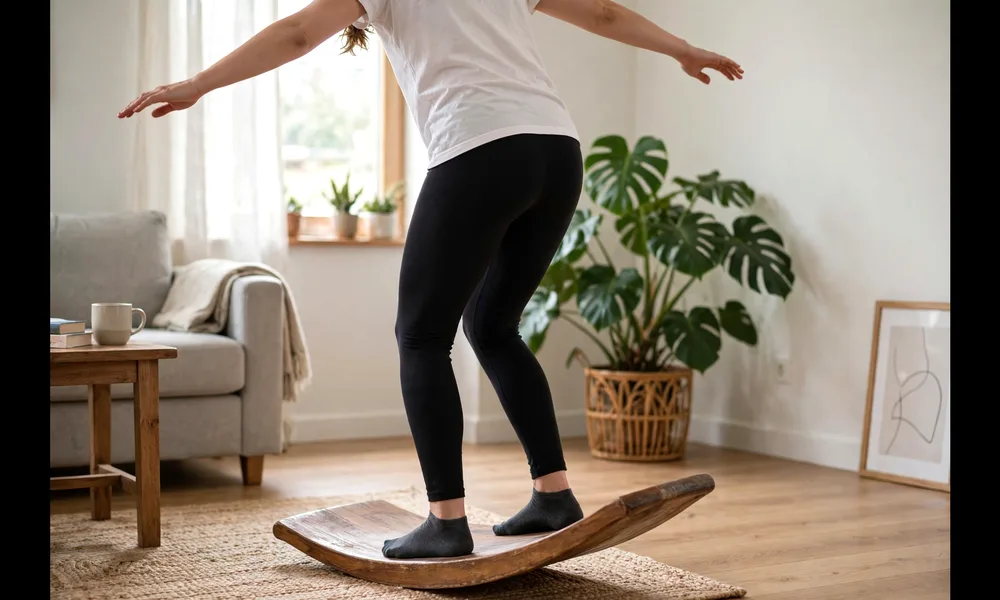
The first session should be boring, and that is a compliment. Clear a space with a soft landing, put the board on a mat, and stand next to a wall. Step on with one foot, then the other, keep your knees soft and your eyes forward, and hold the wall with one hand. Most people fall off in the first minute because they lock their knees or stare at their feet. Soft knees, a level gaze and small movements are the whole technique.
Build a habit, not a workout. Two or three minutes in the morning while the kettle boils, and the same again in the evening, will do more than a single heroic session at the weekend. Keep the board where you can see it, because a board leaning against a wall in a spare room builds no balance at all.
Safety is mostly common sense, but it is worth stating plainly. Never use a balance board on a wet floor, never use one in socks on a polished surface without a mat underneath, and never let children use a roller board unsupervised. If you have a bad ankle, a knee problem or a balance disorder, talk to a physiotherapist before you buy, and start with the gentlest rocker you can find.
Mistakes that waste your money
The most common mistake is buying the hardest board first because it looks like the fastest way to improve. It is the fastest way to fall off and stop trying, because balance improves in small steps. The second mistake is buying on looks: a pretty deck with a smooth varnished top is a slide, not a trainer. The third is ignoring the stops on a roller board, which decides whether a fall is a stumble or an injury. The fourth is buying a deck too narrow for your feet, which forces your weight onto the edges, where cracks start.
Before you buy checklist
- Choose the type for your level: gentle rocker for beginners, wobble for intermediate, roller for advanced.
- Check the deck: seven or more plies on wood, rigid and silent under your weight, edges rounded.
- Check the grip: full-surface grip tape, textured rubber or cork, tested with a damp hand.
- Check the base: smooth curve on a rocker, fixed dome on a wobble, end stops or a track on a roller.
- Check the size and rating: deck wide enough for your stance, rating comfortably above your weight.
- Plan the space: a mat underneath, a wall within reach, and a clear floor with a soft landing.
Frequently asked questions
Are balance boards good for beginners?
Yes, if you buy a gentle rocker board and start near a wall. A rocker moves in one predictable direction and cannot roll away, so you can stand on it for a minute on day one. Avoid roller boards until the rocker feels easy.
How long should I use a balance board each day?
Five to ten minutes a day is plenty. Short, regular sessions build balance faster than occasional long ones. Stand on the board while you wait for the kettle or watch the news, and the minutes add up.
Do balance boards help with ankle strength?
Yes. The board forces the small muscles around the ankle to make constant corrections, which strengthens them and improves their reaction speed. Physiotherapists use rocker and wobble boards after a sprain, but if you have an injury, ask a professional which type to start with.
What is the difference between a wobble board and a rocker board?
A rocker board pivots on a fixed curve and tips in one direction. A wobble board sits on a central dome and tilts in every direction at once, which makes it harder and better for core work. Start with a rocker and move to a wobble once the rocker feels easy.
Are roller balance boards dangerous?
They can be, if the roller has no end stops or track. A free roller can shoot out from under the deck and drop you. Buy a roller board with rubber end caps, a centring track or raised deck ends, learn near a wall, and never let children use one unsupervised.
Can I use a balance board at a standing desk?
Yes, a gentle rocker or low wobble board works well at a standing desk, because it keeps your legs and core moving slightly through the day. Start with short spells, keep a mat underneath, and step off the moment your legs feel tired.
Bottom line
Why the best balance boards in 2026 are worth the wobble is simple: a few minutes a day on the right board builds steadier ankles, a stronger core and better posture, with no gym, no screen and no subscription. Buy a gentle rocker if you are starting out, a wobble board when you want more challenge, and a roller board with proper stops only when you have earned it. Check the deck, the grip and the stops before you pay.


