
A vibration plate is a platform that shakes while you stand, squat or stretch on it, and the best vibration plates of 2026 turn ten quiet minutes into a genuine workout add-on. Rapid vibrations force your muscles to contract and relax dozens of times a second, which wakes up stabiliser muscles that ordinary training often misses. Used well, a vibration plate can support strength, balance, circulation and recovery, especially for people who are short on time or easing back into exercise. Used badly, it is an expensive wobble board that gathers dust. This guide explains how vibration plates work, which type suits which person, and how to use one properly.
Key Takeaways
- Stand on a vibration plate for ten minutes a day to start; short, regular sessions beat occasional long ones.
- Pivotal plates suit balance and gentle use, while linear plates suit strength work and firmer sessions.
- Keep your knees slightly bent and your weight even, never lock your joints while the plate is running.
- Start on the lowest setting and raise the speed only when the lowest one feels easy.
- A vibration plate supports training and recovery; it does not replace walking, strength work or stretching.

What Is a Vibration Plate?
A vibration plate, also called a whole-body vibration platform, is a flat machine with a motor underneath that moves the platform up and down, side to side, or both. You stand on it, usually in trainers, and the movement travels up through your feet, legs and core. Most plates vibrate between twenty and fifty times a second, and the speed, or frequency, is adjustable. Higher frequencies feel more intense, while lower ones feel gentler. The platform is about the size of a large doormat, and many models come with handles, resistance bands or a remote control. Some are heavy, gym-grade machines; others are slim plates that slide under a bed. The basic promise is the same: the vibration makes your muscles work harder during simple positions such as standing, squatting or holding a plank. That is why plates appeal to people short on time, to older users working on balance, and to anyone easing back into exercise who wants a low-impact way in.
How Vibration Plates Work
When a plate vibrates under your feet, your body reacts automatically. Tiny sensors in your muscles and joints detect the movement and trigger small, rapid contractions to keep you steady. This is called the tonic vibration reflex, and it is the same reflex that keeps you upright when a bus brakes suddenly. The result is that muscles you barely notice, the small stabilisers around your ankles, knees and hips, get a thorough workout from simply standing still. None of this is magic, and the effects are modest: studies suggest vibration training can improve balance, flexibility and muscle activation, particularly in older adults and people new to exercise. It will not build large muscles on its own, and it will not burn many calories by itself. Think of it as a useful amplifier for the exercises you already do, not a replacement for them.
Best Vibration Plates by Type in 2026
There is no single best vibration plate for everyone, because the right choice depends on your goals, your joints and the space you have. The five types below cover almost every user.
Best Pivotal Vibration Plate
A pivotal plate rocks from side to side like a seesaw, lifting one foot slightly while the other drops. This motion feels natural and is kind to the knees, which makes it the best starting point for most people. The trade-off is intensity: a pivotal plate gives a softer workout than a linear one, so experienced trainers may find it too gentle.
Best Linear Vibration Plate
A linear plate moves straight up and down, so both feet rise and fall together. The motion is firmer and more intense, and it loads the legs and core more directly. It is the best choice for people who want strength work, such as squats, lunges and calf raises on the plate. The downside is comfort: the vertical jolt can feel harsh on sensitive knees or a stiff lower back, so it suits confident users more than beginners.
Best Tri-Planar Vibration Plate
A tri-planar plate combines vertical and side-to-side movement, shaking in more than one direction at once. It gives the most complete stimulation and is the type found in many gyms and physiotherapy rooms. It suits people who want one machine that covers balance, strength and recovery.
Best Compact Vibration Plate
A compact plate is slim, light and made to be stored away, often under a bed or behind a sofa. It suits small flats and people who are not sure they will use a plate every day. The limitation is power: a small motor cannot match a full-size machine for intensity, and heavier users should check the weight limit carefully before buying.
Best Vibration Plate with Handles
A plate with handles, sometimes sold as a vibration trainer with a support column, suits anyone who worries about balance. The handles give you something to hold during squats and stretches, and many models add resistance bands for upper-body work. It is the safest option for older users and for anyone recovering from a fall or an injury.
How to Use a Vibration Plate Properly
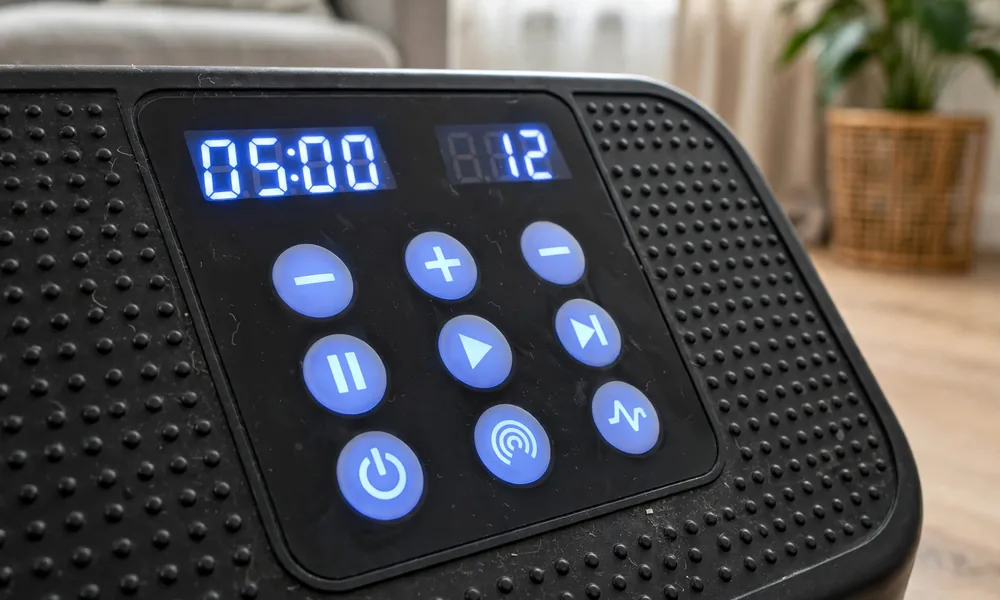
Good technique matters more than an expensive plate. Start with the machine off, step on in trainers, and stand with your feet hip-width apart and your knees slightly bent. Switch it on at the lowest speed and let your body adjust for a minute before you try anything else. Never lock your knees, elbows or spine while the plate is running, because locked joints pass the vibration straight into the bones instead of letting the muscles absorb it. A first session should last five to ten minutes, and you can build up to fifteen as you get used to it. Wipe the platform down after each session, since sweat makes the surface slippery and shortens the life of the grip texture. Three to five sessions a week is plenty. A thin mat under the machine protects hard floors and damps the noise, and our guide to the best exercise mats of 2026 covers the mats that grip best on smooth floors.
Vibration Plate Exercises Worth Doing
Standing still is a fine start, but a plate earns its keep when you move on it. A gentle squat is the single best exercise: feet on the plate, knees bent, back straight, hold for thirty seconds, then stand and repeat. Calf raises are simple too, rising slowly onto your toes and lowering again, which works the ankles and lower legs. A wall sit with your back against the wall and your feet on the plate adds a balance challenge. Keep every movement slow and controlled, and stop the moment your form slips. A balance board trains similar stabiliser muscles on solid ground, and our guide to the best balance boards of 2026 covers the boards that suit beginners and confident users alike.
Vibration Plates Compared
| Plate Type | Best For | Typical Price | Intensity | Footprint |
|---|---|---|---|---|
| Pivotal | Balance, gentle use, older users | £150–£350 | Gentle | Medium |
| Linear | Strength work, squats, firm sessions | £200–£500 | Firm | Medium |
| Tri-planar | All-round training and recovery | £500–£1,500 | Strong | Large |
| Compact | Small homes, occasional use | £100–£250 | Gentle | Small |
| With handles | Balance support, rehabilitation | £250–£700 | Moderate | Large |
| With bands | Upper-body work, full sessions | £200–£450 | Moderate | Medium |
Common Mistakes to Avoid
The most common mistake is starting too fast. A new user who jumps straight to a high frequency will feel shaky, tense up, and conclude the machine is unpleasant, when the lowest setting would have felt fine. The second mistake is locking the knees, which sends vibration into the joints instead of the muscles. The third is using the plate for too long: thirty minutes of shaking is not twice as good as fifteen, and tired muscles lose form quickly.
How to Choose the Best Vibration Plate for You
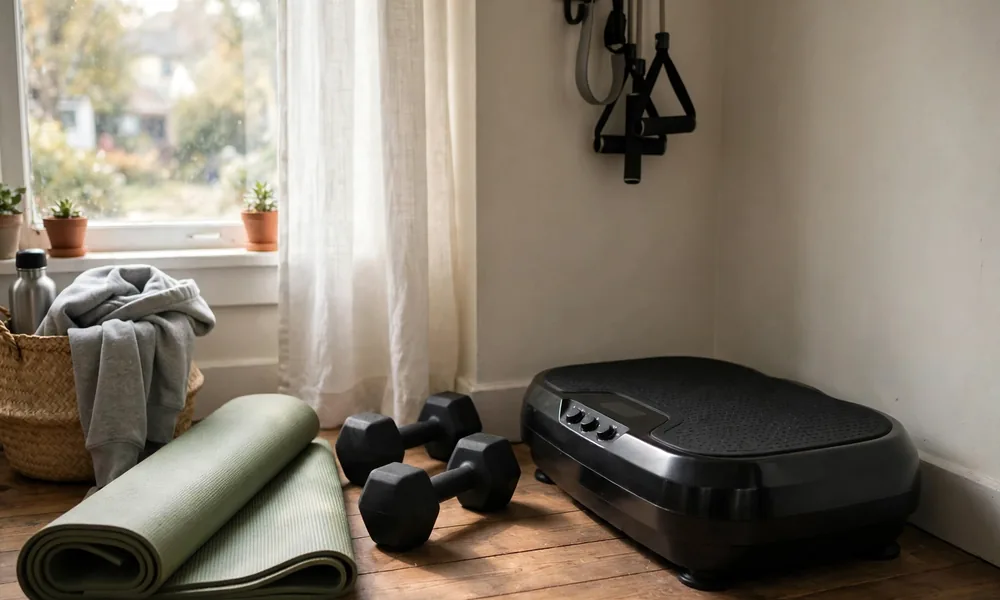
Start with your goal. If you want better balance and gentler joints, choose a pivotal plate. If you want harder strength work, choose a linear or tri-planar model. Then think about space: measure the spot where the plate will live, and remember you need room to step on and off safely. Handles are worth paying for if your balance is uncertain, and a remote control is genuinely useful, since bending down to change settings mid-squat is awkward. Set a budget before you shop: a good home plate costs £150 to £500, and more is rarely better unless you want gym-grade build. If you are building a small training space around the plate, our guide to the best home gyms of 2026 shows how to set up a compact corner for training and recovery together.
Vibration Plate Buying Checklist
- Choose a pivotal plate for balance and gentle use, or a linear plate for firmer strength work.
- Check the weight limit and the motor power before you buy, not after.
- Make sure the platform is wide enough for your stance with room to spare.
- Pick handles if your balance is uncertain, and a remote if you will change settings mid-session.
- Measure the storage space and check the noise level if you live in a flat.
- Set a budget of £150 to £500 and read the warranty before you pay.
Frequently Asked Questions
How often should I use a vibration plate?
Three to five times a week, for ten to fifteen minutes at a time, is enough for most people. Daily use is fine if you keep sessions short and the intensity moderate. Consistency matters more than long sessions.
Can vibration plates help with weight loss?
Only a little on their own. A plate burns few calories, so it works best as part of a routine that includes walking, strength work and sensible eating. It can help by making muscles work harder during the exercises you already do.
Are vibration plates safe for older people?
Yes, for most older users, provided they choose a gentle pivotal plate, use the handles, and start on the lowest setting. Anyone with a joint replacement, a pacemaker, or a history of blood clots should ask a doctor first.
Should I wear shoes on a vibration plate?
Trainers are the best choice for most sessions, because they grip the platform and cushion the feet. Bare feet work for gentle stretching, but shoes give better grip and comfort for squats and standing work.
How long does a vibration plate last?
A well-made home plate should last three to five years of regular use. Keep it clean, wipe the platform after sessions, and check the bolts and the power cable every few months.
Can I use a vibration plate every day?
Yes, if sessions stay short and gentle. Ten minutes a day is fine for most people.
The Bottom Line
The best vibration plates of 2026 are simple machines that reward short, regular use. For most people, a pivotal plate on a low setting, used for ten minutes three to five times a week, is the right buy. Trainers who want more intensity should look at a linear or tri-planar model, and anyone unsure on their feet should pay for handles. Keep your knees soft, start slow, and treat the plate as a partner to walking and strength work, not a replacement for them. Do that, and ten minutes of shaking a day can genuinely help your balance, your legs and your recovery. Check the return policy too, so you can send the plate back if the first week tells you it is not for you.


