
Best Stair Climbers for a Stronger Climb at Home in 2026
The best stair climbers in 2026 turn the most ordinary movement you already know — climbing stairs — into one of the hardest, most honest workouts a home gym can offer. A good stair climber works your glutes, calves and thighs with every step, raises your heart rate fast, and does it all without the pounding that makes running miserable for sore knees. This guide compares the best stair climbers of 2026 on step height, resistance, stride feel, noise, footprint and price.
Key takeaways
- Step height matters more than speed: a real climbing step of 20 to 30 centimetres works your glutes far harder than a shallow mini-stepper shuffle.
- Magnetic or hydraulic resistance stays quieter and smoother than friction systems, which matters in a flat with neighbours below.
- A heavier machine with a wide base feels steadier under a hard climb; light machines wobble exactly when you push hardest.
- Check the step width and the weight limit before you buy, not after: narrow steps punish wide feet and tall users most.
- Start with short, slow sessions and build up over weeks; stair climbing is far more intense than it looks from the floor.
What a stair climber actually is
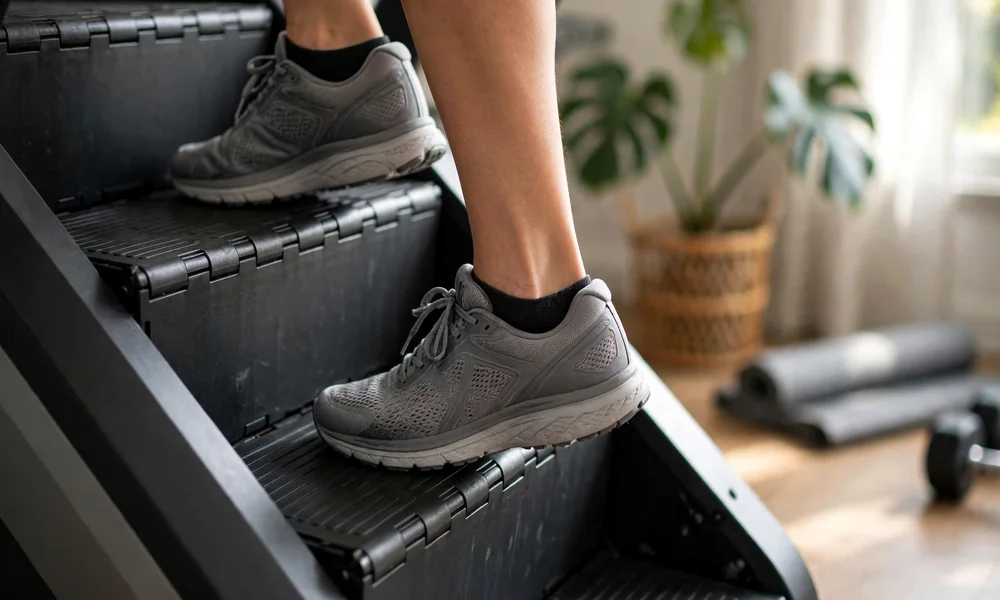
A stair climber is a machine that recreates climbing stairs, over and over, in one spot. Most home models have two pedals that move up and down in turn, so each foot rises and falls like a step, while your hands rest lightly on the rails for balance. Larger machines, sometimes called stairmills, have a short flight of revolving steps that roll down as you climb them, closer to a real staircase.
That simple demand is why the workout feels so hard so quickly. Walking on flat ground barely lifts your body at all, and even running mostly moves you forward. Climbing lifts your full weight against gravity with every step, so the big muscles of the legs and seat do the work. Ten minutes of steady climbing can leave a fit person breathing hard, which is why short sessions work so well.
It is worth knowing what a stair climber is not. It is not a treadmill with an incline, although the two machines get compared constantly. A treadmill moves a belt under you while you walk or run; a stair climber makes you lift and lower your own feet on fixed pedals. Treadmills are better if you want to run or walk long distances indoors. A stair climber is better if you want a short, steep, leg-burning session in a small space.
The main types of stair climber, compared
Home stair climbers fall into four broad types, and the right one depends on your budget, your floor space and how seriously you plan to train. Mini steppers are the smallest and cheapest: two small pedals, no rails, often with elastic cords for your arms. They store easily, but the step is shallow, so the workout is closer to marching on the spot than climbing. Full-size pedal climbers are the middle ground, with tall rails, a console and adjustable resistance. Stairmills are the big machines from gyms, with revolving steps and a heavy frame; they give the most realistic climb but need a permanent corner and a serious budget. Finally, curved climbing trainers blend a climber with a stepping motion on a curved track, aimed at athletes who want a harder, more natural stride.
| Stair climber type | Best for | Step feel | Footprint | Approx. price |
|---|---|---|---|---|
| Mini stepper | Small flats, light use | Shallow, short | Tiny, stores anywhere | $60–$150 |
| Full-size pedal climber | Daily home training | Deep, stair-like | About 1 square metre | $250–$700 |
| Stairmill | Serious climbers, gym feel | Real revolving steps | Large, permanent spot | $1,500–$4,000 |
| Curved climbing trainer | Athletes, hard intervals | Long, natural stride | Large, permanent spot | $1,000–$3,000 |
| Stepper with rails | Beginners, balance help | Medium depth | Compact, folds sometimes | $150–$400 |
For most homes, the full-size pedal climber is the sweet spot. It feels like real climbing and fits in a corner without taking over the room. Mini steppers suit gentle movement, but rarely satisfy anyone who wants a real workout; a stairmill is an expensive way to find out you do not love climbing.
What makes a good stair climber
Step height and depth
Step height is the single most important number on a stair climber, and it is the one manufacturers hide most often. A real stair riser is about 17 to 19 centimetres high, so a climber that lifts your foot 20 centimetres or more feels like climbing. Many cheap steppers lift your foot barely 10 centimetres, which feels like shuffling in place and works your glutes far less. A pedal at least 30 centimetres long gives your whole foot room, while a short pedal forces your heel to hang off the back.
Resistance that stays smooth
Resistance is what makes the climb hard, and how it is made decides whether the machine feels good after six months. Magnetic resistance is the quietest and smoothest and does not wear out; hydraulic cylinders can feel uneven as they warm up, and friction pads are the noisiest and wear fastest. Test the full range: the easiest setting should feel easy, and the hardest should slow you to a crawl within a minute.
Stability and weight limit
A stair climber wobbles at the worst possible moment: when you are tired, pushing hard, and leaning on the rails. A machine of 30 kilograms or more with a wide base stays planted; a light one creeps and rocks. Check the maximum user weight and leave a margin of at least 15 kilograms — a limit of 100 kilograms means the machine was built for people well under that, not for someone exactly at it.
Noise and neighbours
Stair climbers are quieter than treadmills because there is no motor and no belt, but they are not silent. Pedal machines make a soft hydraulic hiss and a faint click at the top of each step; stairmills hum as the steps revolve. In a flat, that is usually fine, but a machine that squeaks or clunks will be heard through a wooden floor. Put a rubber mat underneath — it damps sound and stops the machine creeping.
Console and tracking
A good console shows time, steps, calories and heart rate without making you hunt through menus mid-climb. A tablet holder is useful, but a screen that demands a paid subscription before it shows your step count is a reason to buy a different machine.
Stair climbers and your knees
Stair climbing has a reputation for being hard on knees, and it deserves a fair hearing. Climbing does load the knee more than walking on flat ground, because each step bends the knee under your body weight. But it loads the knee without impact: your foot never slams down the way it does with every running stride. For many people with sore knees, that trade is a good one. Ellipticals are still the kindest choice for the worst knees, because they remove the step-up load entirely, but a stair climber is far gentler than running on a hard road.
Technique matters more than the machine. Keep your whole foot on the pedal instead of climbing on your toes, which overloads the calf and the front of the knee. Stand tall rather than leaning heavily on the rails — the rails are for balance, not for holding your weight up, and leaning on them robs your legs of the workout. Take the full step rather than short shuffles, and stop if pain lasts into the next day.
How to start without burning out
Almost everyone starts too hard on a stair climber. The first session feels easy for two minutes and brutal by minute five, and the soreness the next day can put people off for a week. Start with five minutes at the easiest resistance, three times in the first week, and add two minutes per session in week two.
Mixing up the sessions keeps the habit alive. Mix steady climbs with short intervals — one minute hard, one minute easy — to build fitness faster and break the boredom. Exercise bikes make a good partner on the days your legs are tired, because cycling works the legs seated and gives the climbing muscles a rest while you still get your cardio in.
Before you buy checklist
- Measure your floor space and ceiling height: you stand tall on a climber, so low ceilings and tall users do not mix.
- Check the published step height — 20 centimetres or more — and the pedal length for your foot size.
- Confirm the weight limit leaves at least 15 kilograms of margin above your weight.
- Test the resistance at both ends of its range, and listen for squeaks, clicks or uneven effort.
- Make sure the machine fits through your door and up your stairs in its box before delivery day.
- Budget for a rubber mat, and check the warranty covers the resistance system for at least a year.
Care, storage and common mistakes
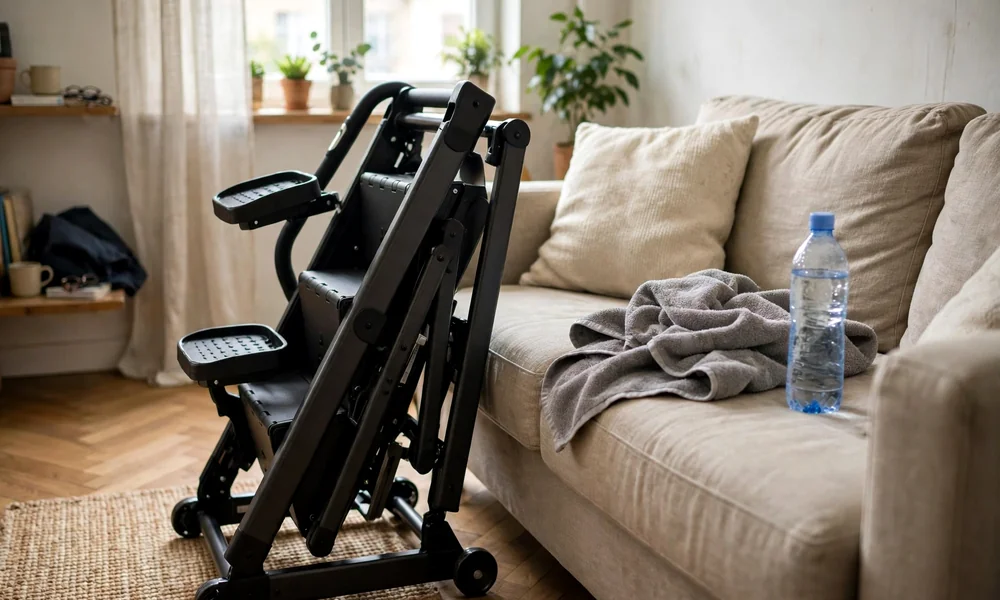
A stair climber needs very little care, and that is part of its appeal. Wipe the pedals and rails after sweaty sessions, check the bolts monthly, and keep the step mechanism free of dust. Magnetic machines need almost nothing; if the pedals squeak, a drop of silicone lubricant on the pivots usually fixes it.
The most common mistake is buying on price alone. A cheap stepper that wobbles, squeaks and gives you a shallow shuffle will be abandoned within a month, and the money is gone either way. The second mistake is hiding the machine in a spare room, where it gets used far less. The third is skipping a two-minute easy warm-up.
Frequently asked questions
Are stair climbers good for weight loss?
Yes: a steady climb burns roughly 400 to 600 calories an hour for most adults, more than walking and close to running, without the impact. Weight loss still depends on what you eat.
How long should a stair climber session last?
Beginners should aim for five to ten minutes, building to twenty or thirty minutes over a month. Twenty minutes of steady climbing, three to five times a week, is a strong routine for most people. Longer sessions are fine once you are used to it, but form matters more than duration.
Do stair climbers build muscle?
They build endurance and tone in the glutes, thighs and calves, especially at high resistance, but they will not replace strength training. Think of climbing as the best cardio for your legs, not a substitute for squats.
Are stair climbers bad for bad knees?
They load the knees more than walking but without the impact of running, so many people with mild knee trouble do well on them. People with serious knee problems should ask a doctor first.
How much space does a stair climber need?
A full-size pedal climber needs about one square metre of floor plus room to step on and off safely, and enough ceiling height to stand tall on the pedals — usually at least 30 centimetres above your head. A stairmill needs a permanent spot of about two square metres.
Is a mini stepper worth it?
For gentle movement in a small flat, yes. For a real workout, no: the shallow step works your glutes far less, and most people outgrow one within weeks.
Bottom line
The best stair climbers for home in 2026 are the full-size pedal machines with a real 20-centimetre step, smooth magnetic resistance and a heavy, steady frame. They cost more than a mini stepper and take up more room, but they are the ones that still get used in six months, because the workout feels like climbing rather than shuffling. Start short, stand tall, keep your whole foot on the pedal, and let the stairs do the work.


