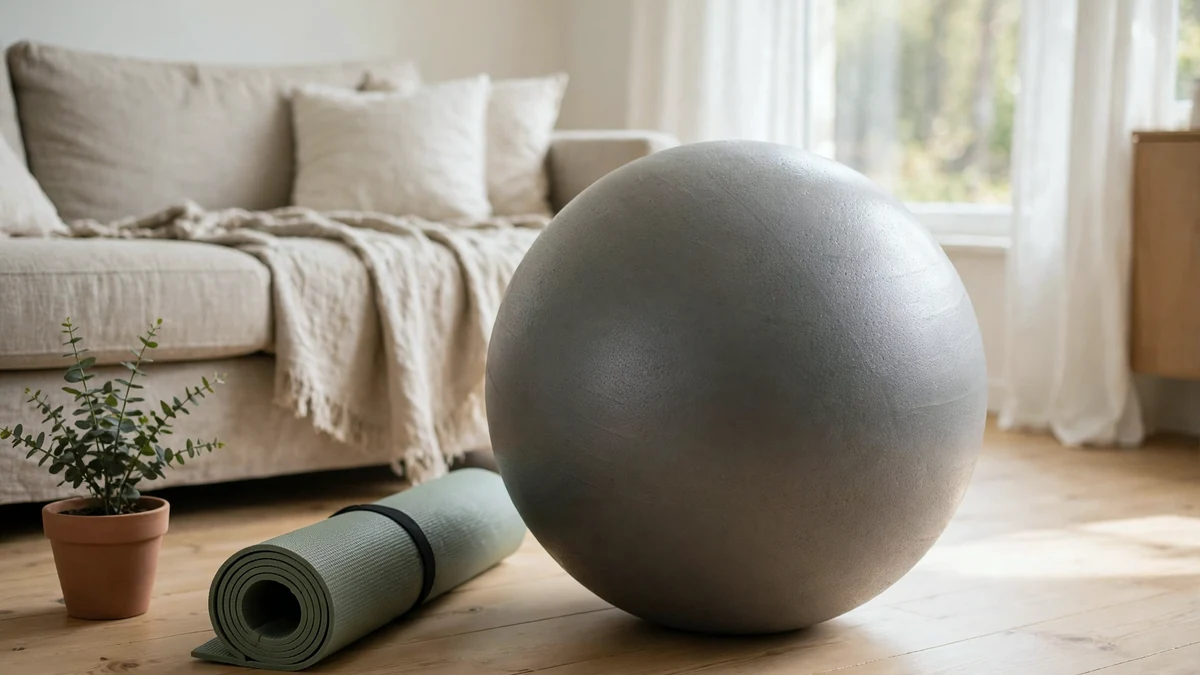
An exercise ball looks like the simplest piece of fitness equipment ever made: a big round ball, a little air, and nothing else. That simplicity is exactly why it works so well, and also why it is so easy to buy badly. A good exercise ball holds its shape under your weight, stays put when you move on it, and gives you a surface that is firm enough to trust and soft enough to be kind to your back. A bad one slowly sags, rolls away at the wrong moment, or feels wobbly in a way that makes every move harder than it should be. The best exercise balls of 2026 are the balls that stay round, stay steady, and keep working day after day without losing air.
What makes an exercise ball worth owning is how many jobs it can do. It is a seat, a bench, a balance trainer and a stretching aid, all in one piece of equipment that costs less than a month of gym fees and stores in the corner of a room. You can sit on it at a desk, roll on it to stretch a stiff back, or use it for crunches and planks. For people who work out at home, a good ball is often the first thing worth buying and the last thing worth throwing away.

What Makes an Exercise Ball Good
The first thing to judge is the material. A good exercise ball is made from thick, burst-resistant PVC or a similar rubber blend that can take your full weight without deforming. The surface should feel slightly grippy rather than slick, so your hands and feet do not slide when you sweat. Cheap balls feel thin and shiny, and they often have a faint chemical smell that lingers for weeks. A quality ball feels matte and substantial in the hand, with a smooth, even surface and a plug that sits flush instead of sticking out. That plug matters more than it looks: a proud plug digs into your back during floor work, while a flush one disappears.
The second thing is how the ball holds air. A good ball inflates to a firm, round shape and stays there for weeks, losing only a tiny amount of pressure over time. If a ball needs topping up every other day, it has a slow leak, and that leak will only get worse. When you sit on a properly inflated ball, your hips should sit just above your knees, and the ball should give slightly under your weight without sinking. That small amount of give is what makes the ball comfortable and what keeps your muscles working to stay balanced.
The Main Types of Exercise Ball
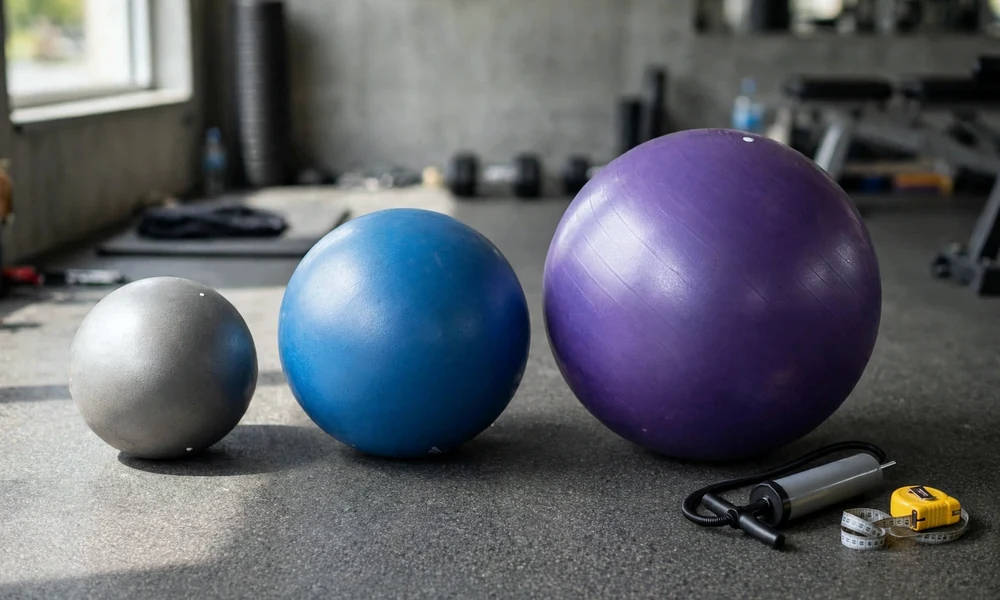
The classic stability ball is the one most people picture: a smooth, round ball in grey, blue or purple, used for core work, stretching and sitting. It is the most versatile type, and for most people it is the only one they will ever need. Stability balls come in several sizes, usually from 45 centimetres for shorter users up to 85 centimetres for taller ones, and they work for everything from gentle physio exercises to full home workouts. If you buy one ball and nothing else, buy a classic stability ball in the right size.
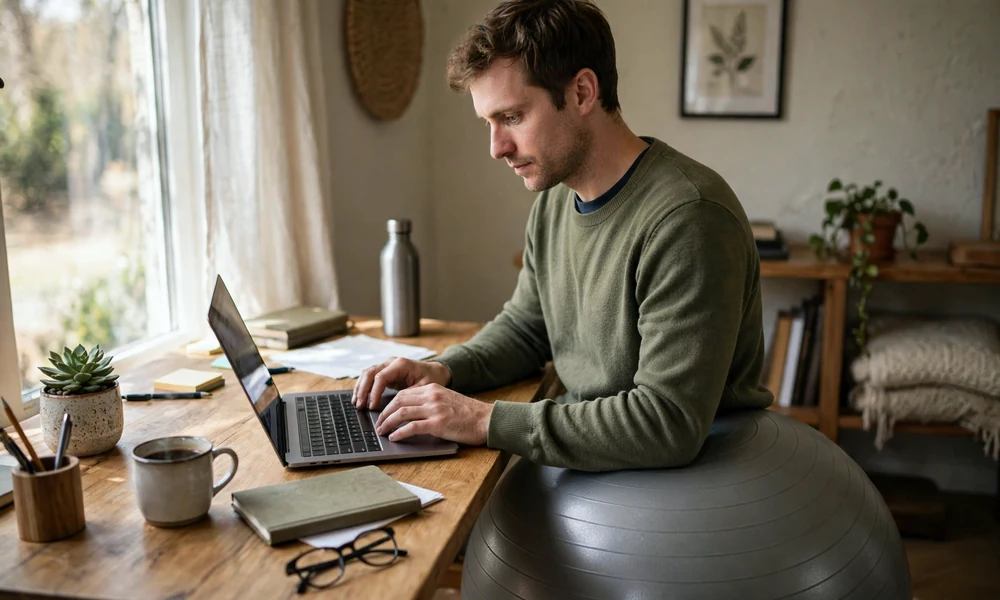
A birthing ball is simply a well-made stability ball in the right size, used for gentle movement and comfortable sitting in the later months of pregnancy. A desk ball is the same idea at a desk: it keeps the body moving slightly through the day instead of locking into one stiff posture. Both work because the underlying product is sound. If a ball is good enough for a physio clinic, it is good enough for a desk chair.
How to Choose Your Size
Size is the one choice that matters most, and it is also the one people get wrong most often. The rule is simple: when you sit on the ball, your hips should be level with or just above your knees, and your feet should rest flat on the floor. For most people under about 155 centimetres tall, a 45-centimetre ball is right. From about 155 to 170 centimetres, a 55-centimetre ball fits. From about 170 to 185 centimetres, a 65-centimetre ball is the standard pick. Above 185 centimetres, a 75-centimetre ball is usually best. If you fall between two sizes, choose the larger one for sitting and stretching, and the smaller one for intense core work.
Weight rating matters too, and it is worth checking before you buy. Most good stability balls are rated for at least 300 kilograms of static weight, which covers the force of moving, bouncing and dropping onto the ball, not just sitting still. Burst-resistant construction is the other rating to look for: a burst-resistant ball deflates slowly if it is punctured, instead of popping. That slow deflation is a genuine safety feature, especially for anyone using the ball for balance work or for sitting at a desk all day.
The Best Exercise Balls of 2026
The best exercise ball for most people this year is a mid-priced burst-resistant stability ball in the right size, with a matte finish, a flush plug and a proper pump in the box. It inflates firmly, holds its air for weeks, and feels steady underfoot during planks and steady under the hips during seated work. It is firm enough to trust for core exercises and soft enough to sit on comfortably for an hour. It costs little, lasts well, and does everything a home workout asks of it. For a first ball, or the only ball in a small home gym, this is the pick that makes the most sense for the most people.
The best premium exercise ball of 2026 is a thicker, heavier-duty model built for daily use in a busy household or a small studio. It uses a denser material that resists scuffs and punctures, it holds its shape even after months of hard use, and it comes with a better pump and clearer sizing guidance. It feels noticeably more solid than a budget ball, with no slow sinking during a long plank and no soft spots after a month of sitting. It is the ball for the person who uses one every day and wants to buy once and forget about it.
The best budget exercise ball is a simple, well-made stability ball that skips the extras and gets the basics right. It may not come with the best pump, and it may need a top-up of air slightly more often, but the material is thick enough, the plug sits flush, and the size range is honest. For someone trying an exercise ball for the first time, or buying one for occasional stretching, it is all the ball they need.
What Else You Need
A ball on its own is nearly everything you need, but two small extras make it much better. The first is a pump. A hand pump works, but it takes a while, and a small electric pump or a foot pump gets the ball to full firmness in a few minutes. The second is a tape measure, used to check the ball’s diameter once it is inflated. A ball that looks full can still be a few centimetres short of its stated size, and that shortfall changes how it feels. A quick measure when the ball is new tells you whether it is holding its size properly.
Common Mistakes to Avoid
The biggest mistake is buying the wrong size. A ball that is too small forces the knees up and the back into a hunch, while a ball that is too large makes it hard to reach the floor and leaves the feet dangling. Both feel wrong within seconds of sitting down, and both make every exercise harder than it needs to be. Measure your height, check the sizing chart, and sit on the ball before the first workout to confirm your hips sit just above your knees. If the size is wrong, swap it: no amount of good technique fixes a ball that does not fit.
The second mistake is under-inflating the ball. A soft ball feels comfortable for about a minute, then turns into a wobbly sack that gives way under every move. It also wears out faster, because the material creases and stretches unevenly. Inflate the ball until it is firm and round, with only a small amount of give when you press it with your thumb. If you can push your fist deep into the ball, it needs more air. A properly inflated ball feels almost hard, and that firmness is what makes it stable and safe.
The third mistake is using the ball on a surface that damages it. Rough concrete, gravel and sharp stones all shorten a ball’s life, and a puncture outdoors usually means the ball is finished. Keep the ball indoors on a clean floor or a mat, and check the surface before floor work. The fourth mistake is treating the ball as a toy for jumping or standing on: it is not designed for that, and a burst or a fall can cause a real injury. Use the ball for what it is made for — sitting, stretching, core work and balance — and it will last for years.
How Exercise Balls Fit a Home Workout
An exercise ball slots into a home workout the way a good bench slots into a gym: it makes everything else easier. A set of crunches on the ball works the core harder than the same set on the floor, because the unstable surface forces the small stabilising muscles to join in. A plank with the forearms on the ball is harder than a floor plank, and a wall squat with the ball behind the back is kinder to the knees than a free squat. The ball turns ordinary bodyweight moves into something more challenging without adding any weight at all, which is why it is a favourite in physio clinics as well as home gyms.
The ball also pairs naturally with the rest of a home kit. A short session might start with a few minutes of rolling and stretching on the ball, move into core work, and finish with a set of weighted moves using a medicine ball for resistance. Floor work is more comfortable on a yoga mat underneath, which also stops the ball rolling away between sets. Readers building out a whole home setup will find the best home gyms guide useful for choosing the bigger pieces, while the ball stays the cheapest and most flexible item in the room. It is the piece of equipment that gets used on the days when nothing else does.
The Verdict
The best exercise ball of 2026 is the one that fits your height, holds its air, and feels steady under you. For most people that means a mid-priced burst-resistant stability ball in the right size, with a matte finish and a flush plug. For daily users, a thicker premium model is worth the extra money. Whatever the choice, measure your height, inflate the ball properly, keep it indoors, and use it for what it is made for. A ball chosen this way will not just help on the first day; it will still be round, firm and ready years from now, quietly making every home workout a little bit better.


