
The Worst Food Trucks of 2026: Mobile Kitchens That Cost More Than They Cook
The worst food trucks of 2026 are not the oldest vans on the street or the plainest ones at the festival. They are the mobile kitchens that look charming on the pavement and then wear their owners down: a kitchen too cramped to cook a full service, a generator that dies in the middle of lunch, insulation so thin that the fridge cannot hold temperature, or a repair bill that costs more than a season of sales. This guide names the seven worst food trucks of 2026, based on published recall records, owner surveys and repeated owner complaints, so you can spot the pattern before you sign. Vans suffer the same traps at a smaller scale, and our guide to the vans that let buyers down in 2026 shows how the same reliability problems play out on the chassis most food trucks are built on.
Key takeaways
- The Ford Transit T-350HD food truck build is the one to avoid first: a cramped kitchen, weak electrics and a conversion bill that keeps growing after the sale.
- Kitchen space and power matter more than engine power: a food truck that cannot cook a full service or keep its fridge cold is useless for real trading.
- Generators and electrics are the new weak points in food trucks, just as they are in cars: faults strand trucks that are mechanically sound.
- Dealer and converter support matters as much as the truck: a thin network means long waits for parts and warranty work that eats into trading days.
- Always check the recall record, the conversion paperwork and a pre-purchase inspection before you buy, and test the exact truck cooking a full service, not just an empty drive.
How the worst food trucks of 2026 were chosen
Every truck below was scored on five measures. Reliability comes first: how often owners report faults, and how serious those faults are. Repair cost is second, because a dealer-only repair turns a nuisance into a disaster. Support is third, judged on the dealer and converter network near the buyer and how long parts take to arrive. Capability is fourth: whether the truck can actually do the work its size and price promise, from cooking a full lunch service to keeping food cold on a hot day without overheating. Value is fifth: the real five-year cost, including downtime and lost trading days, not the forecourt price.
Two notes before the list. First, no truck here is slow or weak on paper, and most of them are genuinely capable when they are running. They earn their place because the ownership experience lets them down, not because the engine lacks power. Second, this guide is strictly about food trucks: mobile kitchens on a truck chassis, with a serving window, cooking equipment, refrigeration and a generator, built to cook and sell food on the street. That is a different job from every neighbouring machine. Tractors work fields and pull farm implements, dump trucks haul loose material in a tipping bed, forklifts lift pallets on forks inside a warehouse, excavators dig holes with a boom, stick and bucket on tracks, and tow trucks recover broken vehicles with winches and flatbeds. A food truck cooks food; it hauls, lifts, digs and recovers nothing. It is also different from an RV camper, which is built for living in, not for cooking for paying customers all day. Our guide to the RV campers to avoid in 2026 covers mobile living, and the faults there follow the same pattern of electrics and support failures. Pickups suffer the same traps at a smaller scale, and our guide to the pickup trucks to avoid in 2026 shows how the same reliability problems play out on lighter trucks.

Comparison table: the worst food trucks of 2026
| Rank | Food truck | Main problem | Buy instead |
|---|---|---|---|
| 1 | Ford Transit T-350HD | Cramped kitchen, weak electrics | Ford Transit T-350 |
| 2 | Chevrolet Express 4500 step van | Generator faults, dealer-only fixes | Chevrolet Express 3500 |
| 3 | Freightliner MT45 step van | Cramped serving window, thirst | Freightliner MT55 step van |
| 4 | Ford E-450 Super Duty cutaway | Premium price, costly parts | Ford E-350 Super Duty |
| 5 | Mercedes-Benz Sprinter 3500XD | Heavy, pricey, poor visibility | Mercedes-Benz Sprinter 2500 |
| 6 | Ram ProMaster 3500 | Transmission complaints, parts cost | Ram ProMaster 2500 |
| 7 | Isuzu NPR-HD | Thin dealer network, weak resale | Isuzu NRR |
The worst food trucks of 2026
1. Ford Transit T-350HD: the food truck to avoid first
The Ford Transit T-350HD food truck build is the best-known starting point for a new food business in America, and that is exactly why its faults sting. Buy a Ford Transit T-350 instead: a simpler conversion, a kitchen that fits the work, and an upfit that costs less to finish.
2. Chevrolet Express 4500 step van: clever, and dealer-only when it breaks
The Chevrolet Express 4500 step van looks like a smart buy, with a strong V8 option and a tall box that seems made for a kitchen. The Chevrolet Express 3500 does the same job with a far bigger dealer network and simpler electrics, and it is the safer buy for a small food business.
3. Freightliner MT45 step van: a good truck with a window too small for the job
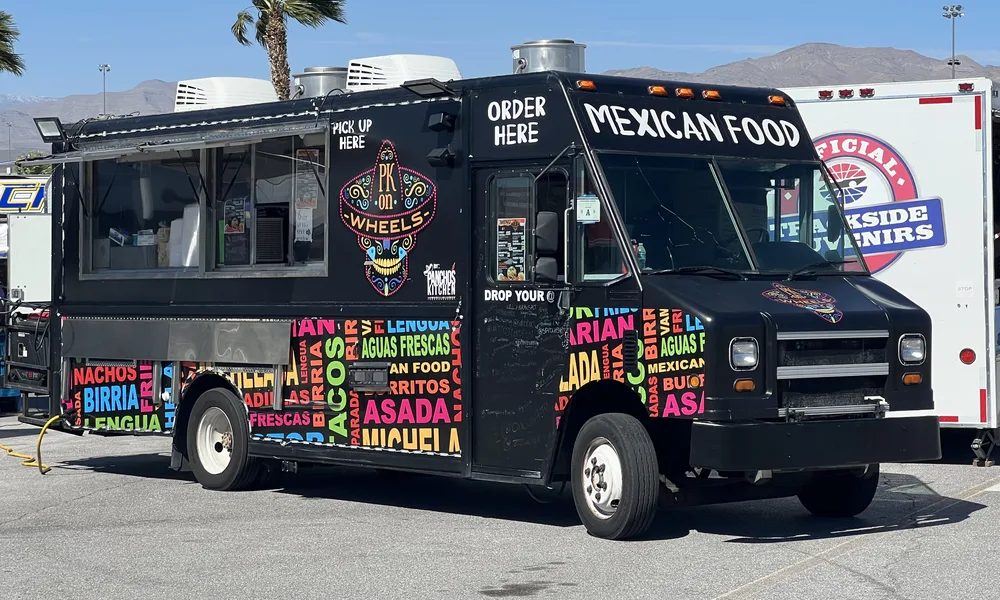
The Freightliner MT45 step van is a well-built food truck chassis, and its place on this list needs explaining, because the problem is specific: the serving window. The Freightliner MT55 step van costs more but gives the crew room to work, with a wider serving window and a better layout, and it sips fuel by comparison. If you serve long queues, the window is where the money goes.
4. Ford E-450 Super Duty cutaway: brilliant, and brutally expensive to keep
The Ford E-450 Super Duty cutaway is a superb food truck base to drive, with a strong V8, a solid chassis and a cab that feels built for a long working life. A smaller operator who stretches to buy one and then discovers the running costs will feel the pain every month. The Ford E-350 Super Duty is no bargain either, but it holds its value better and its parts are easier to find through a wider dealer network.
5. Mercedes-Benz Sprinter 3500XD: heavy, pricey and hard to see out of
The Mercedes-Benz Sprinter 3500XD is a heavy food truck base, and its weight is the problem. The high cab and long bonnet make it hard to place the truck precisely on a narrow street or a crowded festival site, which is where a food truck spends most of its working life. The Mercedes-Benz Sprinter 2500 does the same job with a lighter chassis, a lower cab and a far better view of the road, and it costs less to run every single week.
6. Ram ProMaster 3500: strong on paper, costly in the workshop
The Ram ProMaster 3500 promises a lot for the money: a solid front-wheel-drive chassis, a tall box and a price below the premium brands. The Ram ProMaster 2500 does the same job with a smoother transmission and a far bigger parts network, and it is the safer buy for a business that cannot afford downtime.
7. Isuzu NPR-HD: capable, but support is the gamble
The Isuzu NPR-HD is a capable food truck chassis for the money, with a simple diesel engine and a box that genuinely fits a full kitchen. Cold starting is another repeated complaint: the engine is hard to start on frosty mornings without a block heater, which matters when the first service of the day is breakfast. The Isuzu NRR does the same job with a far wider dealer network and stronger resale, and it is the safer buy for most food businesses.
What to avoid when buying a food truck
The most common food truck regret is not a bad truck but a wrong match: a kitchen too small for the menu, a generator too weak for the equipment, or a dealer too far away to fix the truck quickly. Avoid the trap by checking three things before you pay: the real kitchen space and power supply, not the headline engine power; the dealer and converter network near you and how long parts take to arrive; and the total price with the kitchen, generator and refrigeration fitted, not the bare chassis price. The same checks work for other work vehicles too, and the traps are the same everywhere: a truck that cannot do its one job, a repair only the dealer can make, and a bill that arrives after the sale.
Checklist: buying a food truck in 2026
- Cook a full service in the exact truck, with the generator running and the fridge loaded, before you sign.
- Check the serving window with a real queue, and the kitchen with two people working at the same time.
- Ask for the recall record, the conversion paperwork and the generator service history.
- Map the nearest dealer and converter, and ask how long a generator or fridge part takes to arrive.
- Add the kitchen, generator, refrigeration and serving window to the chassis price and compare the real total.
- Drive the exact truck loaded with water, gas and stock, and check the cab, the mirrors and the ride.
Frequently asked questions
Which food truck should I avoid first in 2026?
The Ford Transit T-350HD food truck build, because of its cramped kitchen, weak electrics and a conversion bill that keeps growing after the sale. A Ford Transit T-350 is the safer buy for the same street-food work.
What matters more than engine power in a food truck?
Kitchen space and power. A food truck that cannot cook a full service or keep its fridge cold on a hot day is useless for real trading, however strong its engine looks on paper.
Are food trucks the same as RV campers?
No. A food truck is a mobile kitchen built to cook and sell food to paying customers all day. An RV camper is built for living in, with beds and a bathroom, and it is not set up for a full cooking service.
Why do food trucks cost so much to repair?
Because many faults are electronic and dealer-only: sensors, controllers and software locks mean an owner cannot reset fault codes or replace some parts without dealer tools, and dealer labour rates turn a small job into a large bill.
How do I test a food truck before I buy it?
Test the exact truck cooking a full service with the generator running, not just an empty drive. Check the recall record, the conversion paperwork and the dealer and converter network near you before you sign.
Is a cheaper food truck chassis a false economy?
Often, yes. A cheap chassis with a thin dealer network means long waits for parts, weak resale and downtime that costs more than the saving on the purchase price. Buy the truck with the support behind it.
Bottom line
The worst food trucks of 2026 are the ones that let a food business down where it hurts: a kitchen too cramped to cook, a generator that dies at lunch, a fridge that cannot hold temperature, or a dealer-only repair that strands the truck while customers walk away. A food truck is a mobile kitchen on a truck chassis, not a farm tractor, a dump truck, a forklift, an excavator or a tow truck, and it should be judged on cooking and serving alone. Check the kitchen space, the power supply, the recall record and the dealer near you before you buy, and the truck will earn its keep instead of eating it.


