Skip the Worst Footballers of 2026: Habits That Hand Matches Away
The worst footballers of 2026 do not lose matches because they drew a stronger opponent or had one unlucky afternoon. They lose the same way, week after week, because of habits that were never fixed: a first touch that bounces away, no tracking back, one foot doing all the work, and a temper that turns a bad call into a red card. Football is a game of first touches, movement, discipline and decision-making, and the footballers below fail at those things so reliably that the result is rarely in doubt. This guide ranks the worst types of footballer in 2026, so you can spot the patterns early and avoid them in your own game.
Key takeaways
- The worst footballers give the ball away with a heavy first touch before they have even looked up.
- One foot is never enough: a footballer who cannot use his weaker foot is solved by every decent defender.
- Not tracking back loses matches slowly, through overloads and free runners, long before the scoreboard looks bad.
- Hollywood passing looks brave and costs possession, because a fifty-yard ball that fails is a counter-attack for the other team.
- Discipline decides tight matches, so a footballer who collects cards and argues with referees is a liability in every squad.
How the worst footballers of 2026 were ranked
Every type below was scored on five measures. First touch comes first: does the footballer control the ball cleanly under pressure, or does it bounce away and start a scramble? Work rate is second, judged on tracking back and covering for teammates when possession is lost. Decision-making is third, because the wrong pass or the wrong moment to shoot gives away good positions. Versatility is fourth: can the player use both feet and adapt when the plan changes? Discipline is fifth: does the footballer stay calm and keep eleven players on the pitch, or collect cards and lose his head?
Two notes before the list. First, no single footballer is named as the worst, because the same bad patterns appear in many places, and what matters is learning to recognise them. Second, the patterns cross every position, and a habit that loses in one role usually loses in the others too. Fans of other sports will find the same logic in our guides to the worst tennis players and the worst boxers, where one missing skill and no backup plan give the contest away just as surely as a bad first touch does here.

Comparison table: the worst footballers of 2026
| Rank | Footballer type | Main flaw | How the match is lost |
|---|---|---|---|
| 1 | The heavy-touch bricklayer | First touch bounces away | Possession lost on receipt |
| 2 | The luxury forward | Never tracks back | Team defends with ten men |
| 3 | The one-footed wonder | One foot does everything | Shown onto the weak side and stopped |
| 4 | The Hollywood passer | Tries the killer ball every time | Counter-attacks conceded |
| 5 | The disappearing midfielder | Hides from the ball | Midfield overrun, no link-up play |
| 6 | The reckless tackler | Dives in, late, every time | Free kicks, cards and suspensions |
| 7 | The diver and head-case | Simulation and arguing | Cards, lost focus, red cards |
The worst footballers of 2026
1. The heavy-touch bricklayer: the worst way to receive a ball
The heavy-touch bricklayer is the easiest footballer in the world to defend against, because every attack dies on receipt. There is no cushion, no body shape that takes it in stride: the pass arrives and the touch bounces three yards off the foot, straight to an opponent or out of play. A decent defender does not even need to tackle; he simply waits for the second touch that never comes under control. The fix is slow: hours of receiving drills, head up and body already turned toward the next pass. Until then, every promising move follows the same script, and teammates stop passing to the bricklayer altogether.
2. The luxury forward: brilliant going forward, absent going back
The luxury forward usually looks dangerous for about ten minutes. There is pace, a trick or two, and a shot that can win a match on its day. The problem is that football asks eleven players to defend as well as attack, and a forward who walks while his team is out of possession leaves his full-back two against one. By the second half the other team is attacking down his side again and again, and the full-back is exhausted from covering two jobs. A forward needs at least the willingness to sprint back and fill a gap, and one who refuses will always cost his team more goals than he scores.
3. The one-footed wonder: solved by half-time
The one-footed wonder often looks skilful at first, because the strong foot is genuinely good: the pass is crisp, the shot is clean, the cross curls exactly where it should. The problem is that defending is about adjustment, and a good opponent only needs to see the pattern once to take it away. Show the wonder onto his weaker foot and the threat disappears: the pass goes sideways, the shot is scuffed, the cross never comes. There is no second option, no cut inside on the other foot, no way to hurt a team when the favourite side is closed. A footballer needs both feet to be a threat, and one of them must work when the first is taken away.
4. The Hollywood passer: every ball is a highlight reel
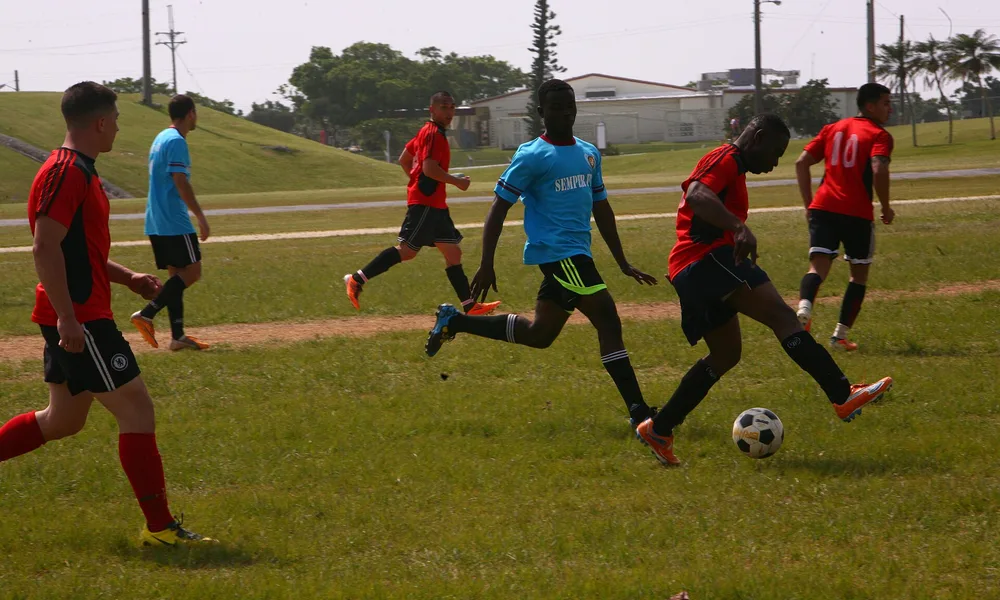
The Hollywood passer is the most frustrating footballer to play with, and the easiest to score against once the pattern is clear. This type ignores the simple five-yard pass and tries the fifty-yard diagonal, the through ball between three defenders, the chip over the top, every single time. It looks brave on the one occasion in ten that it comes off, and the other nine times it is a turnover in a dangerous area, with the midfield out of shape. Football rewards the player who keeps the ball moving and picks the right moment for the risky pass; the Hollywood passer does the opposite on every possession.
5. The disappearing midfielder: nowhere when the ball needs him
The disappearing midfielder can look respectable on the team sheet and then vanish the moment the match starts. When his team has the ball, he hides behind an opponent, stands still in a crowd, or drifts to the far side where the pass cannot reach him. When his team loses the ball, he jogs back slowly and arrives after the danger has passed. Midfield is the engine room, so this type loses the matches that matter most: the midfield is overrun, the defence gets no protection, and the forwards get no service. A midfielder who will not show for the ball is not a passenger, he is a hole in the team.
6. The reckless tackler: a free kick waiting to happen
The reckless tackler treats every duel as a chance to win the ball with a lunge, even when the attacker is going nowhere dangerous. There is no patience, no jockeying, no forcing the man wide: the tackle flies in, late or from behind, and the whistle follows. A good attacker needs one clean foul in a dangerous area, and the match tilts: a free kick, a yellow card, and then a second yellow waiting for the next rash challenge. Defending is the least glamorous part of football and the most important, because a defender who cannot stay on the pitch never helps his team. The players around him spend the whole match covering for him.
7. The diver and head-case: beaten by the whistle in his own mind
The diver and head-case loses the match twice: once on the scoreboard, and once in his own head. Go down too easily and the referee stops giving him fouls, so the genuine ones go unpunished. Concede a goal and the composure goes with it: arguing, gestures at the referee, wild tackles, and dissent that turns a yellow into a red. Coaches dread this type most, because the technique is often there and the temperament is not. Football is a sport of small margins, and the player who cannot handle a bad call or a lost duel will always find a way to lose a winnable match.
What to avoid if you do not want to play like the worst
The patterns above share one root cause: training that skips the boring parts. Check three things: can you control the ball first time under pressure, can you sprint back when possession is lost, and can you keep your head when a call goes against you? If any answer is no, that is where the next month of training goes. The same discipline applies in other sports, and our guide to the worst golfers makes the same point about one-dimensional games, because a player with one shot and no backup loses the same way in every sport.
Checklist: spotting a worst footballer before kick-off
- Watch the first five minutes: a footballer whose first touch bounces away will give the ball away all match.
- Count the sprints back: a forward who walks while his team defends is a luxury no side can afford.
- Watch which foot does the work: one foot used for everything means the player is solved by half-time.
- Count the long balls attempted: a passer who ignores the simple option will hand the other team a counter-attack.
- Watch the midfield when the ball is lost: a midfielder who hides is a hole the other team will run through.
- Watch the reaction to the first bad call: diving, arguing and wild tackles are the signs of a head-case.
Frequently asked questions
What makes a footballer the worst in 2026?
A repeated pattern of losing the same way: a heavy first touch, no tracking back, one foot, Hollywood passing, hiding from the ball, reckless tackling or lost composure. One bad match means nothing; the same mistake in every match puts a type on this list.
Do the worst footballers lose in every position?
Mostly yes. Every position punishes the same habits differently, but a footballer who cannot control the ball or defend his position will lose in all of them.
Why is a heavy first touch so costly in modern football?
Because the game moves so fast that a loose touch is a turnover, and a turnover near your own goal is a chance for the other team. A clean first touch buys time; a heavy one gives it away.
Can a one-footed footballer ever succeed at a high level?
Only briefly. A single great foot wins early matches, but good defenders scout it and show the player onto the other side. Without a second option, the threat stops.
Is tracking back really more important than scoring?
Neither works without the other, but tracking back decides close matches. Goals win the highlights; the sprint back wins the points.
How do you fix the habits on this list?
By training the unglamorous half of the game: first-touch drills, weaker-foot work, defensive sprints, simple passing and composure under pressure. The fix is slow and boring, which is why the worst footballers never do it.
Bottom line
The worst footballers of 2026 lose the same way every time: they kill attacks with a heavy first touch, they refuse to track back, they have one foot and no backup, they try the Hollywood ball on every possession, they hide from the midfield battle, they dive into reckless tackles, or they lose their temper when the whistle goes against them. None of those flaws is a mystery, and none is fixed by hoping the next opponent is weaker. Fix the touch, use both feet, sprint back, keep it simple, show for the ball and keep your head, and the patterns on this list stop being yours.