
The Worst Hybrid Bikes of 2026: Flat-Bar Commuters That Flex, Fade and Fall Apart
The worst hybrid bikes of 2026 are the ones that promise to do everything and end up doing nothing well. They are sold as the sensible middle ground: flat bars for control, medium tyres for comfort, and a price that looks fair for the commute, the park path and the weekend ride. Then the frame flexes, the brakes fade in the rain, the gears skip, and the bike you were meant to ride daily ends up in the shed. This guide ranks the worst types of hybrid bike by what actually ruins ownership. It covers flat-bar mixed-terrain commuter and leisure hybrids only: not drop-bar road bikes, not mountain bikes, and not electric-assist bikes.
Key takeaways
- A hybrid that flexes under power wastes every pedal stroke, however comfortable its upright position feels in the shop.
- Weak brakes are the most dangerous fault on a hybrid, and they show up on the first wet descent, not on a dry test ride.
- A hybrid with the wrong tyres for your riding is a bad buy at any price: slick tyres slide on gravel, and knobbly tyres drag on tarmac.
- Cheap suspension forks on hybrids add weight and take away control, and most of them stop moving within a season.
- Check the frame, brakes, gears and fit on a real ride before you pay, and walk away from any hybrid that hides its specification.
How the worst hybrid bikes of 2026 were chosen
Every type below was scored on five measures. Frame stiffness comes first: a hybrid frame should stay rigid when you stand on the pedals, because a frame that flexes wastes effort and makes the steering feel vague. Braking is second, judged on wet-weather stopping power. Gears are third, because a hybrid that skips under load will ruin a commute. Fit is fourth: the upright position should suit your height and reach. Parts support is fifth, because a hybrid is only a bargain if a local shop can fix it with standard parts at a fair price.
Two notes before the list. First, no single bike is named as the worst, because the same bad patterns appear across many models. Second, a hybrid is a compromise by design, so each type is judged on the job it claims to do. Riders who spend most of their time off road will find the same logic in our guide to the worst mountain bikes of 2026, where the fork and the brakes matter even more.

Comparison table: the worst hybrid bikes of 2026
| Rank | Hybrid type | Claims to be | Watch out for |
|---|---|---|---|
| 1 | The supermarket hybrid | A bargain for everyone | Flexing frame, fading brakes |
| 2 | The fake suspension hybrid | Comfort on any surface | A fork that never moves |
| 3 | The heavy steel hybrid | Built to last forever | Weight that kills every hill |
| 4 | The racer in hybrid clothes | Fast and comfortable | Skinny tyres, harsh ride |
| 5 | The trail-look hybrid | Ready for rough tracks | Knobbly tyres, weak wheels |
| 6 | The step-through with no gears | Simple and easy to ride | One gear, no escape on hills |
| 7 | The folding hybrid compromise | A commuter that folds away | Flex, rattles and tiny wheels |
The worst hybrid bikes of 2026
1. The supermarket hybrid: the worst first buy
The supermarket hybrid is the worst hybrid you can buy, because it looks like a bargain and behaves like a toy. It arrives with bright paint, a padded saddle and a price that undercuts every bike shop in town. Then the frame flexes when you stand on the pedals, the brakes barely slow you in the wet, and the gears slip under load. The parts are the problem: a pressed-steel frame that bends, plastic brake levers that flex, and a drivetrain that wears out in weeks. The money you save at the till comes back as repair bills.
2. The fake suspension hybrid: comfort that never arrives
The fake suspension hybrid promises a smooth ride on any surface and delivers a fork that never moves. The fork looks the part, with chunky legs and a visible coil spring, but it is either seized solid or so stiff it only moves when you hit a kerb hard enough to hurt your wrists. Either way it adds dead weight and takes away steering precision. A rigid fork would be lighter and better in every way. If the fork does not move smoothly when you push down on the bars in the shop, walk away.

3. The heavy steel hybrid: built to last, too heavy to ride
The heavy steel hybrid is sold on durability, and it is durable in the worst way: it will outlast your enthusiasm for riding it. The frame is made from thick, low-grade steel, and with a steel fork, steel bars and heavy wheels, the bike can weigh as much as a small child. On flat ground that only feels sluggish, but on the first hill it becomes a punishment. Good steel in thin tubes can make a wonderful bike, but this is not that bike. Pick it up before you buy it, and if it feels like lifting furniture, leave it in the shop.
4. The racer in hybrid clothes: fast on paper, harsh on the road
The racer in hybrid clothes takes a road bike, bolts on flat bars, and calls it a hybrid. The frame is stiff and light, the tyres are skinny, and the position is low and stretched out, which sounds fast until you ride it over a real road. Every pothole rattles through the bars into your hands, the narrow tyres slide on wet leaves and gravel, and the aggressive position aches your neck within half an hour. If your riding is mostly smooth tarmac, a proper road bike is the honest choice, and our guide to the worst road bikes of 2026 shows what to avoid there too.
5. The trail-look hybrid: ready for tracks it cannot handle
The trail-look hybrid wears knobbly tyres, wide bars and a rugged paint job, and it invites you to leave the tarmac behind. The problem is that everything underneath the look is built for the pavement. The knobbly tyres drag and buzz on the road, so your commute takes longer and feels harder, and the moment you take it onto a rough track, the wheels tell the truth: single-wall rims that buckle on the first rock and a frame with no clearance for mud. A hybrid can handle a smooth gravel path, but it is not a mountain bike.
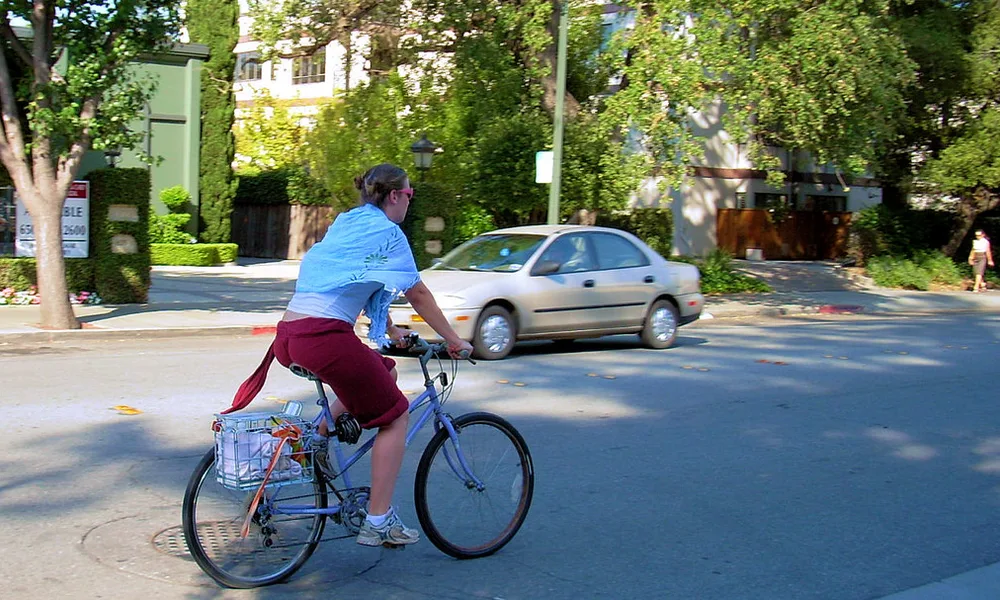
6. The step-through with no gears: simple until the first hill
The step-through hybrid with a single gear, or a three-speed hub that was never serviced, is the simplest bike in the shop and the most limited on the road. On flat ground it is lovely: step on, pedal gently, and glide to the shops in normal clothes. Then you meet a hill, a headwind, or a bridge, and the single gear turns every pedal stroke into a grind. You stand up, your knees complain, and you end up walking. A step-through frame is a good idea for easy riding, but only with at least seven gears and a low one you can spin up a hill.
7. The folding hybrid compromise: a commuter that folds away and falls apart
The folding hybrid compromise tries to be two bikes at once: a full-size commuter and a package that folds under a desk. The result is usually a bike that does neither job well. Small wheels make every bump feel bigger and every hill feel steeper, the folding hinge flexes under power and develops a rattle within weeks, and the long seat post turns the bike into a wobbling tower. A good folding bike is an engineering achievement and costs accordingly; a cheap one charges you twice, once in money and once in rides you do not enjoy.
What to avoid when buying a hybrid bike
The most common hybrid regret is not a bad bike but a wrong match: a trail-look hybrid bought for a flat commute, a racer in hybrid clothes bought for a bad back, or a supermarket hybrid bought because the price looked too good to argue with. Avoid the trap by checking four things before you pay: the frame, the brakes, the gears and the fit. Lift the bike to feel its weight, squeeze the brakes hard, shift through every gear under load, and ride it for ten minutes on a real road with a hill in it. The same checks catch the worst bikes of every kind, and our guide to the worst bicycles of 2026 makes the same point about frames and brakes.
Checklist: buying a hybrid bike in 2026
- Ride the bike for ten minutes on a real road with a hill, not just around the shop car park.
- Stand on the pedals and check the frame stays stiff; any flex you feel now will only get worse.
- Squeeze both brakes hard and check the wheels stop cleanly without squealing or grabbing.
- Shift through every gear under load and reject any bike that skips, clunks or needs constant trimming.
- Check the tyres match your daily surface, and that mudguards and a rack will fit if you commute.
- Confirm a local shop can service the bike with standard parts, and ask what the first service costs.
Frequently asked questions
What is the worst type of hybrid bike to buy?
The supermarket hybrid is the worst first buy: a flexing frame, fading brakes and parts no shop wants to fix. A cheap bike that cannot be repaired is not a bargain, it is a short rental that ends in the shed.
Are suspension forks good on a hybrid bike?
Usually not. Cheap suspension forks on hybrids add weight and rarely move properly, which makes the steering worse. A rigid fork is lighter and more reliable, and wide tyres at the right pressure give you all the comfort you need.
How much should a good hybrid bike weigh?
Most decent hybrids weigh between 11 and 14 kilograms. Anything much heavier will feel sluggish on hills and hard to carry, and the extra weight usually means cheap steel and heavy wheels rather than useful strength.
Can a hybrid bike handle gravel paths?
A hybrid can handle smooth, hard-packed gravel with the right tyres, but it is not a mountain bike. Knobbly tyres will not turn it into one, and the wheels, brakes and frame are not built for rough tracks or mud.
How many gears does a hybrid bike need?
At least seven, with a low gear you can spin up a hill. A single gear or a three-speed hub is fine on flat ground only, and it turns every hill and headwind into a walk.
What should I check first on a second-hand hybrid?
Check the frame for cracks and rust, the brakes for stopping power, and the gears for skipping under load. Then check the wheels are true and the headset is tight, because a wobbling wheel or a loose headset is expensive to fix.
Bottom line
The worst hybrid bikes of 2026 promise to do everything and deliver only the look of it: a frame that flexes, brakes that fade, gears that skip, and a compromise that suits nobody. Buy the simplest hybrid that works for the riding you do every day, check the frame, brakes, gears and fit before you pay, and the bike will make the commute easier instead of getting in its way.


