A Blade With Nowhere Safe to Land: The Worst Knife-Throwers of 2026
The worst knife-throwers of 2026 do not fail the way other stage acts fail. A juggler drops a ball and the crowd laughs it off, but a knife-thrower who loses control of the blade loses the whole room in a single second. This guide ranks the worst types by the patterns that ruin the act: wobbling throws, stalling routines, patter that talks over the danger, and safety corners cut in full view of a paying crowd. No real performer is named here.
This guide is strictly about knife-throwing as a single dangerous act: the throws, the target work and the assistant routines, judged on control, pacing and safety. It is not about the mixed circus bill, covered in our guide to the worst circus acts of 2026, where aerial, trapeze and juggling acts share one ring. It is not about sword-swallowing, covered in our guide to the worst sword-swallowers of 2026, where the danger is a blade going down rather than flying through the air. Nothing here is an instruction: the failures below are described so audiences can recognise them and walk away.
Key takeaways
- A knife-thrower lives or dies on the first throw: if the blade wobbles or bounces off the board, the audience stops trusting what follows.
- The throw itself should be the centre of the act, not a trick buried under shouting and ten minutes of stalling.
- A thrower with no spotter, no safety line and no calm around the stage is cutting corners in front of a crowd.
- Long patter is the clearest sign of an act that does not trust its own trick.
- If the blade misses and the room exhales with relief instead of gasping, the act has failed at its one job.
How the worst knife-throwers of 2026 were ranked
Every type below was scored on five measures. Control comes first: does the blade fly straight and stick cleanly, or does it wobble, bounce and fall? Pacing is second, judged on whether the act builds to the throw or fills time with talk and delays. Safety is third, because a dangerous act performed carelessly is not brave, it is reckless, and the crowd can tell the difference. Originality is fourth, since a routine the audience has seen a hundred times must be done brilliantly to earn its place. Respect for the audience is fifth: the best acts trust the crowd to follow the danger, while the worst talk down to it.
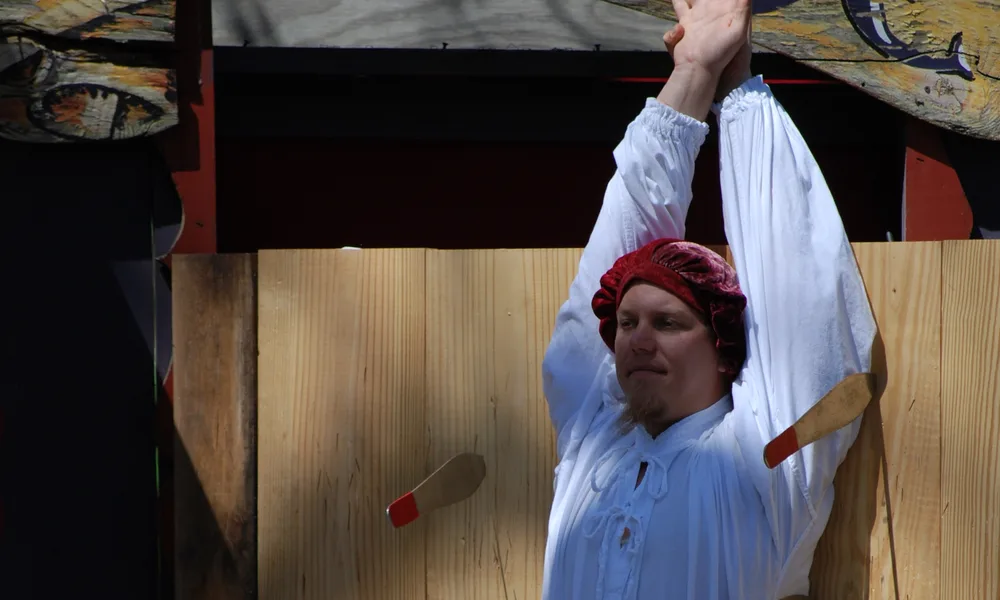
Comparison table: the worst knife-throwers of 2026
| Rank | Worst type | Main flaw | Warning sign | Worst score |
|---|---|---|---|---|
| 1 | The Blade That Will Not Stick | Throws bounce off the board | First knife on the floor | 10/10 |
| 2 | The Act With No Safety Line | No spotter, no space, no calm | Crowd pressed against the stage | 10/10 |
| 3 | The Ten-Minute Talker | Patter instead of performance | Five minutes in, no knife thrown | 9/10 |
| 4 | The One-Throw Wonder | A single trick, then stalling | Encore is the same throw again | 9/10 |
| 5 | The Assistant As a Prop | Target partner treated as furniture | Assistant never speaks or moves | 9/10 |
| 6 | The Blade Collector | Knives paraded, few thrown | A table of blades, one quick throw | 8/10 |
| 7 | The Finale That Fizzles | No closing throw at all | The act ends with a wave | 8/10 |
The worst knife-throwers of 2026
1. The Blade That Will Not Stick: throws that bounce off the board
The Blade That Will Not Stick is the worst type of knife-thrower in 2026 because it breaks the one promise the act makes: that the blade will land where it is aimed. The first knife hits the board handle-first and clatters to the floor, the second bounces off, and the audience watches the same failure repeat itself.
A good thrower misses sometimes too, and the difference is what happens next: the recovery is quick, the next throw sticks, and the act moves on. The worst version has no recovery, just a smile and a restart that bounces again. After the third miss the crowd stops hoping and starts flinching, and a crowd that flinches is not being entertained.
2. The Act With No Safety Line: no spotter, no space, no calm
The Act With No Safety Line is the knife-thrower who makes a dangerous act more dangerous by removing everything that keeps it under control. There is no spotter standing by, no clear space, and the crowd is pressed right up against the board. Safety is not the opposite of thrill: the best dangerous acts feel thrilling because the safety is visible and the control is obvious.
An act with no spotter, no space and no calm anywhere on stage is not brave, it is careless, and the room knows it. The same judgement applies to the worst fire-eaters of 2026, where the danger is a flame rather than a blade: when the safety disappears, the thrill goes with it.
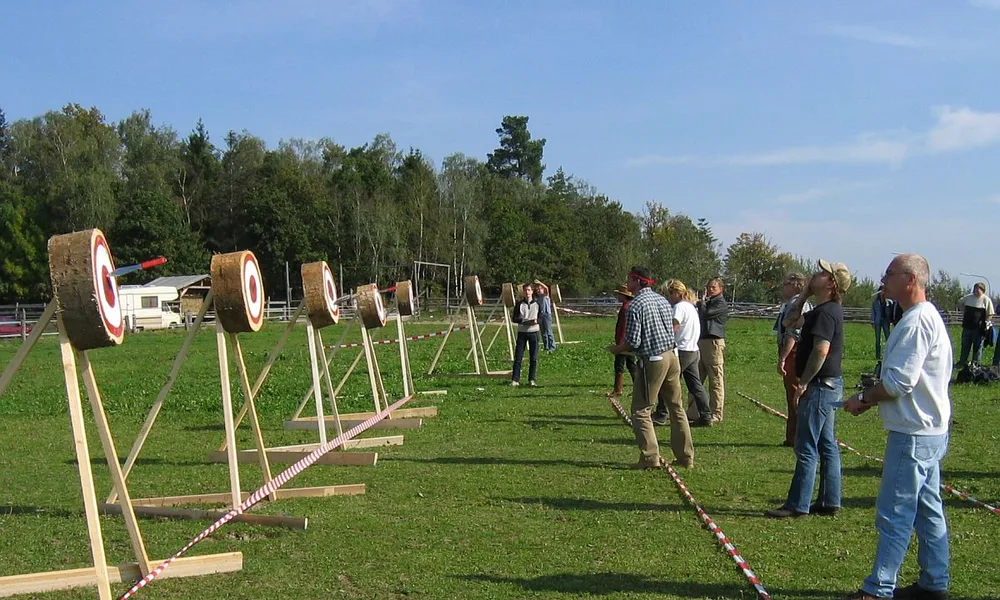
3. The Ten-Minute Talker: patter instead of performance
The Ten-Minute Talker seems to believe the act is the talking and the throwing is an interruption. The performer opens with a long story, then a joke, then a warning, then another story, and five minutes in no knife has left the hand. The audience came to see a dangerous act, not a lecture, and every minute of talk drains the tension the throw needs.
When the talk runs longer than the trick, the act has its proportions backwards. A thrower who trusts the blade lets the silence do the work. The talker fills that silence because the throw alone would not hold the room.
4. The One-Throw Wonder: a single trick, then stalling
The One-Throw Wonder has exactly one move, and the whole act is built around hiding that fact. The blade flies once, sticks cleanly enough, and then the performer spends the rest of the set finding reasons not to throw again: a drink of water, a story, a request for applause. The audience notices fast: the act is thin by design, and it shows the moment the blade lands the first time and there is nowhere left for the routine to go.
The encore gives it away: the same throw again, from the same distance, at the same board. A good knife act builds, so the last throw is the hardest one. The one-throw wonder has no last throw, only a first throw repeated until the audience stops clapping.
5. The Assistant As a Prop: a target partner treated as furniture
The Assistant As a Prop is the knife act that forgets the second person on stage. The assistant stands against the board, still and silent, while the thrower performs as though alone. The assistant never speaks, never moves, and the audience watches a person being used as scenery with blades flying at them. The best target acts are a partnership: the assistant’s calm is part of the thrill.
When the assistant is treated as furniture, the act turns queasy rather than thrilling, because the audience starts worrying about the person instead of admiring the throw. A good act shows the partnership: a nod before the throw, a shared bow after it. Without that, the act is just a person throwing knives at another person who is not allowed to matter.
6. The Blade Collector: knives paraded, few thrown
The Blade Collector arrives with a table full of knives laid out for the crowd to admire. The problem is that admiration is all the audience gets. One blade is thrown briefly, the rest are picked up, waved about and put back down. The act becomes a show-and-tell session, and the crowd, which came to see throwing, ends up watching a museum tour.
The collector’s table is a confession: the performer has more knives than throws. A good thrower needs one good blade and a steady arm; when the table is the most interesting thing on stage, the act has told the audience where its priorities lie.
7. The Finale That Fizzles: no closing throw at all
The Finale That Fizzles is the knife act with no ending. Every dangerous act needs a closing moment, a final throw that sends the audience out talking. The worst knife-throwers have no finale at all: a throw here, a story there, a wave, and the performer is walking off, leaving the room unsure whether the act is over.
The audience applauds out of politeness, and the applause dies fast. When the act ends with a shrug instead of a throw, the crowd leaves remembering the anticlimax, not the blade.
Warning signs: spot a bad knife-thrower in two minutes
Watch the first two minutes before committing to the set. If the first blade bounces off the board, the control is not there. If five minutes pass with no knife thrown, the act is stalling. If there is no spotter, no safety line and no clear space, leave: no act is worth a blade that goes where it was not aimed. And if the assistant looks frightened rather than calm, trust what you see.

How to pick a better knife-thrower instead
Pick a thrower whose first throw sticks cleanly and whose second throw lands somewhere new: more distance, a faster sequence, a tighter pattern. Look for a visible safety line, a spotter standing by, and an assistant who is calm and part of the act.
Checklist: spotting a bad knife-thrower early
- Watch the first throw: if the blade bounces off the board, the control is not there.
- Count the talk: if five minutes pass with no knife thrown, the act is stalling.
- Look for a spotter and a safety line: no spotter means no backup when a throw goes wrong.
- Check the assistant: a calm partner who shares the bow is a good sign, a frightened one is not.
- Count the throws: one good throw repeated is not a routine, it is a stall.
- Look for a finale: a real closing throw, not a wave and a walk off stage.
Frequently asked questions
What makes a knife-thrower bad?
A bad knife-thrower breaks the promise of the act: the blade wobbles, bounces off the board, or is buried under talk and props. The fault is usually a routine with no control, no pacing and no safety, repeated until the audience stops watching.
Are knife-throwing acts dangerous to watch?
Real knife acts carry real risk, which is why the good ones keep a safety line, a spotter and a clear space. If there is no line and no spotter, the act is not safe enough, and you should move back or leave.
How many throws should a good act include?
There is no fixed number, but a good act builds: the throws get harder or faster as the routine goes on. An act with a single throw repeated is filling time, not performing.
Why do knife acts have an assistant?
The assistant is the target partner, and their calm is part of the thrill: the audience trusts the throw because the assistant trusts it. A good act treats the assistant as a partner, with a shared bow.
Is knife-throwing a sport as well as a stage act?
Yes, and the two are different: sport throwing is judged on accuracy at a wooden target, while a stage act is judged on showmanship, pacing and safety around a living assistant.
Should I try knife-throwing myself?
No: throwing is a trained skill that needs proper instruction, a safe range and experienced supervision. This guide describes failures so audiences can recognise them, not so anyone can copy them.
The bottom line
The worst knife-throwers of 2026 all make the same mistake: they treat the blade as the act, when the blade is only the tool. Throws that will not stick, safety lines that do not exist, and finales that never arrive all fail the same test. The best throwers make the danger look easy and the safety look obvious.