Worst Race Boots 2026: Seven Boot Types That Ruin Race Day
The worst race boots of 2026 are not the cheapest boots on the shelf or the oldest pair in the kit bag. A cheap boot can still fit well and feel the pedals properly, and an old boot can still be honest about what it is. The worst race boots fail in a much more basic way: they deaden the pedals, slip off them at the worst moment, cook the feet inside, or come undone when a driver needs them most. A driver only thinks about boots when they fail, and by then the braking zone is already coming.
Key takeaways
- A race boot is judged by pedal feel first: a boot that dulls the pedals cannot tell the driver what the car is doing.
- Grip is safety: a sole that slips off the brake or the throttle leaves the driver guessing at the worst moment.
- Fit matters more than looks: a boot that pinches, lifts at the heel or rubs raw distracts the driver on every lap.
- Fire protection is not optional: a boot with no proper fire-resistant lining is a risk, not a saving.
- Try the boot on and work the pedals, and walk away from any pair that slips, stiffens or will not stay laced.
How the worst race boots were ranked
Every type below was scored on five measures. Pedal feel comes first: does the boot pass the pressure of the pedals through to the feet, or deaden it into a blur? Grip is second: does the sole hold the pedals in heat, sweat and rain, or slide when the driver needs it most? Fit is third, because a boot that pinches the toes or lifts at the heel is a distraction on every lap. Fire protection is fourth: a proper race boot resists heat and flame. Comfort is fifth: a boot that cooks the feet or rubs them raw fights the driver late in the race.
First, no real maker, model or brand is named as the worst: this guide ranks types and patterns, not individual products. Second, a bad boot is not the same as bad head protection: our guide to the worst race helmets shows how good boots can still be wasted by a helmet that fogs or cooks the driver, and our guide to the worst race cars shows the same logic in a machine that cannot turn or stop.
Comparison table: the worst race boots 2026
| Rank | Boot type | Main failure | Worst moment |
|---|---|---|---|
| 1 | The stiff-sole boot | Thick sole, no pedal feel at all | Braking too hard because the pedal felt dead |
| 2 | The slippery-sole boot | Smooth sole, foot slides off the pedal | The foot slipping off the brake mid-corner |
| 3 | The sauna boot | No ventilation, feet soak through | Sweaty feet sliding inside the boot |
| 4 | The narrow pinch boot | Too narrow, crushes the toes | Toes going numb by the third lap |
| 5 | The loose heel boot | Heel lifts with every pedal move | The heel slipping as the throttle opens |
| 6 | The lace-tangle boot | Long laces, catch on the pedals | A lace hooking the brake pedal |
| 7 | The work-boot substitute | Heavy, thick soles, no feel at all | Two pedals pressed at once by a wide boot |
The worst race boots of 2026
1. The stiff-sole boot: thick sole, no pedal feel at all
The stiff-sole boot is the worst type of race boot, because it fails at the one job that matters most: letting the driver feel the pedals. It is bought because it looked tough, and it feels tough from the first lap. The sole is thick and rigid, and the pedals come through as dead, padded shapes instead of a live connection to the brakes. A driver in stiff boots cannot tell how hard the brakes are biting, and finds out about lock-up a corner too late. A good race boot has a thin, flexible sole that passes the pressure of the pedals straight through to the foot.
2. The slippery-sole boot: smooth sole, foot slides off the pedal
The slippery-sole boot is the quietest failure on this list, because nothing about it looks wrong until the car is at speed. The sole is smooth, the tread is shallow, and the rubber was never made to grip a metal pedal. In the dry it feels acceptable, but add sweat, rain or a wet footwell and the foot starts to travel. Under braking the foot slides across the pedal face, and every input arrives late because the foot is busy re-planting instead of pressing. A good race boot has a sole that bites the pedals in the wet and the dry. Stand on a pedal with the boot on before you buy.
3. The sauna boot: no ventilation, feet soak through
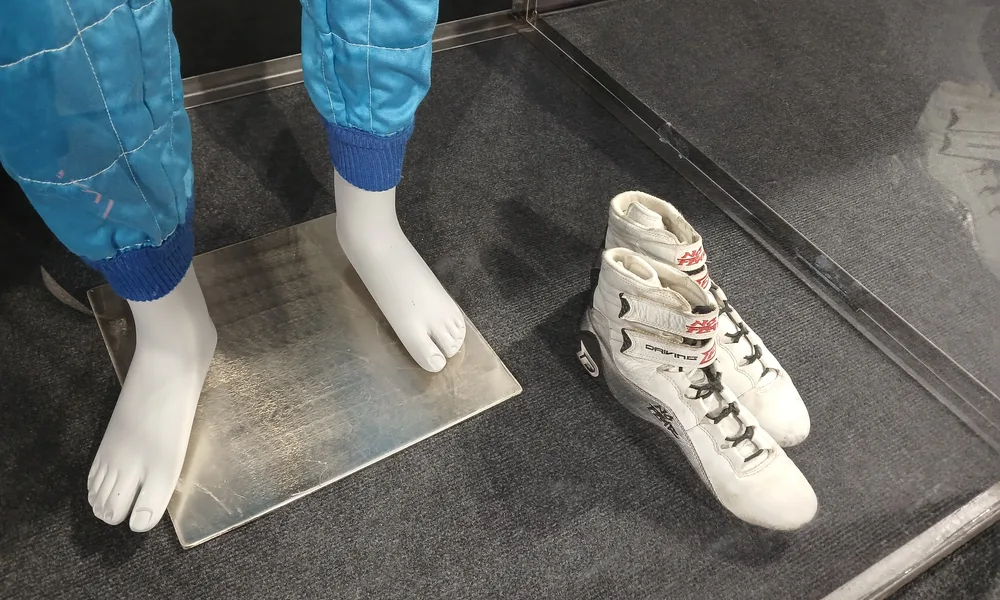
The sauna boot looks fine in the paddock and fails the moment the driver starts working. As soon as the cockpit heats up, moisture builds inside the boot, and the feet turn slick. The foot slides around inside the boot, the grip on the pedals goes vague, and the driver presses harder to compensate, which only tires the legs faster. A good boot moves moisture away from the skin, with panels and linings that breathe, so the foot stays dry enough to hold its place. Check the lining before you buy, and walk away from any boot that feels clammy after five minutes of wearing it indoors.
4. The narrow pinch boot: too narrow, crushes the toes
The narrow pinch boot fails at the fit, and the fit is where a race boot either disappears or ruins the day. The boot is too narrow for the foot, so it squeezes the forefoot, digs into the little toe and presses on the top of the foot with every pedal press. The pain starts as pressure on the first lap and becomes a numb ache by the third, and a driver with numb toes cannot feel the pedals at all. A good race boot fits the width of the foot, not just the length, with even pressure and no single hot spot. Try the boot on before you buy, standing in it for fifteen minutes, and feel for pressure on the toes. A boot that pinches standing still will pinch worse at racing speed.
5. The loose heel boot: heel lifts with every pedal move
The loose heel boot fails at the back, and the back of the boot is what anchors the foot to the pedal. The heel cup is too wide or too soft, so the heel lifts with every press of the throttle and every lift off the brake. The foot slides forward inside the boot, and the driver loses the fine control that separates a smooth lap from a ragged one. A good race boot locks the heel in place with a firm cup and lacing that holds the foot back. Press an imaginary pedal and watch whether the heel stays put. If it lifts in the shop, it will lift at speed.

6. The lace-tangle boot: long laces, catch on the pedals
The lace-tangle boot is a small failure with a large consequence. The laces are long, the loops hang loose, and the ends dangle where the pedals live. In the cockpit it is a hazard: a lace loop can hook a pedal, snag on a lever or wrap around the throttle, and the driver discovers it at the exact moment a quick pedal move is needed. A good race boot has short laces, a strap, or a lace garage that keeps everything tucked tight and out of the way. Lace the boot, tuck the ends in, and look down: if anything dangles near the pedals, the boot is not ready to race.
7. The work-boot substitute: heavy, thick soles, no feel at all
The work-boot substitute is not a race boot at all, but it turns up at track days more often than anyone admits. It is a heavy site boot or hiking boot, worn because it was already in the garage. On the pedals it is a disaster. The sole is thick and rigid, the boot is wide, and the driver cannot feel the pedals, cannot fit between them cleanly, and can press two at once by mistake. A good race boot is narrow, light and thin-soled, built for the pedal box, not the building site. The work boot has its place, but that place is not in a race car. If the boot looks like it belongs on a site, it probably does, and the pedals deserve better.
What to avoid when buying race boots
The most common race boot regret is not a bad boot but a wrong match: a stiff sole bought for a long race, a slippery sole discovered in the rain, or a narrow fit found out only when the feet swell in the heat. Avoid the trap by checking three things before you pay: the feel of the pedals through the sole, with your feet actually on a pedal; the grip of the sole when it is damp, not just when it is dry; and the fit after fifteen minutes of standing, with your suit on. Our guide to the worst motorsport makes the same point about equipment that looks right and fails under pressure.
Checklist: buying race boots
- Try the boot on and work a pedal, not just walk around the shop, and feel for the pressure of the pedal face.
- Check the sole grip when damp: wet the sole slightly and press on a smooth pedal surface.
- Stand in the boot for fifteen minutes and feel for pressure on the toes and the sides of the forefoot.
- Press an imaginary pedal and watch the heel: it must stay locked in place, not lift.
- Tuck the laces away and look down: nothing must dangle near the pedals.
- Walk away from any boot that slips, stiffens, pinches, lifts at the heel or will not stay laced.
Frequently asked questions
How should race boots fit?
Snug all over, with no pinching at the toes and no lift at the heel. The boot should feel like a second skin rather than a shoe.
Do race boots need fire protection?
Yes. A proper race boot uses fire-resistant material and lining, because the feet are close to fuel, heat and the cockpit in a crash. A boot with no fire protection is not a race boot, however good its grip feels.
Why do my race boots get slippery?
Sweat, worn soles and smooth rubber are the usual causes. A sole that has gone shiny has lost its grip, and a boot with no ventilation soaks through. Both problems mean the boot is finished, not the driver.
Can I wear work boots for racing?
It is a poor match. Work boots are heavy, wide and thick-soled, so they deaden pedal feel and can press two pedals at once. They are built for a site, not a pedal box.
How long should race boots last?
A good pair lasts a season or more of regular racing, but the sole is the tell. Once the tread goes smooth or the heel cup softens, the boot is done, however new it still looks.
What is the most important thing to check before buying?
Feel and grip together. Put the boot on, press a pedal, and twist. If you cannot feel the pedal or the foot slides, nothing else about the boot matters.
Bottom line
The worst race boots of 2026 are the ones that take feel, grip or protection away from the driver: thick soles that deaden the pedals, slippery soles that slide, narrow fits that crush, heels that lift, laces that catch, and work boots that belong on a site. A good boot is thin-soled, grippy when damp, snug at the heel and honest about its fire protection. Check the feel, the damp grip and the fit before you buy.