
Racing Games to Skip in 2026: The Worst Types on the Track
The worst racing games of 2026 are not the ones with the oldest graphics or the smallest car lists. They are the games that take your money and your evenings and give almost nothing back: the kart clone that sells you the fast car, the sim that punishes you for braking like a human, the online racer that fills every lobby with cheaters and then charges you to skip the grind. This guide ranks the worst types of racing game you can buy in 2026, what goes wrong with each, and what to play instead, so your next race is a contest and not a chore.
Key takeaways
- The worst racing games of 2026 fail on design, not on budget: rubber-band AI, pay-to-win upgrades and empty tracks are choices, not accidents.
- A racing game that sells speed is selling you the fun twice, first in the box price and then in the shop.
- Rubber-band AI turns every race into a scripted chase, so your skill stops mattering in the last lap.
- An online racer lives or dies on its lobbies: cheaters, rammers and dead servers kill a good handling model fast.
- Before you buy, check recent player reviews, the refund window and whether the car list is earnable without paying extra.
How the worst racing games of 2026 were ranked
Every type below was scored on five measures. First, fairness of the racing: does the AI race honestly, or does it speed up and slow down to keep every finish close? Second, fairness of the economy: can a player who never spends extra still earn the cars and upgrades, or is the fast stuff locked behind a shop? Third, handling honesty: does the car do what the wheel and the pedals ask, or does it fight you with numb steering and canned slides? Fourth, track and mode depth: are there enough circuits, modes and reasons to return, or is it the same three ovals with new paint? Fifth, online health: are the lobbies full, fair and moderated, or empty, toxic and full of cheaters?
Two notes before the list. First, no single game is named as the worst, because the same broken patterns appear across many releases, and what matters is learning to recognise them before you pay. The same logic applies to other kinds of games, and our guides to the worst video games of 2026 and the worst board games of 2026 rank types and patterns the same way, so you can spot a dud before it costs you an evening.

Comparison table: the worst racing games of 2026
| Rank | Racing game type | Biggest flaw | Who gets hurt most |
|---|---|---|---|
| 1 | Rubber-band AI racers | Rivals speed up and slow down on script | Skilled drivers |
| 2 | Pay-to-win kart clones | Fast cars and parts sold in the shop | Free players |
| 3 | Grind-wall career modes | Hours of chores before the fun starts | Busy players |
| 4 | Empty open-world racers | Huge maps with nothing worth racing | Explorers |
| 5 | Ram-filled online racers | Lobbies full of wreckers and cheaters | Clean racers |
| 6 | One-track arcade clones | Three circuits, one mode, full price | Arcade fans |
| 7 | Broken sim racers | Numb handling and day-one bugs | Wheel owners |
The worst racing games of 2026
1. Rubber-band AI racers: the race is decided before you start
Rubber-band AI is the oldest trick in racing games, and it is still the most insulting. Fall behind and the rivals slow down to let you catch up; pull ahead and they suddenly find speed they never had, closing a five-second gap on the final straight. The result is a race where your driving barely matters. Brake late, hit every apex, and the pack still arrives together at the finish. A good racing game lets you win by ten seconds when you drive well and lose by ten when you do not. If every race ends in a photo finish, the game is not tense, it is rigged,.
2. Pay-to-win kart clones: the shop is faster than you are
Kart racers should be about lines, boosts and nerve. The pay-to-win clones turn them into a shop window. The fastest karts, the best tyres and the strongest power-ups sit behind a paywall, and the free path to them is a grind measured in months. The tracks are usually bright and cheerful, which makes the sting worse, because the game looks like a party and plays like a till. If a kart game shows you a faster kart in the shop on your first day, before you have even learned the tracks, it is telling you exactly how it plans to make its money, and it is not from the box price.

3. Grind-wall career modes: the fun starts forty hours in
Some racing games lock their best content behind a career mode that feels like a second job. You start with the slowest car in the game, race the same three beginner events dozens of times, and earn so little currency that the car you actually want is twenty hours away. The grind is not difficulty, it is delay: the game has the fun, it just will not let you have it yet. A good career mode teaches you the cars and the tracks and rewards you with something new every session. A grind-wall career repeats the same event with a different number on it and calls that progress.
4. Empty open-world racers: a huge map with nothing to race
Open-world racing sounds wonderful: a whole city or countryside to drive through, races everywhere, freedom. The empty versions deliver the map and forget the racing. You drive for ten minutes between events, past scenery that repeats itself, through traffic that behaves like furniture. The events themselves are thin, often the same sprint or checkpoint run with a new start line, and the world never reacts to you. Size is not value. A small map with twenty great circuits beats a huge one with three good races and a hundred miles of nothing.
5. Ram-filled online racers: the lobby is the boss fight
Online racing should be the best part of the genre: real rivals, real unpredictability, real rivalries. In the worst online racers, the lobby is the enemy. Rammers treat the first corner like a demolition derby, cheaters run impossible lap times, and the penalty system punishes the victim who gets spun out while the rammer drives on untouched. A healthy online racer needs three things: a penalty system that actually works, lobbies that split players by skill, and moderators or tools that remove cheaters quickly.
6. One-track arcade clones: three circuits, one mode, full price
Arcade racers do not need a hundred cars or a deep career, but they do need enough to justify the price. The one-track clones ship with a handful of circuits, a single race mode, and a car list so short you have seen everything in an evening. The handling is often decent, which makes the thin package harder to forgive: you can feel the good game underneath, and there is simply not enough of it. Before you buy an arcade racer, count the circuits and the modes on the store page, not in the trailer.
7. Broken sim racers: great physics, shame about the game
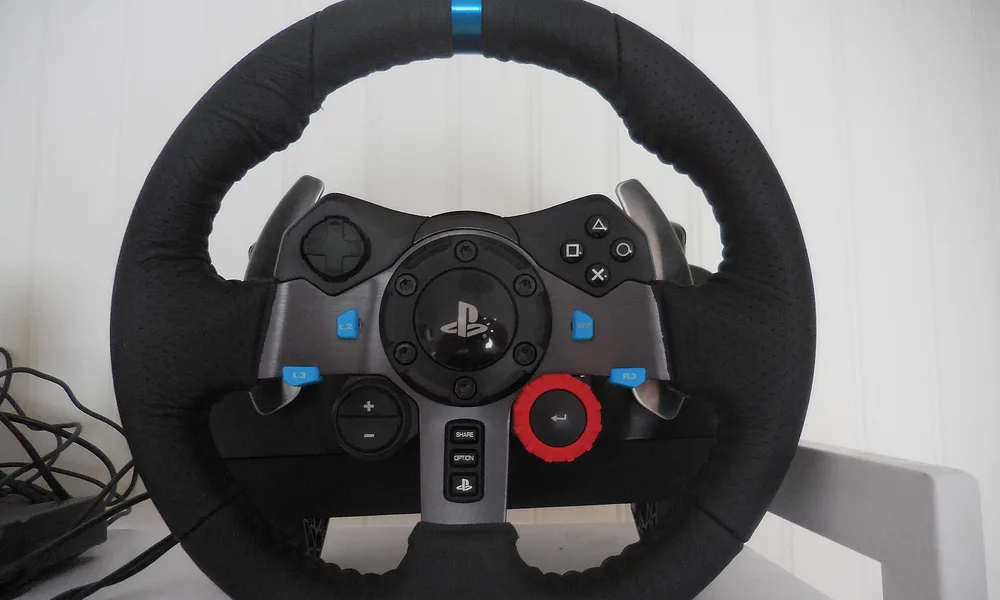
Simulation racers live or die on trust: you must believe the car will do what your hands ask. The broken ones break that trust on day one, with numb force feedback, steering that lags behind your wheel, and physics that punish clean driving while rewarding exploits. The worst part is the price: sim racers often cost more than other games, and they ask you to buy a wheel as well. Wait for the patches, read the wheel-owner reviews, and never buy a sim on its trailer alone.
What to try instead of the worst racing games
The fix is usually a smaller, more honest game. Look for racers with earned progression, where the cars come from winning races and not from a shop, and where the AI races to its own pace rather than to yours. Try a game with a real penalty system online, or one with a strong single-player career that respects your time. The same test works across the shelf: our guide to the best versus worst video games of 2026 shows how the honest games in every genre share the same signs, so use them here too.
What to avoid when buying a racing game in 2026
Avoid the trap by checking four things before you pay. First, the shop: if the store page advertises currency packs or faster cars, the economy is the game. Second, the AI: read player reviews for the words rubber-band, catch-up and scripted. Third, the online health: check whether the lobbies are full and whether the penalty system works, because a dead or toxic online mode halves the value. Fourth, the content count: circuits, cars and modes should be listed plainly, and if the track list is hidden behind a season pass, the price on the box is not the real price. A racing game that is honest about all four is rarely a bad buy.
Checklist: buying a racing game in 2026
- Check player reviews for rubber-band AI, pay-to-win shops and broken online lobbies before you pay.
- Confirm the full car and track list is earnable in the game, not sold separately in a shop or season pass.
- Test the handling in a demo or trial, and check wheel support and force feedback if you own a wheel.
- Look at the online penalty system and lobby population, because a dead or toxic online mode halves the value.
- Count the circuits and modes on the store page, and compare them with the price before you buy.
- Buy inside the refund window and play the career mode first, so a grind-wall or a broken sim costs you nothing.
Frequently asked questions
What is rubber-band AI in a racing game?
Rubber-band AI speeds rivals up when they fall behind and slows them down when they lead, so every race finishes close no matter how well you drive. It makes your skill feel meaningless, and it is the clearest sign a racing game is scripted rather than simulated.
Are pay-to-win racing games really that bad?
Yes, when the fastest cars and parts are sold in a shop and free players cannot earn them in a reasonable time.
How can I tell if a racing game has a grind-wall career?
Read player reviews for the time it takes to earn a competitive car. If the best cars are twenty or more hours away, or the shop sells a shortcut to them, the career is a grind-wall, and the fun is being held back on purpose.
Is an open-world racing game always better than a track-based one?
No. A huge map with few good events is worse than a small set of great circuits. Judge a racing game by the number of races worth repeating, not by the size of the map or the length of the trailer.
What makes an online racing lobby toxic?
Rammers who wreck rivals on purpose, cheaters with impossible lap times, and a penalty system that punishes victims instead of offenders. A healthy lobby needs working penalties, skill-based matchmaking and quick action against cheaters.
Should I buy a sim racer at launch?
Usually not. Sim racers often launch with handling bugs, crashes and broken force feedback. Wait for the first patches, buy once the game is proven stable.
Bottom line
The worst racing games of 2026 share one flaw: they ask for your money and your time and then refuse to race you fairly. Rubber-band AI scripts the finish, pay-to-win shops sell the speed, grind-walls delay the fun, empty maps waste the drive, and broken lobbies punish clean drivers. Buy the racers that earn your trust instead: honest AI, earned cars, full track lists and online modes that punish the wreckers, not the victims.


