
Worst School Buses 2026: Yellow Pupil Buses That Fail the Morning Route
The worst school buses of 2026 are not the oldest yellow buses in the depot or the plainest ones on the route. They are the pupil-transport buses that look ready for the morning run and then let a whole district down: brakes that fade on a loaded descent, heaters that quit on a freezing morning, doors that stick in the rain, or a repair bill that arrives far earlier than the fleet budget planned for. This guide names the seven worst school buses of 2026, based on published recall records, operator reports and repeated driver complaints, so you can spot the pattern before you sign. A school bus is a yellow pupil-transport bus built to carry children to and from school, with a stop arm, flashing red lights, a crossing gate and high-back padded seats. That makes it a different machine from a general bus, which carries adult passengers on city, coach or tour routes. Our guide to the buses to avoid in 2026 ranks general buses, including the conventional Thomas Built Saf-T-Liner C2, Blue Bird Vision and IC CE Series school buses, so this article covers the school-bus types that guide did not rank: transit-style, small and electric pupil-transport buses.
Key takeaways
- A school bus lives or dies on its brakes, heater and doors: a bus that cannot stop safely, keep children warm or open its doors is unfit for the morning route.
- Transit-style school buses carry more pupils but cost far more to repair, and small districts often have no technician trained to fix them.
- Small school buses cost nearly as much to run as full-size ones, while carrying far fewer pupils per mile.
- Electric school buses only work where the route, the weather and the charging setup all fit; get one wrong and the bus misses its run.
- Check the stop arm, the crossing gate and the seat frames before you sign: pupil-safety kit is the part of a school bus that must never be tired.
How the worst school buses of 2026 were chosen
Every school bus below was scored on five measures. Braking and pupil safety come first: a bus that carries children must stop safely on a wet descent and its stop arm, lights and crossing gate must work every time. Heating and ventilation are second, because a bus that cannot keep children warm on a freezing morning fails its most basic job. Reliability is third, covering the engine, electrics and doors that decide whether the bus makes its run. Dealer and parts support is fourth, since a bus that waits three weeks for a part strands a whole route. Running costs are fifth, covering fuel or electricity, maintenance, insurance and resale value. The ranking draws on published recall records, operator reports and repeated driver complaints, and it weighs the pattern of failures rather than a single bad day. Only yellow pupil-transport buses were considered: city buses, coaches, tour buses and vans were all excluded, because each of those is a different job with different faults.
Comparison table: the worst school buses of 2026
| Rank | School bus | Main problem | Buy instead |
|---|---|---|---|
| 1 | Thomas Built Saf-T-Liner HDX | Costly parts, complex electronics | Thomas Built Saf-T-Liner C2 |
| 2 | Blue Bird All American | Wiring faults, heater failures | Blue Bird Vision |
| 3 | IC RE Series | Premium price, costly maintenance | IC CE Series |
| 4 | Thomas Built Minotour | Cramped, noisy, costly per seat | Thomas Built Saf-T-Liner C2 |
| 5 | Blue Bird Micro Bird | Thin parts support, long waits | Blue Bird Vision |
| 6 | Collins Grand Bantam | Cramped cabin, costly parts | IC CE Series |
| 7 | IC BE Series | Range depends on route and weather | IC CE Series |
The worst school buses of 2026
1. Thomas Built Saf-T-Liner HDX: the school bus to avoid first
The Thomas Built Saf-T-Liner HDX is the best-known transit-style school bus in America, and that is exactly why its faults sting. Owners report complex electronics that only a dealer can diagnose, parts prices that shock small districts, and a rear-engine layout that local workshops struggle to service. Buy a Thomas Built Saf-T-Liner C2 instead: the same maker with a simpler conventional layout, a cab crews know well and a far bigger parts network behind it.
2. Blue Bird All American: familiar, and fragile where it counts
The Blue Bird All American looks like a safe buy, with a familiar badge and a long history on school routes. Wiring faults are the most reported problem: warning lights that come and go, door mechanisms that stick in the rain, and heaters that quit on freezing mornings. The Blue Bird Vision does the same job with simpler electrics, a warmer cabin and a dealer network that answers the phone.

3. IC RE Series: a good bus at the wrong price
The IC RE Series is a capable rear-engine bus with a smooth ride that drivers like. The price is the problem: it costs far more to buy and far more to maintain than a conventional school bus, and the rear-engine layout means many district workshops cannot service it in-house. The IC CE Series does the same job with a conventional layout, cheaper parts and a cab that any school mechanic can work on.
4. Thomas Built Minotour: small bus, big bills
The Thomas Built Minotour suits narrow streets and small routes, which is why districts buy it. The cabin is the problem: it is cramped for taller drivers, noisy at speed, and the heater struggles to warm the whole bus on cold mornings. Running costs per pupil are high, because the bus carries far fewer children than a full-size bus while costing nearly as much to fuel and insure. The Thomas Built Saf-T-Liner C2 does the same job with more seats, a warmer cabin and a far lower cost per pupil.
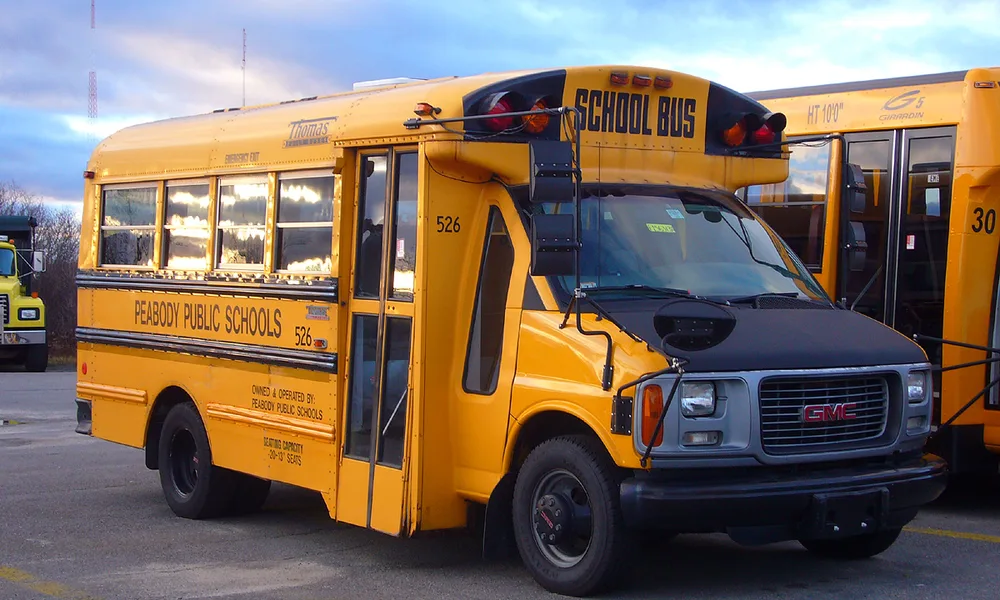
5. Blue Bird Micro Bird: capable, but support is the gamble
The Blue Bird Micro Bird wins buyers with its tight turning circle and easy parking on crowded school grounds. Parts support is the most reported problem: owners describe long waits for body and chassis parts that other brands keep on the shelf, and few local technicians who know the model. The Blue Bird Vision does the same job with a far bigger parts network and a cabin that fits a full class of pupils.
6. Collins Grand Bantam: cramped cabin, costly parts
The Collins Grand Bantam is a small Type A school bus that looks like a cheap way to cover a short route. The cabin is cramped, the ride is harsh on broken roads, and parts prices sting every time something wears out. Resale values are weak, because the next buyer faces the same thin support. The IC CE Series does the same job with more seats, a smoother ride and far stronger resale.

7. IC BE Series: the electric promise that depends on your route
The IC BE Series is the electric school bus that districts buy to cut fuel bills and emissions. Range is the problem: it depends on the route length, the heating load and the cold weather, and a bus that runs short on a freezing morning misses its run. Charging infrastructure costs far more than most districts budget for, and few local workshops can service the electric drivetrain. The IC CE Series does the same job with a diesel engine that runs in any weather and any mechanic can fix.
What to buy instead of the worst school buses
The best school bus for most districts is a boring one: strong brakes, a heater that works on the coldest morning, simple electrics any local mechanic can fix, and a dealer within an hour of the depot. The conventional trio our buses guide ranked, the Thomas Built Saf-T-Liner C2, the Blue Bird Vision and the IC CE Series, all tick those boxes, with wide parts networks and proven drivetrains. If you run a small route, a small bus only makes sense if the cost per pupil beats a full-size bus, which it rarely does. If you are tempted by electric, match the bus to the route first: short runs, mild winters and a depot charger are the minimum. Whatever you buy, test the stop arm, the crossing gate and the door mechanisms before you sign. Our guide to the vans that let buyers down in 2026 shows what happens when fleets buy on price alone, and the same lesson applies here.
Checklist: buying a school bus in 2026
- Test the brakes with a full load of pupils on a hill: any fade, pull or soft pedal is a walk-away sign.
- Check the stop arm, flashing lights and crossing gate three times: pupil-safety kit must work every time.
- Run the heater on a cold morning and check every seat row warms up, not just the front.
- Open and close every door and window ten times and check for sticking, draughts and broken seals.
- Ask for the full maintenance history: repeated electrical faults and heater failures mean trouble ahead.
- Map the nearest three dealers and check parts availability before you sign, not after the first missed route.
Frequently asked questions
What is the worst school bus to buy in 2026?
The Thomas Built Saf-T-Liner HDX tops this ranking: complex electronics that only a dealer can diagnose, parts prices that shock small districts, and a rear-engine layout local workshops struggle to service make it the school bus to avoid first.
Are school buses and buses the same thing?
No. A school bus is a yellow pupil-transport bus with a stop arm, flashing red lights, a crossing gate and high-back padded seats, built to carry children safely. A general bus carries adult passengers on city, coach or tour routes without that pupil-safety kit. Our general buses guide ranks the general buses.
Should I buy a used school bus?
A used school bus can be a bargain if the brakes are strong, the heater works, the stop arm and lights are sound and the maintenance history is clean. Walk away from any used bus with tired safety kit, floor rot or repeated electrical faults, because those repairs quickly erase the saving. Many used school buses are also converted into motorhomes, and our guide to the motorhomes to avoid in 2026 shows what to watch for in a converted bus.
Are electric school buses a mistake in 2026?
Not always, but they only work where the route is short, the winters are mild and the depot has proper charging. On long rural routes or in freezing weather, range falls and the bus can miss its run, which is why the IC BE Series appears in this ranking.
How important is the dealer network when buying a school bus?
It matters more than the sticker price. A school bus that waits three weeks for a part strands a whole route and forces the district to hire cover, so a nearby dealer with parts on the shelf is worth more than any discount.
What should I check before buying a school bus?
Check the brakes under load, the stop arm and lights, the heater on a cold morning, the doors and windows, the maintenance history and the nearest dealer network. A bus that fails any one of those checks will cost the district more than the discount negotiated.
Bottom line
The worst school buses of 2026 fail in the same ways: complex electronics, weak heaters, tired safety kit and dealer networks too thin to keep a working bus on the route. The Thomas Built Saf-T-Liner HDX leads the ranking, but every bus on this list can let a district down if bought blind. Buy the boring bus with strong brakes, a warm cabin and a dealer nearby, and test the stop arm before you sign.


