Pass on the Worst Shoe Repair Shops of 2026
The worst shoe repair shops of 2026 do not announce themselves with a warning sign. They look like any other small counter with a bench and a rack of waiting shoes. The trouble only shows up later, when a sole peels off on the second wear or a heel sits crooked. This guide ranks the worst types of shoe repair shop by the patterns they share, so you can spot a bad one before you hand over a pair you care about. No shop is named here; the same bad habits turn up everywhere.
Key takeaways
- A good repair takes time to cure, stitch and finish; a resole promised while you wait cuts corners.
- Glue alone never completes a repair on a shoe that flexes with every step; stitching holds a sole for months, not days.
- Uneven heels and dye used to hide damage are the clearest signs of speed over craft.
- Get a written price and a collection date before you leave your shoes; walk away from any counter that gives neither.
- The cheapest quote is usually the most expensive repair, because a bad job is paid for twice.
How the worst shoe repair shops were chosen
Every type below was scored on five measures. Workmanship comes first: does the repair hold under normal wear, or fail within days? Materials are second: the right leather, rubber, thread and adhesive for the shoe, or the same cheap supplies for everything. Honesty is third: a shop that explains what cannot be fixed beats one that promises everything. Pricing is fourth: clear quotes before work starts. Care is fifth: how the shop stores your shoes, and whether it returns them clean.
Two notes before the list. First, this ranks types and patterns, not named businesses, because bad habits repeat from town to town. Second, a good cobbler is worth finding, and the best way is to know what the bad ones do. Readers who care about footwear will find the same logic in our guides to the best and worst sandals and the dress shoes that look sharp without hurting your feet, where materials and fit matter just as much as they do at the repair counter.

Comparison table: the worst shoe repair shops of 2026
| Rank | Shop type | Main fault | What it costs you |
|---|---|---|---|
| 1 | The rush resoler | Soles glued and returned before the adhesive cures | A sole that peels off within days |
| 2 | The one-glue-fits-all shop | One adhesive for leather, rubber and synthetics alike | Bonds that fail on the wrong material |
| 3 | The stitch-skipper | Glue-only repairs with no stitching at all | Soles that separate at the first flex |
| 4 | The heel-height guesser | Heels replaced by eye, never measured | An uneven walk and sore knees |
| 5 | The dye-and-hide shop | Dye and polish used to cover structural damage | Cracks that split open again in weeks |
| 6 | The no-quote counter | No written price until collection day | Surprise charges and pressured upsells |
| 7 | The drop-off black hole | No ticket, no date, no record of your shoes | Lost pairs and weeks of chasing |
1. The rush resoler
The rush resoler is the worst type of shoe repair shop because it treats curing time as optional. The adhesive needs hours to bond, and stitching cannot be rushed either. This shop promises the job in twenty minutes, handing the shoes back while the glue is still soft. Two days later, after a normal walk or a damp pavement, the edge lifts, then the toe peels, and then the whole sole flaps. Ask how long a resole takes: a good cobbler says a day or two, while the rush resoler says twenty minutes for any shoe. If no finished shoes wait in clamps on the bench, nothing is ever left to cure.
2. The one-glue-fits-all shop
Different materials need different adhesives: leather bonds one way, rubber another, and synthetics often need a primer or a different glue. The one-glue shop keeps a single tub and uses it for everything, from a leather brogue to a rubber boot. The failure happens on the customer’s feet, days after payment. The giveaway is the bench: a proper bench carries several adhesives, a primer, and different threads for different jobs, while the one-glue shop has one of each. Ask what glue suits your shoes and why; a good cobbler answers in a sentence, while a bad one says glue is glue. It is not.
3. The stitch-skipper
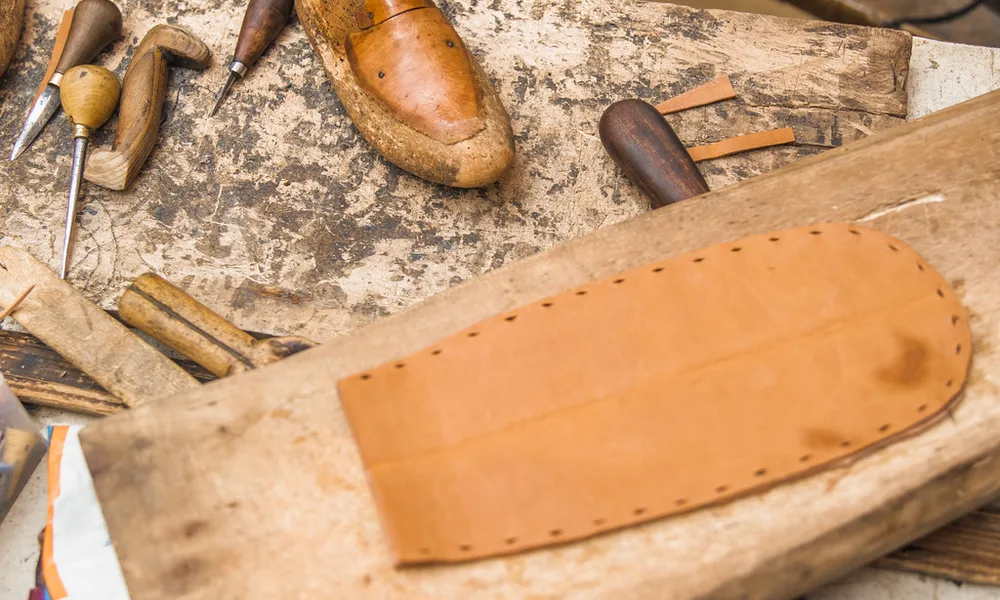
A sole that is only glued on is a sole waiting to come off. Every step flexes a shoe, and flexing works on a glued joint until it gives way. Stitching turns a glued sole into a lasting repair. The stitch-skipper charges the full price of a resole and does half the job: gluing the new sole on, trimming the edge neatly, and handing the shoes back with no stitching at all. The shortcut shows when the sole separates at the toe or heel after a few weeks. Check before you pay, every time. Turn the shoe over: a proper resole shows even stitching around the welt, while the stitch-skipper’s work shows only a smooth glued seam. Modern glues are better, but no substitute for thread on a shoe that bends hundreds of times a day.
4. The heel-height guesser
Heels look simple and are anything but: a heel must match the other exactly and sit square. The guesser measures nothing: the old heel is prised off, a new one cut roughly to size by eye, nailed on, and trimmed while the cobbler squints from above. The result is a pair that no longer sits level. One heel is a millimetre or two higher, or sits at a slight angle, and the wearer feels it in knees and lower back within a day. Test it at the counter: put both shoes on a flat surface and look from behind; the heels should sit level and square, with no rocking when pressed.
5. The dye-and-hide shop
Some damage can be repaired and some cannot, and the honest answer matters more than the sale. The dye-and-hide shop never gives it. Faced with cracked leather, a split upper or a torn lining, it reaches for dye and polish instead of telling the customer the shoe is past saving. The shoe comes back looking wonderful: the colour is even, the scuffs are gone, the crack invisible under a fresh coat. A week later the dye wears off, the crack reopens, and the shoe looks worse than before. The warning sign is a shop that never says no. A good cobbler sometimes refuses a job, or warns a repair will only buy a few months. Dye has its place as a finish on sound leather; on cracked leather it is a cover-up, and a cover-up costs you both the fee and the shoes.
6. The no-quote counter
A shop that will not quote before starting intends to set the price after you can no longer walk away. The no-quote counter takes your shoes, writes nothing down, and says come back Friday. When you return, the price is higher than any figure mentioned at the drop-off, and there is always a reason: the leather was worse than expected, the sole needed extra work, the stitching took longer. The upsell is built into the same visit: a waterproofing treatment, a new insole, a polish, each added without being asked for, each on the bill. The defence is simple: get the price in writing before you leave the shoes. A figure on the ticket, or a text message, is enough. Good cobblers quote happily; the no-quote counter relies on customers who will not argue at the till.
7. The drop-off black hole
The worst-run shops lose shoes through chaos, not theft: no ticket, no tag, no book, and a rack where pairs pile up with no record of who owns what. The drop-off black hole takes your shoes with a nod and a vague promise, and when you return, nobody can find them. The cobbler searches the rack, then the back room, then asks you to describe them again, as if your description were the filing system. Sometimes they turn up a week later, dusty or damaged; sometimes they never turn up, and the answer is a shrug. Never leave shoes without a ticket you keep half of, carrying your name, the shoe, the work, the price and the date. A shop that refuses one does not want a record.
What a good shoe repair shop looks like
The best shoe repair shops share the opposite habits, and they are easy to recognise once you know what to look for. The bench carries several adhesives and threads. Finished work waits in clamps, tagged and dated. The cobbler measures heels, explains what cannot be fixed, quotes before starting, and gives you a ticket. None of this is fancy; it is the craft done properly. Our guide to the worst climbing shoes shows the same pattern: good materials used badly.
Checklist: before you leave your shoes at any repair shop
- Ask how long the repair will take, and walk away from any full resole promised in under an hour.
- Ask whether the sole will be stitched as well as glued, and check it yourself at collection.
- Get a written price and a collection date before you hand the shoes over, and keep your half of the ticket.
- At collection, put both shoes on a flat surface and check the heels sit level and square.
- Ask what happens to any cracked or damaged area over the next few months, not just how it looks today.
- If the shop cannot name the adhesive or material it will use, take your shoes elsewhere.
Frequently asked questions
How long should a proper resole take?
At least a day, often two. The adhesive needs time to cure and the stitching takes time. A shop promising a full resole while you wait is skipping the curing time, and the sole will usually peel within days.
Is glue alone ever enough to hold a sole on?
For a light, temporary fix it can hold for a while, but not as a lasting repair. Every step flexes the sole until a glued joint fails, so a proper resole is always both glued and stitched.
How can I tell if a heel has been fitted properly?
Stand both shoes on a flat surface and look from behind. The heels should sit level, square and at the same height, with no rocking when you press down on them. Walk a few steps if you can; an uneven heel is obvious within a minute.
Should a cobbler ever refuse to repair my shoes?
Yes, and a good one will. Cracked leather and split uppers cannot always be fixed, and an honest cobbler will say so rather than take your money for a cover-up. A shop that never refuses a job is less honest about the limits of the craft.
What should be on my repair ticket?
Your name, a description of the shoes, the work agreed, the price quoted and the collection date. Keep your half of the ticket until the shoes are back in your hands. Without a ticket there is no record of a lost or disputed pair.
Is the cheapest shoe repair shop ever the best choice?
Almost never. A very low price usually means the shop is skipping a step: no stitching, no curing time, the cheapest adhesive, or the thinnest sole material. The cheapest quote is the most expensive repair once the redo is counted.
The bottom line
The worst shoe repair shops of 2026 fail in seven ways: rushed glue, the wrong adhesive, skipped stitching, guessed heels, cover-ups, vague pricing and chaotic storage. All of them are visible before you pay, if you ask the right questions and check the work at the counter. Take your good shoes to a cobbler who measures, stitches, cures, quotes and tickets.